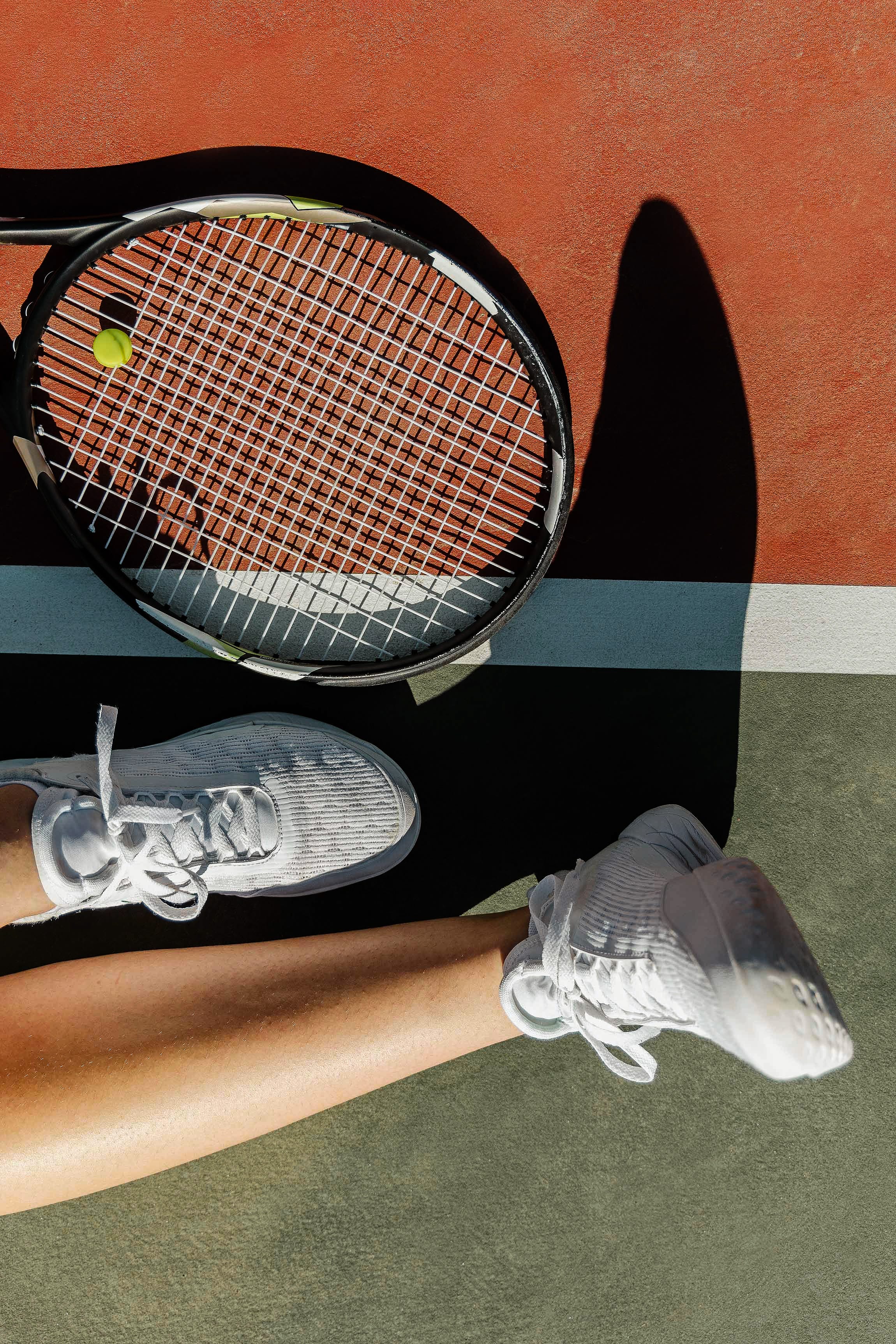
🏆 Game, Set, Match: AI is Changing the U.S. Open
from MAIVENS Podcast Hosted by Cheyenne Dominguez
💜 Hey M(AI)VENS, ☕ Estimated reading time: 6 minutes The US Open is happening this week in New York. While we watch the aces, rallies, and nail-biting tie-breaks, there’s another player on the court this year: AI. From the way fans experience the game, to how players prepare, to the clever things sponsors are rolling out, AI is woven into nearly every part of the tournament. For us as women exploring AI in our own lives and careers, the US Open is a real-world example of how this technology shows up. Not just in Silicon Valley, but right there on the courts of one of the most iconic sporting events in the world. Let’s walk through the areas where AI is making its mark on the court, plus a sneak peek at how it’s about to affect the NFL this fall. 🎾 Women in Focus at the U.S. Open But before diving into AI, here are three exciting women’s stories lighting up this year’s tournament and news cycle: * Equal Pay, Bigger Purse: The 2025 U.S. Open is offering a record-breaking $90 million prize pool, a 20% increase from last year. It’s also the 52nd year of equal pay for women and men, with both singles champions set to earn $5 million. * Venus Williams at 45: With a wildcard entry, Venus is the oldest player in the singles draw since 1981. * Anisimova’s Comeback: Amanda Anisimova stepped away from tennis for her mental health and dropped to No. 359. Now she’s back in the top 10 and entering the Open with renewed strength and resilience. 💬 AI as Your Personal Match Companion This year, fans have an AI tennis pro right in their pocket through the updated U.S. Open mobile app. During and after each singles match, the new Match Chat feature powered by IBM’s watsonx platform is available. It works like texting a knowledgeable friend. You can ask about a player’s head-to-head record, her chances of winning the next set, or how she performs on hard courts. IBM’s technology also powers the Likelihood to Win predictions that refresh in real time as matches progress. To make it easier to keep up, AI now creates short summaries of articles, commentary, and captions for highlight videos. AI is now part of the fan experience itself, making tennis more interactive, inclusive, and accessible. 👀 Hawk-Eye and Fairer Calls If you’ve ever groaned at a bad call, you’ll appreciate how AI has reshaped officiating in tennis. Hawk-Eye is the technology behind those dramatic replay graphics that show exactly where the ball landed. It uses a network of high-speed cameras placed around the court, with AI algorithms piecing the frames together to calculate the ball’s trajectory within millimeters. Line judges are now a thing of the past at the US Open, Australian Open, and Wimbledon, where Hawk-Eye has fully taken over their role. And Hawk-Eye isn’t stopping at tennis. Starting this fall, the NFL will use Sony’s Hawk-Eye technology to measure first downs. Instead of chain crews walking out with poles and a 10-yard chain, six 8K cameras will track the ball with accuracy down to less than half an inch. AI is moving from “nice-to-have” to a trusted part of the game. I’ll share more on its role in football as the season gets underway this fall. 🏈 🎉 Marketing & Sponsorship: AI Experience Sponsor setups at the US Open are almost as entertaining as the matches themselves. Last year Amex created a Glow Tennis mixed-reality game. This year, AI is powering even more personalized fun. Think less “same for everyone” and more “made for you.” Walk into an event and the highlights, content, or activities adjust to your preferences. Brands are experimenting with this approach, and women leaders can use this as inspiration to bring that same idea into networking, client experiences, and team gatherings. 🏋️ Player Preparation: AI as a Competitive Edge Players and coaches are tapping into AI-powered analytics to break down every angle of the game. Systems like IBM’s SlamTracker can provide deep data on serve speed, shot placement, and rally length. Coaches can use this data to spot patterns, like an opponent’s tendency to hit crosscourt under pressure, or how often a player attacks the net in a deciding set. Players are turning to smart video tools and data-driven feedback to analyze serve patterns, footwork, and shot placement. Additionally, some interesting news is taking shape this week around Coco Gauff. Just days before the U.S. Open, she parted ways with her coach and added biomechanics specialist Gavin MacMillan to her team. While it’s not confirmed that AI is part of his work, his reliance on detailed motion analysis and sports science strategy suggests how tech-driven coaching, and possibly AI-powered tools, are becoming part of elite tennis prep. 🔮 Looking Ahead: The Future of AI in Sports Broadcasters are experimenting with VR and mixed reality, where AI overlays strategy diagrams and offers dynamic camera angles. And beyond tennis, ESPN just gave its app a glow-up with AI-powered personalization, including a TikTok-style highlight feed and daily recaps tailored to your favorite teams. For women leaders, this points to what’s next: a trend toward more immersive, more personalized, more interactive experiences, whether you’re sitting in a stadium, leading a board meeting, or streaming a keynote. 🎽 Serving Style on Her Own Terms Alongside the AI powering this year’s US Open, there’s another story worth celebrating. Taylor Townsend, now the world’s No. 1 women’s doubles player, and the first mother ever to reach the top of the WTA doubles rankings, has been competing without an apparel sponsor since 2017. Rather than wait for a brand to back her, she created her own. This year, she’s debuting her TT logo on the court with bold outfits inspired by orcas, phoenixes, and even dinosaurs (a sweet nod to her 4-year-old son). I love Townsend’s story about ownership, confidence, and building something that reflects who she is. Townsend joins the tradition of Venus and Serena Williams in blending sport with fashion entrepreneurship, proving that sometimes the best and boldest move is to create your own lane. ✨ Little Things I’m Loving Speaking of fresh and bold, my fig tree delivered a basketful of goodies this week, and I turned them into the most delicious breakfast bread. Hint: ChatGPT helped refine the recipe. It was devoured so fast that I didn’t get a chance to take the “after” photo until there were only two tiny little slices remaining. 😋 🍞 Fig, Almond Flour & Honey Breakfast BreadPerfect with coffee or tea. Ingredients * 6–8 ripe figs, chopped (plus a few slices for topping) * 1 ½ cups almond flour * ½ cup oat flour or all-purpose flour (optional, for structure) * 1 tsp baking powder * ¼ tsp salt * ½ tsp cinnamon or cardamom * ½ cup honey * 2 eggs * ⅓ cup olive oil or melted butter * ¼ cup milk or almond milk * 1 tsp vanilla extract * Zest of 1 lemon or orange * handful of walnuts (optional) Instructions * Preheat oven to 350°F (175°C). Line or grease a loaf pan. * Mix dry ingredients in one bowl. * Mix wet ingredients in another. * Combine, fold in figs (and walnuts if using), pour into pan. Top with fig slices. * Bake ~55 minutes until golden and set. Cool slightly before serving. Delicious warm or at room temp. 🏆 Closing Rally So as you catch the US Open this year, whether you’re there in person, tuning in with friends, or sneaking highlights between meetings, notice how AI is shaping the experience. It’s in the stats, the commentary, the fairness of the calls, and the playful sponsor extras. It’s also behind the scenes, keeping everything running. 💜 More soon,CheyenneFounder, M(AI)VENS P.S. If you’re enjoying the M(AI)VENS newsletter for women, please share it with a friend. 🦉💌 Copyright © 2025 M(AI)VENS. All rights reserved. Get full access to M(AI)VENS at womenai.substack.com/subscribe
Embed this episode
No transcript yet.