
EPISODE · Aug 28, 2020 · 3 MIN
Gear for Freezing ⚙️
from Life School · host Life School
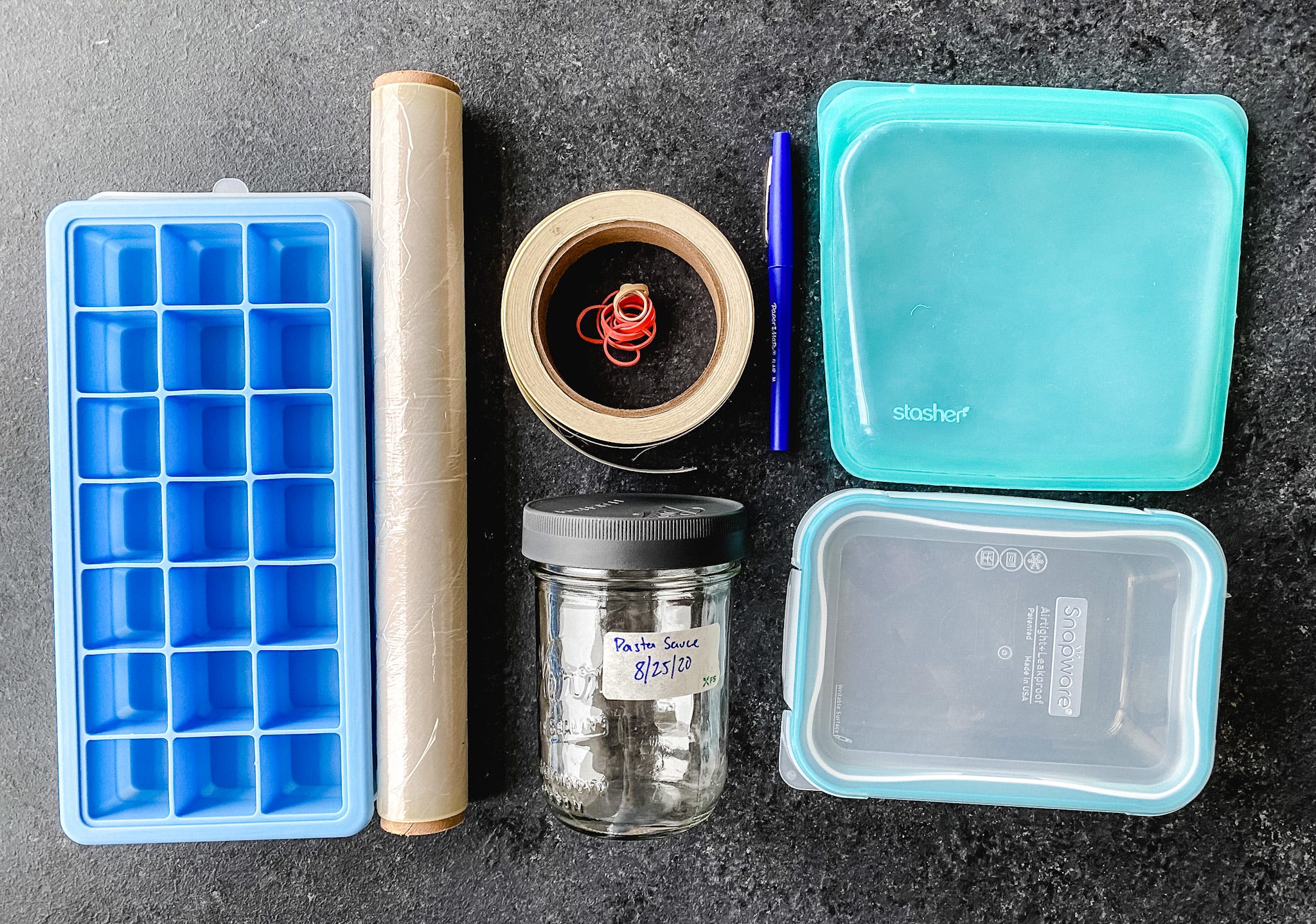
Today’s lesson is 477 words, a 1 min 54 sec reading time. It is the second lesson of How to Hack Your Freezer. 📍 Introduction: Knowing how to wrap & pack items properly is an essential skillset in freezing. Using the right equipment will ensure you: * Keep foods fresh as long as possible * Find & identify items quickly * Save valuable space * Avoid freezer-burn 👆 A Note on Freezer Burn Freezer burn is a condition that occurs when foods dehydrate & then subsequently oxidize inside the freezer. This happens when water/ice from the item evaporates, mixes with the surrounding moist air & then-refreezes. The result is icy-crunchy crystals or grayish-brown leathery spots. While freezer burn does not make the food unsafe to eat, it does impact the taste & texture. The trick to preventing freezer burn is sealing items tight to ensure they do not lose moisture. For this reason, we use some special gear when freezing! ⚙️ Recommended Gear: * Ice cube trays (with lids best) * Tupperware/takeout containers (locking lids seal best) * Zipper or silicone bags (freezer safe) * Saran wrap * Tape (e.g., painters or masking) * Felt pen * Glass jars (optional) * Aluminum foil (optional) 📝 Notes, Tips & Tricks: * Only use moisture & leak-proof materials. * Avoid items that aren’t airtight (e.g., yogurt containers, produce bags) unless you double up (e.g., inside a sealed bag, wrapped in saran wrap) * Packaging should be “full” to (a) save space and (b) reduce unnecessary contact with air. Match the item to the size of container & press air out of bags. * A small arsenal of containers will serve you well. Cultivate a mix of sizes & shapes. * To be extra economical, save takeout quarts & glass jars to reuse * Liquid expands when frozen. Make sure to leave ½ to 1 ½ inch of headspace to avoid overflow (or cracked glass) * Glass jars are hit & miss. They are at risk of breaking (both from liquid expansion and falling out of the freezer). If you want to use glass, make sure it’s thick/durable and freezer-safe. Also, make sure the items are cool. * For zipper bags, “freezer safe” is best as they are thicker and thus sturdier & less likely to puncture. * For opened bags of frozen fruit/veggies, press out the air, twist up the top, and secure tightly with a rubber band. * Label containers with the contents & date (tape & a sharpie works well for this); items can be hard to identify later if frosty. * Individual or double portions work best. They stack easily, save time to defrost later, & are helpful for portion control. 🎓 Further Study: * The Best Ice Cube Tray [Wirecutter] * Reusable Food Storage Bags [New York Magazine, The Strategist] * The Best Reusable Produce Bags, Beeswax Wraps, and Other Ways to Reduce Plastic Waste [Wirecutter] * Tools and Tips for Freezing Food So Nothing Goes to Waste [Wirecutter] * What’s the Difference Between Freezer Bags and Regular Zip-Top Bags? [The Kitchn] * 6 Easy Ways to Prevent Freezer Burn [Ben & Jerry’s] * Freezer Burn [Wikipedia] —————————————————— 🎧 Prefer to listen? Subscribe on iTunes, Spotify or Overcast. ☎️ Do you have ideas about how to make Life School better? Sign up here for a 15-min call with Founder & Chief Researcher, Michelle. 📚 Check out more in the Table of Contents This is a public episode. If you would like to discuss this with other subscribers or get access to bonus episodes, visit www.trylifeschool.com
Embed this episode
Ready to play
Gear for Freezing ⚙️
No transcript for this episode yet
Similar Episodes
No similar episodes found.