
EPISODE · May 30, 2026 · 8 MIN
Generated Episode Idea
from Spanish for Nomads Podcast | Nomad Life Success
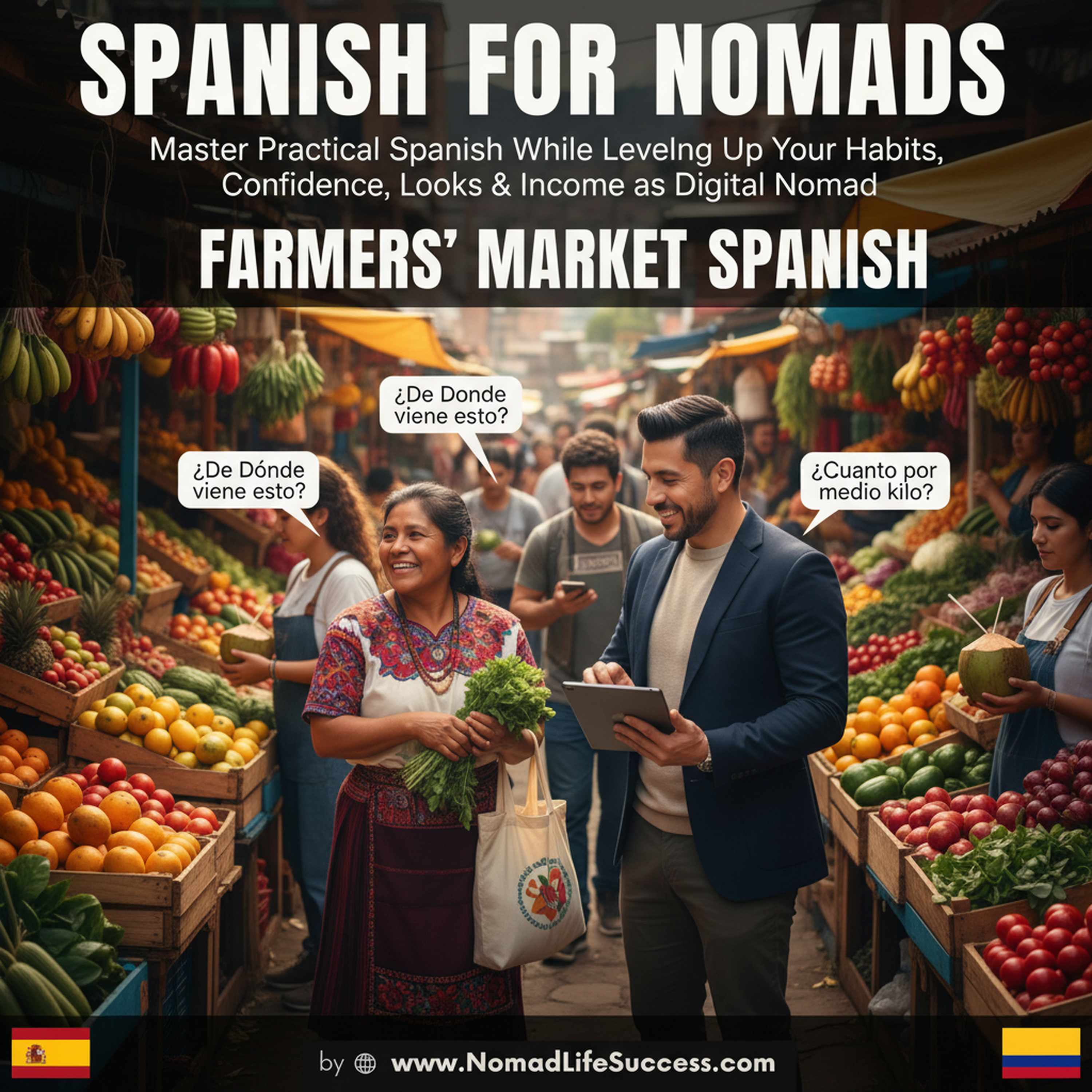
{"title":"Farmers' Market Spanish: Buy Fresh, Make Friends & Upgrade Your Habits","one_liner":"Learn 6–8 neutral market phrases to buy fresh produce, ask where food comes from, politely bargain, and turn a simple market run into energy-boosting habits and local connections — with a vendor guest, slow pronunciation, a live role-play, and an immediate practice step.","description":"Markets are a daily goldmine for nutrition, energy, and social connection — especially for nomads building routines abroad. In this interview episode Sarah and Carlos bring a friendly local vendor to teach 6–8 clear, region-neutral Spanish lines for buying produce, asking for preparation tips, and politely negotiating price. You’ll get slow pronunciation, full English translations, cultural habits for choosing anti-aging, nutrient-dense foods, and quick tips on turning market chats into regular friendships or small-income opportunities (selling snacks, sourcing ingredients for a cooking class). The episode includes a real-life role-play, actionable habit steps to make markets part of your weekly routine, and a concrete practice challenge you can do on your next market visit. Beginner-friendly, confidence-focused, and ready to use today.","why_now":"Daily markets and fresh food are a timeless part of life across Spanish-speaking countries; learning neutral, practical market language immediately improves health, social ties, and confidence no matter when you travel.","target_audience":"Complete-beginner digital nomads who want practical Spanish to order healthier food, build local friendships, boost energy and appearance, and create small local income or side gigs while traveling.","episode_type":"interview","estimated_runtime_s":540,"outline":["00:00-00:30 — Hook: A common nomad moment at a crowded farmers' market — you want to buy ingredients for better energy but don’t know what to say; Sarah sets the scene.","00:30-01:00 — Promise & Guest Intro: What you’ll walk away with (6–8 phrases, pronunciation, habit tips); introduce the market vendor guest.","01:00-04:00 — Teach Phrases: Present 6–8 neutral market phrases with slow pronunciation and full English translations (examples: “¿De dónde viene esto?”; “¿Me recomienda algo para la energía/mantener la piel?”; “¿Cuánto por medio kilo?”; “¿Me puede preparar un paquete para llevar?”; “¿Cómo lo guarda para que dure más?”), short notes on when to use each.","04:00-05:30 — Food & Habit Tie-in: Carlos and Sarah explain how these phrases help you choose anti-aging, nutrient-dense foods, build a market-based weekly habit, and upgrade appearance/energy.","05:30-07:00 — Interview: Vendor explains common responses, seasonal clues to ask for, polite bargaining norms, and how small regular purchases build rapport and local recommendations.","07:00-08:00 — Live Role-Play: Sarah practices buying a selection using the phrases; Carlos plays the vendor, modeling friendly follow-ups and a natural local reply.","08:00-08:30 — Immediate Practice Action Step: A 3-step micro-challenge to use at your next market (arrive, use two phrases, ask for a recipe or storage tip) and tracking habit suggestions.","08:30-09:00 — Recap, Quick Tips & Custom CTA: Summarize phrases, reminder of habit benefits, invite listeners to the Market Phrase Sheet + 3-Day Market Challenge (custom CTA), outro.","tags":["Spanish for nomads","travel Spanish","healthy eating","farmers market","confidence","role-play"],"duplication_check":{"nearest_match_title":"Host a Healthy Potluck: Spanish to Invite, Coordinate & Turn Meals into Local Friends and Opportunities","similarity_score":0.38,"decision":"distinct"},"risks":["Regional vocabulary differences may confuse beginners (produce names vary).","Bargaining taught poorly can offend vendors or feel awkward for newbies."],"mitigations":["Teach neutral, widely-used words and include a safe fallback phrase: “¿Cómo se llama esto aquí?” to learn the local name; provide downloadable phrase sheet with images and alternatives.","Demonstrate polite, low-pressure bargaining language and cultural cues in the interview; encourage observing one market visit before bargaining and to rely on phrases that ask recommendations rather than haggle aggressively."]}
Embed this episode
NOW PLAYING
Generated Episode Idea
No transcript for this episode yet
Similar Episodes
No similar episodes found.
Similar Podcasts
No similar podcasts found.