
EPISODE · Apr 2, 2026 · 21 MIN
Generative AI Rescued fragmented well data
from Quarter Century in Tech · host VKStrategyLab
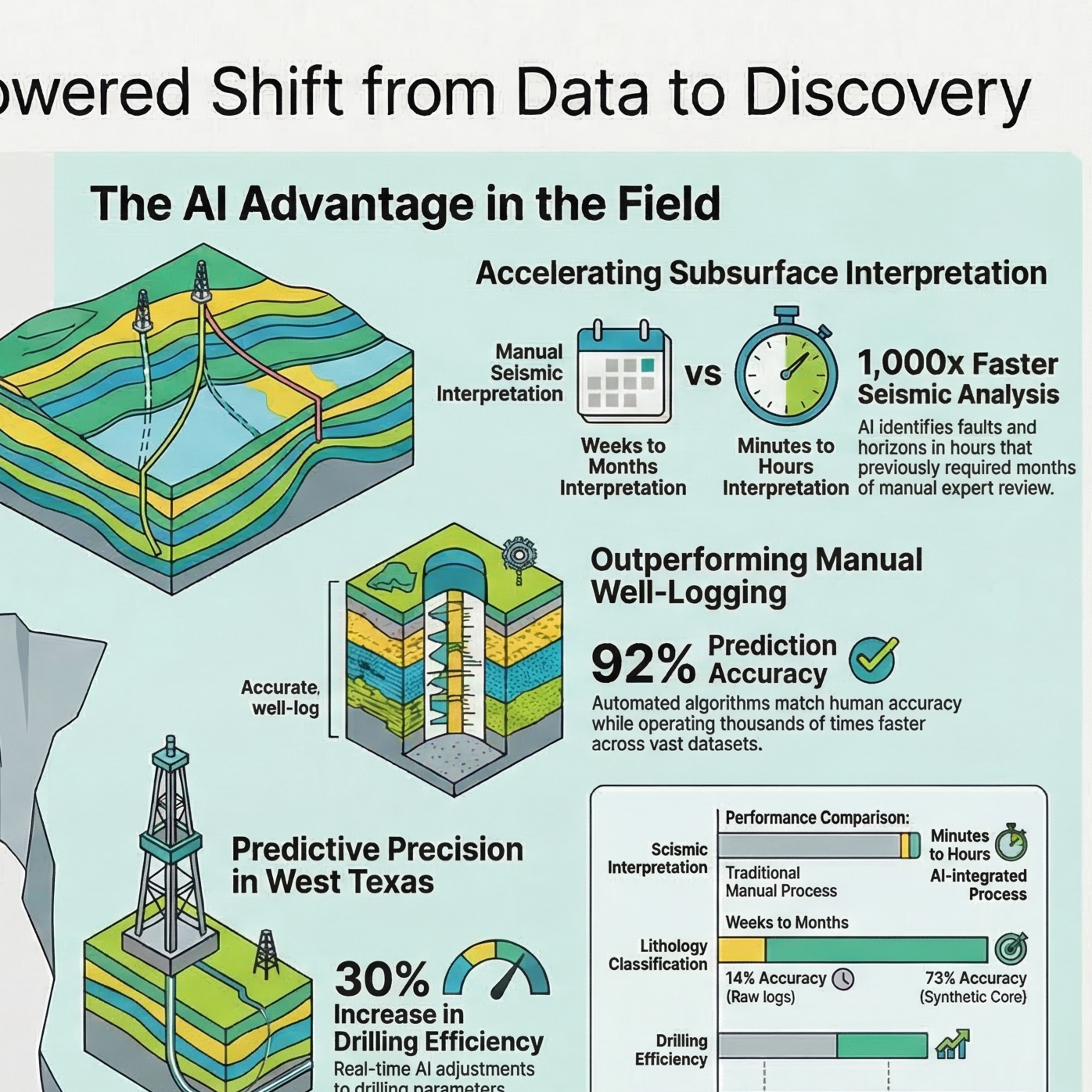
Geologists use well data to understand the subsurface (stratigraphy, reservoirs, fluids, structure) so they can reduce exploration risk and optimize field development, and the same data underpins broader decisions across drilling, completions, production, and portfolio management for the wider oil and gas industry.1. How Geologists Benefit Directly• Subsurface characterization• Well logs (gamma ray, resistivity, sonic, etc.) let geologists delineate lithology, porosity, and fluid saturation, which they use to assess hydrocarbon potential and decide whether to complete or abandon a well.• By correlating logs from multiple wells, geologists trace stratigraphic units and understand lateral continuity and heterogeneity in reservoirs and seals.• Play and prospect mapping• Combining well locations, formations, and production data into color‑coded pay maps highlights producing trends and zones with remaining potential, helping geologists screen leads and prospects quickly.• Overlaying well data on topographic or aerial maps reveals structural trends, faults, and stratigraphic traps that guide where to drill next and how to extend existing fields.• Data quality and benchmarking• Online well databases allow geologists to check the completeness and accuracy of internal well files, fill gaps, and standardize header, formation, and production information.• Access to large, regional well datasets supports basin‑scale stratigraphic models and regional studies, which are difficult to build from a single company’s wells alone.2. Extending Value to the Wider Oil & Gas Industry• Exploration and field development planning• Integrated well data (logs, tops, completions, production) feeds reservoir characterization, trap and seal assessment, and volumetric estimates, supporting exploration and appraisal decisions.• Operators combine geological and performance data to characterize shale basins, reducing trial‑and‑error in landing zones and development patterns.• Drilling and completions optimization• Real‑time and historical well data help plan trajectories that avoid collisions, stay in zone, and navigate complex stacked reservoirs.• Production and completion attributes (stages, fluids, proppant) tied to each well enable analytics to identify which designs perform best by formation and area, informing frac recipes and spacing.• Production, reserves, and operations• Standardized production and injection data (oil, gas, water, EUR, remaining reserves, EOR and disposal volumes) support deliverability assessment, reserves estimation, and field performance benchmarking.• Centralized, high‑quality well databases improve data accuracy and timeliness, which studies show leads to better decisions and operational performance across oil and gas operations.• Data and digital transformation• Master well records that connect permits, construction, completions, logs, and production create a foundation for PPDM/OSDU‑aligned data platforms and APIs, making it easier to integrate with corporate IT and analytics systems.• This unified well dataset enables advanced analytics and AI for tasks like automated drilling sequence optimization, production schedule optimization, and smart maintenance across assets.
Embed this episode
NOW PLAYING
Generative AI Rescued fragmented well data
No transcript for this episode yet
Similar Episodes
No similar episodes found.
Similar Podcasts
No similar podcasts found.