
EPISODE · Feb 20, 2026 · 26 MIN
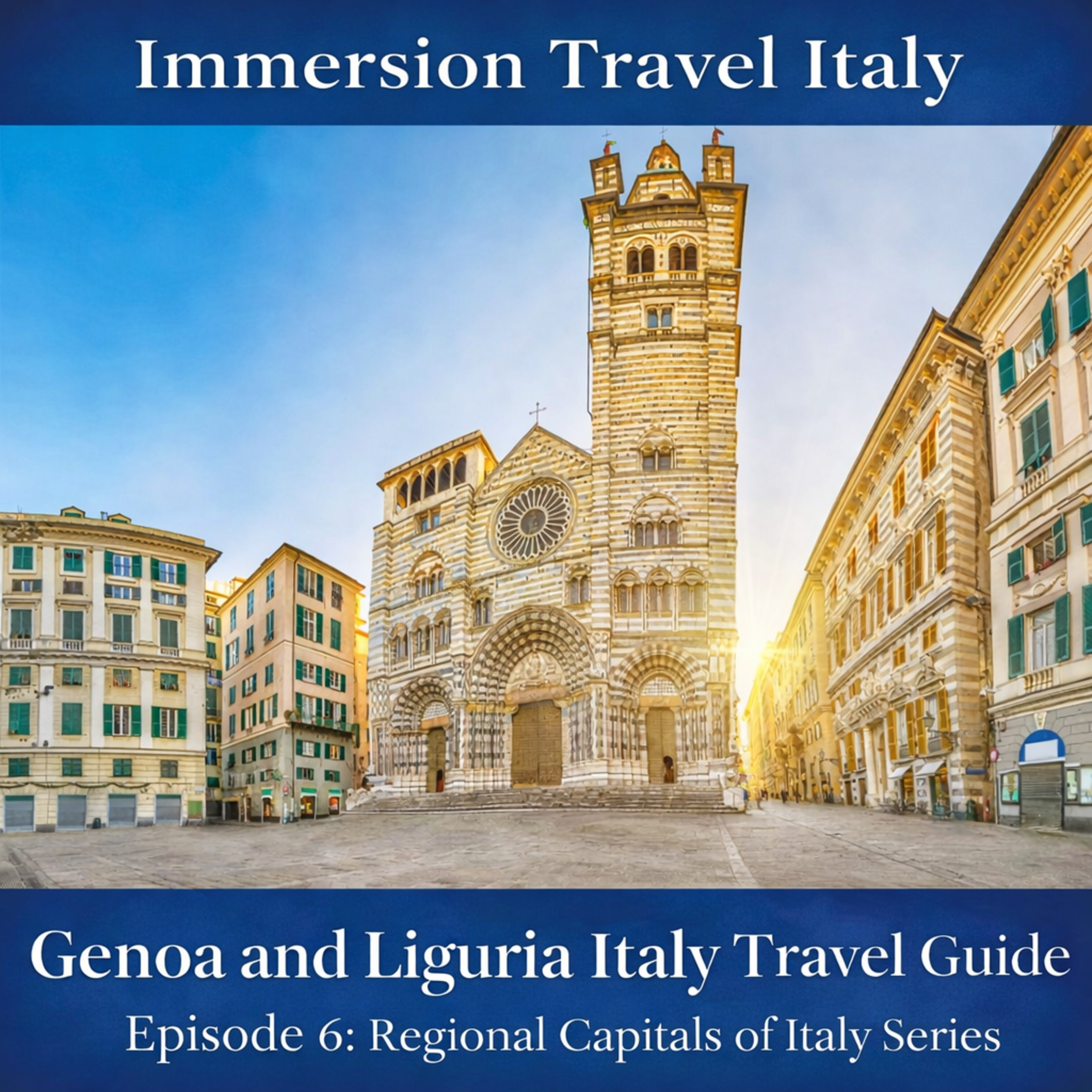
Genoa and Liguria Italy Travel Guide | Maritime Power, Hidden Streets, and a Capital Built on Trade. Regional Capitals of Italy Series Episode 6
from Immersion Travel Italy · host Katerina Ferrara
In this episode of the Immersion Travel Italy Podcast, we travel to Genoa, the capital of Liguria, and one of Italy’s most complex and underestimated cities.Genoa is not a city that explains itself easily. Wedged between the Ligurian Sea and steep hills, it developed inward, guarding its wealth, knowledge, and power behind narrow medieval streets known as the caruggi. For more than seven centuries, Genoa functioned as an independent maritime republic, funding empires, controlling trade routes, and shaping European finance in ways that are still felt today.This episode is the sixth in our Regional Capitals of Italy series, following Turin in Piedmont, Bologna in Emilia Romagna, Milan in Lombardy, Trento in Trentino Alto Adige, and Trieste in Friuli Venezia Giulia. Each capital reveals a different way power shaped Italy. Genoa’s story is one of commerce, strategy, and endurance.We begin with Genoa’s origins as a medieval maritime republic and explore how geography shaped its identity. Unlike Venice, Genoa exercised influence quietly, through contracts, banking, and control of movement rather than ceremony. Powerful families built palaces not as royal seats, but as private instruments of authority.The episode covers Genoa’s key historical transitions, including the end of the Republic under Napoleon Bonaparte, the city’s forced integration into the Kingdom of Sardinia, and its later role in Italian unification. Genoa never regained independence, but it became essential to the new Italian state as a port, industrial center, and gateway to the wider world.We also explore Genoa’s connection to Christopher Columbus, born here in the 15th century. Columbus was shaped by Genoa’s maritime culture and financial mindset long before sailing for Spain. Even after his voyages, Genoese bankers helped manage the flow of wealth from the Americas into Europe, reinforcing Genoa’s influence beyond visible borders.From history, we move into experience.You’ll walk through Genoa’s historic center, beginning at the magnificent Duomo di San Lorenzo, moving through the caruggi, opening into Piazza De Ferrari, and continuing along Via Garibaldi and the UNESCO listed Rolli Palaces. We talk about what to notice, how to read the city, and why Genoa feels lived in rather than curated.Food is an essential part of understanding Genoa, and we cover classic Ligurian dishes including focaccia genovese, farinata, and trofie al pesto, along with suggestions for cafés, bakeries, and traditional lunch spots.The episode also highlights Genoa’s three most important festivals:Festa di San Giovanni Battista, honoring the city’s patron saintLe Vele d’Epoca, celebrating maritime heritageRolli Days, when historic palaces open their doors to the publicFrom Genoa, we explore easy day trips by train and boat, including Rapallo and Portofino in one day, the fishing town of Camogli, and ferry connections to Sardinia, Sicily, and Corsica. Genoa has always been a city of departure, and it remains one today.We close with activities that help you experience Genoa beyond sightseeing, including walking the Porto Antico, riding the city’s public elevators and funiculars, visiting the Galata Museo del Mare, and seeing Genoa from the water.This episode is about learning how to read a city that never performed for visitors, but rewarded those willing to look deeper.🎧 Associated blog with full details, walking routes, and planning tips:https://katerinaferrara.com/blog/For more immersive travel guides, podcast episodes, and Italy focused itineraries, visit katerinaferrara.com and follow the Immersion Travel Italy series.
Embed this episode
Ready to play
Genoa and Liguria Italy Travel Guide | Maritime Power, Hidden Streets, and a Capital Built on Trade. Regional Capitals of Italy Series Episode 6
No transcript for this episode yet
Similar Episodes
No similar episodes found.