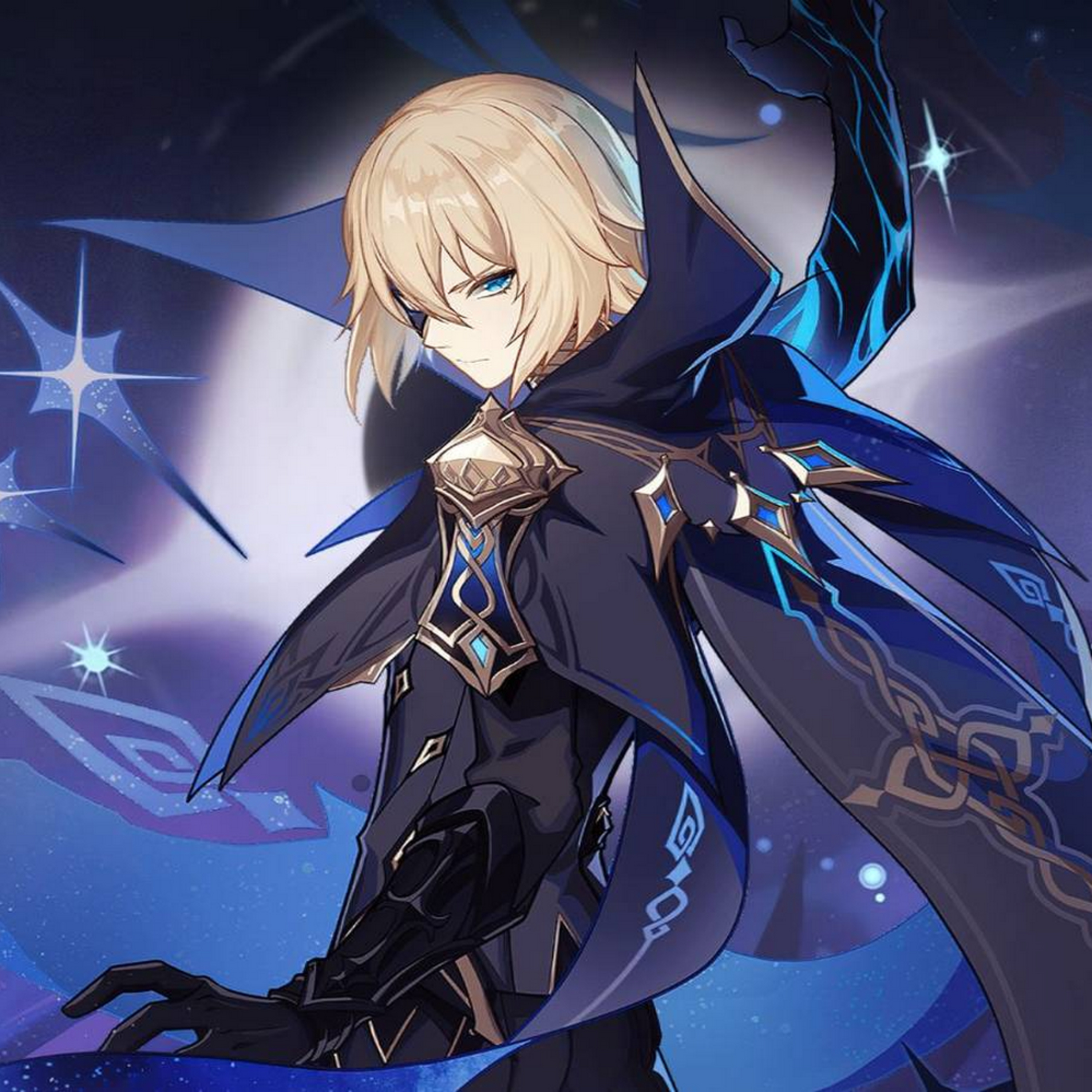
Welcome back to Dreamscape Archives. Tonight, we're stepping into the breathtaking realm of Teyvat to uncover some of Genshin Impact's most obscure and fascinating secrets. These aren't your typical gameplay tips or character guides. Instead, we're diving deep into the cryptographic puzzles hidden in decommissioned machines, the mysterious connections between seemingly unrelated characters, and the countless Easter eggs that most travelers have walked past without a second glance.
Over the next hour or so, we'll explore everything from complex ciphers that took the community months to decode, to subtle animation details that reveal profound truths about character origins, to hidden treasures that require nothing more than careful observation and a willingness to explore every shadowed corner of this vast world. So, settle in, get comfortable, and let's begin this journey through the secrets that lie beneath Teyvat's surface. The language of ancient machines. Scattered across the frozen peaks of Dragonspine and the verdant rainforests of Sumeru, there exist machines that speak in a language most travelers never stop to hear.
These are the Ruin Guards, those imposing mechanical sentinels left behind by the fallen civilization of Kanriya. While most players know them as formidable enemies or farming targets for their valuable components, a select few have discovered that some of these ancient automatons carry messages, encrypted in layers of mathematical complexity that would challenge even the most dedicated codebreakers. In the icy wastes of Dragonspine, nine decommissioned Ruin Guards lie buried in snow and time. Unlike their active counterparts, these machines no longer pose any threat to passing travelers.
Instead, when approached and examined, each one displays a cryptic sequence of numbers and symbols. For most players, these strange codes appeared meaningless, perhaps nothing more than random serial numbers or technical specifications. But the Genshin Impact community has never been one to leave mysteries unsolved. What followed was one of the most impressive displays of collaborative problem-solving in gaming history.
Players began by meticulously documenting every code from all nine Ruin Guards, organizing them by the serial numbers visible on each machine. The breakthrough came when someone noticed that the first digit of each serial number was unique, ranging from one through nine. This couldn't be coincidence. The codes needed to be read in order, arranged by these ascending serial numbers.
The actual decryption process revealed layers of mathematical sophistication that spoke to the fallen kingdom's advanced understanding of both language and numbers. The codes used a ternary numeral system, meaning they operated in base three, rather than the base ten system humans typically use. Each cluster of symbols in the sequence contained combinations of periods and numbers, with dashes serving as separators between these clusters. The decryption required converting these ternary numbers into decimal format, then transforming those decimal numbers into letters based on alphabetical position.
But that was only the first layer. The resulting text was then run through a ROT 13 cipher, a substitution cipher, where each letter is replaced by the letter 13 positions ahead of it in the alphabet. It's the kind of encryption that demonstrates both elegance and practicality, simple enough to implement with ancient technology, yet complex enough to keep casual observers from stumbling upon its secrets. When the dust settled, and all nine codes had been properly decrypted and assembled, they revealed a haunting message from Cainria's final days.
The text read, For the nation, we can't forgo this skyborne power, but we failed. These words carry profound implications for Genshin's overarching narrative. They speak of a civilization that reached for power beyond mortal kin, grasping at forces from the heavens themselves, only to meet catastrophic failure. The ruined guards, those tireless mechanical soldiers, became the tombstones of their creator's ambition, carrying this confession of failure through centuries of silence.
But Dragon Spine's coded machines weren't the only ones with stories to tell. In Sumeru, the nation of wisdom and ancient knowledge, another set of damaged ruin guards waited with an even more complex puzzle. Five of these machines could be found throughout Sumeru's forests, each lying dormant until travelers discovered the proper method to activate them. The process required finding lost energy blocks scattered throughout the region and feeding three of these blocks to each machine.
Unlike their Dragon Spine counterparts, these Sumeru ruin guards didn't simply display their codes. They needed to be awakened through a specific sequence of actions. Near each damaged machine, travelers would find a dendro-sealed rock. Breaking this seal would release a non-hostile ruin scout, a smaller mechanical unit that would then guide players to the dormant ruin guard.
Upon arrival, two ruin sentinels would spawn and need to be defeated before the main machine could be accessed and loaded with its energy blocks. Once activated, each of the five ruin guards revealed a code fragment. These fragments were named after the first five runes of the Elder Futhark, the oldest form of runic alphabets used by Germanic peoples. The names themselves carried significance.
Fehu, Uruz, Thurisaz, Ansuz, and Redho. Following the alphabetical order of these ancient runes provided the proper sequence for assembling the complete message. The decryption process for the Sumeru codes proved even more intricate than Dragon Spine's puzzle. First, all dashes in the sequences had to be converted to spaces.
Then, each number needed to be converted into its equivalent number of dashes. So a two became two dashes, a three became three dashes, and so on. This transformation revealed sequences that could be decoded using Morse code, that classic method of communication where dots and dashes represent letters. But there was one more layer to unravel.
The Morse code translation produced text that was then encrypted with a Vigen or Re cipher using the keyword Enfortas. This particular cipher is named after a 16th century French cryptographer and uses a series of interwoven Caesar ciphers based on the letters of a keyword. Enfortas itself is a name found elsewhere in Genshin's lore referring to a knight-marshal associated with the ruined golems and the fallen kingdom of Kanria. When every layer of encryption had been peeled away, the five Sumeru ruin guards yielded their message.
We Schwanenritters have fought to the last one. The Schwanenritters or Swan Knights were an order devoted to protecting Sumeru during the cataclysm that destroyed Kanria 500 years before the game's main story. Their final message preserved in mechanical memory and mathematical code speaks to a last stand, a desperate defense carried out to the bitter end. These cryptographic puzzles represent something special in modern gaming.
The developers at Mahoyo crafted mysteries that required genuine intellectual effort to solve, puzzles that couldn't be brute-forced or looked up in a strategy guide. They demanded collaboration, creative thinking, and expertise across multiple fields of knowledge from ancient writing systems to classical cryptography. The solutions don't unlock powerful weapons or rare resources. Instead, they offer something perhaps more valuable to those who seek them, connection to the game's deeper lore and the satisfaction of genuine discovery.
Bloodlines and hidden lineages While Teyvat's landscape holds many secrets in stone and steel, some of the most intriguing mysteries concern the very nature of its inhabitants. Characters that travelers have come to know through countless adventures often carry hidden aspects to their identities, subtle clues woven into their designs, abilities, and histories that most players never think to question. Consider Kiki, the small zombie girl who works at Hubu Pharmacy in Liyue Harbor. Most travelers know her story in broad strokes.
A child who died in an accident then was revived through a combination of adeptal power and desperate measures. Now existing in a state between life and death, with memory so fragile, she must constantly write reminders to herself. But there's a detail about Kiki that connects her to one of Liyue's most prominent figures in ways that suggest a shared past few have noticed. Kiki's normal attack talent bears the name Ancient Sword Art in most translations of the game.
This might seem like a generic designation for a basic combat ability, nothing worth remarking upon. But in the original Chinese text, her attack carries a more specific name, Yunlai, Ancient Sword Art. That particular designation should sound familiar to players who've spent time with another Liyue character because it's the exact same name given to Kiki's normal attack talent. This shared naming has sparked considerable speculation within the community.
In a game as meticulously crafted as Genshin Impact, where every detail of character design carries meaning and intention, this connection between their fighting styles could suggest something profound about their relationship. Both characters share strikingly similar features beyond their combat techniques. They possess nearly identical hair colors, that distinctive shade of purple that sets them apart from most other characters. Their eye colors match as well, a violet hue that seems too specific to be accidental.
These details, when assembled together, paint an intriguing picture. Given that Kiki died in ancient times and has existed as an undead being for centuries, one interpretation is that she came from the same clan or family as Kikin. She may have been a distant ancestor of Kikin's line or at minimum a member of the same family from generations past. The sword art they both practice has been passed down through their bloodline across centuries, surviving in Kikin's hands while existing as muscle memory in Kikin's undead form.
If this connection holds true, it would add new dimensions to both characters. Kiki's existence becomes not just a personal tragedy, but a link to Li Yue's distant history, a living connection to how her family's martial tradition developed centuries ago. For Kikin, it would suggest her lineage extends much further back than most players might have considered, her clan ancient enough to have produced notable figures even in eras long before the present day. Speaking of distinctive physical features that hint at hidden truths, Kli presents one of the most obvious yet least discussed mysteries in all of Mondstadt.
The energetic young pyrotechnic has long pointed ears that extend well beyond normal human proportions. These ears have always been visible, prominently displayed in her character design, yet many players simply accepted them as a stylistic choice without questioning what they might signify about Kli's nature. The Golden Apple Archipelago event provided crucial context for understanding Kli's heritage. Her mother Alice, one of the most powerful and enigmatic figures in Tavot, despite never appearing directly in the game, left behind recordings and notes that shed light on her daughter's true nature.
Alice described her bloodline as belonging to a race blessed with longevity, a straightforward statement that carries enormous implications. In fantasy fiction, long lifespans and pointed ears typically indicate elven or similar non-human heritage. The evidence suggests Genshin Impact follows this tradition. Kli's mixed heritage would explain not just her distinctive appearance, but potentially other aspects of her character.
Her seemingly boundless energy, her prodigious talent with explosives despite her young age, even her resilient constitution that lets her survive the numerous pyrotechnic accidents she causes. These characteristics could stem from her non-human bloodline. Alice herself remains one of Tavot's greatest mysteries. Described as adventurer, scholar, and mage of extraordinary power, she's been referenced as having capabilities that rival or exceed the archons themselves.
If she and Kli share this long-lived race's heritage, then Kli's apparent youth might be misleading. She could be far older than she appears, or conversely, she might remain in childhood for an extended period compared to human development. The implications extend beyond a single character. If non-human or mixed heritage individuals live openly in Tavot's cities without remark or discrimination, it suggests the world's diversity runs deeper than the seven nations and their distinct cultures.
There may be entire populations of non-human races living alongside humanity, their presence so normalized that travelers like us never think to question it. Then there's Tartalia, better known as Child, the eleventh of the Fatui Harbingers. At first glance, he appears entirely human, a skilled warrior from Snezhnaya who fights with bow and blade. But his character design contains a unique detail that sets him apart from every other character in the entire game.
His eyes, in official artwork and character models, possess no eye shine whatsoever. Eye shine, that small highlight or reflection of light visible in the eyes, is a fundamental element of character design across animation and gaming. It makes characters appear alive, gives their gazes depth and direction, helps convey emotion through subtle shifts. Every single playable character in Genshin Impact features eye shine in their official art and models.
Every character, except Child, his eyes are rendered as solid colors, flat and unreflective, creating an unsettling effect for those who notice it. The absence makes him appear slightly less alive than those around him, as though something fundamental about his humanity has been lost or altered. This design choice cannot be accidental. In a game where even minor NPCs have eye shine, removing it from a major playable character must carry significance.
The reason becomes clearer when considering Child's backstory. As a young boy, he fell into the abyss, that corrupted realm beneath Tevot where the laws of normal reality break down. He spent three months there, though time flows differently in that place. So those months might have...
equated to years or even decades by his perception. In the Abyss, he was trained by a woman named Skirk, learning combat techniques that transformed him from a frightened child into a weapon. The Abyss changes those who spend too long in its depths. The Abyss.
Order's members, corrupted residents of the fallen nation of Canria, bear this corruption visibly in their twisted forms. Child's time in that realm left marks less obvious, but no less real. The lack of eyeshine in his design could be interpreted as a visual representation of what the Abyss took from him, a permanent marker of how that place altered his very nature even as it granted him power. His combat abilities support this interpretation.
Child can transform into his foul legacy form, a monstrous state that channels abyssal power directly. This transformation causes severe harm to his body with each use burning through his life force at an alarming rate. The fact that he can access such power at all speaks to corruption that runs deeper than surface appearances would suggest his lifeless eyes in normal form then become a visual echo of the transformation he undergoes, a hint at the Abyss that lurks within him. The Mark of Ancient Powers.
Some characters carry their secrets not in bloodlines or combat styles, but in symbols, in marks and sigils that connect them to forces beyond mortal understanding. Albedo, the chief alchemist of the knights of Favonius and synthetic human created by the legendary Rhin Dottir, bears one such mark in plain sight, yet its significance escapes most travelers entirely. In Albedo's character demonstration video, the presentation of his name includes a small symbol positioned beside it. A triquetra.
Three interlocking arcs forming a triangular shape. This might seem like simple decorative flourish, the video editors adding visual interest to the title card. But here's what makes it remarkable. Albedo is the only character whose demo includes this symbol.
No other character, not even the archons themselves, has this triquetra accompany their name in their introduction videos. The triquetra appears elsewhere in Genshin Impact, always in contexts that suggest deep significance. It's visible on Paimon's clothing, marked clearly on her stomach. The symbol adorns the doors to domains, those concentrated pockets of challenge and reward scattered throughout Teva.
It can be found in various other locations tied to ancient powers and fundamental forces of the world. What does it mean for Albedo to be connected to the same symbol that marks Paimon, arguably the most mysterious character in the entire game, despite her constant presence. Paimon's true nature remains one of Genshin's most enduring mysteries. Theories abound about her origins, with some suggesting connections to Celestia, to unknown gods, or to forces that predate even the archons.
The triquetra she bears appears to mark beings of special significance, entities that stand apart from normal humans, and even from most supernatural beings. Albedo's connection to this symbol reinforces what his character stories already suggest. He is no ordinary synthetic human. His creator, Rheindotter, crafted him using techniques of alchemy that border on or exceed divine power, methods that allowed for the creation of a being with human consciousness, emotion, and potentially abilities beyond what she revealed even to him.
The presence of the triquetra suggests Albedo's connection to the same cosmic forces or universal principles that touch Paimon and the domain system itself. There's more to Albedo's uniqueness in subtle mechanical details. His plunge attack, that aerial assault every sword user can perform, executes faster than other sword-wielding characters. The difference comes from missing frames of animation.
While other sword users have a brief wind-up before dropping from the sky, Albedo's plunge begins immediately, shaving off precious fractions of a second. This isn't simply a game balance or an oversight. Given how deliberately everything else about Albedo's character has been crafted, this mechanical difference likely reflects something about his nature, perhaps the artificial precision of his movements or the supernatural efficiency of his combat style. His character story mentions that he and Rheindotter discovered an artifact called the Heart of Nebarrius.
That name should resonate with players familiar with Genshin's naming conventions. Because Nebarrius belongs to the same category of demons as the names born by the Archons Barbatos, Morax, Baal, these are all names drawn from the Arscoitia, a grimoire detailing 72 demons. Nebarrius belongs to this same text. Given that the game's term for agnosis in Chinese translates to Heart of God, this parallel raises interesting questions about what Albedo and Rheindotter actually discovered.
The possibility that Albedo has been in direct contact with something equivalent to an Archon-level artifact would mean he's handled power meant for gods. Whether this contact influenced his development, granted him hidden capabilities, or marked him in ways not yet revealed remains uncertain. But it provides context for understanding why the Triketra accompanies him, why his very existence seems to brush against the fundamental forces that shape Teva. Bennett presents a different kind of mystery, one rooted not in supernatural heritage, but in cosmic misfortune.
The young adventurer is famous throughout Mondstadt for his catastrophically bad luck. Any team he joins faces disasters. Any expedition he undertakes meets complications. Even the simple act of existing near Bennett seems to court calamity for those unfortunate enough to share his immediate vicinity.
Most characters treat this as simple superstition or coincidence, but Bennett's own backstory suggests something more profound at work. He was discovered as an infant in a deep cave system, alone and surrounded by dangers that should have killed any human baby within minutes. No one knows who his parents were, how he came to be in such a place, or how he survived until adventurers found him. The knights of Favonius took him in, but his luck followed him even into childhood.
His constellation name offers a crucial clue, Rhoda Calamitas, Latin for Wheel of Calamity. Constellations in Genshin's lore represent more than just game mechanics or character progression systems. They reflect fundamental aspects of a person's fate, their connection to the cosmic forces that govern Teva. Bennett's constellation explicitly identifies him as tied to calamity itself, which could indicate his terrible luck isn't random misfortune, but a core aspect of his destiny.
The circumstances of his survival suggest forces beyond normal fortune at work. Whether marked by the gods of Celestia or something even more ancient remains unclear. His survival in that cave might not have been miraculous, good fortune, but rather something keeping him alive for purposes we don't yet understand. The fact that he remains cheerful, optimistic, and genuinely good-hearted despite this apparent curse makes his story both tragic and inspiring.
Bennett fights against whatever destiny might have in store for him every day, simply by choosing kindness and perseverance. The mystery of his origins deepens the tragedy. Who were his parents? Did they abandon him in that cave to try protecting others from the calamity he carried?
Or did something happen to them, some disaster tied to Bennett's nature that left him orphaned? The game offers no answers, only the image of this young man who carries cosmic misfortune like a burden too heavy for anyone else to bear, yet somehow manages to keep smiling. Echoes of the past. Then there's Kaya, the cavalry captain of the Knights of Favonius, whose easy charm and mysterious air hide truths that most of Mondstadt remains blissfully unaware of.
Unlike the subtle hints in design or ability, names that mark other characters' secrets, Kaya's hidden nature has been explicitly revealed through his character stories, yet many players have never taken the time to read them carefully. Kaya Alberich is not from Mondstadt. He was born in Kynria, that fallen civilization whose destruction 500 years ago reshaped the entire world. More than that, he was planted in Mondstadt deliberately as a child spy by his father, sent to infiltrate the nation and learn its secrets, to serve as an asset for forces working in Kynria's interests.
The implications of this revelation cascade outward in every direction. Kaya has lived in Mondstadt since childhood, was raised alongside Diluc as an adopted brother, trained with the Knights, earned their trust and a position of significant authority, all while knowing that his original purpose was betrayal. The game suggests he confessed this truth to Diluc on the night their adoptive father died, which directly caused the rift that shattered their brotherhood Diluc, learning that his brother was a spy placed in their family, reacted with rage and grief, and the two have remained distant ever since. But here's what makes Kaya's story more complex than simple espionage.
Kynria fell 500 years ago. Its people were cursed, transformed into monsters of the abyss, or condemned to immortality, watching their civilization's memory fade. Yet Kaya appears to be a normal human in his 20s, born long after Kynria's destruction. How can he be from a nation that no longer exists?
The most logical explanation is that surviving Kynria remnants, humans who escaped the curse or found ways to maintain their humanity, have continued to exist in secret. They've reproduced across generations, maintaining their identities and purpose, despite their homeland's destruction. Based on what we know of Kaya's origins, these survivors appear to be working towards some goal, conducting operations across all seven nations, with Kaya representing one such operation in Mondstadt. What makes this particularly tragic is that Kaya genuinely cares about Mondstadt.
His actions throughout the game story demonstrate loyalty to the knights, concern for the city's safety, and real friendship toward multiple characters. He may have started as a planted spy, but everything suggests he's developed authentic connections to his adopted home. He exists in a state of divided loyalty, torn between the purpose he was given and the life he's actually built. His cryo-vision adds another layer of meaning to his character.
In Genshin's lore, visions are granted by the gods to individuals who embody certain qualities or who face particular forms of internal conflict. Cryo-visions have been observed going to people dealing with contradictions in their lives with aspects of themselves that don't align. Kaya, the Canaria spy who became a true knight of Favonius, fits this pattern remarkably well. Through granting him a cryo-vision, the gods acknowledge the fundamental contradiction at the heart of his existence.
These revelations about characters' true natures and hidden pasts transform how we understand their roles in the story. They stop being simple collections of abilities and personality traits and become individuals carrying genuine weight, burden, and secrets that shape their every action. The fact that most of these truths hide in plain sight, visible in character stories and design details that players must actively seek out, mirrors how secrets work in real life. The most profound truths about people often exist right in front of us, waiting for us to pay closer attention.
The little details that tell stories. Sometimes the most fascinating aspects of Genshin Impact emerge not from grand revelations or tragic backstories, but from tiny details in animation, environmental design, and world building. These are the touches that reward careful observation, the elements that make Teyvat feel like a place that exists beyond the borders of player interaction. Consider a detail so subtle that most players will never notice it, despite spending countless hours with the character.
Chichi has an idle animation where a gust of wind blows across her. Nothing particularly remarkable about that. Many characters have idle animations involving weather effects or environmental interactions. But Kichi's wind animation is special because it actually produces wind.
The environmental effects in Genshin react to Kichi's idle animation. Grass bends and moves in response to the wind that passes over her. Loose objects might shift slightly. The game's physics engine recognizes this animation as generating actual force within the game world, not merely playing a visual effect isolated from the environment.
It's a detail that serves no gameplay purpose and provides no advantage to players. It exists simply because the developers wanted the world to feel more interconnected, wanted actions and animations to have weight and consequence beyond their immediate visual appeal. Mona provides another example of animated details carrying hidden depth. One of her idle animations shows her manipulating a constellation wheel, fitting for a character who practices astrology and divination.
At first glance, it appears to be generic star patterns, decorative elements that suggest her scholarly pursuits without necessarily meaning anything specific. But closer examination reveals that the constellations she's manipulating are actual character constellations from the game. Amber's constellation, Lepus, the rabbit, can be spotted. Jean's constellation, Leo Minor, the lesser lion, appears as well.
Multiple other recognizable patterns from playable characters show up in Mona's idle divination. This means Mona is quite literally reading the fates of her fellow characters, glimpsing their cosmic connections and destinies through her astrological practice. It transforms her idle animation from simple character flavor into a metatextual acknowledgement of the game's mechanical systems as actual forces within the world. Heart Island offers an environmental mystery that rewards exploration and cooperation.
This small, unmarked island off the coast of Liyue's Yao Guang Shoal features a distinctive rock formation shaped like a heart. Most players month house underneath thought who discover it snap a few screenshots and move on, appreciating the romantic landmark without investigating further. But the island holds a secret for those who bring company. When two players stand together inside the heart-shaped rocks in co-op mode, a hidden chest appears.
It's the kind of secret that can't be discovered through normal solo play, requiring both the knowledge that something might be there and access to multiplayer functionality to test the theory. The chest's rewards aren't particularly special compared to other hidden treasures throughout Kavot, but the discovery itself feels special, a reward for exploration and cooperation that the game never explicitly hints toward. The chest represents game design at its most playful, a developer wink toward players who approach the world with curiosity and imagination. How many other similar secrets might exist, waiting for the right combination of circumstances to reveal themselves?
How many locations hold triggers that players simply haven't discovered yet because they haven't tried the right action, the right character, the right time of day? Hidden vendors scattered throughout Kavot demonstrate another layer of environmental detail. These NPCs aren't marked on the map, don't appear at obvious locations, and often only show up during specific times of day. Players who stick to main roads and fast travel between marked locations could easily play through the entire game without encountering them.
Take Chloris, a young girl who appears in Windrise during daylight hours. She wears a blue dress and carries an oversized backpack, looking like nothing more than a random child NPC. But approach her and initiate conversation, and she reveals herself as a vendor specializing in plants used for character ascension. Her stock includes windwheel asters, philonemo mushrooms, and other regional specialties that might otherwise require extensive exploration to gather.
Uncle Sun follows a similar pattern of obscurity. This Liyue Harbor NPC only appears between noon and three in the afternoon, a narrow window that many players might discuss entirely. He sells seafood items, including fish, crab, and shrimp meat. These items serve primarily as cooking ingredients, so he's easy to overlook unless you're specifically trying to prepare seafood dishes.
But his existence speaks to the detail embedded throughout Kavot, the sense that the world operates according to its own logic beyond player convenience. Charles, the bartender at Angel's Share in Mondstadt, represents perhaps the most obvious hidden vendor since he works at a prominent location players visit for story quests. Yet many travelers never realize they can purchase drinks from him. His menu includes apple cider, berry, and mint burst, and wolf hook juice.
These beverages serve limited gameplay purposes, mainly existing as consumable items that provide minor buffs. But their presence reinforces the feeling that Mondstadt's tavern actually functions as a tavern beyond being a quest location. Even Draft, the cat-eared hunter found in Springvale, maintains a small inventory of meat products for sale. His stock focuses on items like fowl and raw meat, ingredients hunters would naturally accumulate.
The fact that he exists as a vendor at all, tucked away in a small village that players might visit a handful of times during their entire playtime, demonstrates commitment to world-building that goes beyond necessity. References and homages MiHoYo's developers clearly love embedding references to other works, other games, and real-world culture throughout Kavot. Some of these references are broad and obvious, like the entire nation of Mondstadt being inspired by German culture and architecture. But others require specific cultural knowledge or careful observation to catch.
Consider the unusual Hilichurro, an enemy that appears randomly throughout Kavot and drops unique rewards. Most players know him simply as a good source of animogems and unusual materials. But his true identity carries significance that only makes sense to those familiar with MiHoYo's other works and company history. The unusual Hilichurro's name is Wei.
His character design deliberately mirrors Forrest Wei Liu, the co-founder and CEO of MiHoYo. The resemblance isn't subtle once pointed out. The distinctive features and overall appearance pay clear homage to the company's leadership. This same character appears in MiHoYo's previous game, Hongkai Impact, where he's known as Da Wei, making the reference explicit across multiple titles.
But there's more to Wei than simple visual homage. During combat, he pulls items from his oversized suitcase and throws them at players. One of these items is a small yellow-stuffed toy easily missed in the chaos of battle. This toy is Homu, a popular mascot character from Hongkai Impact.
Wei even has a voice line referencing Homu, Homu, Homu, Mimi, Domu, which translates roughly to Homu, Homu, We Dance. For players whose only MiHoYo experience is Genshin Impact, these details mean nothing. The yellow toy is just a projectile, the voice line gibberish meant to emphasize the Hilichurro language. But for those who came to Genshin from Hongkai, these references create a sense of continuity, a playful acknowledgement that multiple universes might be connected, or at minimum, that the company remembers its earlier successes.
Speaking of company references, careful observers might notice the MiHoYo logo itself appears on buildings throughout Mondstadt and other regions. These logos are most visible during nighttime hours between midnight and six in the morning when specific lighting conditions make them stand out on certain walls and structures. Springvale and the areas near Dawn Winery both feature buildings branded with the company mark. This kind of self-reference walks a fine line between world building and fourth wall breaking.
On one hand, it reminds players that Tevat is a constructed space, a game world rather than a real place. On the other hand, it's subtle enough that most players will never notice, existing primarily as an inside joke for those who pay close attention during night exploration. Mondstadt offers another reference that literature enthusiasts might catch. Just outside the city gates, travelers can meet a young boy named Arthur who stands near a sword embedded in stone.
He talks about wanting to pull the sword free but lacking the strength to do so. This is, of course, a direct reference to the legend of King Arthur and Excalibur, the sword in the stone that could only be drawn by the rightful king. The reference doesn't go anywhere in gameplay terms. You can't actually interact with the sword, can't attempt to pull it yourself, or complete any quest related to Arthur's dream.
It exists simply as an environmental detail, a nod to one of western fantasy's most enduring stories placed in a location where knights and medieval-inspired architecture dominate. The fact that the reference is incomplete, that Arthur never succeeds in his quest, might itself be commentary on destiny and fate within Genshin's universe. Marvin and Marla present a more elaborate environmental story. These two NPCs can be found in different locations, Marvin in Mondstadt proper and Marla in the nearby village of Springvale.
Talking to both and paying attention to their dialogue reveals they're conducting a secret romantic relationship. Marvin's father disapproves of the match, forcing the couple to meet clandestinely and maintain their connection through carefully hidden communication. Their story unfolds entirely through dialogue scattered across multiple NPCs and overheard conversations. The game never draws attention to it through quests or markers.
It exists for players who take the time to talk to minor NPCs repeatedly, to listen to what townspeople say when they think no one important is paying attention. In a game focused primarily on combat, exploration, and the conflicts between nations and gods, these small human dramas remind us that ordinary people live their lives in Tevat, facing ordinary challenges and finding ordinary happiness where they can. Liban, the merchant who appears during certain limited-time events, carries references on his very back. His oversized backpack stuffed with goods and trinkets includes several items visible to careful observers.
What appear to be Dragon Balls from the famous anime series can be spotted among his inventory, along with crystals that resemble those from Honkai Impact, tying back to MiHoYo's earlier game. Whether these are intentional references or simply similar-looking objects, they've sparked plenty of discussion among players about what a mysterious merchant's pack might contain. His character design and mannerisms also echo the Happy Mask salesman from The Legend of Zelda. Majora's Mask, another mysterious merchant who appears and disappears, offers strange deals and seems to know more about the world than he reveals.
Whether this similarity is intentional homage or convergent design in how games depict mysterious traveling merchants, it adds to Liban's unsettling charm. Mechanical curiosities. Beyond lore, story, and visual references, Genshin Impact contains numerous mechanical details and gameplay quirks that most players never discover despite hundreds of hours of playtime. These are the systems and interactions that demonstrate how much thought went into creating a world that follows consistent rules, even when those rules contradict player expectations or common game design patterns.
Consider how elemental zones function in combat. Characters like Chongyun and Bennett can create circular areas that provide ongoing buffs or elemental infusions to anyone standing inside them. Chongyun's elemental skill creates a field that converts melee attacks to cryo, while Bennett's elemental burst creates a field that heals and boosts attack. Most players understand these mechanics at a basic level, staying in the circles to get their benefits.
But here's the detail most miss. These zones don't account for elevation. If you create Bennett's healing field on a cliff, then drop to a lower elevation, you'll continue receiving the healing and attack boost as long as you remain within the horizontal boundaries of the field. The vertical component simply doesn't matter.
You can be 10 meters above or below the field and still benefit from it, as long as your position on the map aligns with the field's circular area. This isn't realistic physics, obviously. Effects that manifest as visible circles on the ground should logically only affect targets at that same height. But Genshin's engine treats these zones as vertical columns extending infinitely up and down, which creates interesting tactical possibilities.
You can apply buffs to aerial enemies or maintain beneficial effects while climbing or falling. It's counterintuitive enough that most players never experiment to discover it. Rain creates elemental reactions with certain ranged attacks in ways that seem almost impossible given the game systems. Shoot an arrow into the sky during a rainstorm using venti or amber's charged shots, and you'll see swirl reactions triggering midair as the arrows pass through rain.
The game treats raindrops as actual hydro element sources that can interact with other elements, not merely as visual effects or atmospheric details. This means the weather itself becomes a tactical consideration beyond simple annoyance. Fighting enemies during rain while using electro characters creates electro-charged reactions more easily. Using cryo during rain freezes the environment more readily.
Even something as simple as venti shooting arrows into the air becomes more than a visual spectacle. It demonstrates the game's commitment to consistent elemental rules even in unexpected contexts. The home screen contains a detail that exists purely for atmosphere, serving no gameplay function, but demonstrating attention to detail regardless. Most players probably think the home screen shows a single static scene, perhaps with different weather effects applied randomly.
In reality, the screen changes through four distinct time periods, based on when you launch the game. Log in during normal daytime hours, and you'll see the door bathed in daylight. Launch during evening, and the lighting shifts to capture sunset tones. Nighttime brings darker colors and different shadows.
But the most specific timing creates a dawn scene, visible only when logging in between 4 and 5 in the morning. Most players will never see this version because most people don't play Genshin at 4 in the morning, but it exists anyway. A small detail that rewards unusual play schedules or rotating time zones. Bow characters contain a hidden mechanical detail that affects damage calculations across distance.
Arrow damage doesn't remain constant regardless of range. Instead, aimed shots deal less damage the farther the arrow travels before impact. The falloff isn't severe enough to matter in most combat scenarios, but it exists nonetheless, representing a realistic physics consideration translated into game mechanics. This detail matters most for characters focused on charged shot gameplay, like Ganyu or Hignari.
Optimal damage requires getting relatively close to targets rather than assuming maximum range provides safety without cost. It also means careful positioning provides actual mechanical benefit beyond avoiding enemy attacks, which adds depth to ranged combat that many players never consciously engage with. Elemental reactions can trigger on the player character themselves in ways that enable unusual strategies. The game's swirl reaction normally requires an Anemo attack to hit an enemy affected by another element, but elements can affect the player too.
Step into water and your character gains Hydro status. Stand in grass that caught fire and you'll be marked with Pyro. These elemental applications work the same way they do on enemies. This means Anemo abilities used by the player can swirl elements affecting the player themselves.
The reaction damage still targets enemies, but the trigger comes from your own elemental state. This mechanic enables strategies like using Chongyun's field to infuse yourself with cross- then triggering freeze reactions on enemies by swirling that cryo off yourself. It's unintuitive and rarely necessary, but it demonstrates the consistency of the game's elemental system. Sayu offers one of the most unusual mechanical interactions when combined with cryo application.
Her elemental skill causes her to roll rapidly across the ground. Normally this movement cannot cross water, you'll simply fall in and swim. But if Sayu hits crystallized cryo ore or gets affected by cryo effects while rolling, the element infuses her movement. This cryo-infused roll gains the ability to roll across water surfaces, treating them like frozen ground for the duration of the infusion.
This interaction requires specific setup, isn't applicable in most situations, and barely qualifies as efficient transportation compared to just swimming. But it exists, discoverable by players experimenting with character abilities and elemental reactions, rewarding curiosity with functional, if impractical, results. Hidden achievements and secret rewards While most achievements in Genshin Impact appear clearly in the achievement menu with requirements listed, several achievements remain completely hidden until completed. These secret objectives often involve unusual actions, creative problem solving, or simply stumbling upon specific circumstances that trigger recognition.
One of the most beloved hidden achievements is titled, You could hear Paimon all along, couldn't you? The requirement is both simple and bizarre. Repeatedly adjust Paimon's dialogue volume in the settings menu, toggle between low and high volume multiple times in succession, and eventually Paimon's voice will express irritation about being manipulated. The achievement unlocks immediately, rewarding five primogems and confirming that Paimon is at least somewhat aware she exists in a game.
This achievement works because it breaks the fourth wall entirely. Normal gameplay never requires adjusting volume repeatedly in short succession. The only reason to do so is testing whether something happens, experimenting based on curiosity, or following guides from other players who discovered it. The achievement rewards metagaming, acknowledging that players aren't really commanding the traveler through Tavon, but rather manipulating systems and menus that exist outside the game's fiction.
The fantastic four requires completing any domain using a team composed entirely of characters sharing the same element. All pyro, all hydro, all electro, any single element works. The restriction provides no gameplay advantage, and in most cases actively hinders effectiveness since many domains feature enemies resistant to specific elements. But the achievement exists anyway, encouraging experimentation and variation in team building.
Early in the game, assembling four characters of matching element proves nearly impossible without significant luck in wishes. Even later, when rosters expand, the restriction forces players to use unusual combinations and characters they might normally overlook. It's achievement design that pushes against optimal play patterns, suggesting that exploration and experimentation matter more than pure efficiency. Run Melos asks players to maintain a running state for 15 consecutive seconds, which sounds straightforward until considering stamina limitations.
Normal running depletes stamina relatively quickly, and most players haven't fully upgraded their stamina reserves through exploration when first encountering this achievement. The solution requires understanding game mechanics in unusual ways. The trick is to sprint until stamina nearly depletes, then jump. The jump maintains forward momentum while the running animation hasn't officially ended yet.
By chaining jumps together while sprinting, you can maintain the running state far longer than stamina would normally allow. It's a movement technique with limited practical application. Sprinting and jumping costs more total stamina than just sprinting, then walking, but it enables the achievement. The solution teaches players to think about animations and game states as separate from actual movement mechanics.
Your character's visible action doesn't perfectly correspond to what the game counts as your state. This kind of mechanical literacy becomes useful in other contexts, though most players probably unlock Run Melos, claim their Primogems, and never apply the underlying lesson elsewhere. Futile Endeavor awards five Primogems for finding and examining all nine decommissioned Ruin Guards in Dragonspine. The achievement name itself suggests the action is meaningless, yet players receive rewards for completing it anyway.
Combined with the encrypted message those Ruin Guards contain, Futile Endeavor transforms from simple exploration achievement into philosophical commentary on the nature of video game actions and rewards. Everything we do in games is technically futile. None of it matters in practical real world terms. But we persist anyway, finding meaning and satisfaction in accomplishing goals that exist only within virtual spaces.
The Ruin Guards' message about attempting to claim Skyborne power and failing echoes the achievement's name. Both speak to effort, defeat, and the persistent human need to try regardless of outcome. Gliding from Starsnatch Cliff all the way across the water to a hidden island earns it's the same as having wings, along with the golden gliding license. The distance involved exceeds normal stamina capacity significantly, requiring either stamina, restoring food, consumed mid-flight, or extensive stamina upgrades from exploration.
Most players probably attempt this glide, realize they lack sufficient stamina, and turn back rather than committing resources to what appears to be an impossible jump. But those who persist, who either stock up on stamina food, or return after thorough Mondstadt exploration, discover the island does exist, can be reached, and contains multiple rewards beyond just the achievement. It's a reward for commitment, for refusing to accept apparent limitations, for trying again after initial failure. The very name of the achievement references Icarus, who flew too close to the sun, suggesting perhaps that persistence pays better than Icarus' hubris did.
Development secrets and meta-knowledge. Beyond the content visible within the game itself, Genshin Impact's development history and production details contain fascinating trivia that most players never encounter. These facts illuminate how such an ambitious project came together and what it cost in both financial and human terms. According to presentations given by MiHoYo's president, Genshin Impact's initial development required approximately $100 million.
This figure places it among the most expensive video games ever created. For comparison, Watch Dogs, a major Superboy game from Ubisoft, cost roughly $74 million. Genshin exceeded that by a significant margin, despite coming from a company that wasn't previously known for massive budget productions. But the initial development cost was only the beginning.
MiHoYo projected that maintaining and expanding Genshin Impact would require approximately $200 million per year. This ongoing cost covers everything from new character development and region creation to server maintenance, marketing, and the salaries of hundreds of staff members working continuously on new content. These numbers explain several aspects of Genshin's design that sometimes frustrate players. The gacha monetization system, with its random character acquisition and relatively expensive pull prices, exists because the game needs to generate enormous revenue just to break even, let alone profit.
The frequent limited time events and new character banners maintain player engagement and spending. The carefully controlled pace of new permanent content reflects the massive cost of creating regions that meet the game's quality standards. The development cost also underscores Genshin's technical achievement. Creating a game that runs smoothly across mobile devices, PCs, and consoles while maintaining graphical quality and enormous open-world scope requires sophisticated optimization and extensive testing.
The anime-inspired art style, while sometimes dismissed by critics who prefer photorealistic graphics, actually represents careful decision-making about how to achieve visual appeal without hardware requirements that would limit the potential player base. When Genshin Impact was first revealed at China Digital Entertainment Expo in 2019, the reception wasn't universally positive. Many attendees and online observers immediately drew comparisons to The Legend of Zelda. Breath of the Wild, the open-world structure, climbing mechanics, gliding traversal, elemental puzzle solving, even aspects of the visual design showed clear inspiration from Nintendo's landmark title.
Some fans of Breath of the Wild reacted strongly to what they perceived as imitation, or worse, one particularly dramatic incident involved an attendee at the expo smashing his PlayStation 4 Pro console in front of the PlayStation booth promoting Genshin. The destruction was filmed and shared online, becoming a symbol of the controversy surrounding the game's originality. In retrospect, this controversy seems somewhat overblown. Yes, Genshin drew obvious inspiration from Breath of the Wild's successful formula, but it also diverged significantly in tone, combat depth, character roster, elemental system complexity, and monetization model.
The games serve different audiences despite surface similarities. Breath of the Wild offers solitary exploration and physics-based puzzle solving. Genshin provides character collecting, team building, ongoing narrative updates, and social features like co-op play. The controversy did serve one purpose.
It generated enormous publicity for Genshin before launch. Many people who might never have heard of a new action RPG from a Chinese mobile developer became aware of the game specifically because of the Breath of the Wild comparisons. Whether the attention was initially positive or negative mattered less than the fact that people were paying attention at all. The player birthday system demonstrates the kind of quality of life feature that transforms a good game into something players feel personally connected to.
When setting up their account, players input a birthday. On that specific date each year, they receive in-game mail containing a special item called Cake for Traveler. Using this cake grants two fragile resin, each of which restores 60 original resin. The gift has real gameplay value, resin being one of the game's most carefully controlled resources, used for claiming rewards from domains, bosses, and leyline outcrops.
But the real value lies in the gesture itself. The game remembers your birthday, acknowledges it, treats it as something worth celebrating, even though you might be one player among tens of millions. That personal touch creates connection beyond mechanical gameplay loops. Some characters have voice actors whose personal backgrounds eerily match their in-game roles.
Yoemiya, the energetic pyrotechnic from Inazuma, is voiced in English by Jenny Yokobori. During casting, MiHoYo had no idea that Yokobori had previously worked as a professional pyrotechnician. The match between character and voice actor was complete coincidence, discovered only after the role had been cast, and Yokobori mentioned her background in interviews. Kole, a character who suffers from a debilitating chronic illness, is voiced by Christina Asaf-Costello, who has publicly discussed her own battles with serious health conditions.
Again, this wasn't intentional casting to create authentic performance. MiHoYo cast based on auditions without knowing about Asaf-Costello's personal medical history. The parallel between character and actor emerged after the fact, creating strange resonance between fiction and reality. These coincidences could be explained away as simple probability.
Cast enough actors across enough roles, and some overlaps between character backgrounds and actor experiences will inevitably occur. But they also speak to how performance can carry authentic understanding, even without conscious intent. Actors bring their full selves to their work, whether they realize it or not. And those who've experienced circumstances similar to their characters often imbue performances with subtle truth that manufactured research cannot easily replicate.
The Enduring Mystery Genshin Impact remains a game that rewards curiosity, observation, and willingness to engage with its world beyond surface level. The facts we've explored tonight represent only a fraction of the details embedded throughout Teyvat new discoveries emerge regularly as players experiment with mechanics, data miners uncover unused content, and the community collaborates on solving mysteries the developers never explicitly highlight. What makes these obscure facts valuable isn't their practical application to gameplay. Knowing about the Ruin Guard ciphers doesn't make you deal more damage.
Understanding Chi-Chi's connection to K'King's clan doesn't improve your team composition. Spotting the MiHoYo logos on buildings at night grants no rewards. These details matter because they deepen our understanding of the game as crafted work rather than simple product. Every encrypted message represents someone at MiHoYo, spending hours implementing a puzzle that the majority of players would never engage with.
Every voice actor coincidence required a casting director, reviewing hundreds of auditions to find the perfect match. Every subtle animation detail like Chi-Chi's wind affecting environment grasp required a programmer writing code and an animator creating assets that might never be noticed. Genshin Impact succeeds not just because of its gacha system, beautiful art, or engaging combat. It succeeds because it feels like a world that exists beyond our observation, that operates according to consistent rules, that contains depth beyond what's necessary.
The idea of the Genshin Impact is not just because of its gacha system, Obscure facts are proof of care, evidence that making something special requires obsessing over details that most people will miss. As travelers ourselves, wandering through Teyvat with our teams of collected heroes, we can choose to rush from one objective to the next, chasing efficiency and optimization. Or we can slow down, examine the ruin guards a bit more carefully, talk to every NPC, watch our characters' idle animations, experiment with unusual ability combinations to see what happens. The game rewards both approaches, but only one lets us discover these hidden layers.
So next time you're exploring, take a moment to notice things. Read the names of abilities carefully. Listen to what minor NPCs say. Try combining elements in ways that seem pointless.
Stand in the rain and shoot arrows at the sky. Activate Keechi's idle animation near some grass. These small experiments won't change your damage numbers or improve your spiral abyss, clear times, but they might reveal some small detail that no one you know has noticed yet. Some tiny piece of the puzzle that makes this virtual world feel a little bit more real.
If you enjoyed this journey through Genshin Impact's obscure facts and hidden details, please consider leaving a like and subscribing to the channel. There are countless more mysteries to explore across gaming's vast landscapes, and we'll continue uncovering them together. Until next time, travelers, may your adventures through Tevot be filled with wonder and discovery.