
EPISODE · Jun 25, 2024 · 13 MIN
George Washington Carver's Innovations: Advancing Agricultural Science in the Digital Age
from The Cogitating Ceviché Podcast · host Conrad T Hannon
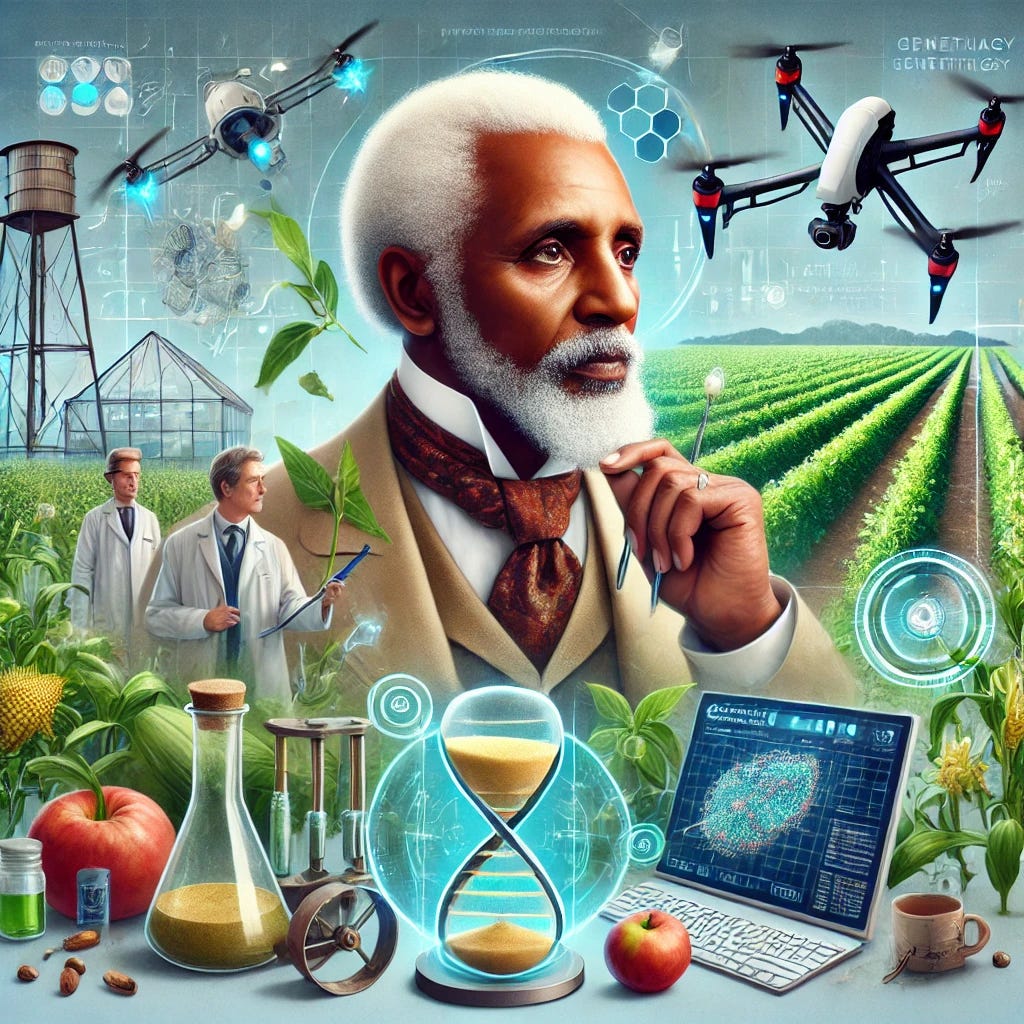
The Cogitating Ceviche PresentsGeorge Washington Carver's Innovations: Advancing Agricultural Science in the Digital AgePast Forward: Historical Icons in the Digital Frontier #18by Conrad HannonNarration by Amazon PollyPrefaceWelcome to the eighteenth installment of our "Past Forward: Historical Icons in the Digital Frontier" series. This series reimagines how legendary figures from history would navigate and contribute to the scientific and technological advancements of the 21st century. Each article blends their timeless wisdom with modern tools and knowledge, exploring their potential impact on contemporary challenges.In this edition, we delve into the remarkable life and legacy of George Washington Carver, an agricultural scientist and inventor whose innovative spirit revolutionized farming practices in the early 20th century. Known for his pioneering work with crop rotation and sustainable agriculture, Carver's contributions have impacted how we understand and approach farming and environmental stewardship.Imagine Carver transported to our modern world, surrounded by cutting-edge technologies such as biotechnology, genetic engineering, and advanced agricultural tools. How would he leverage these new resources to solve today’s agricultural challenges? What innovations might he bring to contemporary practices in food security, climate resilience, and environmental sustainability?"Carver's Innovations: Advancing Agricultural Science in the Digital Age" explores these intriguing questions, envisioning how Carver’s expertise and inventive mind would flourish in the context of 21st-century science and technology. Join us as we bridge the past and the present, highlighting Carver’s enduring legacy and its resonance in today’s efforts to create a more sustainable and productive agricultural future.Introduction: The Legacy of George Washington CarverGeorge Washington Carver, born into slavery in the mid-19th century, rose to prominence as one of America’s most distinguished agricultural scientists. Known for his pioneering work in promoting alternative crops to cotton, such as peanuts, sweet potatoes, and soybeans, Carver’s research and innovations significantly improved soil health and agricultural productivity in the southern United States. His advocacy for crop rotation and sustainable farming practices left an indelible mark on agriculture, highlighting the importance of environmental stewardship long before it became a global concern.Carver’s contributions extended far beyond his famous work with peanuts. He developed hundreds of products from peanuts, sweet potatoes, and other crops, demonstrating their potential for economic and nutritional benefits. Carver’s holistic approach to agriculture emphasized the interconnectedness of soil health, crop diversity, and sustainable farming, making him a visionary in agricultural science and environmental conservation.Imagine now Carver awakening in the 21st century, surrounded by the marvels of modern biotechnology, advanced agricultural tools, and genetic engineering techniques. How would his innate intelligence, resourcefulness, and innovative spirit adapt to and influence contemporary agricultural practices? With access to cutting-edge technologies and a wealth of scientific knowledge, Carver’s potential contributions to modern agriculture are boundless.Engaging with Modern Biotechnology and AgricultureUnderstanding Modern Tools:As Carver acclimates to the 21st century, he would likely be astounded by the advanced tools and technologies available to today’s agricultural scientists. Modern biotechnology offers tools such as CRISPR for precise genetic editing, enabling scientists to modify crops at the molecular level to enhance their traits. Drone technology allows aerial surveillance of large farming areas, providing real-time data on crop health, soil conditions, and pest infestations. Data analytics, powered by artificial intelligence, processes vast amounts of agricultural data to optimize farming practices and improve yields.Carver, known for his meticulous experimentation and deep understanding of plant biology, would quickly adapt to these modern tools. His keen observational skills and methodical approach to research would enable him to harness the power of these technologies effectively. Imagine Carver using CRISPR to develop drought-resistant crops that can thrive in arid conditions or employing drone technology to monitor soil health and apply precise amounts of fertilizers and pesticides only where needed, minimizing environmental impact.Innovative Designs:In the realm of biotechnological applications, Carver’s innovative mind would flourish. Genetic engineering could provide Carver with the ability to enhance crop resilience, nutritional content, and yield. He might focus on developing crops that are more resistant to pests and diseases and fortified with essential nutrients to combat malnutrition. For instance, Carver could work on biofortified sweet potatoes enriched with vitamins and minerals, providing a nutritious food source that addresses specific dietary deficiencies in various populations.Carver’s commitment to sustainability would drive him to explore new sustainable farming practices, combining traditional methods with modern innovations. Vertical farming, which allows crops to be grown in stacked layers indoors, could be an area where Carver’s expertise shines. By integrating traditional crop rotation principles with vertical farming’s efficient use of space and resources, Carver could develop systems that maximize yield while minimizing environmental footprint.Contributions to Contemporary ProblemsAgricultural Productivity:Carver’s contributions to agricultural productivity would be profound. In an era where food security remains a pressing global issue, Carver’s innovations could significantly increase crop yields and ensure a stable food supply. He could leverage modern genetic engineering to create high-yield, climate-resilient crop varieties that thrive under challenging environmental conditions. By developing crops that require fewer inputs, such as water and fertilizers, Carver’s work could reduce the environmental impact of agriculture while boosting productivity.Carver’s impact on climate resilience would be equally significant. As climate change threatens agricultural systems worldwide, Carver’s expertise in developing resilient crops would be invaluable. He might focus on creating plant varieties that can withstand extreme weather events, such as floods and droughts, ensuring that farmers can maintain productivity despite the challenges posed by a changing climate.Environmental Sustainability:Carver’s dedication to environmental sustainability would find new expression in the 21st century. His understanding of soil health and fertility, combined with modern techniques like biochar and microbial inoculants, could lead to groundbreaking advancements in maintaining and improving soil quality. Biochar, a form of charcoal used to enhance soil fertility, and microbial inoculants, which promote beneficial soil microorganisms, are modern techniques that align well with Carver’s principles of sustainable farming.Carver’s resourcefulness would also drive innovations in waste reduction and the promotion of circular economy practices. He might develop methods to repurpose agricultural waste into valuable products, reducing waste and creating new economic opportunities for farmers. For example, Carver could work on converting crop residues into biofuels or biodegradable materials, providing sustainable alternatives to fossil fuels and plastics.Philosophical and Ethical InsightsScientific Philosophy:Carver’s approach to discovery was characterized by a deep curiosity and a commitment to experimentation. His innate curiosity led him to explore the potential uses of various crops, resulting in numerous innovative products and practices. This same curiosity would drive Carver to explore the possibilities offered by modern science and technology. His methodical approach to research, emphasizing careful observation and experimentation, would ensure that his innovations are grounded in solid scientific principles.Carver’s holistic understanding of mechanics and natural resources would influence modern interdisciplinary research. He would likely advocate for a systems-thinking approach to agriculture, where the interconnections between soil, plants, water, and the environment are considered in developing sustainable farming practices. This interdisciplinary perspective would encourage collaboration between agronomists, biotechnologists, environmental scientists, and policymakers to address complex agricultural challenges.Ethics in Biotechnology:Carver’s respect for nature and commitment to sustainability would guide his approach to biotechnology and genetic engineering. He would emphasize the ethical considerations of using these powerful tools, ensuring that they are applied responsibly and for the benefit of society. Carver might advocate for transparent and inclusive discussions on the ethical implications of genetic modifications, balancing the need for innovation with respect for natural processes.Global collaboration in agricultural research and development would be another area where Carver’s inclusive approach to knowledge shines. He would likely promote international partnerships to share knowledge, resources, and technologies, ensuring that advancements in agricultural science benefit all nations. Carver’s vision of a collaborative and equitable approach to innovation would inspire a new era of cooperative scientific discovery.Educational and Inspirational ImpactSTEM Education:Carver’s practical approach to agricultural science can inspire hands-on learning in modern education. Educators could develop curricula incorporating Carver’s experimentation and discovery methods, encouraging students to engage directly with plants and soil. For example, students could conduct experiments to test the effects of different fertilizers on plant growth or explore the benefits of crop rotation through classroom gardening projects. These hands-on activities would make science more accessible and engaging, fostering a deeper understanding of agricultural principles.Promoting creative problem-solving and critical thinking in STEM fields, inspired by Carver’s legacy, can transform education. Carver’s ability to develop innovative solutions to agricultural challenges would encourage students to think creatively and approach problems from multiple angles. Educators could use case studies of Carver’s work to illustrate the importance of interdisciplinary thinking and persistence in scientific research.Inspiring Future Generations:Presenting Carver as a role model for aspiring agricultural scientists and environmentalists emphasizes his enduring influence. His dedication to improving farming practices and promoting sustainability highlights the impact that one individual can have on society. By showcasing Carver’s achievements and methodologies, educators can inspire students to pursue careers in STEM with the same passion and commitment.Incorporating Carver’s story and insights into educational programs can inspire curiosity and a love for innovation. Schools and universities might develop courses that explore Carver’s contributions in a multidisciplinary context, integrating agriculture, biology, and environmental science. Science museums and educational websites could create interactive exhibits or virtual tours that bring Carver’s discoveries to life. Additionally, annual competitions or events around Carver’s work could encourage students to engage with his legacy creatively and practically.We can cultivate a deeper understanding and appreciation of agricultural science by embedding Carver's methodologies and achievements into STEM education. His legacy encourages students to engage actively with scientific questions, think creatively, and pursue their discoveries passionately and persistently. This approach not only honors Carver’s contributions but also prepares students to become the innovative thinkers and problem-solvers of the future.Conclusion: Carver’s Modern ResonanceIn this speculative narrative, George Washington Carver’s journey through modern agricultural science exemplifies the synthesis of ancient wisdom and contemporary technology. His innovative spirit and dedication to sustainability resonate deeply with today’s challenges, highlighting the timeless nature of curiosity and the pursuit of knowledge. Carver’s enduring legacy continues to inspire and guide us as we navigate the complexities of modern agriculture and strive for a more sustainable and equitable future.Thank you for your time today. Until next time, stay gruntled. This is a public episode. If you'd like to discuss this with other subscribers or get access to bonus episodes, visit thecogitatingceviche.substack.com/subscribe
Embed this episode
NOW PLAYING
George Washington Carver's Innovations: Advancing Agricultural Science in the Digital Age
No transcript for this episode yet
Similar Episodes
No similar episodes found.
Similar Podcasts
No similar podcasts found.