
EPISODE · May 6, 2026 · 45 MIN
Gestalt Principles in Modern Interface Design
from HCI Explained · host HCI Explained
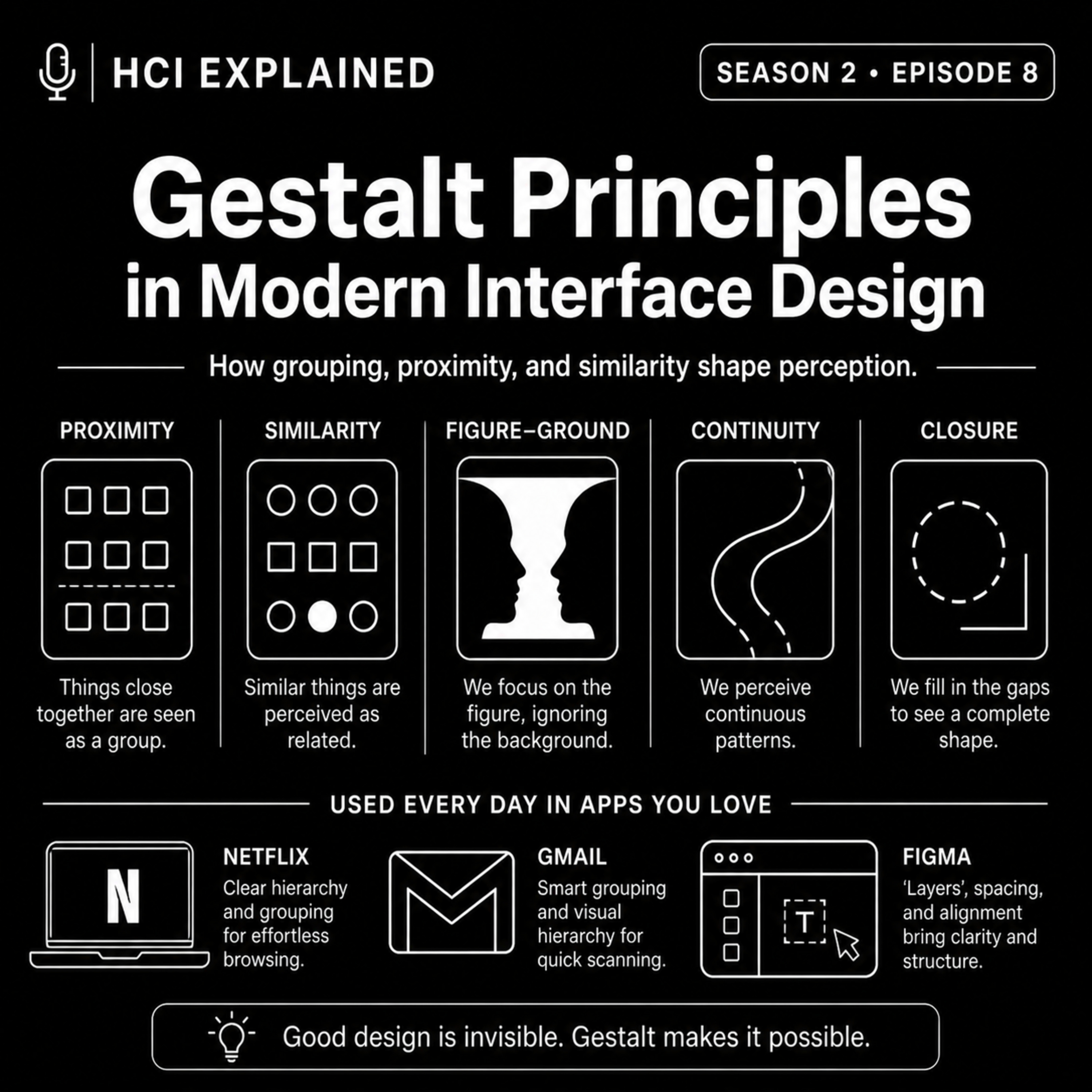
Why does a button feel clickable? Why do some interfaces feel intuitive almost instantly? And why can cluttered apps feel exhausting to use? The answer often comes back to a set of ideas from early psychology known as Gestalt principles. In this episode of HCI Explained, we explore how principles like proximity, similarity, figure-ground, continuity, and closure quietly shape the way people perceive digital interfaces every day. We break down how designers use these principles in products like Netflix, Gmail, Figma, iOS, and Android to guide attention, organise information, and reduce cognitive load without users even noticing. Along the way, we unpack: • Why the human brain naturally groups things together • How spacing can completely change usability • Why visual hierarchy matters more than decoration • Common interface mistakes that violate Gestalt expectations • How to start recognising these patterns in everyday apps This episode is designed for anyone curious about design, UX, psychology, or how interfaces communicate visually without words.
Embed this episode
Ready to play
Gestalt Principles in Modern Interface Design
No transcript for this episode yet
Similar Episodes
No similar episodes found.
Similar Podcasts
No similar podcasts found.