
EPISODE · Jan 19, 2020 · 21 MIN
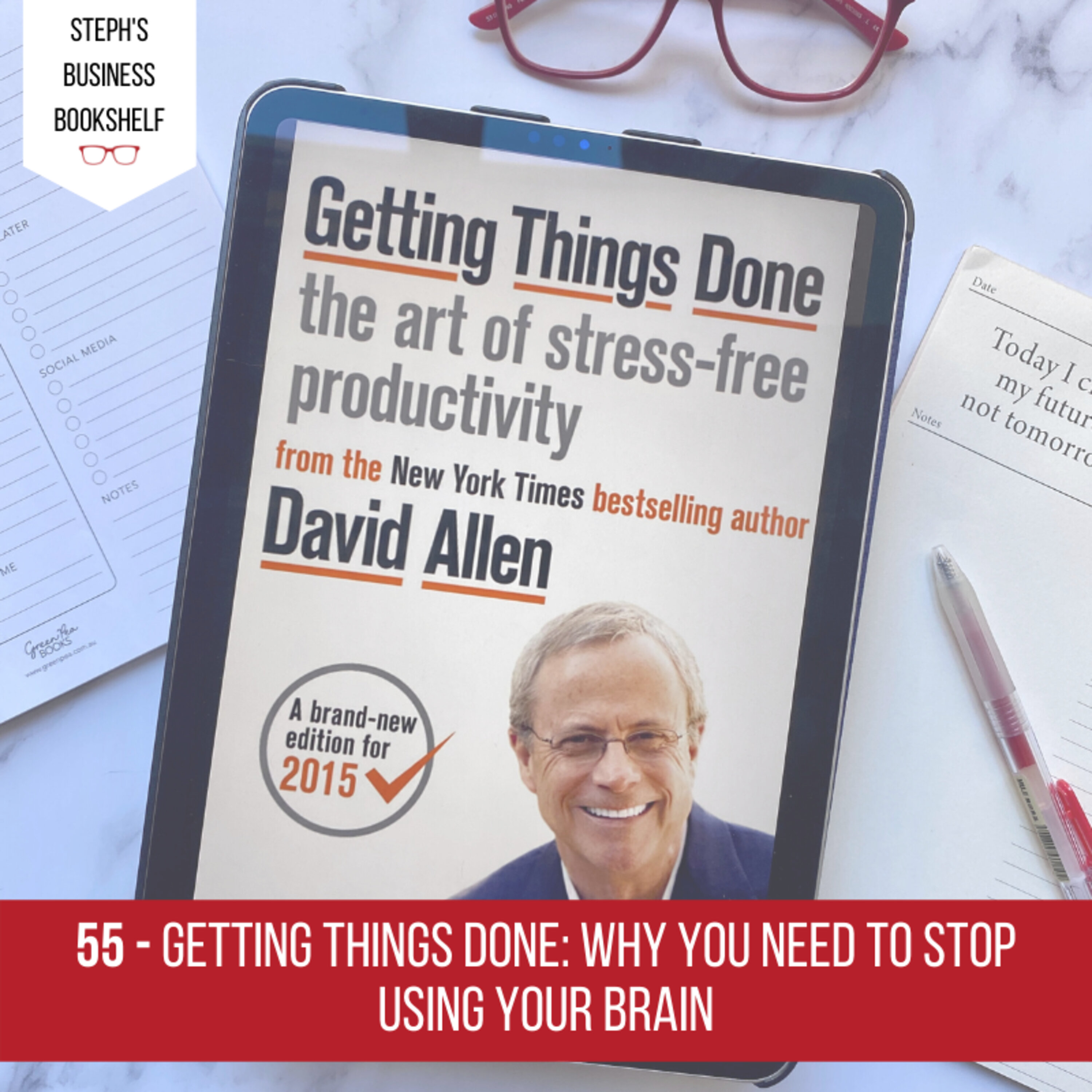
Getting Things Done by David Allen: why you need to stop using your brain
from Steph's Business Bookshelf Podcast · host Steph Clarke
Want to get productive in 2020? This book could be for you. About the authorProductivity king David Allen is considered one of the world's leading authorities on getting things done. He has spent over three decades researching, teaching and coaching, and has beenrecognised as one of the top executive coaches by Forbes and the top 100 thoughtleaders by Leadership Magazine. David has written three books, including the 2001bestseller, Getting Things Done: the Art of Stress-Free Productivity, and his GTDprogram has received tremendous praise and is in widespread use.Source: https://www.thegrowthfaculty.com/onDemand/author.php?id=001D0000028npfcIAA Click here to buy on The Book Depository https://www.bookdepository.com/Getting-Things-Done/9780349408941/?a_aid=stephsbookshelf About the bookGETTING THINGS DONE® is a personal productivity methodology that redefineshow you approach your life and work.In today's world, yesterday's methods just don't work. In Getting Things Done,veteran coach and management consultant David Allen shares the breakthroughmethods for stress-free performance that he has introduced to tens of thousands ofpeople across the country. Allen's premise is simple: our productivity is directlyproportional to our ability to relax. Only when our minds are clear and our thoughtsare organized can we achieve effective productivity and unleash our creativepotential.Source: https://www.amazon.com/Getting-Things-Done-Stress-Free-Productivity/dp/0142000280 LinksRead more about the method here: https://gettingthingsdone.com/what-is-gtd/ BIG IDEA 1 (4:02) - Outsource your brain The fundamental principle of this method is that your brain is not designed to remember much. Every one of us is holding many things in our brain and according to David Allen, our brains can only hold four to seven items as memories. “Our brains are designed to generate ideas, not hold them”. David wants us to free our brains from the shackles of remembering things and instead use them for what they are designed for; great ideas. Therefore we need to develop external systems to outsource and help our brains with the mental load of remembering things. This helps avoid distraction and overwhelm. BIG IDEA 2 (5:57) - Collect and clarify The first step of this method is downloading everything. Clear our brains and download all the things we’re holding on to a piece of paper (or likely multiple pieces of paper!). The in-tray is an important part of his method, this is where all the collation happens as you put all the items from your brain into a physical in-tray. Next we go to the processing stage. Once you get all the pieces of paper in the intray you need to process them one at a time. An important rule is that you only touch everything once so it gets processed straight away. The next thing to ask for each item in the in-tray is “what’s the next action?”. David sets out five specific lists which items are collated into. These lists are; 1) projects (things which require more than one action), 2) reference materials (things you need to look back on at some time), 3) someday maybe (for those pipe dreams and big ideas), 4) waiting on (for things that you’re waiting on someone else to action before you can) and 5) next actions (the collation of all the ‘next actions’ you need to take). This brings us to the point of processing, collecting and clarifying what needs to be done BIG IDEA 3 (11:28) - Your next action is key A critical principle of GTD is that *everything* needs to be boiled down to the next action. In the book, David talks a lot about processing your next actions in between your fixed meetings or hard commitments in your calendar. He also argues that your calendar is ONLY for your hard commitments. So when you have time in between your meetings, you would start working on your next action plan on the list. I didn’t love this specific element of the model as I feel that ‘doing the work’ (which may well be your next action) needs scheduling in your calendar, as relying on the cracks of time between meetings just won’t cut it. The book was written in 2001 so this could be a reflection on how work has changed in the last 19 years. Music By: Through the Fire – Instrumental Version Song by Michael Shynes Support my book habit: https://www.buymeacoffee.com/stephsbookshelfSee omnystudio.com/listener for privacy information.
Embed this episode
NOW PLAYING
Getting Things Done by David Allen: why you need to stop using your brain
No transcript for this episode yet
Similar Episodes
No similar episodes found.
Similar Podcasts
No similar podcasts found.