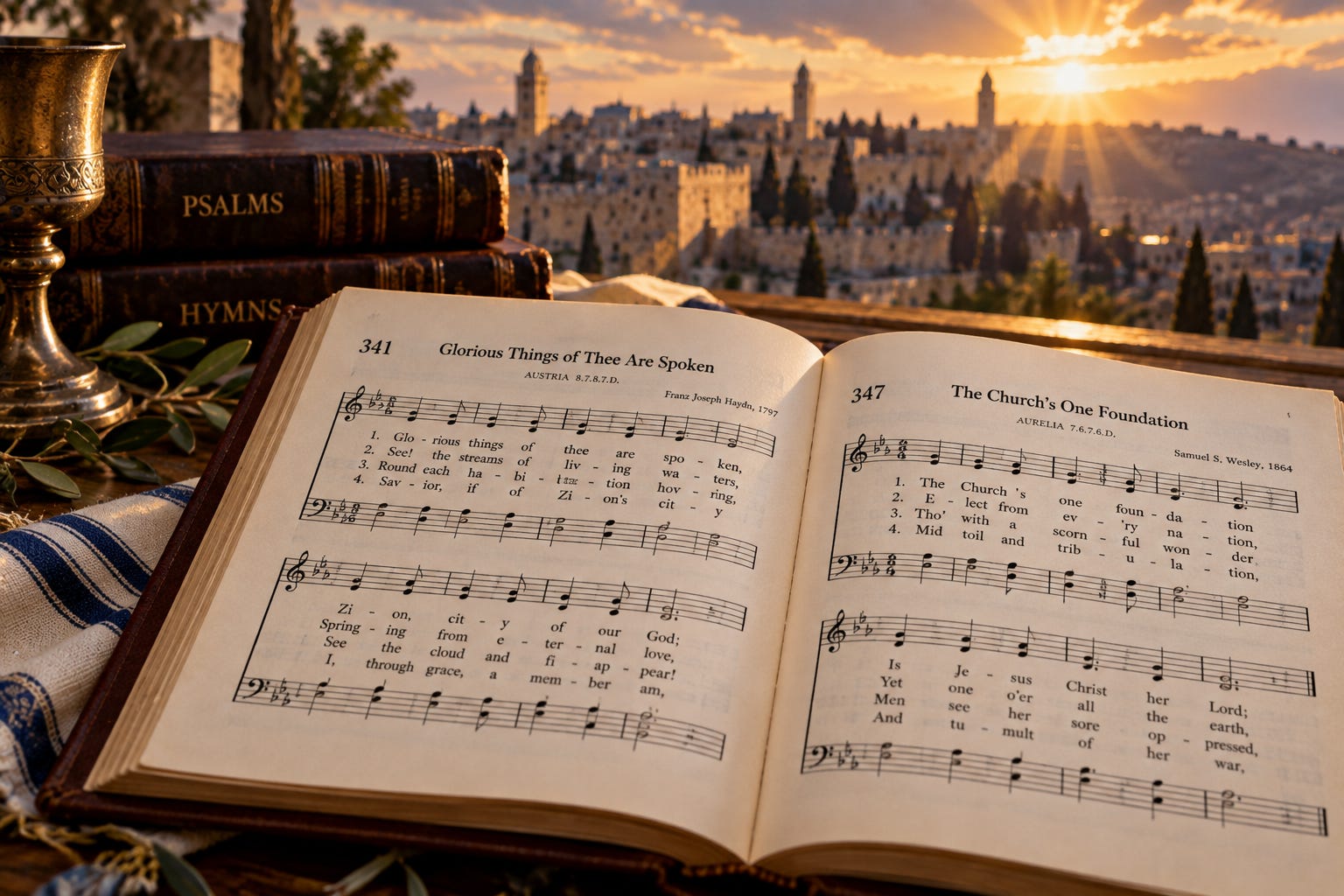
Glorious Things of Thee Are Spoken
from Reflections on the Psalms Podcast Hosted by William Conley
Psalm 87: Glorious Things of Thee Are Spoken The City of God and the Conversion of the Nations This is Reflections on the Psalms for October 17, 2026. When we come to Psalm 87, we come to what is probably the most mission-oriented psalm in the whole Psalter. I have titled this reflection Glorious Things of Thee Are Spoken, after the hymn written by John Newton. Let me read the first verse. Glorious things of thee are spoken,Zion, city of our God;He whose word cannot be brokenFormed thee for His own abode.On the Rock of Ages founded,What can shake thy sure repose?With salvation’s walls surrounded,Thou may’st smile at all thy foes. And then there is another great hymn, The Church’s One Foundation, written by Samuel John Stone. The first verse reads: The Church’s one foundationIs Jesus Christ her Lord;She is His new creationBy water and the Word.From heaven He came and sought herTo be His holy bride;With His own blood He bought her,And for her life He died. And the second verse: Elect from every nation,Yet one o’er all the earth,Her charter of salvation,One Lord, one faith, one birth;One holy Name she blesses,Partakes one holy food,And to one hope she presses,With every grace endued. These hymns are speaking of the glorious future of the Church. And when you look at Psalm 87, you cannot help but be overcome by this glorious expansion of the city of God. Christopher Ash, in his commentary on the Psalms, makes an observation that I think gets right to the point. He describes Philistia as Israel’s ancient and persistent enemy, Tyre as the wealthy northern neighbor who was more of a seducer than an oppressor, and Cush as representing the distant nations of the world. From all these nations—proud, hostile, wealthy, powerful, and distant—men and women come to know God. John Calvin makes a remarkable observation: What a glorious distinction of the church, that even those who held her in contempt shall come flocking to her from every quarter, and that those who desired to see her completely cut up and destroyed shall consider it the highest honor to have a place among the number of her citizens. When you read this, it is astonishing. And I think sometimes we need to remember Psalm 87 when we read the rest of the Psalms. There are passages where terrible judgments are pronounced against nations, and we may be tempted to conclude that God must hate those nations. Remember Psalm 137, where we read concerning Babylon: Blessed shall he be who takes your little ones and dashes them against the rock! —Psalm 137:9 You read something like that and think, Well, God must really hate Babylon. But then we come to Psalm 87. And what do we read? Glorious things of you are spoken, O city of God. Among those who know me I mention Rahab and Babylon; behold, Philistia and Tyre, with Cush—“This one was born there,” they say. And of Zion it shall be said, “This one and that one were born in her”; for the Most High himself will establish her. The LORD records as he registers the peoples, “This one was born there.” —Psalm 87:3–6 Look at what is happening here. Babylon, the great enemy of God’s people, is now numbered among those who know God. Egypt, represented by Rahab, is there. Philistia is there. Tyre is there. Cush is there. The enemies of the Church are becoming her citizens. And not merely citizens. They are counted as those who were born in Zion. God is fulfilling the Abrahamic promise. Abraham was to become the father of many nations, and through him all the families of the earth would be blessed. Here we see that promise unfolding. And when you come to the book of Revelation, you see the great multitude gathered from every nation, tribe, people, and language, standing before the throne and before the Lamb. This is the glorious future of the Church. And I think what this tells us is that whenever we read of God sending judgment upon a nation, whenever we see the wrath of God against a nation, we must not simply confuse that wrath with hatred toward all its people. God opposes sin. He opposes wickedness. He opposes injustice, and He opposes these things forcefully. But look at what He is doing. The same Babylon that comes under terrible judgment is named in Psalm 87 among those who know God. God’s judgment against the wickedness of nations does not mean that He has no purpose of mercy toward those nations. His opposition to their sin is not contrary to His call for them to turn to Him. And although many will not turn, that does not detract from what God is doing in the world. He is gathering the nations to Himself. He is calling all peoples to repentance. And this psalm stands as a glorious testimony to that fact. We must read the judgment passages in the light of this larger biblical story. God is fulfilling His promise to Abraham. The nations are being brought into the city of God. We do not need to shrink back from declaring the whole gospel to all peoples, every one of them. The gospel is to be proclaimed to every nation, every tribe, every tongue, and every people. And when we call them to come to Christ, we can do so sincerely, knowing that the invitation is genuine. The well-meant offer is real. It is really well meant. Amen. This is a public episode. If you would like to discuss this with other subscribers or get access to bonus episodes, visit william945.substack.com
Embed this episode
No transcript yet.