Good morning, end of the week. Good to be with you. You may have noticed I was on vacation last week, and when you're back up, doesn't have a back up, you get a video. I'm sorry for that experience.
It's not a plan that we generally go with, but we needed a plan. When we're working on a different plan, a better plan. So, less videos. But I did learn your video was short, meaning you owe me 10 minutes.
So, we're going to add that potentially. It's just in my bank anyway. So, it is a communion Sunday this morning where we'll, at the later part of the service, we'll share it in the Lord's Supper today. I wonder how your summer's going.
How many trips you have. I realized we can't have this conversation now. So, I will just be, tell you about a trip I liked when I was a kid. It was Cedar Point.
We didn't go out of state until I was 12 years old. I didn't know there were things outside of Cedar Springs. And we were going to Cedar Point, which is, you know, Ohio. So, we had this long road trip, and I was told what it was going to be like.
And I'm like, that sounds fun. It sounds nothing like Cedar Springs. And I remember as we were driving the anticipation, and after driving what seemed like a long time, it was only two or three hours. So, we're at the south part of the state.
I see something in the sky. I mean, on the horizon, it was in the sky. It was up high. And I'm like, is that it?
Am I dead? No, that's a corn dryer. And it was just some machinery and equipment. I'm like, oh, then then we went on further, and then we got in, and there was water, and all of a sudden I seen the top of this thing called a magnum.
Back in the 80s, that was the tallest thing. And I think for many of you, you're kind of tasting some memories right now. I just want to get that in your mind, because our song this morning is dealing with a destination and a journey. The title was called, God is my Son.
I'd like to invite you to stand, and we will read from Psalm 84. Again, when I say, we, I usually mean me. So I will read, and then I'll pray. Psalm 84, how lovely is your dwelling place, O Lord of Host.
My so long, yes thanks for the courts of the Lord. My heart and flesh sing for joy to the living God. Even the sparrow finds a home, and the swallow and nest for herself, where she may lay her young at your altars, O Lord of Host, my king and my God. Blessed are those who dwell in your house, and ever sing your praise.
Blessed are those whose strength is in you and whose heart are the highways to Zion. As they go through the valley of Baca, they make it a place the springs, the early rain also covers it with pools. They go from strength to strength, each one appears before God in Zion. O Lord God of Host, hear my prayer, give ear O God of Jacob, behold our shield O God, look on the face of your anointed.
For a day in your courts is better than a thousand elsewhere. I would rather be a doorkeeper in the house of my God than dwell in the tents of wickedness. For the Lord God is a son in shield. The Lord bestows favor and honor.
No good thing does he withhold from those who walk uprightly. O Lord of Host, blessed is the one who trusts in you. Father as we just have heard your word, we probably have a little adjusting to do because we are a New Testament people. We are people of the covenant of Christ and we are reading of the experience of the Old Testament people who were of the covenant of law and sacrifice.
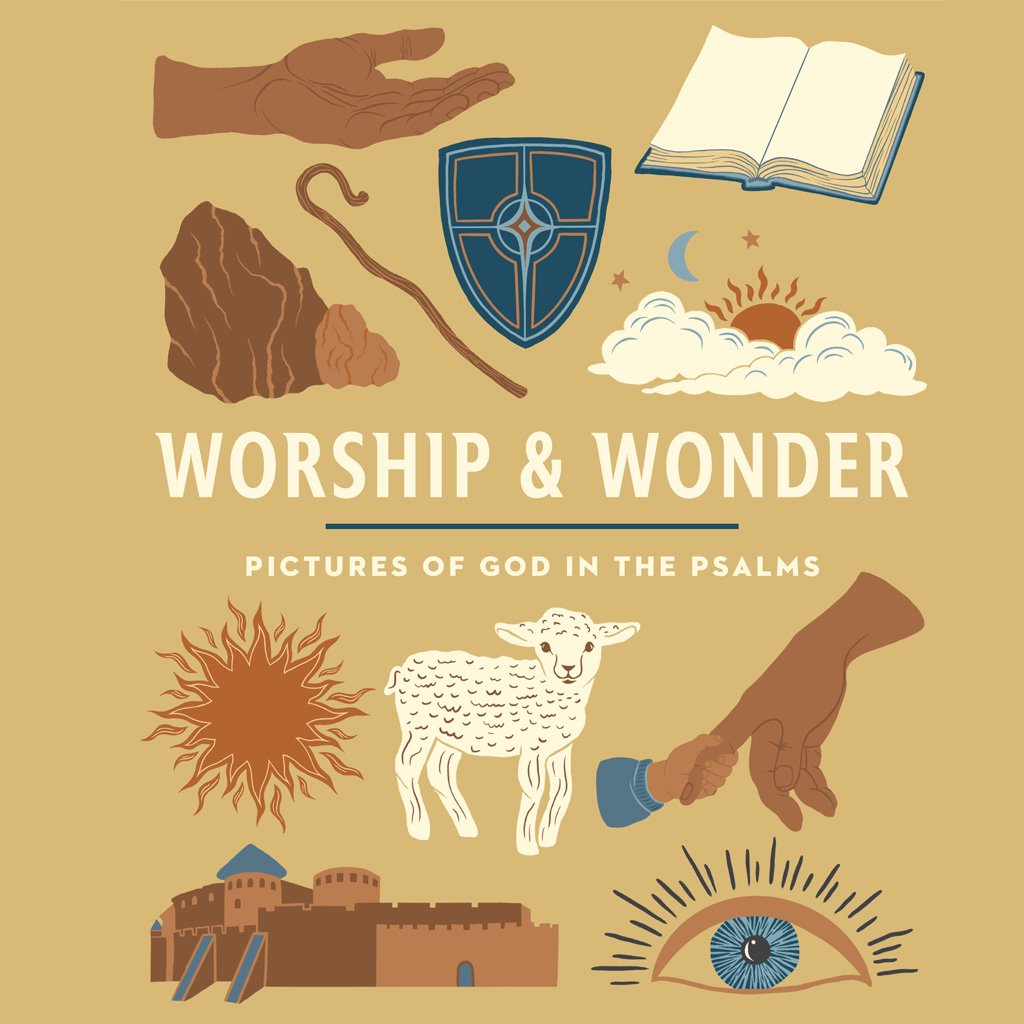
Father I pray that your spirit would enable me to teach, enable us to hear and make that adjustment so we could see that what we have in common with them is the ability to be in your presence and we have only a taste and a small idea of what that is in large, our capacity for that, this morning in Jesus name, amen. Please be seated. Well, we are gonna be in Psalms here for a bit this summer and the Psalms, we've kind of taken the idea of pictures of God in the Old Testament. So we did God as a shepherd and we did think was God as a rock last week and this week will be God as the son.
I talked last time I was with you out of Psalms 23 and we just noticed that they are songs. Psalms are songs and they have various authors like David and his son Solomon, Asaph and then this morning we see the sons of Cora are the author here. The subtitles in Psalms often give us a lot of information. For instance, it says to the choir master according to Gittis, the psalm of the sons of Cora.
So a choir master, again, that just gets our minds in the lane, we're talking about a song, we're reading a song, Gittis, I don't know what that is. And most people don't, they think it could be an instrument or it could be a style of music. This is not really sure. And so when my people I read aren't really sure, that's the lane I stay in.
But what we are looking at in the Psalms is the people of God as they write songs, they're meditating, they're using their imagination and their experience of God and they're writing about their expectations, they're writing about their life, they're writing about their disappointments, they're writing about their longings. And as they're doing this, they're writing them in songs. I would encourage you to read Psalms because when you read them, you're gonna find out that you're not crazy and that you're not alone. There's Psalms, there's the Psalms that says, God would you break the teeth of my enemy?
You ever get in that space? And there's some where there's pouring their heart out. There's some where there's this in anguish and like, where are you God? It's still dry.
If you just ignore me and you can ignore me forever, I would just encourage you to read Psalms because you're gonna find that you're not alone and you're not crazy. This Psalm is written by the sons of Cora. It's about a journey and it's about a destination. That's why I talked about Cedar Point as a journey and a destination.
In this case, the destination is the temple and the journey is the path that was taken. We need to learn a little bit about their destination. No, so I wanna just talk a little bit about the Old Testament. When we know the people of God, which were called the Israelites, they were under occupation of the Egyptians for 400 years.
God raised one of them up named Moses to lead his people out from Egypt. Moses had a brother named Aaron. In Moses and Aaron were the tribe of Levi. Just keep that in your mind.
But as God asked Moses to lead his people out, God had him set up a place called the Tent of Meeting. And that was where Moses met with God on behalf of the people. They traveled for decades to get to their destination. When you have heard of the Ten Commandments, they were given an Exodus 20.
Moses goes up at a mountain and he gets these tablets of stone. But he got more than tablets of stone. He got instructions for the tabernacle. And the tabernacle is a mobile place for a mobile people.
This people of Israel, they are being delivered and they're traveling through the wilderness and God, like, hey, let's upgrade the tent of meeting. We're gonna make this tabernacle. It was amazing detailed, portable place for the mobile people of God. Going back to Aaron, Moses's brother, he had three sons and they were tasked with carrying this mobile tabernacle.
In particular, co-half was one of his sons. And what their job was to do, after everything was packed up, they were to put it on their shoulders or they were to carry it and they were walking. The co-athites were the, I wouldn't say laborers because they're carrying around God's building. It was kind of a big job.
Cora is in the line of co-hats, this people that were carrying it. At one point, they were carrying it. They were doing all the work. And Moses seemed to be getting all the glory because he just stood and talked and met with God.
But the laborers were like, you've gone too far, Moses. You're taking too many liberties. We're doing all the work and you're doing all the glorious things. God was not happy with co-hats and his sons because they rebelled against God.
It's recorded that God did this little test with them to prove who was with God and who was standing against God and that ended up being co-hats and his sons. And the ground opened up and it swallowed 250 of them. As we read that story in numbers, I would say, but not all the sons of co-ath died. The sons of Cora lived.
So these were probably little guys who weren't involved with the rebellion. It is these guys who wrote this song. It is these guys who were involved in the tabernacle. It is these guys who had a place in the temple.
So as they get to the land of Jerusalem and they build this permanent place for a planted people, they're in their land now. They have roles in this tabernacle of serving God. One of the, just take all those things in mind. We're talking about the temple and what they all have in common is God wanted to meet with people.
That's what they had in common. God wanted to be with them. And the sons of Cora got it. They're like, this is a beautiful place because this is where God has chosen to put his presence.
So the sons of Cora had a story. They had a hard story, but they knew one thing about the temple, it is where God was. So here's their song. How lovely is your dwelling place, O Lord of Host.
My little longs, yes thanks for the courts of the Lord. My heart and flesh sing for joy to the living God. Can we let the living word of God this morning challenge us? I want to provide like a minute and a half of meditation for you.
This is something a little bit out of my field that I don't normally do. I'm going to play a part of a song with lyrics. And I would invite you, just open your mind and heart to God this morning and lie to him, check your heart about how you feel about his presence. I would encourage you to notice the gap that might be there between these words and the Psalm and your own appreciation and apprehension of God's presence.
I'd encourage you to let it stir in you a conviction, even an encouragement. Whatever God wants to do, can we just let him do what he wants to do this morning? Here's what I'd like us to listen to. I said that author of that song did not work too hard to come up with lyrics.
He lifted them off of the Psalm that's before us today. I wonder what it was like if you felt a gap or otherwise. The Psalms says, how lovely is your dwelling place? Lovely.
You ever hear the snide comment that this person that has a face only a mother could love? What are they saying there? They might be saying, I've seen prettier faces, but they're also saying something about the mother's love for that face. And they're saying less about the face.
When the Psalmist says, how lovely is your dwelling place? He's not just talking about the building, like this is a magnificent building. He's saying, this is lovely because your presence is here. It was a beautiful building.
We're gonna see the strays, Lord of hosts. And what does that mean? I just like you to invite you to maybe one of those times when you read Revelation and you really got weirded out because we see Jesus Christ writing on this, stallion with his name written on blood and a sword coming out of his mouth and behind him is a myriad of angels. He's saying God of angel armies.
How lovely is your presence, God of angel armies. It feels like paradox, doesn't it? It's like going in a military tent and saying, this is amazing here. Yahweh armies.
What was he saying and saying is he was saying, you are strong and you are safe. You can kill me and you love me. This is our God. So good, so strong.
And it's almost the same. I just longed for his presence. I faint to be in this space. It seems like the sons of Korah are fully alive, doesn't it?
Longing and fainting and singing? Well, they're fully alive because of the living God. And they're not just seen here that God, you are a living God. What they're saying is you are a life-giving God.
God, what I mean, your presence, I become fully alive. I don't become just a brain. I become a full person who feels and tastes and moves and thinks of life-giving God. Jesus, now we'll jump into the new testament and some space that we're familiar with.
They ask him, what is the greatest commandment? And he says, well, it's the love of your God with like a heart, mind, soul and strength. Don't we see the sons of Korah doing this here? Soul, longing, fainting, heart and flesh, singing for joy.
Friends, nothing else, no one else, is worthy of our whole being like this than God. Nothing else and no one else can make us that alive. You can go to a sporting event which makes some people into people that they're not. This is the radical fanness, like their chests are painted.
And you probably wouldn't recognize that guy as your neighbor. He's partially alive in a certain way. God can make us fully alive. This is a joyful pilgrimage song.
Pilgrimage, they're traveling. But there are songs that are pilgrimage songs that are written in deprivation. Meaning they didn't get the destination. They didn't get what they were longing for.
Song 42 is one of them. And often this song comes soft and gentle, but it's actually a deprivation song. And it goes as the deer pants for the streams of water. So my soul pants for you, my God.
My soul thirst for God, the living God. When can I go and meet with God? Our song this morning, they were going. This one is like, what's gonna happen?
I'm panting and I'm thirsty. And in your mind, you might go to, oh, the beautiful deer. It just wants a drink. No, it's that deer that's been running and it's dehydrated.
I mean, one morning I was going to work and I black ran across in front of me. And it was during the rutsies. And then he stood off and the sun was coming up behind him, but it's not, was dripping from his face. And he's standing there, he's panting.
Because he'd been running all night and he didn't get what he was after. And he was becoming deprived. This is a song in 42 where there's deprivation. I didn't bring that in.
Some of us here this morning are deprived of the presence of God. We're not enjoying it. And when we are deprived of the presence of God and we're not enjoying it, what do we do? We go for the lesser imitation that gives us a fix.
And you pant and you thirst. Can I suggest to you, if I'm speaking to you right now, you're thirsty, what you're actually wanting is the one living God who can make you fully alive. You and I both need to meet him regularly and desperately. Back to our joyful song.
He says, even the sparrow finds a home in the swallow and nest for herself where they may lay her young at your altar's old Lord of hosts, my king and my God. So I see your point. Remember I said the first thing you start to scanning the horizon? Well, for the journey you're on their way to Jerusalem to the temple, the first thing they're gonna see is the top of the building and what lives at the top of the building but birds.
So this is the journey in sparrow, swallow. And they assume notice the birds. This is a meditation as well. So we're not just learning details about what the visitors saw.
This is another appreciation for the safe and strong nature of God. God dwells here and these birds live there. The birds are so accustomed to it that they want to nest there. They want to bring their young there.
They want to raise their family in this space around, not just the presence of God, but the altars. And the altars are where the reconciliation was taking place where the sacrifice was being done. Please let this blow your faulty idea of God. So in my neighborhood I grew up in, there was an old man who had a pellet gun inside his house next to his recliner chair and he would shoot the starlings on his bird feeder right outside his window.
And I'm like, are you a bird racist? Like, why are you shooting the starlings? Well, they're ugly. I'm like a bird, this is like the ones that are pretty.
Anyway, that's the thing I got into with him. But God does not like that. He's not shooting the starlings. He's created this place that's habitable.
Where's it habitable? Where the altar of God is. Where's our altar, friends? It's Christ.
He was the sacrifice. Raise your young there, safe. Notice the psalmist now takes a personal thing. He's my God and my King.
Not only am I in this military tent, so to speak, but he's my God and he's my King. Those pronouns are for you, too. Verse four, blessed are those who dwell in your house every single in your praise. So as they approach the temple, they see in the top verse and they see in the birds, but once they can take in the whole building, they realize there are people that live here and work here.
Remember that moment at theater point when you notice the people in the uniforms? We're like, they get to work here. Like how awesome of a job that would be. Of course, that's a 12 year old perspective.
But it is like, wouldn't that be amazing to work there? And the psalmist is similar in this space. Who was he talking about here? He's talking about again, Moses had a brother named Aaron who had sons and his sons were the ones who got to dwell at the temple and take care of the thing.
Blessed, happy are those who live here. Not because it's an awesome building. Again, it's because God has chosen to put his presence there. So our minds like to just make correspondence and he's talking about the church this morning.
Like, no, he's not. This place is boring until you are here. This place is dead until the word of God and his spirit and field of people come. Now we're talking about that.
Wednesday, like there's nobody here. Like I don't even want to be here on Wednesday. If you hear the pipes rattle and nothing else. Where was I?
Happy are those who live here. There's the word sala. What does that mean? Well, there's a music group named sala.
But they're again, it's kind of like, get this. Not everybody has agreed what this is. So I'm going to call it. What they generally agree is signifies a transition.
And I'm going to give you an opinion now. This is mine. So don't inscripturate this. But I think the sala provides us a place to think about that.
Think about that first section. Think about the experience of longing for God's presence and measure it against your own. Think about the trust that the psalmist had and the character of God. Think about him noticing and appreciating the lesser details along the way.
Think about that. Sala. Well, next, after this transition, we're going to go into the journey. So again, from my crude metaphor, go back to Cedar Point.
I want to go back to West Michigan and think about the journey. Blessed are those whose strength is in you and whose heart are the highways to Zion. This word bless me is happy. It's not just some weird Christian thing that we say.
I mean, you're happy. Like truly happy. It's not happy because I happen to happen happily. It's happy because all is well.
With God my creator. Think about this for a second. Not all the travelers on 96. We're going to Cedar Point.
You ever going back in my mind's eye? You think everybody in this road's going to Cedar Point and there's somebody in them ahead of us, right faster, Dad? Right? Well, not everybody sitting with us this morning is enjoying God's presence.
Not everybody with us in our neighborhoods or on the roads are longing for his presence. But the ones that are, there's something about them and it's a strength. They have a strength in the Lord. A characteristic of having peace with God, I believe, is we have a future that back feeds into today.
The promise blessing of seeing God face to face every tear wiped away back feeds in today. Into today, Romans 5 would say something to the fact of, just look at it. We have been justified through faith. Since that's the case, we have peace.
This justification that I promise, it brings me peace. It brings me grace. It brings me a place where I could stand and rejoice in the hope, Romans 5. It's meant to back feed in today, in today, and the journey for the man going to the temple or the family going to the temple was that it was back feeding into the journey.
It wasn't just a destination, it was a path. Here we can think about our application, we're on a path. And we have a destination, and our destination of being with God in a physical sense, should back feed into being with God in a spiritual sense throughout our days here. We can call these people, temple destination people.
Their destination was the temple, which was God's presence, and NIV calls them pilgrims. Blessed are those whose strength is in you, whose hearts are set on pilgrimage. If you would have walked alongside them, I think what was going on in their heads would be, I know who I am, and I know who's I am, and it's marking their journey. Can you frame the events of your life with an understanding of a loving God who sent his son to die in your place, and will joyfully receive you unto himself?
Can you do that? This almost was on this journey. This is strengthening, this is living hope. It's a realization that what I believe matters today.
I'm not saying the events of our lives are gonna be pleasant. I'm asking the question, can you frame them in reference to a good and loving God who loves you? The travel order to the temple went through valleys. He had opposition, he had enemies on the road, he had harsh terrain.
As they go through the valley of Vaca, they make it a place of springs. The early rains also cover it with pools. As they go, they change the nature of the thing. That's what I'm saying here.
So you ever go to meet someone in a hospital and somebody's changing the presence of that room? One of the things, I love a lot of things about Enzil. But one of the things that I love about Enzil, the word that I hear often, that they like the atmosphere. I think I know what they're saying.
They like what they experience when they come in. It's not just their kids' program, it's not just the students, it's not the speaking, of course. It's all of us together being in the same place. You've been in a nursing home, you go to visit somebody, you've been in a place of sorrow and somebody can actually change that atmosphere.
And it's the one who is strengthened by the Lord because they can see things that aren't present. We could say that God does that indirectly through the pilgrim. He's changing the atmosphere through the one who's going to his destination that back feeds into his journey. And he does it indirectly through the rain.
So we get the people of God who can change the atmosphere, then God rains. He brings things that bless and change circumstances. That's who he is, the nature of God and his people in the valleys. What we're talking about here, if you're in love with theology, we're talking about common grace and special grace.
Common grace is the rain that falls on every farmer's land when it rains, like the three inches yesterday. Maybe that was too much. But we're all talking about special grace. That's found in his word and found in his son, it's found in his spirit and it's found in you and I.
Common grace, special grace. Well, they go, not just they have a strength, but they go from strength to strength. In each one of years before God and Zion, strength to the strength. So I want to hold this together.
What is the first strength? The first strength was found in verse five. They're the ones who have their strength from God, not their own. That's the first strength.
What is the second strength? It gets its strength from the first strength. I know where I'm going. That's my first strength.
I know who my God is in it. It gives me energy for today. It gives me energy for the past. We also bow our one another strength.
Don't we? That's another way we can think about going from strength to strength. My wife is a good example of this in my marriage. In a while, one of us has a wheel come off, so to speak.
And we need the strength of the other person to walk us out. And it's rather unpredictable whose wheel's going to come off. But God never has our wheels both come off at the same time. Strength to strength.
I would encourage you if you don't have people on the journey with you in terms of accountability. I have friends who I'm accountable to. And that's a strength to strength. One of us might take a stumble or take a trip.
The other one would bring an encouragement, a strength to strength. I have one friend who I've been in accountability with for, oh, my goodness, probably two decades. And there are those moments in time when I have to confess that it happened. And he said on numerous times, he says, Brett, we're going to make it.
We're going to make it. It's so strengthening to me. It's not like, oh, man. He doesn't.
That's not strength. It's a strength that's proclaiming what is true. We have a destination. And it's back leading in today.
And yeah, you've stripped. But I'm not tripping right now. And there's times when I've said it to him, probably with Christ, we're going to make it. We're going to make it to the temple because of him, not because of us.
We're going to peer before God. Oh, Lord, God, I've host here my prayer. Give it your, oh, God, God of Jacob. Say, la, we are approaching another transition.
God of angel armies, this one who's coming in the clouds with a myriad of angels, hear my prayer, use safe and strong, God. This is one of my favorite titles for God is in this song. It's God of Jacob. Maybe it's because of song that I heard at a special moment in life.
But the God of Jacob, like, what does that mean? God of Jacob, Jacob was born stealing from his brother when he became a teen. He deceived his brother. Jacob was on the run, and God pursued him and met him and changed this man into a leader, an effective man of God.
That's the God of Jacob. Your story matters little. If it's dark or sad or broken, what matters most is there is a God of Jacob who wants to be the God of you in your story. So we have this almost.
He finally arrives there. And there's joy. The place of meeting God, he's at the building. He is going to have the thrill of being in his presence.
And he has this prayer. And he starts his prayer. It starts with a request. Behold our shield, O God.
Look on the face of your anointed. Shield and anointed is a reference to the king. Again, it was very, very important for the Israelites to be praying for their king. Because if you read the Old Testament, so goes the king, so goes the nation.
If the king was compromised, the nation was compromised. And I know there's probably a lot of thoughts flooding your mind right now about today in our president. Let's stay in the context for a minute. Let's talk about the king.
And come into today. Pray for your president, right? Pray for your leaders, especially in their day. They were praying for the king.
So they have a request. Then there's an affirmation. Better is one day in your courts than a thousand elsewhere. I would rather be a doorkeeper in the house of my God than dwell in the tents of wickedness.
So the storm states a value system. And the value system is indicated in scripture often with these words, better and rather. And the better and rather has to do with time and a place. The time is a day here versus a thousand elsewhere.
And the place is a doorkeeper in the house of my God or many, many tents of wicked people. Our value choices matter. Our value choices, unfortunately, are not always found in our words. Our value choices are found in how we spend our time and the locations that we choose to spend our time.
Time and space. So if you don't have accountability, you don't have a friend walking with you. I'd encourage you to because these are great places to talk about value choices. Get beyond words and to get into actual reality.
I was in a board meeting. I think you might find this encouraging. That you don't have to go to the board meeting. That's encouraging.
But what is encouraging in the board meeting, that magnify a couple of the pastors, says, we're going to meet and we're going to have this will blow your ears a little bit. We're going to have a full inventory of sex, technology, and money. We're going to lay it all in the line. That's getting past words of value system and getting into life.
And getting into life reveals our hearts. This is what, again, I just want to throw that out to you. When I first heard that, I'm like, hm, that sounds tough. And as I sat in my mind, I want to have this conversation with somebody or some people.
Well, there's a word doorkeeper there. And I think our minds might immediately go to holding the door. And as I looked into this, it wasn't necessarily what it meant. It meant that there were lines.
You can go and see your point now. And I'm sure your mind can see those snake lines. And they're built so you think you're close, but you're not. Because you're like right there.
And all of a sudden, then you're going back this way. Like, oh, man, how many times is this going to happen? Well, getting into the temple at a feast time, it was slow going. And as they approached the door of the temple, again, it was lying inside.
But they got into the doorkeeper space. I'm keeping this space by the door. I think the idea here is suggested of enduring the monotony and the mundane of the past. You think about that.
Enduring the monotony or the mundane of the past. So there's things on our past to being with God, are things that we don't prefer. But they're on the past. For instance, the video or maybe songs that don't stir us.
They're stirring somebody, to be sure. And during the monotony and the mundane on the past. This piece here speaks to the consumerism that's in each one of us, the instant culture. Like, I want it and I want it now.
I have a low tolerance and an impatience for the things on the past that get me to blessing. And when we have a low tolerance and an impatience for things on the path to blessing, we'll step off the path and go for a dopamine hit. Or something else that will scratch that and satisfy that. Friends don't abandon the path.
It's mundane at times. This is monotony at times. But it's worth it. The next is where we get our title from.
The Lord God is the son and shield. The Lord is those favor and honor. No good thing does he withhold from those who walk up early. The Lord God is.
He's given us a metaphor here. Obviously God is not the son. That's called a cult. When you get into those things, that's called heresy.
We're just using metaphors here. God is like the son. He is like a shield. This is who he is.
Not what he is. It's a big difference. The son that speaks of favor and acceptance and light and warmth. The shield speaks of protection.
And he's going to do what it takes. The son has fallen on hard times. The S-U-N with melanoma, global warming and sunburns. But even then, think about what we just said.
The son can kill me. And the son keeps me alive. God is like that. He bestows.
This word bestows is not something we use very often. But when I started reading some men's material a couple years ago, the word bestows was in there. And bestows has something to do with. When you are with such and such a person, things happen almost automatically just by being in their presence.
God bestows favor and honor. By virtue of being with God who is a son and a shield, grace and glory are coming your way. Did you catch this one thing? And I imagine you have no good thing.
Does he withhold from those who walk up early? No good thing. I know what some of you are thinking this morning. I have a good thing that's being withheld from me.
I have a great thing that was taken from me. We all have. Does that mean the word of God is not speaking truthfully? We have to look toward God be.
We have to sit under it. And what is he talking about? Maybe you feel like you're coming up short on gifts. If you aren't, you're going to.
I have a story I want to share with you. You've heard of Johnny Erickson Tada, I imagine. She's kind of near my age. But when she was 17, she dove into Chesapeake Bay.
She was an athlete, and she misjudged the depth of the water, and she broke her neck. And she was quadriplegic from that moment on. And during her two years of rehabilitation, which was intense, according to her biography, she had intense anger, depression, suicidal thoughts. And she doubted God in the worst way.
In that time, she learned to paint with a brush between her teeth, because that's all she could do, is move and draw. And she also wrote that way with a pencil in her mouth. She's sold at this point, like over 40 books. She's done several musical albums.
And she's an advocate for people with disabilities. Why am I bringing her up? You can look at her and say, aww, easy peasy, girl. Let go and let God, right?
Just roll with it. Don't do that to people. Don't do that. She wrestled.
She wrestled hard with God. She read this in a center of autobiography. But she read this verse, if you, Jesus is speaking, for context, if you then who are evil know how to get good gifts to your children, how much will your father who is in heaven give good things to those who ask him? I'm paraplegic because reading this.
And she's crying out to God. Here are her words about her journey. I thought, God, you said in Psalm 84 that you withhold no good thing from those who walk uprightly. So why are you withholding healing?
I just didn't understand. You promised not to withhold any good thing. And to me, walking was a good thing. I realized that God wasn't so much interested in healing my legs but in healing my heart.
God is always interested in our physical well-being. But he is far more interested in our spiritual well-being. He wants a deeper healing. Those good gifts spoken on in Matthew 7 include gifts of courage and endurance.
And the Lord wanted me to use my paralysis to cultivate perseverance and patience. And most of all, deeper reliance on Jesus. So in short, I began to accept God's idea of what is good, a beautiful, deeper kind of good, a great good. She concludes, I would not trade a Christ-like character for any amount of walking.
And I really would rather be in this wheelchair. Can you imagine that? I would really rather be in this wheelchair, knowing Jesus as I do than to be on my feet, knowing less of him. She's not faking.
She would rather die the way she is than walk again because she's living. She's fully alive. She's tasting. She's tasting how the psalm ends.
Oh, Lord of Host, blesses the one who trusted you. The psalmist concludes this way. Blessed, happy. How you blessed this morning?
And if I were to ask that in the first minute of the service, you would say, nope, because, and we would bring a thing in like, well, I'm paralyzed. Or I have a broken relationship, or I have this. And the blessing is not connected to these things. The blessing is connected to the very presence of God that we have access to through Jesus.
Are you blessed this morning? God wants us to be blessed, to be happy in him. In closing, I want to circle back to the three times we heard the word blessed this morning. You're blessed when you dwell in his presence.
If you notice the gap this morning of appreciation and apprehension of God's presence, learn what this means. God cannot be exhausted. You cannot reach the end. And say, bend there, done that with God.
You are blessed when you rely on his strength. That would require you to abandon your own and to be strengthened in the Lord. You are blessed when you trust him in all situations. Going back to my question, can you frame all the events in your life in perspective to who he is and who you are to him?
Can you do that? Communion is a great time to help us acclimate to some of those thoughts, even to inspect our own lives. As we prepare for communion, I want to remind you a verse that we have, blessed are those who strength is in you, God, who have set their hearts on pilgrimage. God is unchanging, and he desires for us to be in his presence.
He sent his son to draw his near into relationship with him. He's given us his spirit to live with us. We now are his temple. Our communion this morning, you've got to come up, guys.
Our communion this morning is a time to examine our temple, examine our own life. We're going to remember the broken body and the shed blood of Jesus. He's our strength. So as the guys, he knows out, I'm going to invite you to align your life, spend time with God, in his presence.
Think about the great cost that was spent on making a place for his spirit to you. Paul would say, Corinthians, I receive from the Lord what I also deliver to you that the Lord Jesus on the night when he was betrayed took bread. And when he had given thanks, he broke it and said, this is my body, which is for you. Do this in remembrance of me.
In the same way also, he took the cup after supper, saying, this cup is a new covenant in my blood. Do this as often as you drink it in remembrance of me, whereas often as you eat this bread and drink the cup, you proclaim the Lord's death until he comes. It's good to be in the presence of the Lord this morning. I trust that.
God might have stretched you for a second on what that means. He's stretching me. Let's be stretched. Before I pray, I just want to say, maybe you need strength this morning.
We talked about going from strength to strength. And sometimes we need to borrow strength from others. We have people who are going to come up at the end of this last song who would love to share their strength with you. And the way they would love to do that is to pray for you in your need.
One of the things about meeting God's presence is you can just trust him. Birds do. Can you come forward with a need and pray with somebody? Let's pray.
Father, thank you for our time together here this morning. Thank you for your word. Thank you for the broken body and shed blood of Jesus Christ. Thank you for your presence.
In Jesus' name. Amen.