
EPISODE · Sep 27, 2025 · 1H 8M
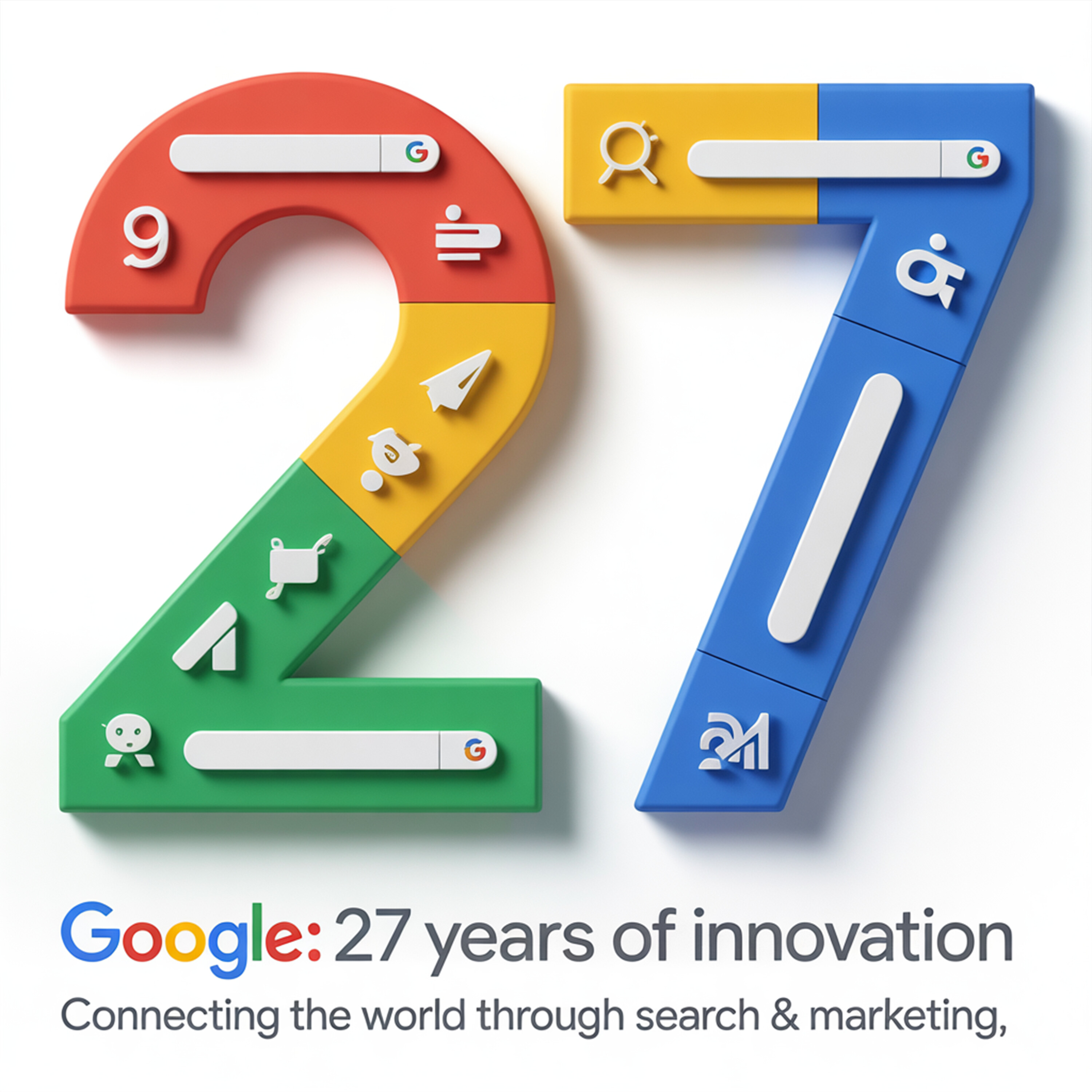
Google Celebrates 27th Year Anniversary: 🥳 The Evolution of SEO, AI, and Marketing with Favour Obasi-ike
from We Don't PLAY!™: Best AI SEO News, Pinterest Business and Web Marketing Masterclasses
Google Celebrates 27th Year Anniversary: 🥳 The Evolution of SEO and Marketing with Favour Obasi-Ike|Get exclusive SEO newsletters in your inbox.This podcast episode covers the evolution of Search Engine Optimization (SEO), primarily centered around Google's 27th anniversary today. Favour emphasizes the importance of Google in the digital ecosystem, contrasting it with other search methods like Bing and AI platforms such as ChatGPT.Key topics include the history of Google, from its original name "BackRub" to its current focus on AI integration and features like AI Overviews, and the foundational role of backlinks and semantic search in ranking. Furthermore, the discussion transitions into advice for businesses on using podcasting and maintaining a well-organized Content Management System (CMS) by creating numerous, contextually relevant pages to achieve better visibility and capture diverse audience segments in the evolving search landscape.Next Steps for Digital Marketing + SEO Services:>> Need SEO Services? Book a Complimentary SEO Discovery Call with Favour Obasi-Ike>> Need more information? Visit our Work and PLAY Entertainment website to learn about our digital marketing services.>> Visit our Official website for the best digital marketing, SEO, and AI strategies today!Quiz Answer Key from this Episode1. Google's original name was "Backrub." This initial search algorithm, created in 1996, functioned by analyzing backlink data to determine the importance and relevance of web pages.2. The name "Google" originated from a misspelling of "Googol." A Googol (G-O-O-G-O-L) is a mathematical term for the number one followed by 100 zeros, which represented the founders' mission to organize a seemingly infinite amount of information on the web.3. The modern "Backrub" concept is likened to a reciprocal relationship where platforms "back each other up." For example, a link from a LinkedIn profile back to a personal website, and a link from that website back to LinkedIn, creates a "back rub" where the two entities reinforce each other's authority through backlinks.4. Embedding a YouTube video on your website creates a "double count" of watch time. A viewer contributes to the "page session time" on your website (first-party data) while simultaneously increasing the "watch time" on your YouTube video, benefiting both platforms.5. The two primary organic methods are: 1) Creating multiple, semantically connected pages on your own website that thoroughly cover a topic. 2) Getting featured on multiple pages across different websites that link back to your site.6. The PSPS framework stands for Product, Service, Problem, Solution. A business defines its product and service, then identifies the customer's problem (often expressed as questions) and provides the solution through its content and offerings, targeting both pre-purchase and post-purchase stages.7. Connecting a website to Google Search Console is like registering a car. This action officially registers your website "property" with Google, activating its visibility across the worldwide web and all of Google's global data centers, allowing it to be found by searchers.8. In 2013, the major shift was the introduction of the Hummingbird algorithm. This update moved Google toward semantic search and the use of Knowledge Graphs to better understand the context and intent behind user queries, rather than just matching keywords.9. A business can create a series of dedicated pages that each tackle a specific, related aspect of "cookies." For example, pages could be created for "types of cookies," "dark-chocolate-cookies-vs-red-velvet-cookies," and "how-to-make-homemade-cookies," creating a dense, interconnected library of content that signals expertise on the topic to search engines.10. "Search everywhere optimization" describes the modern reality where being visible on Google allows a brand to show up on other platforms as well. Because platforms like Reddit, Pinterest, and LinkedIn have high authority on Google, optimizing your presence on those sites contributes to your overall search visibility.Glossary of Key Terms in this Podcast EpisodeAlphabetThe parent company of Google.BacklinkA link from one website to another. The more backlinks a business gets, the more authority it is perceived to have by search engines. It's described as a "back rub" or one site "linking back to you."BackRubThe original name for Google's search algorithm, created in 1996. It analyzed backlink data. The term is also used as a metaphor for the reciprocal nature of backlinking.BERTAn AI-related technology integrated into Google's search algorithm to better understand the nuances and context of language in search queries.Content Management System (CMS)The platform used to build and manage a website's content, such as Wix, Shopify, WordPress, or Squarespace. Your website itself is considered a content management system.Domain AuthorityA measure of a website's relevance and trustworthiness. Sites like Google and Facebook have high domain authority (in the '90s) because users spend vast amounts of time on them.First-Party DataData that you own and collect directly from your audience. An example is the page session time of a visitor on your website.GoogolThe mathematical term for the number one followed by 100 zeros. The name "Google" was derived from a misspelling of this word.Google Search ConsoleA free platform from Google that allows website owners to monitor their site's performance in search results. Connecting a site to it is described as "registering your car" for the worldwide web.Hummingbird AlgorithmA major Google algorithm update in 2013 that marked a significant shift toward semantic search and the use of Knowledge Graphs to understand user intent.Knowledge GraphA system Google uses to understand facts about people, places, and things and the relationships between them. It was a key part of the move toward semantic search.PSPS FrameworkA business strategy model standing for Product, Service, Problem, Solution. It involves defining your offerings, identifying customer problems, and creating solutions for them.Page Session TimeThe amount of time a user spends on a single page of a website. High page session time signals to search engines that the content is valuable.RankBrainAn AI and machine learning component of Google's algorithm that helps process search results, particularly for never-before-seen queries.Second-Party Data PlatformA platform that you use but do not own, such as Instagram, YouTube, or Spotify. While you can control your account, you do not own the platform or the intellectual property on it.Search Engine Results Page (SERP)The page displayed by a search engine in response to a query from a user.Semantic SearchA search process that aims to understand the user's intent and the contextual meaning of terms, rather than just matching keywords. Google began focusing on this with the Hummingbird update.Uniform Resource Locator (URL)The address of a web page. It is described as a "uniform database of information that can be found by search," where the file name contains the location of the resource.Web.archive.org (The Wayback Machine)An internet archive that allows users to see how websites looked at various points in the past. It provides historical "screenshots" of websites.Digital Marketing SEO Resources:>> Join our exclusive SEO Marketing community>> Read SEO Articles>> Need SEO Services? Book a Complimentary SEO Discovery Call with Favour Obasi-Ike>> Subscribe to the We Don't PLAY PodcastSee Privacy Policy at https://art19.com/privacy and California Privacy Notice at https://art19.com/privacy#do-not-sell-my-info.
Embed this episode
What this episode covers
This podcast episode covers the evolution of Search Engine Optimization (SEO), primarily centered around Google's 27th anniversary today. Favour emphasizes the importance of Google in the digital ecosystem, contrasting it with other search methods like Bing and AI platforms such as ChatGPT.
Ready to play
Google Celebrates 27th Year Anniversary: 🥳 The Evolution of SEO, AI, and Marketing with Favour Obasi-ike
No transcript for this episode yet
Similar Episodes
No similar episodes found.
Similar Podcasts
No similar podcasts found.