Welcome to World War I Centennial News, episode number 55. It's about World War I then, what was happening a hundred years ago this week, and it's about World War I now. News and updates about the centennial and the commemoration. Today is January 19th, 2018, and we have a great lineup for you. Dr. Ed Lengel joining us with our new weekly history segment, America Emerges, Military Stories from World War I. Mike Schuster from the Great War Project blog, looking deeper into Wilson's 14 points.
Sculptor Sabin Howard in our Century in the Making segment talking about integrating high-tech 3D resources with a traditional master sculptor's hands, eyes, and clay. Eagle Scout Benjamin Woodard shares his World War I Eagle Scout project. Author Joseph A. Williams introduces us to the fascinating story behind his new book, The Sunken Gold. And Catherine Akey with some great selections from the Centennial of World War I in social media. All that and more this week on World War I Centennial News, which is brought to you by the U.S. World War I Centennial Commission, the Pritzker Military Museum and Library, and the Star Foundation. I'm Theo Mayer, the Chief Technologist for the Commission and your host. Welcome to the show. Our theme this week is one that many of you will be able to relate to in a very direct way. Nasty, freezing, snowy, cold weather, and its dramatic effect on the war effort.
According to the National Weather Service, when the ball dropped in Times Square this past New Year's Eve, it was the most frigid New Year's Eve in exactly 100 years. And back in 1918, that frigid weather carried on through January. Let me set this up. In our episode number 50 that we produced in mid-December, we were joined by Dr. Sean Adams, a historian expert on coal in America. He told us that there was plenty of coal production in the U.S., but there was a big problem with delivering it where it was needed because of the intense demand by the war effort on the national railroad system.
The wartime government, driven by the Energy Administration, choose this moment to step in, and as they were wont to do 100 years ago, they step in with a pretty heavy foot to the protest of a lot of very unhappy citizens, industries, and communities. There's a lot to unpack here as we jump into our Wayback Machine to look at 100 years ago this week in the war that changed the world. It's the second week of January 1918. Just last month in December, the government took over and nationalized the railroads and put them under the direction of Treasury Secretary McAdoo.
It has become quickly obvious that there's a big problem with a lack of available railroad cars in the Midwest and the West. The cars are all bunched up in the East Coast ports. McAdoo's new U.S. Railroad Administration is working to alleviate this problem by dedicating a whole week, starting January 14th, to reorganize the rail cars from where they are to where they're needed. But the plan freezes up thanks to minus 10 to minus 20 degree Fahrenheit temperatures across the Midwest, accompanied by nasty blizzards. Everything grinds to a halt. Dateline, Sunday, January 13, 1918. A headline of the New York Times reads,
Garfield to cut coal to needs. And the story reads, Federal agents of the Fuel Administration in New York have received full authority to employ every facility at their command to move coal from the New Jersey terminal to Manhattan. Officials here tonight were told that there would be 262,000 tons available tomorrow, but that only 20,000 tons would be moved because of the unusual weather conditions. Now the next day, the challenge continues on the eastern seaboard. Dateline, Monday, January 14, 1918. A headline of the New York Times reads,
Ample coal for city's needs awaits fuel administrators on Jersey Shore. And the story includes... Reeve Schley, New York County fuel administrator, was asked why they had feared an acute coal crisis in the next few days. He replied that he does not doubt the reports of 465,000 tons available at the New Jersey Tidewater, but that only 20,000 to 30,000 tons were being brought into the city a day, which is only half enough. But ice in the harbor and many tugs damaged by the ice flows are preventing more. The same day, another article sets the stage for the following week's bombshell.
Fuel and food for New York first, then coal for the ships, McAdoo orders. Industries may close. And the story reads, coal for domestic use and vital public utilities in New York districts shall receive preference. Foodstuff shall come second, and coal for bunkering of overseas fleet third. This drastic action will make necessary the temporary suspension of many of the industries of New York not directly essential to the war program, and that some other industries might have to operate only part-time.
In other words, the government is setting a priority. Coal for personal heating, food for the people, and coal for the ships waiting to head to Europe. While it's willing to shut down a major portion of New York's industries, this will put tens of thousands out of work as employers shut down their factories and facilities. This is just a precursor for Thursday's big announcement that takes these ideas onto a national scale to a shocked nation. Dateline, Thursday, January 17, 1918. From the official bulletin, the government's war gazette published by George Creel for the Wilson administration. Headline.
Fuel order stops certain industries from burning coal on designated days. Necessary war work not included. And the story leads with, The order of the United States Fuel Administrator directs the curtailment in consumption of fuel by certain businesses starting tomorrow and for five consecutive days and thereafter on every Monday beginning January 28th. In other words, the government has stepped in and is telling the majority of U.S. industries, except those that are specifically exempt, that U.S. industry is shutting down for five days and then every Monday coming up. This is a lightning bolt through the heart of the nation.
The front page of the New York Times reads, Shutdown of industries for five days begins Friday. Nine idle Mondays follow. Washington order startles the country. The next day, newspapers from all around the country react. Here's some examples. Utica, New York. This is a staggering blow. By stopping the mills and factories here, it throws thousands of people out of employment. It takes thousands of dollars away from working people who have never needed it more than this winter. Baltimore, Maryland. No such extreme measure as this was ever dreamt of by the American people. Chicago, Illinois.
At a word of command from Washington, the greatest industrial sections of the nation stand idle, a catastrophe to be faced bravely. St. Louis, Missouri. Fuel administrator Garfield's drastic action is a confession of incompetency and also an indication of lack of courage and ability to deal with the coal situation. From Hartford, Connecticut. The news seems almost incredible. If it had come from Germany's Kaiser William, it would have been more easily understood.
From Wheeling, West Virginia, the administration's coal measure is the most drastic industrial order issued in the history of the nation and is without precedent, but it is justified by the prevailing conditions. From Boston, Massachusetts, we had hoped we would not have to resort to such extreme measures, but hesitate to characterize them as unwise or unnecessary. And from Charleston, South Carolina, the coal conservation order issued from Washington will put the patriotism of the American people and especially of American business to a very stern test. And the next day, President Wilson chimes in. Dateline, Saturday, January 19, 1918. In the official bulletin, the headline reads, President upholds fuel curtailment order, declaring it was absolutely necessary to relieve the railroad's traffic congestion. President Wilson issues the following statement.
I was of course consulted by Mr. Garfield before the fuel order was issued, and fully agree with him that it is necessary, much as I regret the necessity. This war calls for many sacrifices, and sacrifices of the sort called for by this order are definitely less than the sacrifices of life which might otherwise be involved. It is absolutely necessary to get the ships away. It is absolutely necessary to relieve the congestion at the ports and upon the railways. It is absolutely necessary to move great quantities of food, and it is absolutely necessary that our people should be warm in their homes if nowhere else.
halfway measures would not have accomplished the desired ends. I have every confidence that the result of action of this sort will justify it and that the people of the country will loyally and patriotically respond to necessities of this kind as they have to every other sacrifice involved in the war. We are on a war footing and I am confident that the people of the United States are willing to observe the same sort of discipline that might be involved in the actual conflict itself. President Woodrow Wilson. Those are some pretty dramatic events on the home front, driven by the need to get men and equipment to increasingly desperate allies in Europe. America needs to get into the fight, and pronto. To cover that side of the story, we're launching a new segment called America Emerges, Military Stories from World War I, with military historian, author, and storyteller, Dr. Edward Lengel. Ed, welcome to World War I Centennial News. I am delighted to be here, and thank you for having me on your show.
So Ed, this week you're bringing us a story from New York City's 77th Division. It's a great story about fighting, but not fighting the Kaiser. This is about world champion boxer Benny Leonard. Who was he and what's the story? Benny Leonard was born...
on Manhattan's Lower East Side in a Jewish ghetto right at the end of the 1890s. He was from a family that had nothing. And yet he built his way up to fame and fortune by becoming the lightweight champion of the world when he was only 21 years old. And he's just a great story. And he became dedicated to training New York City's 77th Division how to fight, how to fight physically, how to take on life's challenges. So I just think it's an amazing story.
The 77th Metropolitan Division was a national army division, and that meant that it was made up of conscripts. They were all draftees, and many of them came from Manhattan. Many of them came from the Lower East Side. They were poor men for the most part. Many of them were first- and second-generation immigrants, and New York City really identified with this division, and it was said to represent all of Manhattan's diversity, all of New York City's diversity. So Benny Leonard felt a particular personal connection with the division. These guys seemed...
to represent the type of person that he was, making his way up from nothing. He was the son of immigrants from Eastern Europe and really made his way to becoming lightweight champion of the world in 1917 just by virtue of his own efforts, of his own strength and his dedication and his will. And so he felt a real desire to transmit what he had learned to the men of the 77th Division. And so the Division went off the train on Long Island at a place called Camp Upton. It was a mosquito-infested swamp, and these poor guys had to spend their days.
drilling and marching around and working with wooden rifles in many cases. There really was not much valuable instruction for them there. Their officers generally didn't know much about tactics or military doctrine. So Leonard set up a boxing ring in camp and decided that he was going to dedicate himself personally to teaching these men how to fight. And so he worked with them day after day, week after week. He insisted that all the men go into the ring and spar with each other and spar with him. And he insisted that he fight with each one of the officers personally. There was not one officer who could escape, you know, fighting with a lightweight champion of the world in the ring. So, you know, they're about to go over to Europe and face the enemy on the battlefield. First, they had to face a lightweight champion of the world in the boxing ring. And this went on for months.
He didn't pull punches, if you pardon the pun, with any of these guys. He really tried to train them to become physically fit and very disciplined. And this is really just, to me, a fascinating story that's not well known. When these guys went over there, the 77th Division performed very well. This was the division that was the source of the well-known Lost Battalion in October that was surrounded in the forest of the Argonne. And I like to think that many of these officers, including Charles Whittlesey, George McMurtry, and others, when they were facing the ultimate test,
in the Argonne Forest. They looked back to Benny Leonard's training that he had provided for them, and it gave them a kind of an individual discipline and determination they would not otherwise have had. And what are you going to tell us about next week? Next week, I will be talking about a baseball game at New York City's Polo Grounds, attended by many baseball Hall of Famers, future Hall of Famers, and Jim Thorpe, the great Jim Thorpe, a game that got a little bit out of control. It was attended by thousands of doughboys who were preparing to go overseas.
Dr. Edward Lengel is an American military historian, author, and our new segment host for America Emerges, Military Stories from World War I. There are links in the podcast notes to Ed's post about Benny Leonard and his website as an author. Joining us now is Mike Schuster, former NPR correspondent and curator for the Great War Project blog. Mike is going to expand on President Wilson's 14 points. You know, Mike, we run around living our lives in our world without thinking a lot about how it got to what it is. But when you read Wilson's 14 points, it really feels like you're seeing the blueprint in the foundation for the modern world order. He really did help define a new world, didn't he? Yes, the blueprint for post-war peace. Wilson's 14 points excite the world. The American president, an instant hero. So far in this war from its beginning in the summer of 1914 until the start of this new year a century ago, there has been no comprehensive statement of the war aims of both sides.
But with the entry of the United States into the war stating the war aims of the United States appear limited. A speech in London stating it is not the aim of the Allies to seek the breakup of Austria-Hungary. It's just one indication of what the belligerents and their weaker Allies are seeking. Behind every front line, writes historian Martin Gilbert, political movements were stirring with a new enthusiasm. They are war-weary, and they are looking for negotiation to satisfy their ambitious plans for statehood. But to fulfill these goals would require the breakup of the Austro-Hungarian Empire, now not a war aim of the Allies. The main precondition for many of these hopes, Gilbert writes, was the disintegration of Austria-Hungary, which could...
be taken for granted. Into this political whirlwind steps the American president. It's nearly a year since America entered the war, but so far the United States has made little difference. Congress on January 8th, 1918 changed that with nothing less than a reform program for Europe. 14 separate points. Among them are goals and principles that Wilson sees as essential for maintaining international peace in the future. Freedom of the seas. Transparency when it comes to international negotiations. The removal of economic barriers to trade. And more specifically, Wilson declares Germany must withdraw from all Russian territory as well as from all Belgian and French territory it's occupying.
What's more, according to Wilson, the peoples of Austria-Hungary must be given freedom to development on their own, and autonomous Romania, Serbia, and Montenegro, for assuring the sovereignty of the Turkish, putting out non-Turkish regions, the other nationalities inside Turkey, read Armenia, to be assured of their autonomy, a united and independent Polish state. And finally, Wilson calls for the formation of a general association of nations to guarantee political independence and territorial integrity to great and small states alike. The 14 points, according to historian Martin Gilbert, were intended as a counter to the growing appeal of Russian Bolshevism among the soldiers of Germany and Austria, and to be more attractive than a Bolshevik-inspired peace. They did not satisfy to the full the hopes for statehood, but the race for nationals was affecting both sides. Quite literally, the 14 points outlined nearly all the terrible political conflicts that were to come in the century that was to follow. The leaders of the Allied powers did have some reservations about the 14 points, but millions of people across the globe, writes historian Margaret Wagner, embraced his plan for a better post-war world. And that's some of the news from The Great War Project this week. Mike Schuster from The Great War Project blog.
As many of you know, we have this commemoration partner over on YouTube called The Great War Channel. They launched the channel way back in 2014, around the centennial of the war breaking out in Europe. We're always promoting them, and the other day somebody asked me why. I thought it was a good question. First of all, they do a great job. Their stories are clean, short, well-researched, and really accessible. Also, being over in Europe, they come at the subject from a really great broad perspective, and they've continued to do that for the past four years. If you haven't checked them out, you should. Their new episodes this week include, of course, Woodrow Wilson's 14 Points. It's a really worthy subject. And...
POWs in Japan. And finally, life on the Isonzo Front. To see their videos about World War I, follow the link in the podcast notes or search for The Great War on YouTube. It's time to move forward into the present with World War I centennial news now. This section isn't about history, but rather it explores what's happening now to commemorate the centennial of the war that changed the world.
In commission news this week, we have an awesome numismatic opportunity for you. Numis, what do you say? Well, according to Merriam-Webster, numismatics is the study or act of collecting of coins, paper money, and metals. Numismatic coins are essentially rare or valuable coins that have an external value above and beyond the base value of the precious metal that they're made out of. And this week, by an act of Congress, the U.S. Mint released a new 2018 World War I centennial silver dollar that honors the 4.7 million American men and women who served in uniform and the over 116,500 who lost their lives.
but they went even further, and created limited edition coin and service metal collector sets. One each for the Army, the Navy, the Marines, the Air Service, and the Coast Guard. These limited edition special service sets are only available for a very short time. It's a once-in-a-lifetime collector's opportunity. Now, personally, I ordered two of the commemorative coin and air service sets, showing this beautiful engraving of a SPAD 13 biplane. I bought the second one for my two-year-old grandson, because I figure that around 12 years from now, he's going to wonder about these coins and metals his granddad bought him back in 2018.
And my son can tell him all about his great-great-grandfather who flew by planes that looked like that over in Europe during World War I. These awesome combo sets are only available for one month. So grab your piece of history right now by going to www.cc.org slash coin that slash C-O-I-N or by following the link in the podcast notes. And best of all, by law, part of the proceeds from the sale of each coin go to building the memorial. So with every coin or set that you buy, you're helping to build America's World War I memorial in Washington, D.C. So don't wait. Order yours today at www.cc.org slash coin. And thank you.
Speaking of the memorial, it's time for our new segment, A Century in the Making, America's World War I Memorial in Washington, D.C. Last week, we introduced you to the segment, and Samen Howard told you about how he met Richard Taylor from New Zealand's Weta Workshop. This week, we learn how he's blending his traditional sculpting techniques with Weta's high-tech 3D tools to create a nine-foot maquette of the memorial sculpture. Well, first of all, what I've always done is it's art about human beings. And my work changed from being classical, which is more about...
quietness and stillness to work that is now, because this is a war and the war that's being memorialized, and it's going in front of an audience that is not really into art, but more interested in the actual visual storytelling or the narrative. So I changed from being something that was quiet and esoteric to something that's more expressive and dramatic. And the way that I worked to get the drawing done, and then this proceeded into the sculpture, was that I had models come into my studio in the Bronx. And over a period of nine months, I took 12,000 pictures with my cell phone. of these scenes that describe a soldier's journey through the war and then a return home. And from those nine iterations that I did with Edwin and the commission, we came to a final iteration that explained the soldier's journey. And that's what the drawing was that I presented on May 18th, last year of 2017. So I took that drawing back to Wellington. And that drawing was the blueprint to proceed into a sculptural format that...
contains the same spacing, the same figures' gestures, the same expressions of the figures' faces, their hands. And what we did is we reshot every single photograph of every single model. And I used my old photographs as well as the initial standard. And that step then was given to a crew that I ran. I was basically art directing a crew of six sculptors that are international. They're from all over the world. And we went into the computer using a...
platform. It's called ZBrush. ZBrush is basically a three-dimensional modeling of whatever you wish to do. In our case, it was a figure. And we recreated three-dimensionally these figures on a computer. So then that could be programmed to a milling machine that would then mill a styrofoam overnight. So I went through five different tests to figure out what the depth of the relief should be. And by the fifth test, we all decided that it was imperative that the sculpture...
be much deeper, much more in a round, less flat, because we needed to create something that carried a sense of drama. Now, the intention was to make sculpture that is very similar to the Schrade sculptures in front of the Capitol building in Washington. And that's art that's very powerful. It's very evocative. It has a lot of movement, a lot of drama, a lot of punch. It's not quiet. It's not classical. It's expressive. Our subject matter for this memorial is a war. You're going to show something that is carrying all those elements of force and emotion and movement.
We established that we were going to do it this deep with the milling of these styrofoam pieces done over probably four or five weeks. And then the next step was a final print that we okayed. And then we milled plastic. And the plastic then was molded. And then from that mold, clay was poured into those molds. And then I started sculpting traditionally. So that was more or less October. And then from October till December 15th, I had a crew that helped me for the first four weeks. Then I kicked everybody off.
And I was just me alone and I sculpted 38 figures or 38 figures there. I re-sculpted all 38 figures within this period, which is a little Herculean and epic, but it was just nonstop sculpting. It's good to be in a place like Wellington where you have no distractions and there's a sense of peace. And that's all I did, bringing this nine foot sculpture to a place that it's cohesive. It's all up to the same level. Then the next steps were molding of that clay, which we had to disassemble it.
So that's disassembled and cut up into maybe also 100 pieces, 100 separate molds. And then that's filled with resin. That's where we are right now. I go back, the resin will be reassembled to be exactly what the clay was. And then we're going to patina that. And we're going to ship back that to the United States to make that meeting in Washington on February 15th.
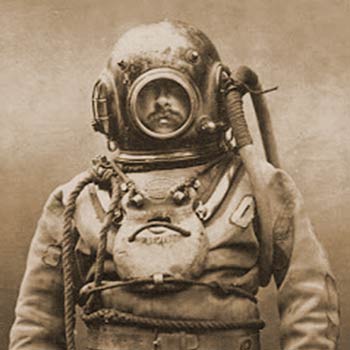
We're going to continue to bring you an insider's view with stories about the epic undertaking to create America's World War I memorial in our nation's capital. Learn more at www.w1cc.org slash memorial or follow the link in the podcast notes. And now for our feature, Speaking World War I, where we explore the words and phrases that are rooted in the war. This week's word is an onomatopoeia. Again with the long words? Well, yeah. An onomatopoeia is a word that imitates the sound that something makes, like buzz or meow or boom. So after a large meal, or maybe at the end of a long, hard week at work, don't you just love to crash on the couch and conk out? Well, people aren't the only things that can conk out. World War I airplane engines did, too, and the word describes the sound the engines made when they flooded out or seized up. Conk, conk, conk.
Having a machine conk out in midair was unfortunately not that uncommon. The term first appears around 1911 in British motorcycling magazines describing the problem early motorcyclists faced going uphill. Specific advice in the magazine includes, give it a bit more throttle when the engine starts to conk, conk, conk. The phrase made its way into common use during World War I and soon was applied to exhausted individuals as well. Conk out. This week's Speaking World War I phrase. See the podcast notes to learn more.
In our Remembering Veterans section, this week we're joined by an amazing young man, Benjamin Woodard, an Eagle Scout from Boy Scout Troop 62 in Huntington, West Virginia. Benjamin is here to tell us about his Eagle Scout project, which involved researching and commemorating local World War I veterans. Welcome, Benjamin. Hi, Tao. Benjamin, what made you decide to make commemorating local World War I veterans your Eagle Scout project? I'd become a Life Scout, which is the rank prior to Eagle, and was looking around for an Eagle Scout project, and I had earned my genealogy merit badge about a year before, earlier in my time as a scout, and I'd been interested in that and looking around, and I'd found on one of the local genealogy websites a page about these trees that were planted in Huntington, and each tree was dedicated to a soldier from Cabell County, which is where I live, who died in World War I.
That Veterans Day, which would be Veterans Day 2016, the local Daughters of the American Revolution chapter actually marked all the trees with little foam non-permanent signs and ribbons. And so I saw that and I thought, okay, that'd be cool to work with and do something like that. And then, of course, it was approaching the centennial, so I thought this would be a neat project to do. So I started with that, and I called the DAR chapter, and I talked to their regent, and she sent me what she had, which basically I thought they had a decent amount of stuff, and we were going to work with them, place signs along the boulevard, because all these trees, it was 91 trees, some of them have died over the years and been replaced, were placed along Memorial Boulevard in Huntington. And I thought we could just place signs along the boulevard with the soldiers' basic information. But at this time, all that the DAR had was each of the soldiers' names and which specific tree that that soldier's name was attached to.
talked to the DAR and talked to the local park board and started trying to figure out how to do research to research all these soldiers. Because they're actually, they planted 91 trees, but they're actually only 88 soldiers because they had a few mistakes. So I started working on researching all of the soldiers. And I did manage to find a good number of different sources available online and in like local libraries, microfilm newspapers, things like that, so that I had all their basic information at least. But at that point, I was still missing some major information for some of the soldiers. So I knew that they had the burial files available at the St. Louis archives, but I didn't really have a way to get there.
And so I messaged several DAR chapters in that area and a lady there volunteered to help me and she made like two separate trips to the archive. She sent me several hundred pictures of different records that were very helpful and helped me get it all completed and wrapped up. I called several different sign companies and got estimates from them and worked with them to get a sign design worked out. And we got those printed and built and we placed those back in October. And I also worked to create my own website, which I think I sent you the link for that. And I submitted my research to the free history app, the Clio, which was created in Huntington actually, but it's available for anywhere in the US and you can submit any historical location.
And so I created an entry there and placed the signs, and then we officially opened it on this Veterans Day. Benjamin, what do you think the most important thing you learned from doing this project is? Overall, I learned a lot about World War I because I did not know as much about World War I. I was more of a World War II history buff, but I learned a lot about World War I, read different books on World War I to kind of get me in context. And I learned a lot about all the soldiers' different stories because they have very different backgrounds, different interesting stories. They're all from around the same area. But I think they varied in age from age 17 and a half to age 38, and all of the soldiers were the ones that died in the war.
So that was the age when they died. But some only enlisted in this area. Some had lived there their whole life. I think we had one immigrant from Finland and one immigrant from Russia who were in the list of soldiers. So it was very interesting to learn more about them and their backgrounds and what they did in the war. Okay, so any advice to other scouts if they want to do a World War I project? I'd say first, look around like your community and see if you have a forgotten World War I memorial, like your forgotten World War I memorial hunter project. And look around and you can see if there's one that's been forgotten, needs repaired and things like that and work with local people to do that or talk to like local DAR, American Legion, local genealogy libraries.
park boards, things like that, and just talk to them and see what they have that you could do. That's really good advice. You're a great guy. Thanks so much for telling us your story. Thank you. I appreciate the opportunity. Benjamin Woodard is an Eagle Scout from Troop 62, Huntington, West Virginia. Learn more about this project and the men who service Benjamin helped to commemorate by visiting the link in the podcast notes.
This week in our Spotlight on the Media, we're joined by archivist, historian, and author Joseph A. Williams. He's here to tell us about his new book, The Sunken Gold, a story of World War I espionage and the greatest treasure salvage in history. Welcome, Joe. Thank you, Taylor. Thanks for having me. Joe, can you start by giving us a brief setup to the story that you told in your book? Sure. The action occurs starting in 1917. There was a former transatlantic liner called the Lorentic. It was part of the White Star Line that was impressed by the Royal Navy and converted into a patrol vessel.
And at that point in the war, this is now January 1917, the United States is still neutral. So Britain has really taken on the backing of the allied economies whose credit was collapsing, etc. So what they did, Britain collected shipments of gold bullion. It would be French gold, Russian gold, British gold, and the like. And they would ship it to different places overseas, either to the British colonies or a lot of times also to neutral countries such as the United States, where they would use the bullion for collateral, for credit, or for direct purchase of munitions.
So HMS Laurentic was loaded up with about 44 tons of gold bullion on January 24th, 1917, and it left Liverpool to go to Canada, and then the gold would be shipped down to the vault of J.P. Morgan in New York. Well, today it would be worth about $1.7 billion, and it was all meant to buy munitions for the Western Front. So the ship went to the north of Ireland, did a stop over at Loch Swilly, and on its way out toward the open Atlantic, it struck two German mines. and it quickly went down. So one part of this book is really the story of the tragedy of the Laurentic, because out of the 475 crew that were aboard, 121 survived, and they didn't have a chance to offload all that gold. So the admiralty in the British government, when they found out what happened to this gold ship, they generally freaked out about it. So what they ended up doing was they went to this lieutenant commander, and his name, I love his name, by the way, it's Gibbon Chesney Castel de Met. He was a blue blood from the Isle of Wight. He was a gunnery officer in the Royal Navy, but he was also a diving expert, because gunnery officers were in charge of the divers, and he just...
fell in love with the stuff. I mean, you could say he took the diving like a fish into water and he was tasked to recover that gold. So then another part of the book is actually the efforts, monumental efforts to recover this large salvo of gold and the obstacles that they faced to get to it, which were very impressive. And then in the middle of all that, there's also a little sub story about how these divers under demands were also assigned by the Naval Intelligence Division to dive onto freshly sunken U-boats, open them up and send the divers in to look for. cipher, keys, code books, and other sensitive documents, which could be sent over to Blinker Hall's room 40 for decryption and that type of thing.
So it's all a very action adventure undersea story, but it's also a biography of the man himself who does all this interesting underwater adventure, recovery, salvage stuff. But he's also at the same time, he's an expert diving. He's well known in the field and actually a prominent figure in the history of diving. And he's also kind of this nerd at the same time because he just goes into all this research about these little topics and he often distracts him. So there's like little injections of humor into the book as well. So it's partially a biography of him as well as what happens after and what remaining treasure there might be, if any.
off the northern coast of Ireland today. So Joe, how did you come by the story? Well, my last book, which is 17 Fathoms Deep, the Saga of the Submarine S-4 Disaster, was about this submarine that got sunk off Provincetown, Massachusetts in 1927 by a Coast Guard destroyer that was kind of circling around the Horn of Cape Cod. The submarine went down and there were men trapped alive in it and they sent rescue divers to go get them. So I did a lot of research in historical diving from the early 20th century. And I kept on coming into reference after reference of the Laurentic operation. And I discovered that there might have been some brief chapters written about it. There really was no full book written on it. So I went to my literary agent and I told him about the topic I did because my publisher had wanted to have contacted me to do another book with him. And he thought it was a great idea.
I had to go find the sources, and luckily for me, there was tons and tons of sources among the British Admiralty records in the British National Archives. And then I was also able to get in touch with Daman's descendants. Actually, his youngest daughter is still alive, and they were able to give to me an unpublished memoir, which really was able to humanize the whole project and make it come to life. Joe, it sounds like a really great movie plot. It's got sunken treasure, enemies, covert expeditions, obsessions. If this were made into a film, who would you cast as Lieutenant Commander Daman?
Well, Theo, you can tell all your listeners, if anybody has any Hollywood connections, feel free to get in touch with me. This way we can sell the rights to some sort of thing. But yeah, I've been asked this question before, and I always felt that Paul Bedney would make an excellent commander demand. And that's because I think my impression of him is really from Master and Commander, where he plays Maturin, the scientist surgeon on board HMS Surprise. And he kind of had that distracted scientist thing going on while at the same time being engaged in this action adventure. And I thought that was excellent. He would make a great...
great actor for that role. Joe, thank you so much for joining us. Thank you so much. I really appreciate it. Joseph Williams, archivist, historian, and author of several books, including The Sunken Gold. He'll be speaking at the International Spy Museum in Washington, D.C. on Tuesday, January 23rd. But if you can't catch him there, we've included links to the event and his book in the podcast notes.
In articles and posts from our rapidly growing website at www.w1cc.org, this week there's an article about a photographic project inspired by a World War I memorial. For years, Eric Burrow would pass the statue of a World War I soldier on his commute just a few blocks from his city home to his office. But he didn't pay any attention to it. Until 2016. The centennial of World War I made him stop and take a closer look at the statue, depicting a doughboy and the memorial hall behind it. This led Eric on a mission to find and photograph other World War I monuments.
First in South Jersey and then statewide, a quest that has resulted in a traveling photography exhibit of major World War I monuments in the state. Read more about Eric Burrow and his Legacy of Remembrance at the link in the podcast notes. Also in articles and posts this week, a story shared from the National Archives' Pieces of History blog about some of the unsung heroes of World War I, messenger birds. The carrier pigeons of both the Allied and the Central Powers assisted their respective commanders with an accuracy and clarity unmatched by technology. The National Archives has a vast collection of messages that these feathered fighters delivered for American soldiers. Using these messages and the history of carrier pigeons in battle, we can look at what hardships these feathered fowls endured and how their action saved American lives. One of the most impressive things about the war record of the carrier pigeons is how widely the birds were used. Their service as battlefield messengers is their most known use. And pigeons found homes in every branch of the service. Read about these essential feathered flying communicators by following the link in the podcast notes.
And that brings us to the buzz. The centennial of World War I this week in social media with Catherine Akey. Catherine, what did you pick for us this week? This week, we picked up on a short film that was shared by The Great War Channel on Facebook. The film's made by Tyler Mendelsohn, a young filmmaker and Marine Corps veteran. The 12-minute short tells the story of a young American soldier who has just become his company's new message runner as a German attack is imminent. You can watch the short by following the link in the podcast notes.
Last week in our Speaking World War I segment, we looked at the origin of the word tank. We happened to find, during our research and then share, a cool webpage on Facebook last week that lays out weird and interesting tank designs from Leonardo da Vinci all the way to the modern day. Among our favorites were the pre-World War I Tsar, a rolling turret with wheels five times the size of a man, the rolling ball tank, and the submarine land dreadnought, an aircraft carrier-sized ship covered with cannons rolling over land. You can check them out at the link in the notes. And last for this week, the U.S. Mint released a special game for children in coordination with the release of the World War I commemorative silver dollar. It's called Peter the Eagle's Coin Drop, and the premise is simple. You fly a plane piloted by an eagle and maneuver to drop liberty loans onto trenches, field hospitals, and banks. But watch out, seagulls appear and can block your coin drop or run into your plane. You can follow the link in the notes to play or to share it with your kids. And that's it this week for The Buzz.
Thank you all for listening to another episode of World War I Centennial News. We want to thank our guests, Ed Lengel, military historian, author, and storyteller, Mike Schuster from the Great War Project blog, Master Sculptor Saban Howard, Eagle Scout Benjamin Woodard, author Joseph A. Williams, Catherine Akey, the show's line producer and the commission's social media director, and I'm Teo Mayer, your host. The U.S. World War I Centennial Commission was created by Congress to honor, commemorate, and educate about World War I. Our programs are to inspire a national conversation and awareness about World War I. Now, this podcast is a part of that, so thank you for listening. We're bringing the lessons of 100 years ago into today's classrooms. We're helping to restore World War I memorials in communities of all sizes across the country. And of course, we're building America's national World War I memorial in Washington, D.C. We want to thank the commission's founding sponsor, the Pritzker Military Museum and Library, as well as the Star Foundation for their support.
The podcast can be found on our website at www.cc.org slash CN for Centennial News. On iTunes and Google Play at www.centennialnews and on Amazon Echo or other Alexa-enabled devices, just say, Alexa, play WW1 Centennial News podcast. Our Twitter and Instagram handles are both at www.cc and we're on Facebook at www.centennial. Thank you for joining us. And don't forget to share the stories you're hearing here today about the war that changed the world.
Numismatic, onomatopoeia, you know, long words just make me want to conk out. So long.