EPISODE · Mar 24, 2026 · 1H 12M
GPH 52: Economic Appraisal
from Clinical Deep Dives · host Dr Manaan Kar Ray
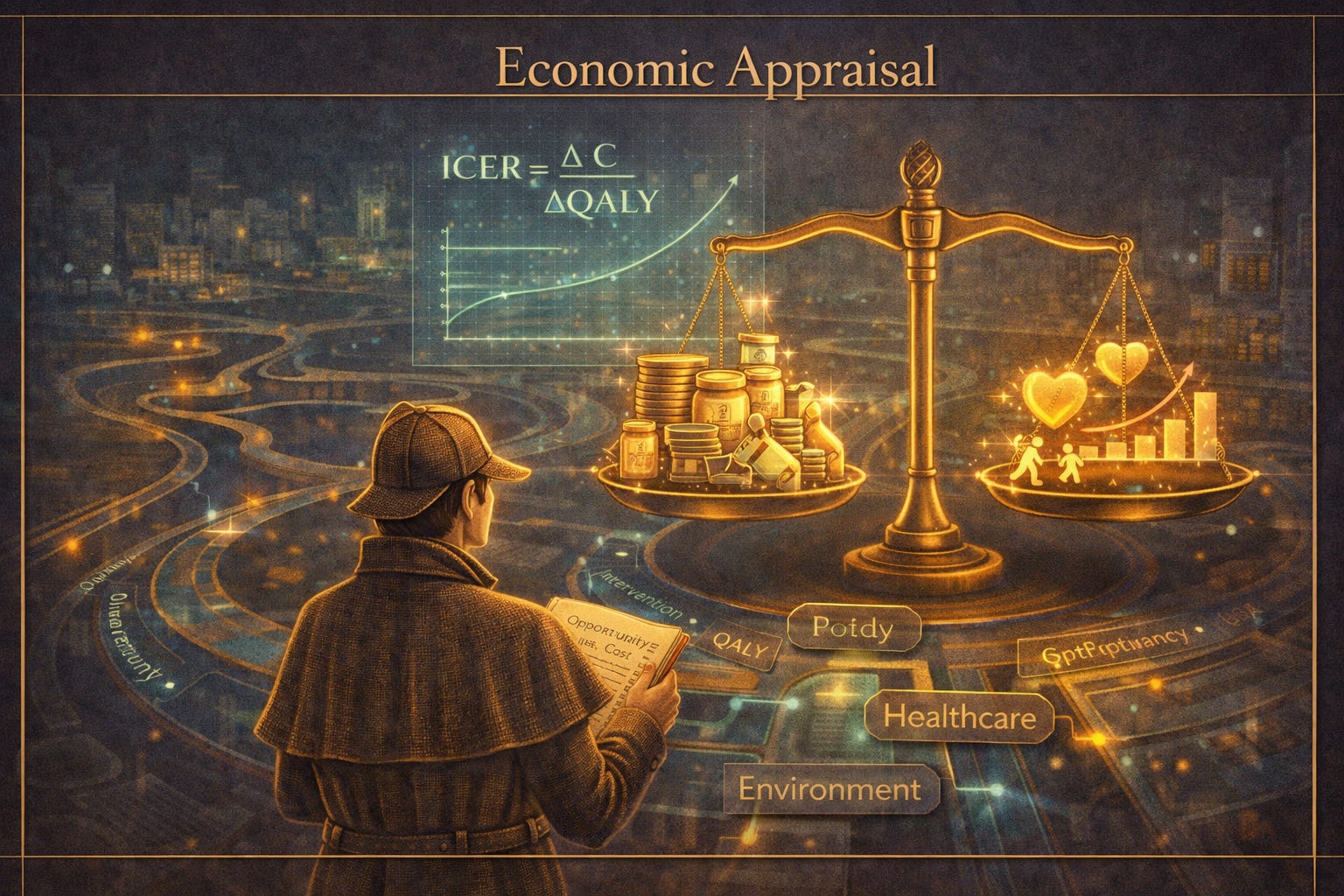
In this episode, Medlock Holmes steps into the chamber of decision-making where evidence meets constraint. Public health operates under limited budgets, competing priorities, and ethical trade-offs. Economic appraisal provides the structured tools to guide those choices.Holmes introduces the core approaches to economic evaluation:* Cost-minimisation analysis* Cost-effectiveness analysis (CEA)* Cost-utility analysis (CUA)* Cost-benefit analysis (CBA)We explore how outcomes are measured - from cases prevented to life years gained to quality-adjusted life years (QALYs). Holmes explains incremental cost-effectiveness ratios (ICERs) and the concept of willingness-to-pay thresholds.The episode also examines discounting, opportunity cost, sensitivity analysis, and uncertainty. A programme that appears effective may not represent good value if alternative investments generate greater population benefit.Holmes highlights ethical tensions:Should all lives be valued equally?How do we compare interventions across age groups?Is cost-effectiveness the same as fairness?Economic appraisal does not replace moral judgement - it informs it. It makes trade-offs explicit rather than hidden.In public health, every allocation decision is both economic and ethical.Key Takeaways* Economic appraisal evaluates value relative to cost.* Cost-effectiveness compares incremental gains and expenditures.* QALYs integrate length and quality of life.* ICERs support comparison between interventions.* Sensitivity analysis assesses robustness under uncertainty.* Opportunity cost reflects foregone alternatives.* Economic evaluation informs - but does not dictate - policy decisions. This is a public episode. If you'd like to discuss this with other subscribers or get access to bonus episodes, visit drmanaankarray.substack.com/subscribe
NOW PLAYING
GPH 52: Economic Appraisal
No transcript for this episode yet
Similar Episodes
Jun 4, 2025 ·9m
May 21, 2025 ·11m