
EPISODE · Sep 11, 2025 · 3 MIN
GPUHammer Exposed: The Hidden GPU Vulnerability Threatening AI Accuracy
from AI with Shaily · host Shailendra Kumar
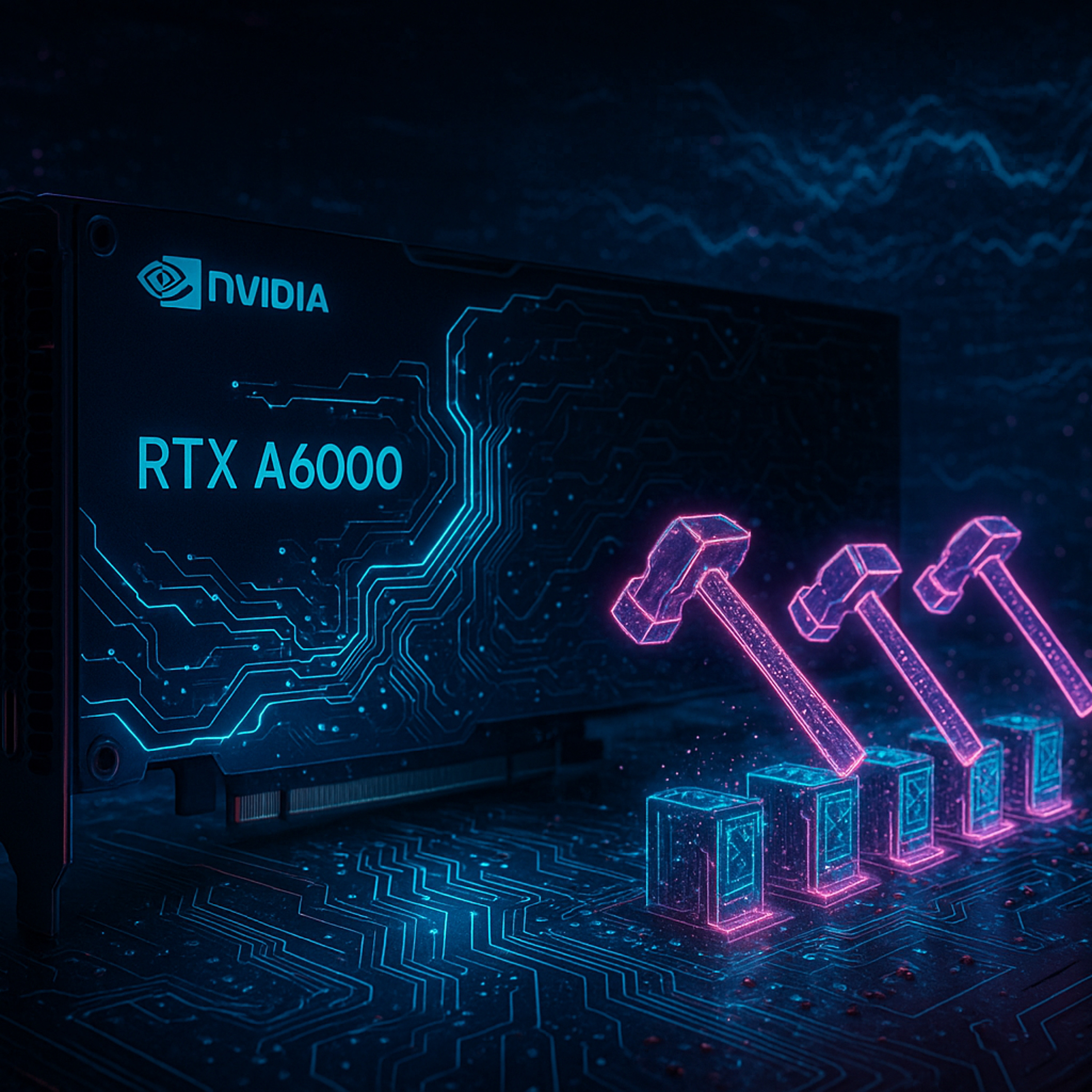
Welcome back to *AI with Shaily*! 🎙️ I’m Shailendra Kumar, your host and AI enthusiast, here to bring you the freshest updates and insights from the world of artificial intelligence. Today’s episode dives into a groundbreaking discovery that’s sending ripples through the AI and cybersecurity communities — a hardware vulnerability named **GPUHammer** 🛠️💥. This isn’t just another software bug or neural network tweak. Researchers at the University of Toronto have revealed that GPUs, especially powerful models like Nvidia’s RTX A6000 🎮⚡, are susceptible to a sneaky attack inspired by the classic Rowhammer technique. Traditionally, Rowhammer targeted CPU memory by rapidly flipping bits in adjacent rows of DRAM, causing data corruption. But GPUHammer takes this concept further by showing that GPU memory (GDDR) isn’t immune either. This is huge because GPUs are the engines driving AI workloads across industries — from medical imaging 🏥🧠 to fraud detection 💳🔍. Why should you care? Imagine your AI model’s accuracy plummeting from a solid 80% to a catastrophic 0.1% due to subtle memory bit flips. That’s like asking a doctor with perfect credentials to diagnose you while blindfolded — a scary thought! 😱 GPUHammer works by electrically “hammering” adjacent memory rows to induce bit flips without altering the data or code directly, making the attack stealthy and hard to detect. The University of Toronto team demonstrated this attack live on an Nvidia RTX A6000, proving it’s not just theoretical but a real-world threat. Nvidia is aware and actively working on protective measures 🛡️. As someone deeply involved in AI development, this revelation hits home. It’s a stark reminder that vulnerabilities don’t just hide in algorithms or datasets — the very hardware we trust to run AI can betray us. This calls for a holistic approach to AI security, one that includes hardware-level safeguards and rigorous fault injection testing 🔍🛠️. For AI practitioners, integrating hardware fault testing into your validation pipeline is a must to catch these subtle glitches before they wreak havoc. Before we close, here’s a question to mull over: if AI outputs can be silently corrupted at the hardware level, how do we maintain trust and ensure reliability in critical applications like healthcare or finance? 🤔 I’ll leave you with a timeless quote from Alan Turing: “Machines take me by surprise with great frequency.” Today, the surprise lies not just in AI’s capabilities but in the fragility of its foundations. Don’t forget to follow me, Shailendra Kumar, on YouTube, Twitter, LinkedIn, and Medium for more AI news and engaging discussions. Subscribe to *AI with Shaily* for your weekly AI fix, and share your thoughts in the comments — I’m eager to hear your perspective! Until next time, keep your AI models sharp and your hardware secure. Stay curious, stay safe! 🔐🤖✨
Embed this episode
Ready to play
GPUHammer Exposed: The Hidden GPU Vulnerability Threatening AI Accuracy
No transcript for this episode yet
Similar Episodes
No similar episodes found.
Similar Podcasts
No similar podcasts found.