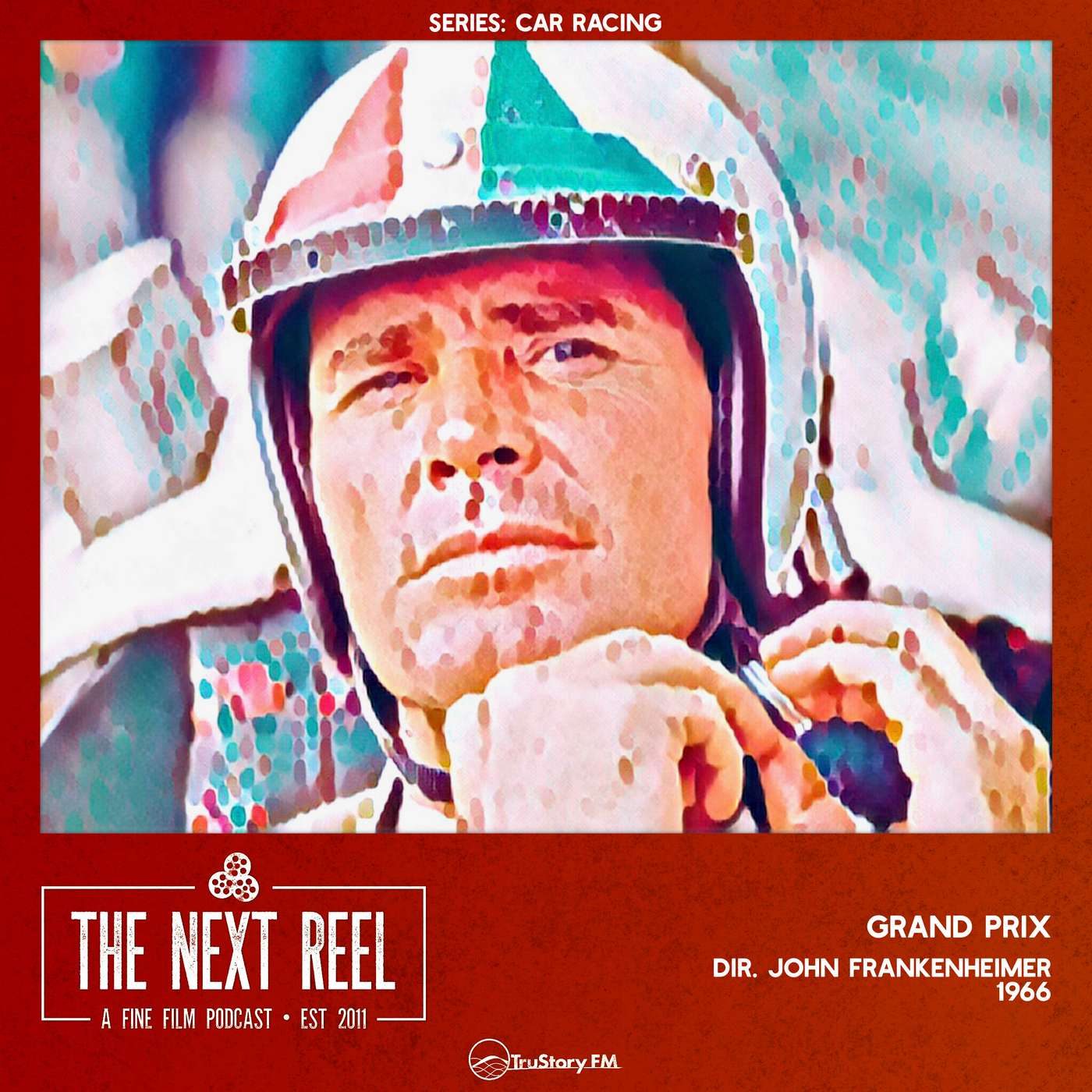
Grand Prix episode artwork

EPISODE · May 29, 2025 · 1H 22M

Grand Prix

from The Next Reel Film Podcast · host TruStory FM

“All of us, proving what? That we can go faster, and perhaps remain alive?”Racing to Glory: John Frankenheimer's Grand Prix (1966)When director John Frankenheimer set out to make Grand Prix in 1966, he faced competition from Steve McQueen's planned racing film. Through strategic negotiations and groundbreaking technical innovations, Frankenheimer created what would become the definitive Formula One racing film of its era, pioneering new camera techniques and shooting during actual F1 races. Join us—Pete Wright and Andy Nelson—as we kick off our Car Racing series with a conversation about Grand Prix.A Technical Marvel on the TrackAndy and Pete dive deep into Frankenheimer's revolutionary filming techniques, particularly the mounted cameras that could pan and tilt while cars raced at full speed. The hosts marvel at how the film captures the intense vibrations and physical demands of banking turns at Monza, with Andy noting how this technical authenticity remains impressive even by modern standards.Melodrama vs. Racing ExcellenceWhile both hosts praise the racing sequences, they share frustrations with the film's romantic subplots. Pete and Andy point out how the relationships involving James Garner, Yves Montand, Brian Bedford, Eva Marie Saint, and Jessica Walter often drag down the pacing, though these elements help illustrate the psychological toll of the sport.Team Dynamics and Sport EvolutionPete provides fascinating context about how F1 team structures have evolved since the 1960s, explaining how Grand Prix accurately captured the complex relationships between drivers, engineers, and team owners. The hosts discuss how the film's portrayal of team conflicts remains relevant to modern F1 racing.Key Discussion Points:Revolutionary split-screen techniques and their increasing effectiveness throughout the filmThe authenticity of racing sequences filmed during actual F1 eventsStrong performances from Yves Montand and Jessica WalterTechnical innovations in racing cinematographyThe film's influence on modern racing moviesPortrayal of team dynamics and driver relationshipsThe ending involving the black flagFrankenheimer's successful negotiation with Ferrari and other racing teamsThe physical and psychological demands of F1 racingComplex relationships between drivers and their romantic partnersLegacy and ImpactBoth hosts agree that while the melodrama may date the film, the racing sequences remain extraordinary achievements in filmmaking. The technical innovations and authentic portrayal of Formula One racing continue to influence modern motorsport films.We have a great time talking about it, so check it out then tune in. The Next Reel—when the movie ends, our conversation begins!Film SundriesEvolution of Monza F1 Track - 1922-2024Watch our conversation on YouTube!Watch this on Apple or Amazon, or find other places at LetterboxdScript OptionsTheatrical trailerSupport The Next Reel Family of Film Podcasts:Become a member for just $5/month or $55/yearJoin our Discord community of movie loversThe Next Reel Family of Film Podcasts:Cinema Scope: Bridging Genres, Subgenres, and MovementsThe Film BoardMovies We LikeThe Next Reel Film PodcastSitting in the DarkConnect With Us:Main Site: WebMovie Platforms: Letterboxd | FlickchartSocial Media: Facebook | Instagram | Threads | Bluesky | YouTube | PinterestYour Hosts: Andy | PeteShop & Stream:Merch Store: Apparel, stickers, mugs & moreWatch Page: Buy/rent films we've discussedOriginals: Source material from our episodesSpecial offers: Letterboxd Pro/Patron discount | Audible

“All of us, proving what? That we can go faster, and perhaps remain alive?”Racing to Glory: John Frankenheimer's Grand Prix (1966)When director John Frankenheimer set out to make Grand Prix in 1966, he faced competition from Steve McQueen's planned racing film. Through strategic negotiations and groundbreaking technical innovations, Frankenheimer created what would become the definitive Formula One racing film of its era, pioneering new camera techniques and shooting during actual F1 races. Join us—Pete Wright and Andy Nelson—as we kick off our Car Racing series with a conversation about Grand Prix.A Technical Marvel on the TrackAndy and Pete dive deep into Frankenheimer's revolutionary filming techniques, particularly the mounted cameras that could pan and tilt while cars raced at full speed. The hosts marvel at how the film captures the intense vibrations and physical demands of banking turns at Monza, with Andy noting how this technical authenticity remains impressive even by modern standards.Melodrama vs. Racing ExcellenceWhile both hosts praise the racing sequences, they share frustrations with the film's romantic subplots. Pete and Andy point out how the relationships involving James Garner, Yves Montand, Brian Bedford, Eva Marie Saint, and Jessica Walter often drag down the pacing, though these elements help illustrate the psychological toll of the sport.Team Dynamics and Sport EvolutionPete provides fascinating context about how F1 team structures have evolved since the 1960s, explaining how Grand Prix accurately captured the complex relationships between drivers, engineers, and team owners. The hosts discuss how the film's portrayal of team conflicts remains relevant to modern F1 racing.Key Discussion Points:Revolutionary split-screen techniques and their increasing effectiveness throughout the filmThe authenticity of racing sequences filmed during actual F1 eventsStrong performances from Yves Montand and Jessica WalterTechnical innovations in racing cinematographyThe film's influence on modern racing moviesPortrayal of team dynamics and driver relationshipsThe ending involving the black flagFrankenheimer's successful negotiation with Ferrari and other racing teamsThe physical and psychological demands of F1 racingComplex relationships between drivers and their romantic partnersLegacy and ImpactBoth hosts agree that while the melodrama may date the film, the racing sequences remain extraordinary achievements in filmmaking. The technical innovations and authentic portrayal of Formula One racing continue to influence modern motorsport films.We have a great time talking about it, so check it out then tune in. The Next Reel—when the movie ends, our conversation begins!Film SundriesEvolution of Monza F1 Track - 1922-2024Watch our conversation on YouTube!Watch this on Apple or Amazon, or find other places at LetterboxdScript OptionsTheatrical trailerSupport The Next Reel Family of Film Podcasts:<a href="https://trustory.fm/join/" target="_blank"...

NOW PLAYING

Grand Prix

0:00 1:22:19

No transcript for this episode yet

We transcribe on demand. Request one and we'll notify you when it's ready — usually under 10 minutes.

Frequently Asked Questions

How long is this episode of The Next Reel Film Podcast?

This episode is 1 hour and 22 minutes long.

When was this The Next Reel Film Podcast episode published?

This episode was published on May 29, 2025.

What is this episode about?

“All of us, proving what? That we can go faster, and perhaps remain alive?”Racing to Glory: John Frankenheimer's Grand Prix (1966)When director John Frankenheimer set out to make Grand Prix in 1966, he faced competition from Steve McQueen's planned...

Is there a transcript available for this episode?

Yes, a full transcript is available for this episode. You can read the complete transcript on the episode page.

Can I download this The Next Reel Film Podcast episode?

Yes, you can download this episode by clicking the download button on the episode player, or subscribe to the podcast in your preferred podcast app for automatic downloads.
URL copied to clipboard!