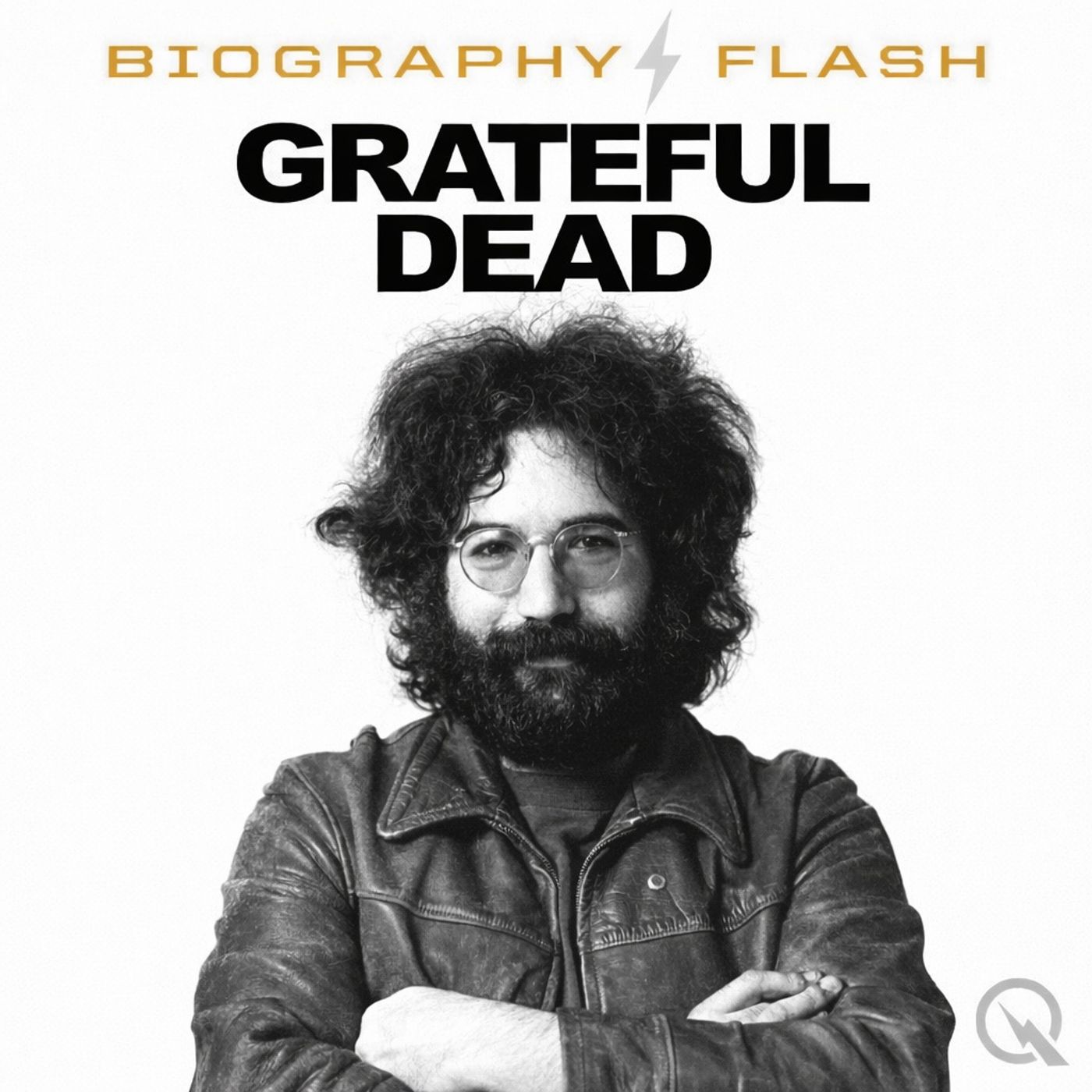
Grateful Dead - Audio Biography episode artwork

EPISODE · Mar 8, 2024 · 13 MIN

Grateful Dead - Audio Biography

from Grateful Dead - Biography Flash · host Inception Point AI

The Grateful Dead, one of the most influential and iconic rock bands in history, emerged from the vibrant San Francisco music scene of the 1960s. Over the course of their 30-year career, the band created a unique blend of rock, folk, bluegrass, blues, reggae, country, jazz, psychedelia, and space rock that captivated audiences and earned them a dedicated following known as "Deadheads." This essay will provide an in-depth exploration of the Grateful Dead's history, their musical journey, and their lasting impact on popular culture. Formation and Early Years (1965-1966) The roots of the Grateful Dead can be traced back to 1964 in Palo Alto, California, when Jerry Garcia, a young musician and former army private, met Robert Hunter, a poet and aspiring musician. The two began playing together in various folk and bluegrass bands, laying the foundation for what would eventually become the Grateful Dead. In 1965, Garcia joined a jug band called Mother McCree's Uptown Jug Champions, which included Bob Weir and Ron "Pigpen" McKernan. As the band evolved and began incorporating electric instruments, they changed their name to The Warlocks. However, upon discovering that another band had already claimed the name, they eventually settled on "Grateful Dead," a name suggested by Garcia after he came across the phrase in a dictionary. The newly christened Grateful Dead began performing at local venues and quickly gained a following among the growing counterculture movement in San Francisco. The band's original lineup consisted of Jerry Garcia (lead guitar, vocals), Bob Weir (rhythm guitar, vocals), Phil Lesh (bass, vocals), Ron "Pigpen" McKernan (keyboards, harmonica, vocals), and Bill Kreutzmann (drums). In 1966, the Grateful Dead became the house band for Ken Kesey's Acid Tests, a series of events where attendees were encouraged to use LSD and other psychedelic drugs. These experiences had a profound impact on the band's music and philosophy, helping to shape their improvisational approach and their commitment to creating immersive, transformative experiences for their audiences. Rise to Prominence (1967-1970) As the San Francisco music scene exploded in popularity, the Grateful Dead's reputation grew. They signed with Warner Bros. Records in 1967 and released their self-titled debut album, which showcased their eclectic mix of genres and psychedelic experimentation. Although the album received mixed reviews, it established the band as a force to be reckoned with in the burgeoning rock scene. The late 1960s saw the Grateful Dead's popularity soar as they continued to tour extensively and release groundbreaking albums such as "Anthem of the Sun" (1968) and "Aoxomoxoa" (1969). These albums featured extended improvisational passages, intricate harmonies, and a blend of musical styles that set them apart from their contemporaries. In 1969, the band performed at the legendary Woodstock Music & Art Fair, cementing their status as countercultural icons. This content was created in partnership and with the help of Artificial Intelligence AI.

The Grateful Dead, one of the most influential and iconic rock bands in history, emerged from the vibrant San Francisco music scene of the 1960s. Over the course of their 30-year career, the band created a unique blend of rock, folk, bluegrass, blues, reggae, country, jazz, psychedelia, and space rock that captivated audiences and earned them a dedicated following known as "Deadheads." This essay will provide an in-depth exploration of the Grateful Dead's history, their musical journey, and their lasting impact on popular culture. Formation and Early Years (1965-1966) The roots of the Grateful Dead can be traced back to 1964 in Palo Alto, California, when Jerry Garcia, a young musician and former army private, met Robert Hunter, a poet and aspiring musician. The two began playing together in various folk and bluegrass bands, laying the foundation for what would eventually become the Grateful Dead. In 1965, Garcia joined a jug band called Mother McCree's Uptown Jug Champions, which included Bob Weir and Ron "Pigpen" McKernan. As the band evolved and began incorporating electric instruments, they changed their name to The Warlocks. However, upon discovering that another band had already claimed the name, they eventually settled on "Grateful Dead," a name suggested by Garcia after he came across the phrase in a dictionary. The newly christened Grateful Dead began performing at local venues and quickly gained a following among the growing counterculture movement in San Francisco. The band's original lineup consisted of Jerry Garcia (lead guitar, vocals), Bob Weir (rhythm guitar, vocals), Phil Lesh (bass, vocals), Ron "Pigpen" McKernan (keyboards, harmonica, vocals), and Bill Kreutzmann (drums). In 1966, the Grateful Dead became the house band for Ken Kesey's Acid Tests, a series of events where attendees were encouraged to use LSD and other psychedelic drugs. These experiences had a profound impact on the band's music and philosophy, helping to shape their improvisational approach and their commitment to creating immersive, transformative experiences for their audiences. Rise to Prominence (1967-1970) As the San Francisco music scene exploded in popularity, the Grateful Dead's reputation grew. They signed with Warner Bros. Records in 1967 and released their self-titled debut album, which showcased their eclectic mix of genres and psychedelic experimentation. Although the album received mixed reviews, it established the band as a force to be reckoned with in the burgeoning rock scene. The late 1960s saw the Grateful Dead's popularity soar as they continued to tour extensively and release groundbreaking albums such as "Anthem of the Sun" (1968) and "Aoxomoxoa" (1969). These albums featured extended improvisational passages, intricate harmonies, and a blend of musical styles that set them apart from their contemporaries. In 1969, the band performed at the legendary Woodstock Music & Art Fair, cementing their status as countercultural icons. This content was created in partnership and with the help of Artificial Intelligence AI.

NOW PLAYING

Grateful Dead - Audio Biography

0:00 13:54

No transcript for this episode yet

We transcribe on demand. Request one and we'll notify you when it's ready — usually under 10 minutes.

Dead Show of the Month Dead Show of the Month Have a monthly dose of the Grateful Dead and Friends! Once a month our podcast will deliver a full Dead show from our vault, complete with an intermission show showcasing some of the Grateful Dead's musical friends, side projects and more... all hosted by Your Old Friend Dave along with his trusted co-host "Bob". Stories of Hope The Dream Center Want to hear some good news and incredible stories of life transformation? Stories of Hope is a podcast produced by The Dream Center in Easley, South Carolina where you will learn about real-life stories connected to our ministry. These stories are so powerful that the redeeming love of Christ is undeniable. Join us and be encouraged...there is HOPE. We are so grateful for the outpouring of support for Stories of Hope. Season 5 of Stories of Hope releases every Thursday!Visit our website at dreamcenterpc.org for more information.Follow us on Facebook :@dreamcenterpcFollow us on Instagram:@dreamcenterpc Audiobook Mystery jiawanying The Ambassadors By: Henry James (1843-1916)Amy Foster By: Joseph Conrad (1857-1924)The Golden Bowl By: Henry James (1843-1916)Green Mansions: A Romance of the Tropical Forest By: William H. HudsonThe Stars, My Brothers By: Edmond HamiltonThe Altar of the Dead By: Henry James (1843-1916)No Name By: Wilkie Collins (1824-1889)I Say No By: Wilkie Collins (1824-1889)Hushed Up! A Mystery of London By: William Le Queux (1864-1927)The Man With Two Left Feet, and Other Stories By: P. G. Wodehouse (1881-1975)The Amazing Interlude By: Mary Roberts Rinehart (1876-1958)A Selection from Young Adventure, A Book of Poems By: Stephen Vincent Benét (1898-1943)Tremendous Trifles By: G. K. ChestertonThe Trail of the Hawk By: Sinclair LewisAt Agincourt - White Hoods of Paris By: George Alfred HentyDeephaven By: Sarah Orne JewettDavid Elginbrod By: George MacDonald (1824-1905)The Wings of the Dove By: Henry 50ish & Fab: The Hot Flash Report KC Sonshine - Your Southern Sweet Tea with a Splash of BROOKLYN! Welcome to 50ish & Fab: The Hot Flash Report — the unapologetic, hilarious, and heart-to-heart podcast for women embracing the fabulousness of life after 50 (and ambitious 40-somethings dreaming of the good life!). Hosted by the witty and warm KC Sonshine, a Brooklyn girl with a little southern charm, this show dives into the messy, magical, and marvelous world of midlife women, menopause, dating, relationships, grandparenting, faith, and living your best life after 50. Because growing old gracefully is cute, but THRIVING after 50 is FABULOUS!

Frequently Asked Questions

How long is this episode of Grateful Dead - Biography Flash?

This episode is 13 minutes long.

When was this Grateful Dead - Biography Flash episode published?

This episode was published on March 8, 2024.

What is this episode about?

The Grateful Dead, one of the most influential and iconic rock bands in history, emerged from the vibrant San Francisco music scene of the 1960s. Over the course of their 30-year career, the band created a unique blend of rock, folk, bluegrass,...

Is there a transcript available for this episode?

Yes, a full transcript is available for this episode. You can read the complete transcript on the episode page.

Can I download this Grateful Dead - Biography Flash episode?

Yes, you can download this episode by clicking the download button on the episode player, or subscribe to the podcast in your preferred podcast app for automatic downloads.
URL copied to clipboard!