
EPISODE · Jun 30, 2026 · 1 MIN
Gray Catbird Dumatella carolensis
from Northwest Soundscapes · host Andy "soundeziner" Martin
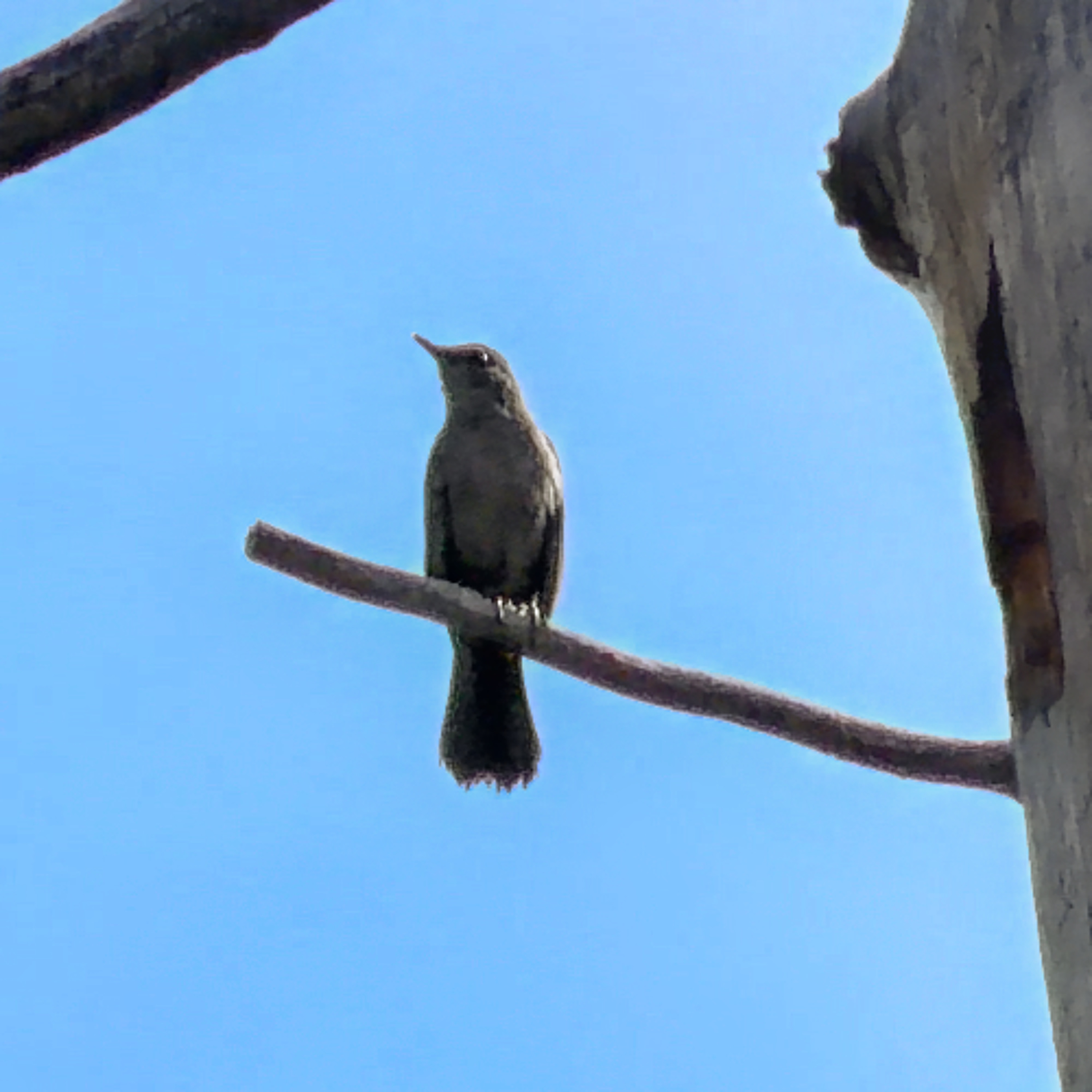
Gray Catbird, Dumetella carolinensis, brief developing song string, clean processed from original parabolic recording followed by the original source family: Mimidae -- Mockingbirds and Thrashers Gray Catbirds are most easily recognizable from their characteristic "mew" like a loud cat, but males are also well known for long, developing song performances that include whistles, squeaks, gurgles, whines, nasal tones, even mimicry of other birds. If you hear a long seemingly random performance coming from spikey shrubs, listen carefully to the phrasing. Where true Mockingbirds tend to repeat phrases three or more times and Brown Thrashers tend to repeat phrases twice before continuing, Gray Catbirds sing phrases almost at random with some repeated notes. Recorded on June 24, 2026, in the high Okanogan of Washington State, I liked this particular bird for his near-perfect example of a Willow Flycatcher. Listen the isolated version at 00:17.600 and again to the original at 00:51.200 See if you can pick out the ACTUAL Willow Flycatcher singing in the background (hint: try 00:36.600, 00:44.100). Was this Catbird responding to the Flycatcher? Or was it just coincidence? I know it was a genuine article by actually seeing it with my own eyes. Also in the background can be heard Spotted Towhee, Red-winged Blackbirds, and Song Sparrow, , among others. The picture attached is a still from a video I'll link to when I post it to Youtube. I've been experimenting with video+audio recordings recently, and while I don't have an amazing camera, my iPhone is doing just fine for now. After all, I'm a bird RECORDIST, not a bird PHOTOGRAPHER ;)
What this episode covers
Gray Catbird, Dumetella carolinensis, brief developing song string, clean processed from original parabolic recording followed by the original source family: Mimidae -- Mockingbirds and Thrashers Gray Catbirds are most easily recognizable from their characteristic "mew" like a loud cat, but males are also well known for long, developing song performances that include whistles, squeaks, gurgles, whines, nasal tones, even mimicry of other birds. If you hear a long seemingly random performance coming from spikey shrubs, listen carefully to the phrasing. Where true Mockingbirds tend to repeat phrases three or more times and Brown Thrashers tend to repeat phrases twice before continuing, Gray Catbirds sing phrases almost at random with some repeated notes. Recorded on June 24, 2026, in the high Okanogan of Washington State, I liked this particular bird for his near-perfect example of a Willow Flycatcher. Listen the isolated version at 00:17.600 and again to the original at 00:51.200 See if you can pick out the ACTUAL Willow Flycatcher singing in the background (hint: try 00:36.600, 00:44.100). Was this Catbird responding to the Flycatcher? Or was it just coincidence? I know it was a genuine article by actually seeing it with my own eyes. Also in the background can be heard Spotted Towhee, Red-winged Blackbirds, and Song Sparrow, , among others. The picture attached is a still from a video I'll link to when I post it to Youtube. I've been experimenting with video+audio recordings recently, and while I don't have an amazing camera, my iPhone is doing just fine for now. After all, I'm a bird RECORDIST, not a bird PHOTOGRAPHER ;)
NOW PLAYING
Gray Catbird Dumatella carolensis
No transcript for this episode yet
Similar Episodes
Dec 22, 2025 ·6m
Dec 22, 2025 ·5m
Dec 22, 2025 ·7m
Dec 22, 2025 ·5m
Dec 22, 2025 ·5m
Dec 22, 2025 ·5m