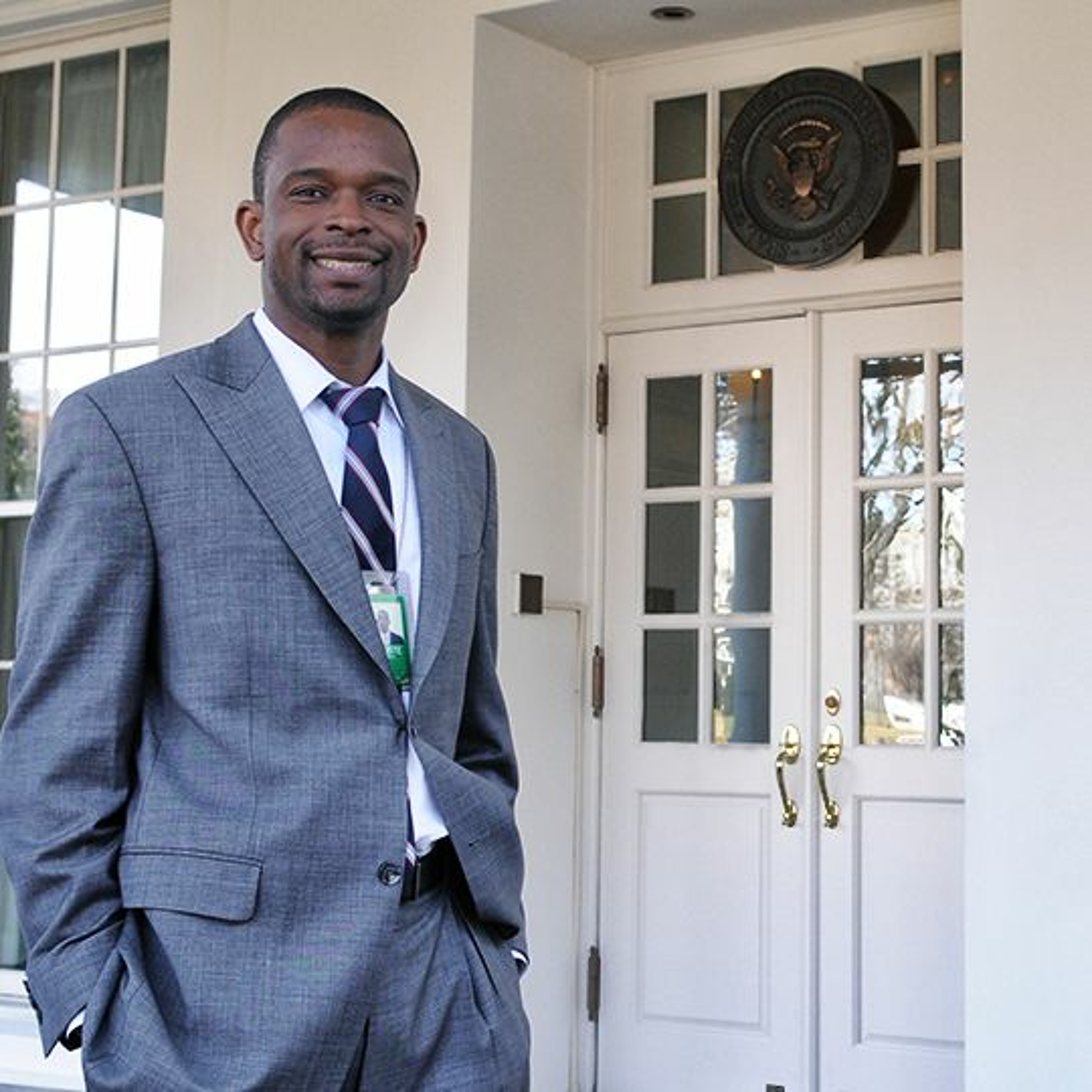
This podcast is being brought to you by WXAV.com. WXAV, bringing the best artists to you. Welcome to WXAV. I'm Sean Anderson, and this upcoming podcast is an interview that I held along with my classmate, Mia Morgan, with Gregory Lorges.
Gregory Lorges is the former associate director of scheduling to President Barack Obama. In this interview, we touch upon Al Greg, scheduled the president, the father, and the man himself, Barack Obama, and we also asked Greg on whether he was going to run for president. There's much more in there, and we hope you enjoy it. So I worked at the White House since the first Monday at administration.
So, like, the full eight years, I was his director, or served as a director, for a little over two and a half years. Would you mind explaining why you are at San Xavier? Because we know you're giving a speaker later on around, like, three PM today. How did you end up coming to San Xavier?
And then what is the talk really focused on? So, Dean Campbell, we've known each other for, I want to say, going on, 1999 or 2000 semicolos, what is that, 16 years? And, you know, not only was he my dean of student, but he was also a close-frain and mentor. And over the years, you know, I love talking to students.
Like, my college years were the best years of my life, still to this day. You know, even after working at the White House, working at the Clinton Foundation, I had so much fun in college because, you know, it was an experience that, you know, I never thought it would be possible. And, you know, it was the first time where, you know, every day I woke up, I had the intention of doing well. So, you know, since leaving college, you know, I made it a mission of mine to always go back and to share my story, you know, to let, you know, students know that, you know, this is going to be the best part of your life, you know.
So, you want to make sure you're doing the best of it. Like, you know, everybody knows you got to go in to get good grades. But also, you know, you want to be able to have fun and you want to be able to engage, you know, so like joining different clubs and organizations, you know, being part of the actual community. So, you know, why I'm here today is one, you know, like Dean Kamoye and I, when I last saw him, he told me about, you know, like the campus and like the student population.
You know, most of the students here, you know, have similar backgrounds as mine, you know, in terms of, you know, they probably wouldn't have been possible for them to even get into college if it weren't for, you know, a Pell grant or a specific, you know, you know, program that would scare them to helping those who wouldn't be able to get into college, you know, under normal circumstances, get into college. You know, that's, that's me, you know, in a nutshell. So, being able to sort of share that piece with the students today, letting them know like, look, you know, sometimes it may start rocky or you may not know, you know, what the future holds. But like, when opportunity presents itself, you know, you take it, you jump at it.
Even if you don't, you know, fully understand like if you can succeed, you know, you try. So, you know, I'll share my story today and, you know, hope that it'll, you know, spark or flame in even if it's one person. So, how as an education major, did you end up in this world of politics? So, it's weird because, you know, if I don't tell folks that I graduated with an education degree, they would assume that I graduated in politics or, you know, social engagement or something.
You know, I went into school to be an education major because that's what I felt was the best way for me to give back. I didn't really like school, you know, and, you know, I lived in Brooklyn, lived in Urbinton, both cities that, you know, didn't really have the best of schools. And, you know, the teachers were always stretched thin. So, you didn't have a lot of teachers that would actually take interest in students because they didn't have the time to.
But you would have, you know, over the years, like these gyms, you know, these teachers that, you know, they went far beyond the normal duties that they needed to. And, you know, I had, you know, maybe two teachers throughout my, you know, middle, high school years that really affected me. You know, it was the ones that really like took the time. You know, they would, you know, give up their Saturday to do stuff.
So, that's why I got into education. I didn't end up teaching, you know, so I spent five years getting into the degree. I didn't use it because my last year, so, you know, I started off in 1999 and ended in 2004. In between those years, no child left behind was enacted.
And, like, you know, there was a shift in how people started teaching. You know, so I got into teaching because I wanted to be that cool, fun teacher that, you know, would use the newspaper to teach, you know, would take, would go on field trips. We'd do all that. But when that law was passed, you know, it took a lot of time for school districts to understand how we were going to intimate this.
So, there was like a little fear and, you know, like we have to do this right. So, you went from, you know, being super engaging to teaching by the book. And I couldn't do that. And, you know, during my student teaching year, I didn't do as well as I thought.
And I know it's mainly because, you know, the function of the role changed. And, you know, I could not adapt. So, knowing that, you know, I just didn't think I was going to be as successful in the classroom as I wanted. So, I decided not to teach.
And, you know, the thing that I drew to next was just, all right, well, I spent a lot of time working in communities and working with different organizations. So, you know, I'll find a job that is geared towards that. And, you know, it was a miracle. You know, so, worked for AmeriCorps, uh, Straight Out of College, I started out as a Promise Fellow.
And then, you know, you know, after two years, um, was lucky enough to work at the Clinton Foundation. So, things just kind of gradually happened. I didn't have, uh, my mind set on politics, but the things that I did as a student, you know, I didn't know that they would, they would become jobs, you know. So, like being, you know, like the, you know, like event planner for your, you know, like BSU or something like that, you know, it was a skill, you know, organizing and like, you know, time management, all that stuff.
You know, like it was easy, I need to transition from me to, uh, to work in AmeriCorps. Uh, so, you know, that's kind of how it happened. Finding opportunities to really succeed. So, you would say AmeriCorps was that, you know, opportunity or was, you said it was opportunity happening in college.
So, I would say, so AmeriCorps was the opportunity, but, um, the, the skills and, you know, just that passion was, it was developing college. I just didn't know that, you know, for me, I just wanted to, you know, be active on campus. And that's how I labeled it. You know, like you come on campus and you do things.
You know, I didn't really connect, well, I'm doing all these things because I'm passionate about it. You know, so when I heard about AmeriCorps and, you know, the things that they would do, it was similar to what I was doing in college, you know. So, you know, you're, you know, helping, you know, like, disadvantaged students by mentoring and coaching them, you know, you're going to, you know, like these cities and helping the homeless or, you know, you're working on disaster-appearness plans, like all these things that we, uh, we're part of in college. Because like, not, not 11 happened when we were in college, you know.
So, you know, figuring out, like, if ever something like that would have happened again, what do you do? Um, well, all things as a student, you know, I just wanted to be part of and, you know, when I read about AmeriCorps, I was like, oh, this is actually a job that you can get paid to do. So, you know, I gravitated towards that. And, you know, eventually other opportunities came about and, you know, you know, the rest is somewhat, you know, like the rest of the course.
You mentioned earlier that you worked for the Clinton Foundation. So, was that like another stepping stone that helped you get to where you are today? And could you explain that? So, the Clinton Foundation, uh, President Clinton, was the first president that my parents ever talked about, um, at home.
It was because he did a lot of work, uh, for the country of Haiti, my parents are from Haiti. Um, and, you know, when he was working on issues that affected the country, you know, back at the time, my parents were, you know, very involved and engaged and knowing what was going on. So, like, I'm here and I'm talking about President Clinton. Um, so when I, um, graduated and finished off in AmeriCorps, because I was, I actually went to DC for this, uh, training for the Senator Barack Obama.
Yes, we can't hope for training. And it was the area where I met some people that were connected to the, uh, to the Foundation. You know, I just talked to them and told them about myself and sort of shared that story, not knowing that they would take my resume and pass it on, you know. So, it was just me, you know, engaging with people.
And I got a call to interview for a job. And, you know, I did. And it was perfect timing because my time at AmeriCorps, you know, served for two years, um, was coming to a close. And that's why I needed to find something to do the next thing.
And, uh, the Clinton Foundation, you know, they called. I interviewed, uh, the first job that I interviewed before I did not get, I was disappointed. Um, but, you know, because I just left a good impression on them, when another opportunity came about, uh, they called me back. I interviewed again for the new role and I got it.
So it's, it's, it's, it's, like, the common theme is, you know, like, I never really had a, uh, a track of like, like, right, well, in two years, I'm gonna work for AmeriCorps. And then like two years after that, I'm going to, you know, work for a big foundation. And then two years after that, I'm gonna go do this. You know, things kind of just happened.
And, you know, so it was nerve-wracking because it was always new and like, you didn't know, like, if you were making the right decision, but, you know, for some reason, deep down inside, in my gut, I felt that it was a good move. So I took it. I should mention that, um, it was between the Clinton Foundation and me going to Missouri to work on a, uh, a sanitourical race, you know, to work for Cleo McCaskell. I had, um, uh, you know, said that I was leaning towards going to Missouri because I never really lived outside of New York and New Jersey.
So that experience alone would have been exciting. Um, but, you know, I couldn't have passed up the opportunity for working for, you know, President Clinton, the president that, you know, my parents loved and admired. So I ended up not going to Missouri taking a job at the Clinton Foundation. So then through the Clinton Foundation, you did start working for the Obama Administration, or was it the Obama campaign?
So, uh, the, uh, Obama campaign, you know, so, you know, going back a little bit, you know, so that training, as I said, it was with Senator Barack Obama's Hope Fund. And, you know, the whole point of it was to, um, you know, help, uh, more minorities get engaged in, the full spectrum of, uh, what it means to work on campaigns, you know? So, you, we learned about fundraising, we learned about policy, we learned about scheduling in the vans, we learned about, um, the, the, the, you know, like, legislative, you know, like working, you know, like, grassroots, like with people. Um, so I kept, uh, in contact with everyone that, uh, ran that program.
So, like, the two years that I was at the Clinton Foundation, I still engaged with them. And, you know, despite, you know, Barack Obama, uh, going against Hillary Clinton, you know, it didn't really affect the relationships that I had, um, with, um, uh, the folks at Workforce Senator Obama, um, because, you know, like, I, I just was a hard worker, you know? And, uh, I could have left to work on his campaign in the very beginning, but I committed to work for President Clinton at his foundation. So, I, I missed the entire primary.
And the minute the primary ended, um, because of those good relationships that I kept, you know, they asked, hey, you know, like, we're looking to staff up, you know, like, do you want to work for the campaign? And, you know, to me, it was an old reiner, you know, like, it was, you know, President, it was Senator Obama's Hope Fund, uh, program to help me get the job at the Clinton Foundation. So, it was only right, I felt for me to help him, you know, like, on his campaign to, you know, hopefully become the President of the United States. So, were you always interested in politics or were you kind of familiar with everything?
Did you need to learn anything new on your journey? So, I wasn't. Um, and, yeah, I'm still learning now, um, because, you know, politics, where I'm from, you know, it's not, you know, the topic of discussion, you know, at the dinner table. Um, you know, as I mentioned earlier, you know, my parents, they immigrated here.
And, you know, to them, you know, the American Dream, you know, was harder, you know, because like, they weren't native to, to the country. So, it was all about working, you know? So, my parents would wake up at like 5.30 in the morning. Um, you know, my dad would take my mom to work and then come back, make sure we were ready and drove us to school.
And we didn't see them again until 7 o'clock. So, like, dinner was kids just talking. Um, and when my parents got back home, it was more like, well, I was school and then like, they went on to sleep. And in our areas, you know, like, someone's thing, someone's bad things would happen.
You know, like, you would, you know, it would be crime ridden or like, you know, the school weren't good. So, you had a, a negative feeling towards all politicians. You just felt like, like, man, you come here during election time and you don't do anything. So, I pay attention to it.
Um, and that's sort of the, um, the attitude I had up until I got into college. Um, you know, where you started to understand the process more because it was, you know, broken down and explained to you, like, well, this is how a law is actually made. And like, you know, there's elections and there's, there's like state senators, there's X, Y, Z. And you realize that, you know, these are normal people, you know, so like, these are your neighbors who, you know, has made the decision to represent, you know, like, their district by doing X.
And it was, it's always something that drives them to it, you know? So, whoa, I would say real public servants, you know, the calling is deep inside, you know, like, whether they see it wrong, that they want to fix, you know? So that's how I, you know, started liking politics and understanding like, look, regardless if we don't like the, the, the, the politician that serves us, you know, like, we, we are the ones that put him in there, you know? So if we don't like him or her, then, you know, we need to be engaged in either find someone else or vote that person out.
So I got a late start in, in, in to politics. And, you know, I said, you know, I'm still learning, but I know it's important. And, you know, that's one of the things I try to stress to people too, you know, like, you can't be on the sidelines, you know? Because if you are the things that you're upset about, you know, they'll never change, or when they do change, they're not going to change, you know, the way you like it.
Because like, you didn't voice your opinion or you didn't show that your voice is an active one. So would you say that politics did end up kind of being a natural fit for you? Because you always mentioned like where I'm from, you wanted to change that. Was it a natural fit?
Yeah. Yes. You know, you come to realize that, you know, that, you know, again, because it wasn't really explained to me, like, I didn't know, you know, but, you know, once you come into yourself, you realize, oh man, you know, like, I have been socially active or concerned about what is going on in my community and, you know, figuring out, like, all right, well, how you how you change that is, you know, through being engaged in the, in the, in the political process now that, you know, I know that things are, you know, things are so much clearer and, you know, I form my own opinions and, you know, I always start off by saying it's my opinion and, you know, try to share and educate folks on what's going on, hoping that they take an interest. And it doesn't even need to be a deep interest, you know, you can start locally, you know, where like, you know, you're, you know, you're worrying about what concerns, you know, your area and then, you know, you move on to like, well, you know, like federal or state, you know, and, you know, the rest is, you know, like, it's all up to you.
Knowing that at the end of the day, like, you know, once you reach a certain age, like, you know, you have the right to cast a vote, you know, that can change the dynamics of, you know, like a city, state or a country. Will you ever run for any type of office? Good question. I, I, before I got to the White House, you know, I always thought about it, because I would have friends that would call me the governor or say, like, you know, you need to run someday.
And, you know, now that I'm out, you know, I don't think so, because I feel not because, you know, I don't think, you know, serving, you know, your country or, you know, your state, your city is a bad thing. I feel that you don't necessarily need to be a politician to make change, you know, you look at people like Bill Gates and Melinda Gates, you know, people like Steve Dogg, who's in your life, like, you know, those folks were ground breakers too, making chains like Oprah, make chains, you know, they don't hold any political office. So I feel like you, you know, like, you're not attached to a political party, like, so like, you can really voice your opinion and be okay with it. Like, this is just what Greg thinks.
And like, it's up to you to defend that, you know, that idea, that thought, you know, and you know, you do your own research, like, again, you talk with people. And like, no one's could come at you and be like, well, this is not, you know, like, what our platform is and like, you're off message and all that stuff. So right now, I feel, I've been, I'm successful just being Greg, someone who, you know, just loves this community. So there's not really a need for me to attach a elected official position to that.
So obviously you did have experience at the White House eight years in the White House. What was the biggest adjustment? Because I remember when we visited the White House, just standing on the driveway looking at the White House, it's like, you know, just kind of jarring. How was it working in that environment?
How was it adjusting to that environment? So I'm not embarrassed to share this. So I started working at the White House when I was 24, maybe 24, 25. And I thought the White House was a Capitol building.
We did too. No, we did too. We were on the backside of the Capitol building. We were looking, we're like, Oh, yeah, that's the White House.
And we walked around, we're like, Nope, that was the Treasury. We thought the Treasury was the White House. You know, so, you know, when I went for the first time, I went to the wrong place. And, you know, a lot of my colleagues were like, Oh, man, you should be embarrassed to share that story.
You shouldn't share that. But like, they come from, you know, families that were heavy into politics or, you know, their parents must, you know, may have took them to the White House. So they knew what it looked like. I didn't.
You know, so every minute of, you know, like my experience day, the first year was like a pinch me moment, you know, because, you know, I was learning so much, you know, so like walking the halls and, you know, swiping in my badge every day just felt like, wow, you know, this is a precious moment. And just, you know, the process of how things worked, you know, I was not familiar with it. But, you know, I made sure that I came in early, you know, so things that I knew I wasn't strong, you know, like I felt that I needed to like, you know, know more, you know, I studied, you know, so, you know, just like you are, you know, have a tough class, you know, you buckle down and figure out like what it is that can make you more successful in it than you do it. So reading the history about the White House, like, tested myself.
So like, I do want a whole bunch of tours where I knew folks would ask questions and like, well, I need to be able to answer them. So like, let me figure it out. It was just, it was crazy, you know, because again, it's not something that, you know, typically happens in, you know, like, areas that I come from. Like, you know, my friends used to think that you have to pay to visit the White House.
And that's not the case at all. I mean, I thought that was just like any other museum that you probably would have to pay a fee, but it's totally free, you know. What is the most difficult part of being former President Obama's scheduler and like, how you cope to overcome these difficulties? So I would say, you know, the hardest part, you know, in this, in that role was, you know, not only were you scheduling, you know, the President of the United States, but you were also, you know, scheduling, you know, like Barack Obama, the father, you know, the, you know, the, the husband, you know, the, you know, the, you know, sports person, you know, so making sure that each day as we mapped out what he would be doing, like we thought about that.
You know, so if there were important games, you know, that were on, you know, like we made sure that we weren't going to plan anything that would, you know, like be in the way of like a bull's game. I know I'd like to for a reason. You know, it wasn't like he said, you know, I want to watch a bull's game, but like you've tried to like, if you wanted to, like, you know, it was easy for him to do it, you know, knowing when, you know, the kids had like, practice or a test, you know, though all those things that, you know, when you look at, you know, different departments, you know, when they're coming for time or requesting time, I wanted to do something like their main focus was on that, you know, like, right, he's going to spend a whole day doing this. And, you know, that was never the case.
So like, you know, setting realistic expectations for everybody was probably the hardest part and, you know, trying to think like him, you know, because, you know, we wanted to make sure that everything he did was awesome for him, but also awesome for the people that he was engaging with, you know, so it would make no sense if it was just one sided, you know, like you come into a meeting or you go to an event and it was all about him. He was the most comfortable person there. You know, we wanted to make sure that, you know, like if he was going to say a city like Chicago, that, you know, we had a diverse group of people and, you know, they got out of the event as much as he got out of the event, you know, so we were the only department that had to sort of like think like that. And how did you make that adjustment to was it just spending so much time with him that you ended up getting more comfortable to think like him and to get more comfortable to think like what he would want to or his day to look like?
So, you know, really, in our roles, like we are behind the scenes, you know, so like, you know, the interaction is not what people think, you know, like where it's like every day, you know, like he's like behind me saying like what's on the agenda. So it took every interaction that we would have, you know, when there was, you know, a meeting where, you know, we're listening at the president talk about, you know, what he feels is important and then taking that and saying, all right, well, how do we make, how do we put this on paper and how do we put a picture to it? So it took, you know, it can always change. You know, so we just were always ready to adapt.
So being adaptable was the biggest key knowing that yes, we have sort of a playbook on how to do something. But if it has to change, we're ready to do that. And from a question, you kept mentioning your family and the president Clinton's the first president your parents talked about what was their reaction when you started working at the White House and you started working with President Obama. So my mom, you know, so my parents, they came to America in the early 70s, mid 70s.
And you know, it was always on like, in a green card status. And my mom, you know, because everybody in the household was, you know, somewhat interested in, and if this was going to be possible, if this African American man would be able to be president you know, they were there when Jesse Jackson ran and they, you know, so they was like, I don't know if this is real. Well, my mom, you know, just feeling that, you know, this could happen. Like she like started the process of becoming, you know, a citizen, you know, so her first vote as a US citizen was for Barack Obama as president, you know, so it was just, you know, to them, it was like, I can't believe my son is doing this.
I can't believe my son is working for two presidents, you know, working for, you know, like President Clinton, who, you know, like did so much for the country that they came from. And, you know, now, you know, working on a campaign, this historic campaign for, you know, this African American man, and becoming president and like me actually having a job, you know, it's been a dream for us all. I was just going to ask if you have a scheduler. No, no, I don't.
And, you know, I sort of have learned how to manage my time through, you know, like managing, you know, like, you know, the president's time, like both President Clinton and President Obama, you know, knowing that, again, like they're so busy and like the time that I have to myself is limited, I try to structure myself. And you know, I've put into buckets, you know, like the most important thing to me is my family, you know, I have two little, two kids, you know, I have a six year old daughter and a three year old son, you know, they married to my wife. It'll be 10 years in September, you know, so like that's my priority, then, you know, there's work. And then there's other, and other, like that's a huge bucket, you know, where, you know, whether it's giving back, spending time with like my family and friends, I try to piece that together.
So it's tough, but I feel that what I do in all three of those buckets is inspiring whoever's watching me, you know, so, you know, at the end of the day, like, you know, someone could see something like, oh, well, you know, I want to one day become like work at the White House, but also, you know, there's someone that's saying, you know, I want to be a great dad or a great mentor or a friend, you know, so, you know, knowing that, you know, I don't cheat myself in terms of time, like, you don't get any seconds back. So I try to do everything that I can 100%.