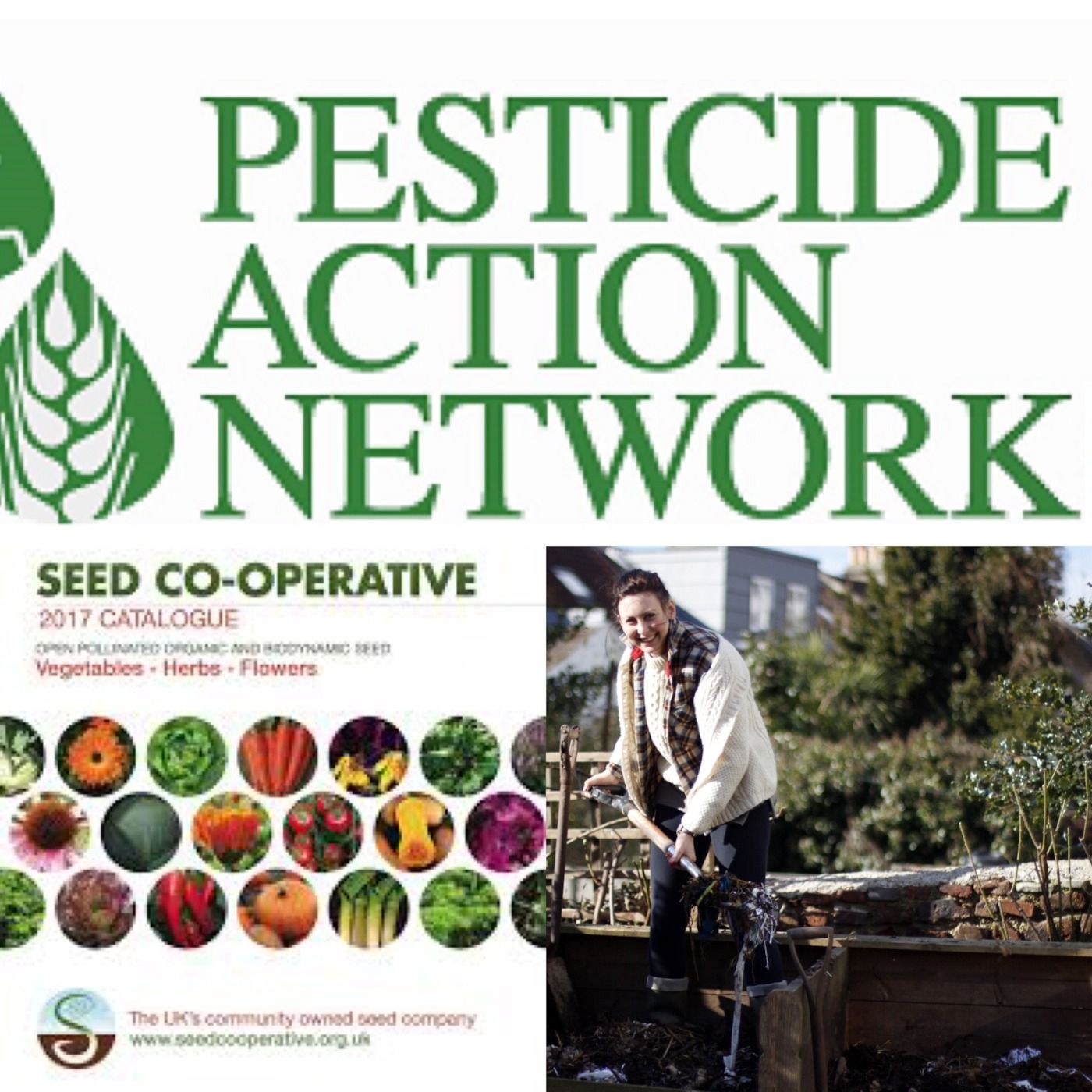
Hello, I'm Charlotte Petz. Welcome to Growing Wild, sponsored by Infinity Foods on Radio Reverb, on 97.2 FM, online and on digital. Coming up on this month's show, I headed off to Seedy Sunday and caught up with a couple of speakers there. We'll be hearing from Nick Moll of the Pesticide Action Network, David Price of the Seed Cooperative, and Lindsay Haskell of What You Sow and Emmaus. But first of all, we'll have a song, and it's going to be The Primitives and Crash.
So what do you want to be? Got no cure for misery. And if I go around with you, you know that I'll get messed up too with you. There's the Primitives and Crash. Oh, that's a great song. It's so 80s. Is it even 80s? It might be 90s.
OK, so first off on the show, I went to CD Sunday earlier in the month. And it's such a great event. I went last year and sort of did lots of Vox popping. And it was the first show I'd done, actually. And I ended up speaking to James Wong and Christine Walkden. I just thought it was the best thing. This year was a bit different. It was a different location. And I decided to sort of focus in more on the people who were speaking and to pick up on some of the issues that they were raising. So one of the chaps who was talking was called Nick Mole. And he's from the Pesticide Action Network.
and they are doing great work in reducing the use of pesticides globally. And, well, I'll let him explain. So I caught up with him after his talk, and the first thing I asked him was to explain to me what the Pesticide Action Network is. We're part of a wider organisation that works all over the world, but as pan-UK, historically we've worked a lot in West Africa with cotton farmers there, so we've helped to train around 15,000. farmers to switch from conventional cotton growing, which is chemical pesticide particularly intensive, to organic production, which has had a huge benefit for their health, the health of their families, and for the well-being of their environment and biodiversity around them. And also help them find new markets for organic cotton. So that's one of the big ongoing projects that we have. We're currently working in some of the former Soviet republics, Georgia and Kazakhstan and various other places.
At the moment, try and show them how to use pesticides safely before then looking at how they can reduce pesticides. Yeah, I heard, it was quite exciting within that talk that you've just done here, that Brighton Council have passed a motion to agree to go pesticide-free. Yeah, well, that's part of our UK work. So in the UK, again, we work on all the issues. We work on agricultural issues, we work on towns and towns and cities, we work on home and garden pesticides issues. But one of our big campaigns is for pesticide-free towns and cities. So every year we've got hundreds of tonnes of pesticides being used on the streets and pavements, parks, playgrounds, schools, hospitals, where we all...
live, work, play, daily, where our children go. And we're being exposed needlessly to these pesticides. There are. examples from all over the world, you know, hundreds, possibly thousands of towns and cities that have stopped using pesticides. They don't get by perfectly well without them. So we want the UK to do the same, but as we're based in Brighton, we thought, well, we should target Brighton. Marvellously, we've got a unanimous decision of agreement from everyone. And we made the point that this is not party political in any way. So stopping using pesticides in our town city is not an issue of party politics. It's about doing the best for the people and the environment where we live. So when you say pesticides, what exactly are those products being used? And are they the same as those that get used in people's gardens? Because it goes right down, doesn't it, to that level. It does. Are you hoping that by the councils almost leading the way and saying we're pesticide free?
that people can say, oh, maybe I don't need to use this in my garden now. Yes, there is a little bit to that. So when we talk about pesticides, we mean all the chemicals that are used to kill living organisms. So that covers insecticides, herbicides, which is used for weeds, fungicides, so all those things that fall under the umbrella of pesticides. So yes, it sort of works both ways. So it's exactly the same thing that's being used to grow our food. It's the stuff that's being used in towns, it's the stuff that people are using in their homes and gardens. The idea is that if we can convince towns and cities to stop using pesticides...
people will start asking questions. We'll be able to start raising awareness and they'll be saying, well, hold on a minute, should we be using these to grow our food or should I be using this in my garden? And we hope that that will then lead to changes so we'll be able to push for a more sustainable agricultural system that relies less heavily on pesticides and chemicals. We'll be able to convince people that actually they don't need to be poisoning their gardens where they live. So it sort of works both ways. And councils are a good target because...
After agriculture, they use the bulk of the pesticides in the UK. And councils can take decisions independently of the national government, who are very pro-pesticides and always have them. That is the thing. That troubles me, that the NFU have their ear big time and they seem to really peddle pesticides. Do you work with them as well? Are you a bit of a lobbying movement in that respect? Oh yeah, absolutely. We work on advocacy, we work on legislation, we work at the higher political level as well. And it's incredibly difficult. And yes, the National Farmers Union is...
basically an extension of the pesticide industry. The National Farmers Union is not a union. It's a society for landowners. And, you know, it's pro-pesticides. As a perfect example of that, they have just appointed to lead their Brexit negotiations. Their Brexit team have just appointed the outgoing head of the Crop Protection Association, which is the industry body for pesticide manufacturers. Wow. Oh, it makes me want to cry. That's how they work. And so it's very difficult, very difficult to work against. I mean, luckily, and this is, you know, we have had Europe. So all the progressive, all the precautionary.
legislation restrictions has come from Brussels, and all of it's been fought against by the UK. So where we go after Europe is really quite worrying. Yeah, especially that sort of appointment that's just been made. I mean, it could be a huge drive to deregulation of how wet pesticides and what pesticides can be used. So we could see pesticides that have been banned on human health and environmental grounds coming back into use.
There are reasons to be pessimistic about the future. Yeah, the Brexit future. So that is where it's even more important to do the small wins, to bring it back down again to a more local level and chip away from the bottom up. Absolutely, yeah. That's where change comes from. For us, it's been great going out and speaking to people, explaining to them what's happening, not being alarmed. It's not saying, you know, your child's going to die or your horse is going to die or that sort of thing, but explaining the issues and gauging the reaction, the positive reaction, saying, well, do you know what? We don't want this. So the idea that, yes, we can develop a grassroots campaign.
People interested, get people to campaign, get them engaged with where they live as well. It's got to be good for, A, getting rid of pesticides, but also good for the democratic process as well. So getting their counsellors to do the things they're supposed to be doing. So what would you recommend to use instead of pesticides? We stop using them. People have become reliant on them. It's easy. It's, you know, lazy in a way. So what can be the alternative? There are lots of different alternatives, different approaches. Just leave your weeds. You know, leave them. It's great.
Dandelions for bees. We like dandelions for bees. They're great. This time of year is a very important food source. They're coming up. Bees are starving. Absolutely. So your bees can feed on them and let's stop persecuting dandelions. So you can accept a level of weediness. That's what they did in Paris. The mayor of Paris was 10 years plus ago and said we're not going to use pesticides anymore. So they stopped. And they had to educate the public. So you're going to see more weeds. You're going to see things growing up out of the drains.
The payoff is we're not using toxic pesticides that are getting in your water or poisoning you. So that's the payoff. Do you know how pesticides came about? Why did we start even using them? Why did that come in and how did they get so massive? Full of money. There's a lot of money involved. There's a lot of clever marketing. Pesticides were developed. They came out of chemical warfare. So the nerve agents in particular that were developed by...
They had all these things during the First World War and leading up to the Second World War. And once that was over and we saw what these things could do, they thought, oh, maybe there's another use for them. Oh, they can kill insects. Oh, we can help push for agriculture. And there was a need after the Second World War to actually increase food production because of everything that happened. And it led to this thing called the Green Revolution, which was, yeah, not really green, as we would understand it. So this sort of, actually, you know, we can control nature and we can grow food and we can use these chemicals. This is how pesticides go on and on. So there's a lot of money involved for the companies that make them.
and billions and billions of pests. So they'll invent a pesticide and start using it. There'll be unforeseen problems, like it kills bees or it kills birds or it poisons the water, so they'll make another one to replace it. And then that one will have unforeseen. And they just keep going on and on and on. We've got to get off this pesticide treadmill because it'll just keep carrying on. Which is why events like this are great. This is grassroots, this is people doing it for themselves. And that's more and more what we have to do. If we're going to counter the power of these companies and the complete incompetence or lack of interest from our governments, then we're going to have to do it ourselves. So whether it's getting pesticides in our towns and cities or whether it's keeping and swapping seeds amongst ourselves, that's the only way we're going to do it. Oof, there's a lot in there, isn't there? That was sort of an equally troubling and heartening conversation for me to hear about.
Just the mass use of these chemicals and the damage that they do to our environment and the willingness of governments to use them just because of the amount of power that the companies yield that create them really is quite... depressing actually but then the work that these guys are doing in educating people in understanding that we don't need to use pesticides it's this thing of getting into the grassroots and having change come from that level and work upwards which is how change in every aspect of our lives ever happens so yeah it's great news that Brighton and Hove have agreed the motion to be pesticide free and it is happening across cities across the world actually Barcelona and like Nick said Paris and then there's Hackney within London they've just agreed it as well so it is happening but if you don't live in Brighton and you listen to this show check out to see what the council situation is where you are make some noise about it you know they listen to the people that they have they have to listen to the people that live in their constituency so and let's try and make everywhere pesticide free and try and just make a dent in these companies that seem just have too much power
The Brexit thing within that is also a concern, you know, and the amount of regulation we do get from the EU on this is really solid and, in my opinion, good for us. And to know that the UK has fought. I remember the chat I had with Dave Goulson, the bee conservationist, and he was saying how the UK government really have fought all of the bans that have come in on neonics and things that have come in, and it's the EU that's enforced that, and our government have tried to fight that. So it is a bit worrying that without the EU, quite what will happen. So let's just try and do this grassroots movement, you know, kind of make some noise and put pressure on your councils and be the voice.
Let's have a song and then we're going to have a chat with David Price, who is another chap who's fighting these big companies. And let's hear what he has to say about the company that he's created called the Sea Cooperative. But first we're going to have a song and it's He's a Rebel by the Crystals. That's the way he shuffles his feet. And when he goes walking by, he's my guy. And he holds my hand, I'm so proud. Because he's not just one of us. It's He's a Rebel by the Crystals.
Another person I heard speaking at Seedy Sunday was David Price. And he's the founder of a company called the Seed Cooperative. And I started by asking him to describe to me what the company is. The way I started to describe it is a cooperation between people who eat food. OK, so your site is predominantly going to be crops grown for the seed only. Is that right? Yeah, I mean, what most people are growing as their product would be a bi-product.
Yeah, right. You've turned it upside down, haven't you? Yeah. Okay, and then you've got a network of growers who send in their seeds to you as well. But why is this an important scheme? Well, it's important because, well, for a number of reasons. I mean, really, I think what we're trying to do is add resilience into the food system. At the moment, 80%. It's quite multi-layered, isn't it? It's reclaiming our food production and also providing extra revenue streams to people who are already growing in this country. Yeah. And also, I mean, I think it's also worth pointing out that the seed that's sold across the world, 75% is by only five global corporations.
And that number is shrinking rapidly. Those companies, I recognise, the big companies that are making pesticides are also distributing our seeds. They're producing seeds, and they tend to. That's the other thing, of course, that the seed that they're producing is designed to work with them, and there's nothing necessarily wrong with them in their own. Well, are those companies, because they have so much clout, is there legislation around being able to produce your own seed the way you are if you come up against the problems in that way, or is it actually something that could be done more often on more sites?
Legislation, well, there is legislation. I mean, initially, legislation was brought in because... You can buy seeds or and you can be part of the... Absolutely. Have a voice within that. Exactly.
That was David Price of the Seed Cooperative. You can find out more about that company on their website, which is seedcooperative.org.uk. I'm going to put all these links up on the Growing Wild show page on radioreverb.com. So do check it out if you want to find out more information. That was another one of those. Oh, there was a bit of a mic problem in that as well. So apologies for that. It just sort of faded in and out a tad. On my bit, luckily not his. But yeah, it was another one of those conversations similarly to Nick, which was sort of in equal parts distressing and heartening. I was just so astounded when I found out. I can't quite believe I didn't really know that the same companies that Nick was talking about.
These pesticide companies, the five big players, are also big in the game of our seed creation and production and distribution. So between them, they are controlling our food, which to me is just unacceptable. And it's these little guys, in a way, the David Price's of the world, that are fighting back. And they're the people that we can invest in, because the only power we seem to have in this is where we put our pound. And if we don't buy their products, then they don't have a company. So if we can invest in people like David...
then that to me just seems to make sense for everyone because these people, they are committed to looking after our planet and looking after our health. And profit is not at the foremost of their minds, unlike these other companies. The two names that came up by both Nick and David there were Bayer and Monsanto. Now, those are the people that make weed killers that you'd be very familiar with, one called Roundup, which is their biggest seller. And if you find that you do use that, maybe just have a think about the wider...
implications of using such a chemical and the fact these companies are not nice companies. Monsanto in this respect, Hubea are trying to buy out, but Monsanto are big in the game in this. They're the ones who are really pushing on these patents because they've gone more towards the seed production now. They've moved away a little bit from the chemical production because they've got themselves into all sorts of trouble with the amount of damage that they've done in creating those chemicals. And they've gone more into the seed production, and especially in the US. But as David was saying, they make the seeds that are created to be used with pesticides, so they have patented seeds that they have modified.
genetically modified, so that when farmers use them, the crops that grow are resistant to the pesticide Roundup, which they will then use to kill off the other weeds, but it won't affect that crop. If farmers use these seeds, they make them sign an agreement which says that they won't be able to harvest the seeds and use them for the next crop, so they have to rebuy the seeds every year, year on year, which is just absolutely lucrative. So not only are they patenting lettuces and seeds, they're also telling people that they're not allowed to harvest the seed that comes from the plant that they've grown. astounding that they can get away with such a thing it's such an ancient practice of ours to grow and to save seed and to produce our own food and for companies to come in and stamp all over that to me doesn't seem okay so if you feel similarly and you'd like to invest in in seed cooperative then do check out their website just being aware of where your seeds are coming from and just investing in organic seeds and being mindful of where our food is coming from it's just so so important and to fight the big guys you know okay let's have a song just to lighten the mood a little bit and then we're going to go into hearing from lindsey haskell this is otis reading and pain in my heart
That's Otis Redding and Pain in My Heart. Okay, the next person we're going to hear from is Lindsay Haskell of What You Sow. That's her company, and then she also does a lot of work with an initiative called Emmaus, who are a social enterprise. So I had a chat with her the other day, and I started off by asking her to describe to me what Emmaus is.
Okay, so Emmaus, it's a movement all over the world. So it started in France about 60 years ago. And essentially it's a project helping people move on from homelessness by giving them work and a home in a kind of supportive family environment. So, yeah, there are different branches all over the world. And the one in Brighton and Hove is in Portslade, just in Portslade Village, quite near the Old Shore Road. Okay, so can you describe the setup there? Yeah, what happens there? So there's 47 formerly homeless people that live and work there.
and there's a number of different social enterprises that operate there, and the idea is that social enterprises create an income for the community to keep going. So it's sort of quite self-sufficient. Yeah, exactly. Bit of a closed-loop. Yeah, and everyone has a job there, so they work to the best of their ability in one of the enterprises. We've got the second-hand superstore, the bedroom store, the Emporium, which is kind of vintage, beautiful vintage and retro things. We've got Southwick, which is Emmaus-by-the-Sea, so that's a little separate shop.
just near Southwick train station. The Cafe Revive, which is a really lovely cafe where you can get really nice food, including cheesy chips, which are everyone's favourite. And the one that I'm involved in, which is the Greenhouse at Emmaus, which we launched in 2012. So I've been involved with it since then. So what happens in the Greenhouse? So there's two main parts to it. So it's a secondhand gardening shop and a community allotment. So yeah, it was a long time in the planning. And then, yeah, like I say, we finally got it off the ground in 2012. And it's kind of a, yeah, it's...
Yeah, all the green things, so growing things, selling plants, selling plant pots, things like that, reselling garden furniture. Also, something I didn't say earlier is that Emmaus communities accept donations of second-hand goods from the public, and then they resell these through the social enterprises. So that's how the model works. So we kind of siphon off all the garden-themed donations, just everything plant-related. Yeah, well, that sounds good, actually. I think I haven't been. I just need to go. Yeah, you should. And the community allotment, that's worked by the people that live on site as well, or how does that operate?
So it's a mixture. In fact, yeah, most of the enterprises have a bit of a mixture of people. So there's a combination of companions who are the people that live there, a few members of staff and volunteers. So, yeah, it means there's quite a different mix of skills and abilities. And, yeah, everyone just chips in and does what they can. So the site that the allotment's on, it used to be, it was this kind of disused land on the site. At one point it was a tennis court. At one point they used to keep chickens on it. So it was kind of just, it had fallen into disrepair.
You've got the beautiful ruins of the church right behind the allotment site. So the idea was that the allotment would provide a bit of extra greenery to kind of beautify that area. Okay. What happens to the produce? Who gets that? So, yeah, different things. Sometimes we use it in the community kitchen for companions to eat. Sometimes we sell it in the shop. And, yeah, it's really popular. So we tend to get lots of things in the summer. And then we sell them. Yeah, lots of courgettes. Yeah, hopefully we won't be affected by the courgette crisis. Of course. That was crazy. That was like, you know, stop eating courgettes in November. That's the only crisis that's happening. Exactly. And even things like nasturtiums. I remember once we put...
So every lunchtime. The community kitchen makes lunch for everyone, and once we just took a big bowl of nasturtiums in, which kind of threw everyone a bit, they were like, what? They're flowers? We can eat them? I don't understand. But it was nice. Lots of people had never seen them before or knew that you could eat them, so it was nice showing people, oh, this is what we've just grown down on the allotment. Yeah, lovely. That's great. I'm a big fan of nasturtium pods. Yeah. Like little wasabi balls. Yeah. Have you pickled them? Yes. They're called poor man capers. Yeah, exactly. Yeah, and it takes out that heat, but they're still really crunchy and lovely. Yeah. Yeah, I like those a lot. Growing them on your site, though, you just never get rid of them. No, yeah, they go a bit crackers, don't they? Yeah. But yes, they're lovely. They are good.
So the people that work there, they've been previously homeless. How long do they get to stay on site for? Is it to help people get back on their feet, or is it a long-term solution for them, or how does that work? Okay, so everyone has a different story, a different place they're coming from, and a different... yeah a different amount of time they stay at Emmaus so you might get people that just um need a few months to get back on their feet and then move on to somewhere else there are some people there that have lived there for a number of years and they call it home now and they're really happy to stay there um so yeah it completely depends so it's actually driven by the person it's not driven by the exactly yeah yeah how did you come to be involved in it yeah it was kind of allotment related so me and my friend Alice had this allotment and we became kind of obsessed with growing wildflowers I think mostly because it was the only thing we were very good at growing we weren't that good at vegetables um yeah so for my birthday that year she got me this really cool um little cornflower teacup a cute vintage one and um She was like, oh, it's from me. It's a secondhand superstore. I was like, the what? Never heard of this. And yeah, I love secondhand stuff. So she took me up there for a look around. And I was just totally hooked. So I just used to go out there shopping. So I spent years as a customer out there just buying just amazing vintage and secondhand stuff. That summer, they had posters calling for volunteers for this new project. They were asking for gardening volunteers. And at that time, I just quit my day job and was setting up my own business.
And I was kind of hunched over my computer all day long, just indoors, not talking to anyone. So I thought, yeah, it's right up my street and it will be a good opportunity to get out and meet people and not be indoors on my own. Yeah, I think that's a great thing for everyone, isn't it? Brighton's brilliant for this. There's so many community gardens around the town, the city. It's something that's actually available to anyone if they want to do it. We found it's benefited your well-being. Definitely.
You know, inside on a computer and then being outside. Yeah. And I think getting involved in a community garden as well. If you feel a bit overwhelmed by the idea of having a whole allotment or a garden or you just don't have the space or time to manage something, I think community gardening is such a good thing to do because you decide how many hours a week you can commit and then you're there for that amount of hours. You are responsible for whatever.
job you're given in that time and then the rest of the time someone else looks after everything and also you learn a lot so there will always be people there that know more than you or know different things so you can yeah benefit from all their advice you mentioned within that that you started up your own business and this is the business called what you sow is that right that's exactly that's the one you're referring to great yeah this is a really cool business and this is something that you've done for yourself tell us a bit about that So when me and Alice had this allotment, we just realised that we were spending a lot of our time and money finding beautiful gardening themed items. So we wanted the prettiest trails and we wanted cute seed labels and things like that. And it also meant that, yes, I think we had the allotment for about two years. And every birthday and Christmas, all our friends and family would just buy us gardening things that we could use on the allotment. And yeah, there's just a really nice selection of items out there, kind of gift items for gardeners. And I just thought, yeah, I think I'd be quite good at curating a collection of these. So I set up What You Sow and yeah, it's kind of a...
Just a nicely curated selection of gifts for people that love growing things. For those with a green inclination. Exactly. Yeah, lovely. But there's also a project that you're doing as part of that. And this show, we talked a lot about seeds and the importance of bringing things down to a local level and things like that. So what is it that you're doing? So we run the Secret Seed Swap, which is an online and postal seed swap inspired by Seedy Sunday. You can register through what you sow and you just put in your name and address. The closing date's on Tuesday.
And so after that, I'll kind of mix up all the addresses and send you someone else's address. And then you just make a beautiful seed packet of whatever seed you happened to have saved from your garden last year, send it to someone, and then you get a mystery seed packet in return. Oh, wow. And you don't know who that person's going to be. No. And they don't really know. They don't know who you are. It's really lovely. Loads of friendships have been started through it. And people get so into it. I love that. That's kind of like a seedy pen pal. Yeah, exactly. But yeah, it's that, isn't it? I used to have a pen pal.
And it was the most fun thing ever, just writing little letters and you don't really know the other person. You've not really met them. And the only communication you've had is handwritten. And so to do that with seeds, that's a really great idea. So the deadline is Tuesday, the 28th of February. And people get involved by, how do they get involved? So you can head to our website, which is whatyousow.co.uk. And then there's a button for secret seed swap. And then you just register. And then, yeah, in a couple of weeks, you'll get an address to send your seeds to. Yeah, this year, we're going to have twice as many as we initially started with in the first year. So it's the third year now.
yeah so many great things yeah nice things yeah yeah do you feel quite proud of being part of all of that yeah so um yeah i do i enjoy yeah it's nice to get involved in different things and um yeah i've been doing this yeah for about four years now the kind of freelance own business plus a bit of charity stuff on the side and it's just a nice way to spend your time was lindsey haskell uh it sounds like i slightly forgot to turn my mic up there doesn't it i thought i had but i've quite mastered the old levels on the microphones yet um it's just another person doing really great things and so it's good to have her on and do register for that that scheme the secret seed swap if you're interested in and getting a mystery packet of seeds through the post that somebody has beautifully decorated She mentioned within that community gardens, and I just wanted to say that if you are interested in that and you live in Brighton, then the organisation of the Brighton & Hove Food Partnership have a list of all of the community gardens throughout the city, and if you express your interest to them, they'll point you in the direction of gardens that are looking for volunteers. I'm going to play a song first, and then I'm going to tell you about the event that Radio Reverb have got going on next month. But first of all, let's hear Bob Dylan and times they are changing.
And accept it that soon you'll be drenched to the bone. And if your breath to you is worth saving, then you better start swimming or you'll sink like a stone. For the times they are a-changing. Come writers and critics who prophesize with your pen. And keep your eyes wide, the chance won't come again.
And don't speak too soon for the wheels still in spin. And there's no telling who that it's naming. For the loser now will be later to win. Cause the times, they are a-changing. Senators, congressmen, please heed the call. Don't stand in the doorway, don't block up the hall. For he that gets hurt will be he who has stalled.
As the battle outside raging will soon shake your windows and rattle your walls. For the times, they are a-changing. The mothers and fathers throughout the land. And don't criticize what you can't understand. Your sons and your daughters are beyond your command.
Your old roads are rapidly aging. Please get out of the new one. Live your candle in your hand. Cause the times, they are a-changing. The curse it is cast. The slowest now will later be fast. As the present now will later be past. The order is rapidly fading. And the first one now will later be last. Cause the times, they are a-changing.
That was Bob Dylan and times they are changing. We're coming to the end of the show. I need to mention the Reverbathon that's happening in March and it's going to be on the 11th of March. It's our annual fundraising event where we have presenters live throughout the day and lots of things going on and lots of, it's very lively and we're going to be in the open market this year obviously so I think we'll be engaging more with the people out there and it's a really fun day and it's very exciting and hopefully encourage you to donate to our station and it's on the 11th of March so be sure to tune in to Radio Reverb on 97.2 FM. And on digital and online. Maybe not all three at the same time, but those are your options for listening. And yeah, please do support us. This has been Growing Wild, sponsored by Infinity Foods. And I'm Charlotte Petz. Thank you very much for listening. You can get me on Twitter and on Instagram, which is at growingwildfm. There you can email me at growingwildreverb at gmail.com. Or you can contact me through the show page, which is on radioreverb.com. And it's the Growing Wild show page. I'll be back next month. I hope you've enjoyed the show and go well. I'm going to play you out with Chains by the Cookies.