
EPISODE · Nov 20, 2025 · 16 MIN
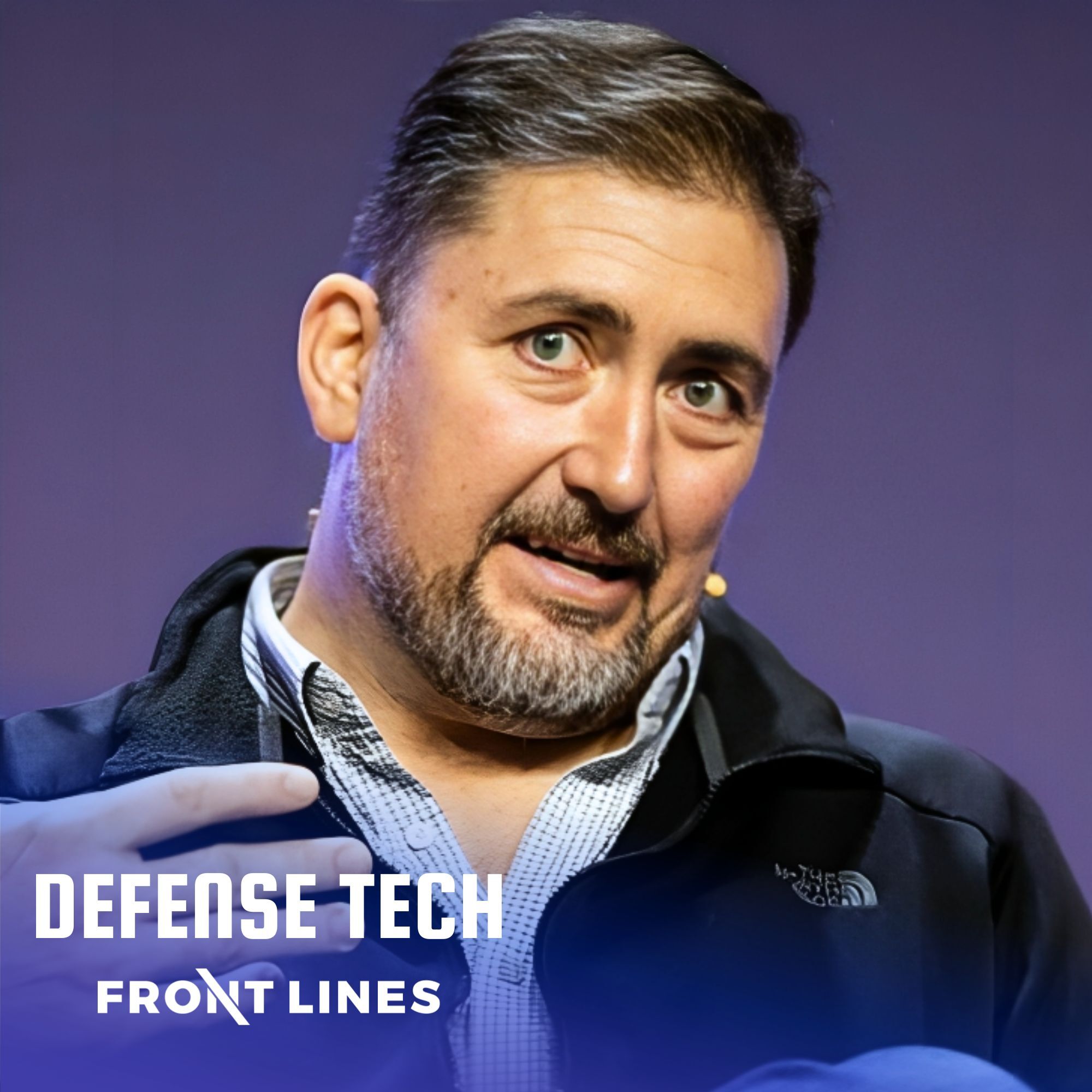
GTM Lessons From a Defense Tech Investor | Jeff Crusey
from BUILDERS · host Front Lines Media
Defense technology has shifted from a social liability in Silicon Valley to commanding 35-40% of venture capital allocation—up from a historical 10%. This isn't just trend-following; it reflects fundamental market dynamics as SaaS becomes hypercompetitive and AI lowers barriers to entry, pushing capital toward deep tech where moats still exist. Blacklake, a defense holdco based in Austin, helps emerging defense companies navigate government procurement and expand into Europe, Asia-Pacific, and allied markets. In this episode, Jeff Crusey, EVP of Technology & Acquisition at Blacklake, reveals the emerging defense tech playbook, explains why lobbying ROI dwarfs traditional GTM spending, and details what actually matters when hardware meets government procurement. Topics Discussed: Why VC capital is rotating from SaaS to deep tech and defense The defense tech go-to-market playbook versus enterprise SaaS mechanics SBIR grant programs as non-dilutive capital for hardware development Lobbying and appropriations as core revenue drivers, not nice-to-haves Field deployment and operator feedback as the only viable iteration strategy Investor evaluation criteria for hardware-intensive defense businesses Emerging threat vectors in Arctic defense and orbital domain awareness GTM Lessons For B2B Founders: Launch lobbying concurrent with SBIR Phase 1 applications: Companies initiating lobbying and appropriations work at the moment they apply for SBIR grants hit revenue milestones materially faster than those treating government affairs as a later-stage function. This means seed-stage companies maintain Capitol Hill presence—a pattern that didn't exist five years ago. The talent profile matters: government affairs hires need proven relationships within specific congressional committees and appropriations staff. Initial engagements typically involve external lobbying advisors with established networks, transitioning in-house at Series A when contract pipeline justifies dedicated headcount. This is consistently the highest-ROI channel in defense GTM. Optimize for deployment speed over system perfection: Modern conflict operates as continuous technological adaptation where capabilities become obsolete within weeks, not years. Companies achieving persistent field presence with operators—not laboratory perfection—win iterative cycles. The tactical approach: deploy minimum viable hardware to operational environments, capture real-world performance data and failure modes, then rapidly incorporate feedback into next iterations. This contradicts traditional defense procurement assumptions about "exquisite systems" and requires founders to resist over-engineering before battlefield validation. Solve the prototype funding problem through non-dilutive capital: Defense investors require working prototypes before capital deployment due to hardware risk profiles—fundamentally different from software's low marginal cost of iteration. This creates a chicken-and-egg problem: prototypes require capital, but capital requires prototypes. The solution path combines bootstrapping to early proof-of-concept, then leveraging SBIR Phase 1 grants (tens of thousands) to reach demonstrable prototype stage. Phase 2 awards (single-digit millions) fund production validation. Strategic founders pursue direct-to-Phase-2 pathways when possible, compressing the timeline from concept to validated demand signal. Strip technical complexity from investor communications: Defense founders with deep domain expertise consistently over-index on technical sophistication during fundraising conversations, losing investor attention before reaching commercial traction narratives. VCs evaluate market timing, defensibility, and path to scale—not engineering elegance. The correction: communicate technology at middle-school comprehension levels. This isn't condescension; it's recognizing that capital allocators optimize for portfolio construction, not technical peer review. Founders often feel they're "dumbing down" their innovations, but clarity on problem-solution fit and market size matters infinitely more than technical specifications during early fundraising stages. Treat SBIR phases as progressive demand validation, not just funding: The phased SBIR structure functions as government-backed demand signaling: Phase 1 validates concept feasibility, Phase 2 confirms development viability, Phase 3 demonstrates production readiness for potential program of record status. Investors decode these phases as risk reduction milestones. Phase 1 awards indicate government interest; Phase 2 awards (especially direct-to-Phase-2 or enhanced Phase 2) signal validated customer pull; Phase 3 contracts position companies for program of record awards worth hundreds of millions annually. Beyond capital, SBIR progression provides founder-market fit evidence and customer commitment that traditional LOIs cannot match in defense contexts. // Sponsors: Front Lines — We help B2B tech companies launch, manage, and grow podcasts that drive demand, awareness, and thought leadership. www.FrontLines.io The Global Talent Co. — We help tech startups find, vet, hire, pay, and retain amazing marketing talent that costs 50-70% less than the US & Europe. www.GlobalTalent.co // Don't Miss: New Podcast Series — How I Hire Senior GTM leaders share the tactical hiring frameworks they use to build winning revenue teams. Hosted by Andy Mowat, who scaled 4 unicorns from $10M to $100M+ ARR and launched Whispered to help executives find their next role. Subscribe here: https://open.spotify.com/show/53yCHlPfLSMFimtv0riPyM
Embed this episode
Ready to play
GTM Lessons From a Defense Tech Investor | Jeff Crusey
No transcript for this episode yet
Similar Episodes
No similar episodes found.