
EPISODE · Dec 29, 2024 · 36 MIN
Hacking Victorian Bodies: From Grid to Vector Space (38c3)
from Chaos Computer Club - archive feed (high quality) · host Marcin Ratajczyk
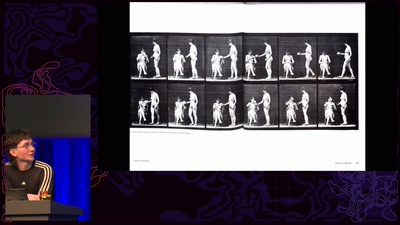
This performative lecture by SOLID FLESH Collective explores how generative AI can reshape historical body representations into tools for imagining new bodily futures. Drawing from Muybridge’s chronophotography, which fixed bodies into a rigid scientific grid, we investigate AI’s capacity for fluid, multidimensional embodiment. Using open-source AI models to ‘resurrect’ Muybridge’s subjects and defy commercial censorship, we reveal speculative possibilities for bodily motion and identity. Our work positions the ‘vector body’—a digitally-mediated form of self-imagination—within a broader conversation on identity fluidity, algorithmic embodiment, and liberating futures beyond conventional body ideals. In this performative lecture, the SOLID FLESH Collective reimagines how artistic practice can transform historical methods of body representation into tools for imagining radical new forms of embodiment. SOLID FLESH Collective, a hybrid space bridging the realms of gym, gallery, and think tank, examines how Muybridge’s chronophotography once ‘solidified’ bodies within a rigid grid, contrasting it with generative AI’s potential for unprecedented fluidity in self-reimagining. We present a series of experiments in ‘resurrecting’ Muybridge’s subjects, using open-source AI tools to transform scientific documentation into speculative fictions. When commercial AI flagged these Victorian images as ‘pornographic,’ this rejection spurred us to explore alternate approaches, resulting in the creation of wonderfully surreal, inhuman movements with animDiff—as if the AI, uninformed by human motion, were an animator imagining it for the first time. The lecture positions the AI-mediated body within a multidimensional vector space of possibilities, spanning dimensions of gender, age, class, and experience. Through our custom ComfyUI workflow and selected clips from our ongoing film project (solidflesh.com), we show how this ‘vector body’ allows for forms of self-imagination that break free from the solidifying gaze of the camera. Our technical explorations engage larger questions around identity fluidity, algorithmic embodiment, and the possibility of a new, digitally mediated somatic imagination. As mainstream AI development often reinforces conventional body ideals, we speculate on alternative futures, asking how these technologies might instead enable liberating bodily self-conceptions. Moving beyond Muybridge’s grid and current AI’s polished limitations, we explore what approaches to algorithmic embodiment might emerge when we embrace the glitches and ‘failures’ of these systems. Licensed to the public under http://creativecommons.org/licenses/by/4.0 about this event: https://events.ccc.de/congress/2024/hub/event/hacking-victorian-bodies-from-grid-to-vector-space/
Embed this episode
NOW PLAYING
Hacking Victorian Bodies: From Grid to Vector Space (38c3)
No transcript for this episode yet
Similar Episodes
No similar episodes found.
Similar Podcasts
No similar podcasts found.