
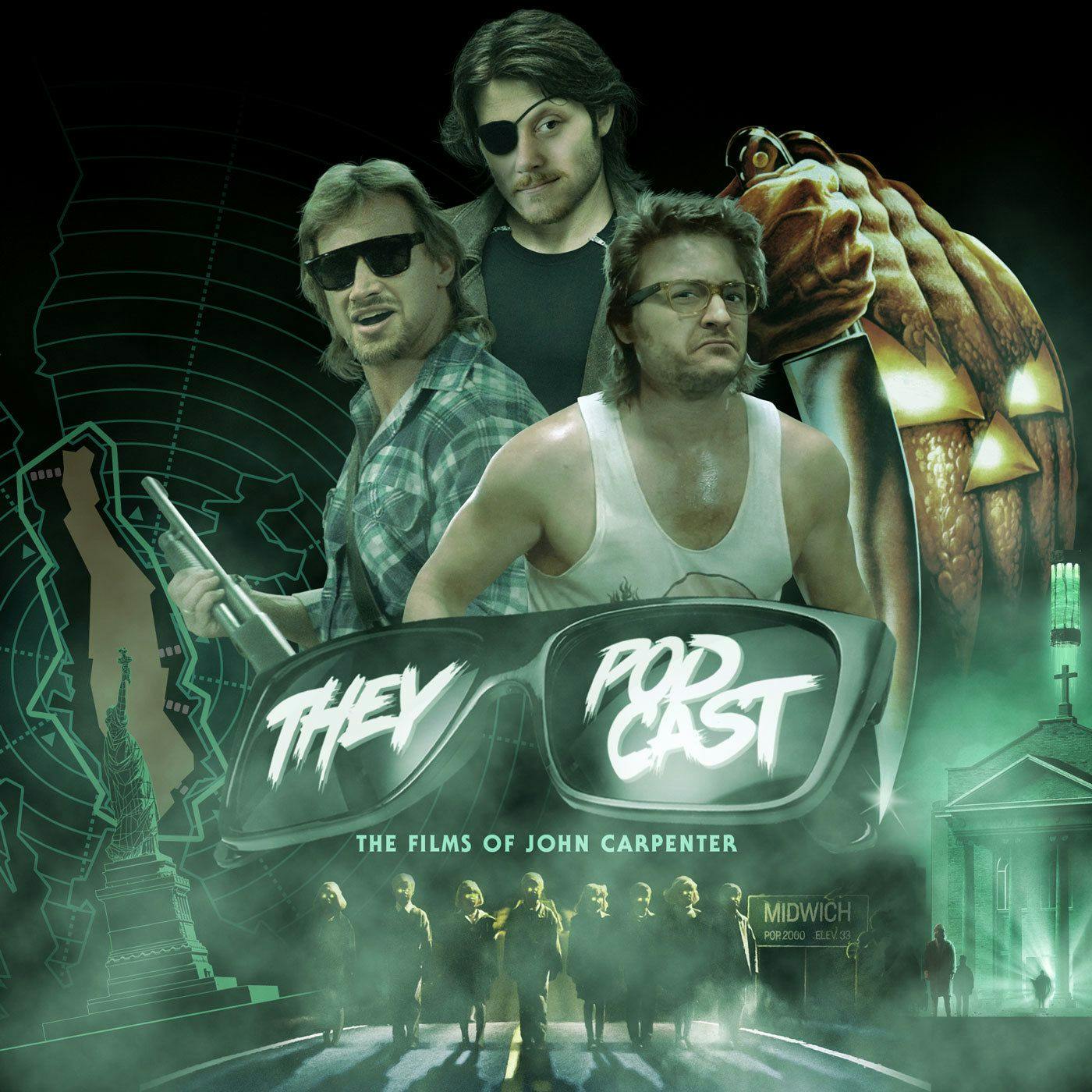
A podcast wouldn't do that. This isn't a podcast. This isn't a podcast. I'm giving you alternate reads here.
Sure. You just see mob. This isn't a podcast. I'm trying to think of my Pleasants.
I was going to do the podcast, the Big Luma speech, but then I realized the thing I should not say, and I'm about to say it is the blackest podcast, the Devil's Podcast, that's misrepresenting this show. Two different audiences call this is not the Devil's Podcast. In fact, well, sometimes it feels that way. Go ahead.
And some people think, yes, yes. And everyone's enthalpy their opinion. But this is in fact a podcast called Blank Check with Griffin the. I'm Griffin.
I'm David. Just starting off. Yeah, let's just start it off right, because I think we have a lot to get to today. It's podcast about filmographies.
Directors who have massive success early on in their careers are given a series of blank checks, like whatever crazy passion projects they want. And sometimes those checks clear and sometimes they bounce, baby. This is a mini series on the films of John Carpenter. Yep.
It's called a podcast because I was overruled. Yep. Good call by us. Yeah, I feel good about that choice still to this day.
I've read some of the comments when Marie put out the new miniseries artwork, and I thought Podcast from New York was maybe like a good alt that we didn't actually really think of. I've never pitched that. I pitched Podscape from the cast. Right.
Which was dumb. And we didn't like that. I felt pretty vindicated by the comments saying, why isn't this min series name sweaty enough? Right.
But here's the thing. None of them actually said a title, you know, it wasn't like sometimes they're all in on like, it should have been called X. What did we know what was in the running? Yeah, we know from you.
Not from podcast for new fast Pod travel. Little Casta. No, there's one that just already is on my mind. It makes perfect sense.
What in the pod of Castness. Yeah, I like that one. Yeah. Assault on podcast 13, I feel like was thrown at one point.
Yep. That was like. Yeah, that was. That was another good option.
But come on, they podcast. That's fun. That's good. They do.
You do. We do. I'm happy to be in person with you guys. In person.
In person for the first time in two years now. For us. Yeah. Oh, easily.
Right. Yeah. When with the last time we Just been sunny at David's apartment. Right.
You were last on the show. I even have a memory of being in a studio, and I think it was probably a year before that. A Spider man concert. Yeah.
Right. But that's 2019. Yeah. Two years ago.
Yeah. Pretty much almost of the day. Oh, boy. And I gotta say, you know, catch out of the bag.
This is our Halloween episode. Guest is director of filmmaker Alex Rossberry. Everyone and I feel triumphant about this. It's like, all right, so what's he doing?
Memoirs. I'm invisible. Everyone's essential. Everyone's filmography.
They're all right. And it's a big surprise. Yeah. You decided to break your streak of trying to pick the most irrelevant.
I should be doing one of those. Village of the Damned. It would have been memoirs I've never seen at this point. But David like cold watching.
Especially someone who means a lot. David, how many minutes after the end of March Madness that I called this episode? You didn't do it during. Honestly, I think it was during the final day.
I said, carpenter wins. I want Halloween. You were very angry. On one of March Madness updates, we casually said Carpenter essentially created a genre.
And you kind of blew up both of us over the moment. He didn't blow me up. I gotta say, this is something happening. Really?
Yeah. I didn't get blown up. Maybe I blew up privately. Maybe I blew you up in person.
No, you blew me up over not knowing the movie Burnt Offerings. Burnt Offerings. That was the one that you were mad at me about not knowing about that. And maybe he blew you up because you said he invented a genre.
Really? He had separate blow ups at separate times. Here are the facts. Two things.
One, I was very hurt by my pathetic, embarrassing loss in March Madness, and I wanted to just. Okay, I want to talk about that for exactly five minutes. We can very briefly talk about that. To my wanting this for wanting this episode, let's put time on the clock.
Just to be clear, at March Madness, we had some friends of the show pick directors, Right. This was a year we let people vote for what we do. And this year we mixed it up and we had one region where we picked eight of our favorite recurring guests and let them each pick a director. And I said to Alex, what do you want?
And you. I've been laughing for years that you guys really should consider covering. Oliver, I think we put five minutes on clock. I know you're saying you want to say something first.
Let's have this count for the five minutes. I put five minutes on the clock. I told you, when you said Oliver Stone, I was like, alex, Oliver Stone is not going to win a single Twitter poll. He's not cool.
He's the opposite of what, you know, people on Twitter are interested in. I'm just saying, I warned you. I'm like, you were like, what are you talking about? Bulletproof case?
Like, you know, you guys have to cover. I said, anybody who loves this show the way I do will instantly be like, that is five months of incredible episodes. You are wonderful insights on some of the most important films of American cinema of the 1980s, 1990s, and even a little bit in the 2000s. If you love the show the way I do, you will be like, I have to hear that miniseries.
It turns out most people don't like. I was also distraught you're not on Twitter. I was just like, if you take the temperature of sort of Twitter, Oliver Stone, he's peanut butter and pickles. Like, no one's interested.
He's interviewing Kootenwald. He's just not in a place right now where people are fired up. I was really humiliated by this, and I thought it was really sad because we were denied something that could be great. I thought I wanted him to win.
I didn't think that would happen. I wanted to build enough momentum that at some point sneak by. Maybe I wanted a couple victories. However, I also was very clear that the only thing I actually wanted was a winner from Ben's region.
And the only thing I really wanted was for John Carter to win, because this is a no brainer. And then I was like, well, if I'm so. I'm so low from this and I want to be on again, but I also don't want to just be like, well, I tried with the candidate and I lost. So here I am talking about one of his irrelevant films.
I just want to just be given the Secretary of Transportation. I said, if this is happening, no one, you know, somebody wins their candidate, they would probably pick the totemic. And we did a fair amount of this of, like, offerings to the people who had not been on in a little while and had other candidates in March Madness. Like, you get an early pick, you pick a big one.
And I wanted the biggest because I knew Ben maybe could have said, actually I want that episode to be private, no guests. Well, yeah, I mean, we do that sometimes, but no, but I feel like this is just this director. I mean, Johnny Boy is just so beloved. And I feel like we would.
We just. We wanted to have as many people on for the series as we could. So yeah, I just want to say something to your credit. You raised a good point.
Not stink, but a good point after the fact that we should have considered which is first round matchup. You should have gone up against JD as the two people without Twitter. It just sounds like it's unfair to put the two people up against people. Gravel mobile weapon.
You have to say to your followers, do me a favor, click on this thing. You don't know what it is. But I this is why we're done with Twitter. Next year we'll put Stone back in and he'll go the distance because sure, fine.
Know what we're doing. Was he in Oscar versus Rassic bracket? No, you would never have that. If I looked at all 32, I would have said the only things that I really think would be wall to wall great or stony Carpenter like these are just the best assortment of episodes, variety of I'll say this, when Jonathan Demi won, I was wrong.
You're sitting in being like, this is disaster. I thought and I told you this as part of my argument. Stone is the dark Sith to the Demi Jedi. It's the same exact filmography arc, the same highs and lows.
And I said he's the same as the Mechas. These kinds of guys. These are great miniseries. Anyway, we're not going to disagree.
I'm going to be so in keeping this focus on the film Halloween, which, thanks to my structure, I will not get to for 45 minutes. But then when I do, what we're talking about, Alex is comp notes. He's got a notebook. The several pages I have printed out here is it's my syllabus.
I came here to really gain March Men. I came here to school you guys on the history of American horror as a genre from 1968 to 1978, in order to understand the context for what Carpenter did with this film in his subsequent career and chew bubblegum. But anyway, fans have demanded John Carpenter in their right. And John Carpenter is a hero and an absolute titan of cinema and one of the finest filmmakers of the second half of the 20th century, no question.
I think. But in order to understand him, I think there's a lot and when I say a lot, I mean a lot of context. You need to understand leading up to the film Halloween, which we'll be talking about in, as I told David last week, excruciating detail. This is, I feel like truly, in every way, the least work I have done for an episode in as long as I can remember and even rewatching this movie, I was barely trying to formulate plus because I was like, Alex is going to do whatever Alex is going to do.
Our hands are off the wheel on this one, you know. Yes, I love listening to your show and I love talking to you guys as friends, but it has come up many times that horror is a humongous blind spot. Self admitted in some cases. But David really still remembers how brutally I raked him over the coals from the Oops Office episode.
You guys chortling and saying there's burnt offerings, like is this a real movie? Oliver Reed is in this. And I just like, David, this is a beloved film. And we all share the same exact.
We all the same DNA of nerdery. We're all trivia veterans. We could all sit at trivia and basically hit the same rounds. But then within these subsections of Murder, there are these other things that one person knows everything about, one person knows nothing about.
And that's kind of the beauty of people that have essentially the same interest. But the interest is diverge. And it also comes up a lot where I feel like, like David, you were saying last year you spent a lot of time familiarizing yourself with a lot of horror franchises. You.
I said you have not seen fun projects. Well, I'd seen some, but I'd never seen every entry. You made an average go through the totemic franchise. And Ben, you're obviously a big.
A big. You're a big horror guy. More so. Yeah.
Just because you're from. From scum scumbag country like I am. People like to wear cut off shorts and sleeveless shirts and wear horror and get weird. Which is what we were talking about before we started this episode.
Be kind of raw. And I just felt like hell, Helrazer's like a hero of mine. Yeah. And that was a close personal friend.
Absolutely. Yeah. We're pen pals, but not the way here we send each other. I've seen Hellraiser many times, but I've never seen a Hellraiser seed.
Okay, that's a big problem. That's the, this one I'm talking about where it's like there's only Hell Avenues is the cyberpunk Hellraiser. This is like, this is like such a good reminder. I have to see this.
A cyberpunk Hellraiser is a real Ben phrase, but Ben's kind of like the rent field to the Cenobites where they're like kind of making you pay. Pay your dues and then they'll Potentially welcome you into the Cenobite Army. I'm aware of the CD Hellraiser. When we watch the Hellraiser, friend, I talk to you about the first Hellraiser is a masterpiece.
At home, my wife and I said, let's watch Hellraiser 2. She said, this is pretty good. We watch Hellraiser 3. And she said, this the last Hellraiser I'm watching.
We're gonna get to talking about horror sequels. So we're not gonna talk about horror Razor because it comes after Halloween. Can I just ask. Can I just ask, did I stopping theatrical after three?
No. I think Bloodline is the last horror. But then isn't there. There's like, a guy who came on board for the direct video ones that made a couple that are well liked.
There are. I haven't gotten into those. And this is the whole thing about horror is if we're talking about this is. It's so dense because these movies can be made so cheaply that there's so many.
And I get over. It's like anime. I've seen a lot more horror than I've seen where I'm like, oh, God, I can't. Like, there's two.
I'm just digging and digging and finding more things. And I'm getting overwhelmed. Yes. But the thing is, horror fans will see everything.
It is a monolithic genre. Like, you can. If it's your thing, you can see everything. And if you look at horror fans and you talk to them, it's like this bullshit Netflix horror movie.
I watched it straight to shutter horror movie. I watched it new direct to video Amityville movie. I watched it. And that's the relationship that horror fans have with the genre.
And I feel like coming on is the third part of the film before any of his other horror films. And I feel like coming on to kind of talk about what the genre was when he changed it forever with this film and what he brought to it to contextualize his innovations as a filmmaker. The director of the camera, really. And his use of music and writing is just so essential.
Not just Halloween, but to the rest of the Carpenter miniseries. Can I just say, just to sort of like, frame my blind spots. Yes. I'm gonna say we're starting in 1968.
Okay. Because this is all I want to say is that, like, certainly is not my. My. My genre of strength.
Right. In terms of movie knowledge to begin with. But also, I feel like in high school, I went through this period. I was just like, homework is relevant.
I'm just Gonna watch movies all the time. It's for losers and babies. And so I was very much like systematically going through blind spots in sort of what I perceive as a 15 year old of like my full knowledge and stuff. Right.
So a lot of that was sort of what Dave was saying, like, oh, I need to watch the first movie of every franchise. So I kind of like did that and then would move on because I was trying to cover as many of the icons as possible without going deep into them. Freddie and Chucky, the two guys I went deep on, unsurprisingly, they were like, well, also Freddy has so much practical effects and sort of fantasy elements. Like Greg Griffey is essentially a comedian and a toy.
Right. Beyond that, my horror preferences just in terms of aesthetics and vibe, whatever, not that I position myself as being an Expert is like pre1960 even sort of like Vincent Price or the Vincent Price. I have a transition from that which is very. Okay, now I'm GLAD you mentioned 1960 because the first thing you have to mention is Psycho, which is the first movie of its kind.
Halloween is a movie of its kind. There's nothing before Psycho that is like that. That is like the premise of this movie is somebody pick up a knife and they use a guy who kill people. They use the necro repeatedly to stab people through their body and then the person is dead and they go to no way.
German movie. German expressionist Mov Psycho is worth it. Ms. Less of a horror movie is more framed around trying to catch this guy.
Yeah, okay. We really jumped down Ben throat correct him about what? Psycho, 1960. That is obviously a huge thing on Also when I was telling her about my thesis, I was going to present set make sure you mention peeping to which is 61.
Is it later? Maybe not 60. It's also 60. So those two movies, 1960 are kind of two sides of the coin, opposite sides of the ocean.
And Psycho is beloved. Yes, Oscar nominations is a huge hit. Keeping Tom essentially ruins a career. But it's a peeping Tom much like Psycho's very pathological movie.
But Psycho is a slasher at its part where I think it becomes like a very psychological. That's not really odd and it's bearing meta. It has these kind of murderous elements. It disturbed people and it was like Korean.
Whereas Psycho is like a roller coaster people. Tom. I know the basic premise of this movie is it's a guy who's obsessed with the look on people's faces when they know they're about to die. He's a cameraman and he builds a blade into one of the legs of his tripod and he like films.
When I'm thinking that they're doing like screen tests, he stabs them on camera. Oh my God. You could be remade about a podcast or. No, absolutely.
Anyway, you're going to hear me say anyway a lot while we're going through this. Anyway, here's one of the important things about Halloween. The people who come to it always talk about, always know Halloween's independent movie. Very special independent movie.
Horror then becomes for many years something that is largely independent or very low budget studio movies. But in order to understand how revolutionary it is that in 1978 there was an independent horror movie that became such a mainstream hit, I just want to very briefly talk about studio horror movies from 1968 to 1978 because everything you're saying, your Valutin movies, your Universal Monsters Horror was a Studio 10. Right, right. It was a classic studio.
And you're not going to talk why 68? What are you talking about? Two things happened in 1968 also. It gives us a clean decade.
Two things happened in 1968. There are two big bangs. Studio Big Bang, 1968 is Rosemary's Baby. There had not been a studio horror movie like Rosemary's Baby for years.
Rosemary's Baby is produced by William Castle, who was a purveyor of schlocky horror. Cheap thrills throughout the 60s, such as you're saying you might grab a Tate More. The Tingler. The Tingler, the sister Garnicus, prowler, 13 ghosts.
So my kind of stuff. Oh yeah, there was, but there was a tingling. But then there's also like. There's like a haunting, which is like a pretty tony.
Studio movies, Lots of ghost movies. Ghost stories. We'll get to the diversion why it's so revolutionary to have a movie about a guy with a knife. But Rosemary's Baby kind of Progresses at your 1958 house on the Hill and the Tinkler.
Those are William Castle movies. Very gimmicky. Another thing I just think worth mentioning very briefly is that in earlier decades you would go to movies and you would see a bill of shit. And B movies were literally the backup movie and people would see horror films.
They were the lesser films that were like the added value behind whatever the prestige movie were. And by the 60s and 70s people are going mostly to see one movie. So you no longer have 60min Boris Carlos movies about a guy who opens his photograph right. There's always a market to be making these movies for cheap because they need something to play after.
To me, a crucial. We're not going into this crucial 60s figure is Herschel Gordon Lewis, who made, yes, totally violent, cheap, low budget independent movies throughout the 60s. It's not mainstream, therefore it doesn't really factor in this conversation. But I'm not going to mention as the name of the documentary.
I believe I've only seen like 2000 Maniacs. Wizard of Gore, wizard of Gore. Blood Feast, which is an Egyptian theme thing coloring me blood Red. The Gruesome Twosome, the Gore Gore Girls.
All these movies are terrific, but it's pure exploitation. I'm not talking about exploitation studio horror movies. This exploitation always exists parallel. It exists throughout the 60s.
But Rosemary's Baby is such a huge hit. When you said that there hadn't been a film like Rosemary's Baby for years, are you saying that essentially there's like a space between Psycho and Rosemary that's not filled in essentially Psycho, Universal, Rosemary's Baby, Paramount. The studios are not saying what a list top shelf directors can make a horror movie that we are going to take very seriously. And we'll end up with Oscar on the effect, obviously based on a book.
It's this very bougie movie about being middle class and buying an apartment and having children. Very specific milieu. And I'll come back to that in a minute. I just want to quickly run down after that movie.
There is up until Halloween something of a boom of studios making horror films. Sure. Because it's a huge thing. People try to copy it.
There's not a ton of them, but there are a handful. I'm going to run them down and these are in order. And really the first one of these is the only one that functions as basically an independent film. But it is a Paramount film which is 1971.
Let's scare Jessica to death. It's a film I love. I feel like it's a film. People see it, love it.
It's also. It's got that great tag. I know. I don't know.
Something's after Jessica. Someone. Something very cold, very wet and literally perks his head in my. Again, there are gaps in my research, but that is kind of the first.
Like it's a big studio with a Paramount movie, but it's just like this. It could also have just been Halloween. Embassy Pictures, it was a Paramount movie, but it was like a rounding error for caramo, basically. Right.
1971 is a great movie that Fox makes called the Mephisto Waltz, which is Alan Alda playing a pianist. It is seen for scene the same as Rosemary's Baby. It's really like an occult kind of movie. Again, we watched this a couple years ago and it's like, oh, this is three years after Rosemary's Baby.
And they were like, so when Rosemary's Baby. John Cassavetti is an actor in this movie. We should make Alan Alda a pianist. It's in the Mephisto Waltz.
Mephisto Waltz. And he sells his soul to devil to become a better piano. It's actually really good, really funny. I want all the pretty good horror movie coming from my soul.
Paul Wenkos, that's his name. Good movie. Want to mention it? The next big one, 1973.
It's a big movie. The actresses big. One of the most successful films ever made a hit. We're going to come back to it.
I just want to say at this point. Worldwide, 587 million adjusted. Warner Brothers, 10 Oscar nominations. It's one of five high.
Also, the book was one of those books. I was not alive at the time, but I feel one of those books was on every coffee table. It was like a blockbuster book too. Again, like the book often helps here.
Right? If you're adapting from a bestselling novel. You know the COVID of the Exorcist scaring young children. Exactly.
I just decided this Halloween I'm going to reread the Exorcist and read Legion. Are you going to watch Exorcist 3 or 3? I know. I'm saying you like to do a rewatch marathon sometimes.
Theme I haven't watched the Exorcist 3. Every July 4th you type me about whatever like political thriller. Made the cut this year or whatever. We can't get into it.
There's a great movie on HBO called the Urban Mason. Amazon package, which Gene Hackman and Tommy Lee Jones Cold war thriller. It's like. It's just a David movie Anyway.
Asher says 1973, huge head. Weirdly, this I was actually surprised by 1973. Don't look now. Not a studio film.
I thought this was an art film. It is. I thought MGM made it. I think that's because I'm picturing the old tv.
They had home video rights for one. No, it's. Yeah, it's whatever. It's like a British.
It bears mentioning. But it kind of exists outside now. Weirdly by this time. Also classy.
Also based on are quite classy. A list stars, stars. But also has fucking. This genre.
Has some fucking. This genre now in my Chronology, only five years away from Halloween is very a list. You're bringing a lot of guys, Tony. And then there's a few more.
But even at this point, I found. I found it interesting that the Palma has not really gone poor yet. No, he's still doing 1972. Right.
But carries 1976. But then those are the only horror movies he's made because Lance from the paradise doesn't really count, obviously. Horror nodding to it. No.
But he is not yet a horror film. Carrie's animated artist. So that's a studio movie. And again, as you mentioned, star driven.
But these ones, some of these aren't quite horror horror and some of these are complicated anime. Because the rest of this list now from 74 to 78, studio horror, we're starting to ramp up a little. It's alive. 1974, Warner Brothers Larry Collins movie.
Evil Baby. Stepford Wise. 1975, Columbia, Rosemary's Baby Connection. Ira 1111 or Lewis.
So again, Sephard Wise. Kind of horror kind of satire, but that's a Columbia movie kind of hit. 1970, the Omen, Fox. Huge hit.
Coming back to that in a minute. Yeah. 1976, burn offerings, United Artists Distributed. Great movie.
Amityville Horror. Before Amityville Horror. David's Avoid eye contact. You don't want to face the wrath.
People moving into a house that is evil. Totally good movie. But Amityville Horror. So Burn off rings.
In 76, the Amityville Horror book comes out. 77. So the true story is. Yeah, of course, the true story book.
That, that, that definitely happened. The movie is when. 79. I know that's just after Halloween, but I have to mention it in a minute.
The rest of these. 77. Audrey Rose. Don't know if you ever seen that creepy girl movie, Ghost.
Anything has a ghost on it. That's Robert Wise. But I feel like these, these eight years you covered, right. Starting out with like, oh, it's proven directors, international art, household tours this and that, and often based on a bestseller.
We're making classy films that can, as you said, be sold as a single feature. Right. Demon seed. 1977 USA, Julie Christie sort of evil technology movie.
Ben Demon Seed. Never seen that evil technology. What if the computer. What if you gave your house a computer on a computer, tried to make you pregnant?
And what if a witch hacked that computer? 77 is also the Sentinel, which is universal, which I feel is a movie that people have come back around to. But these are the kinds of movies that start to just have tons of stars from like the 40s. The Sentinel is a Michael Winner movie.
And if you grew up in Britain, which no one here did, which I did. Irrelevant. Once you know, Michael Winner, obviously he directed Death Wish as well. And he grew up.
Sorry, wait, wait. Isn't you shocked that I grew up? You're just a big kid now. I am big.
Kidding. Michael Winner became a guy who would like, you know, he was like a pitch man. It was weird. What's that column called?
I don't know what it was called. Michael Winner, look it up. Michael Winner wrote a column for a thousand columns about restaurant reviews. Yes.
What was his column called? Griffin says, where does your brain go? He became this guy who would like wear a cravat and say, britain used to, you know, Britain used to be better before. And he would tail off and you were supposed to.
And you're like, aren't you the guy who made these like trashy ass movies in the 70s? He's an odd figure. Anyway. Sentinel, I think.
Is that set in Brooklyn? Right. That's a Brooklyn Heights movie. Sentinel is indeed set in Brooklyn.
It's a great movie. Chris Random Walson. The Sentinel has like a cast of. If I'm not mistaken, there are like golden age actors.
Meredith. Yeah. If they made a Brooklyn Heights war movie today, it'd be about the coffee shop running out of oat milk. It's horror movie.
Let's of the Terror. No one knew how to respond to that. He took a shot. We might read for that thing.
Two more of these movies. The Legacy in 1978. Universal. Sam Elliott and Catherine Ross.
Is that what they meet? Yes. This is a very sexy movie. Excuse me.
Also the poster is a cat divided by. And then there's smoke underneath the cat and there's an evil hand coming out of the bottom of the cat. It's a great poster we have. It's crazy.
What is this? I don't know. Could he use a little horse on the post? Sort of like isolated, like Arnold Oberlin, Richard Mark Cullen, director of the Stranger before that.
It's a pretty solid movie. And then 1978, the final one on this list, Invasion of the Body Snatchers. Oh, great movie. Yes.
These are so. These are kind of seen most of these films just to be. A lot of these are repeating the same stars. They give two Christy Mo movies or two Sutherland movies.
Like there are high class actors who are dipping their toe into horror and staying there. Yes. Now that is kind of the extent of mainstream studio horror filmmaking between Rosemary's Baby and the release of Halloween. So you Understand with the list I just read, when we describe most of those movies, just how different horror.
Nothing that we just talked about. There's nothing even. A lot of these are supernatural. A lot of these are vaguely sci fi adjacent.
And there's one other element that unites these that we're going to talk about in a minute and it's going to be a little more psychological paranoia based. They also largely take place in very, as David said, very moneyed, very high class situations. None of these are about children. These are almost exclusively about adults.
Because I imagine part of the calculation, partly it's based on these books that are often about. But like it's. Yeah, like we're going to need a Gregory Peck or whoever, right? Like we're going to need a big serious star to ground this thing.
A lot of them are also about sort of like the threat to the family. Obviously the Exorcist is. We're going to talk about the Mount Rushmore because you're absolutely right. Here's the Mount Rushmore of the four.
And again, one of these is just after Halloween. But the whole point of this is trying to contextualize when Halloween comes out. How could this movie be such a big deal? How could it go so far against the current of the genre?
So the four movies, Mount Rushmore, right? Rosemary's Baby, sure. That's George Washington, the Exorcist. Okay, That's Abraham Lincoln, the Omen.
Okay. That's Teddy Roosevelt. Amity, the Horror, for some reason, that's Jefferson. Now the one thing.
What's the one thing all four of these movies happen. Okay, sorry, just go through again, it's Rosemary, Exorcist, Amityville Horror and the Omega are the four. These are the four most successful horror movies of. I know Amy's One Year After Homie, but of this deck.
They were all about having children to some ext. That's true. Apart from, you know, you know, you know who I'm talking about. You love this guy.
Wait, what? The main threat in those four movies, Satan himself. Yes. The Dark Prince.
The four biggest, most successful movies of the decade. They all are literally about Satan. Rose, baby, what if Satan fucked your wife and made a baby? What if you loved your wife to Satan?
What if your kid was the devil? The Exorcist. What if your kid got infected with the devil? Right.
Is I guess the least demonic. It's more of a haunting also. For God's sake, get out for God's sake. Because of the sort of religious sense of demonic horror.
I would Say also undisputably the trashiest. Well, I know you don't like Amy, but I don't hate it. I just feel like it is the one going to explain to you why you think that. Right.
Man. There's an episode where you were like Amityville and we think that. And Anna was wearing the Carla and you hit break and it was like a 20 car pile up. She loves Amityville.
She just went, oh, come on. Because you should rewatch it. It's quite strong. I also recommend visiting.
What? I also recommend visiting Amityville house over in Amityville. Right. There's the success of these four movies just to contextualize how much satanic evil people were eating up for this.
Ten years Rosemary's Baby, two Oscar nominations, 249 adjusted gross. It wins. As already said, 597 screenplay win. Right.
I think because it's only. Yeah, let me look it up. No, she wins the next year sound. Yes.
Okay. Which is fair. Yeah. I mean obviously it's a great year but the Exorcist is just an insane outlier success.
But it makes people comfortable with horror, the devil, Satanism and religious horror. That's what I'll say. That's what's weird about the Exorcist is that it's almost kind of like popular with Christians who wouldn't normally be into that. They're into it because it's so explicit.
That's the thing. Like you're pushing boundaries with the Exorcist. Beyond the gore, the language coming out of a girl's mouth. Right.
That's what I'm saying. It is. It's so good. The Omens.
It's my favorite horror French and it's one of those things like freaking just he's it up so bad now. Like. Oh, sure. Wait, wait.
I feel a couple years ago he screened like Atmos mix, dcp. I know people who saw it, they were like, it's fucking trash. Sure. What he has done to this.
His recoloration of Frenchman made it look inside Davis. It was always supposed to look like. I liked when he added those going spiderwalks. The version you've never seen was solid.
Was solid. Although I still don't prefer it. No, I wouldn't put it on now. No.
Anyway. But I'm also seeing the demented documentary. We talked like the real actress. She's like this one million year old Italian guy.
He's like, Harry Potter is the devil. And you're like, what is this movie? He's also constantly like Scream at freaking like you're Jewish. You're not gonna be interested in this.
He knows it. He has the vibe of like anyway. He doesn't want to remind him. And also freaking keep.
Is the guardian just putting that out there. The original blank check arc guy, in my opinion. I'll go back to my usual lane for that. Okay.
The Omen. 277 million, two Oscar nominations. And also like Jerry Goldsmith, you know, has a song that's like. It was like a charter.
It was like on the Billboard chart last album. The Omen is so good. But again like I haven't seen him in a long time. It's like a stately apartment building.
A Washington D.C. like a very like nice middle class house. An ambassador's home and an Amityville Horror. 311 million adjusted.
This is not a studio film. It's AIP1 Oscar nomination. Leila Schifrin. But again, these are like, that's a big family's house.
House. The Omen is a big family's house. The actress is like a modest family's house. So again, like Halloween is not like these four huge movies in any way now.
I feel like the context for what American horror is in 1978 I think is pretty clear. Then there's this other parallel thing. Halloween, indisputably. Probably the first massively influential slasher mainstreams.
The slasher. Yeah, mainstream. But here's a quick list of other slashers again from this era. Carnival of Blood, 1970.
Great film. I've never seen. I've heard of it. Great title.
Obviously 1972, which is really early. And this is a very straight down the middle slasher. It's also just so lurid and sick and like not at all comfortable. It's a Christmas horror movie.
Last House on the left, 1972. Does that count as a slasher? It's in there. It's so scary.
Obviously they're talking rape revenge. Right. I think that's a rape revenge movie. Right.
But nevertheless, we can't not mention that as a sort of. In terms of also a movie that is being presented to audiences. It's like, do you dare experience. We're going to faint, you're going to vomit.
72 is early for that. It is. I mean that movie is so distressing because it doesn't feel like Hollywood has even touched it at all. What I'm trying to now establish is that we talked about these four huge Oscar nominated mainstream heads and then there's throughout all of this, this concurrent genre trajectory of these other Films that are so gross and violent and dirty and nasty.
And this is pre video. So it's like you have to go to a theater and have this sort of crazy experience. And like William Castle movies where like somebody like people are going to fucking faint. You want to leave it.