
EPISODE · Jul 24, 2026 · 18 MIN
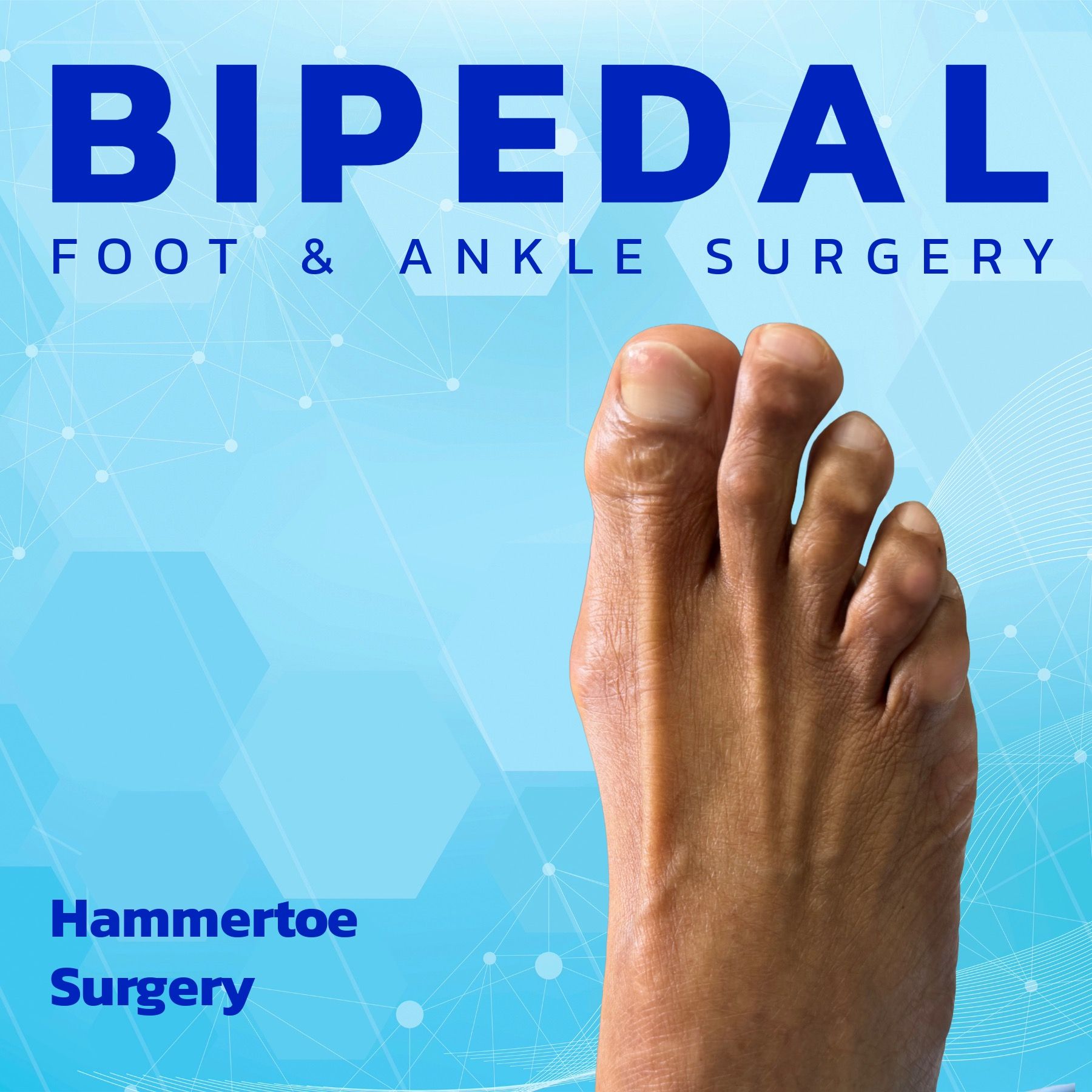
Hammertoe Surgery
from BIPEDAL · host Robert Weinstein
Boradly speaking, there are three types of digital contractures or hammertoes: Flexor Stabilization: This is the most common mechanism, often driven by overpronation (flat feet). As the foot flattens, it unlocks the midfoot, causing the flexor tendons (the muscles underneath the foot) to fire earlier and longer to stabilize the foot. These overactive flexors overpower the smaller stabilizing muscles, forcing the toe to buckle downward at the proximal interphalangeal (PIP) joint. Extensor Substitution: Common in individuals with high arches (pes cavus), this mechanism occurs when the extensor muscles (top of the foot) overpower the lumbricals and interossei muscles. The extensor tendons "bowstring" over the toe, pulling the base of the toe upward (hyperextension) at the metatarsophalangeal (MTP) joint, which in turn forces the tip of the toe downward. Flexor Substitution. This is the least common mechanism and usually results from calf muscle weakness or nerve issues. In this case, the deep flexor muscles take over to help the foot push off the ground, overpowering the stabilizing muscles and causing the toe to curl. The formation of hammertoes occurs in phases, beginning with a flexible deformity with mild muscle and tendon contracture, and often primarily a functional condition seen in weight bearing and ambulating. Later the deformities become rigid, where the affected tendons and joint capsules shorten and tighten permanently. The bones in the joint can luxate, meaning the toe cannot be straightened manually. This rigid phase leads to painful corns on the top of the toe or calluses on the ball of the foot from friction against footwear. Correction methods centers around the biomechanical cause, the rigidity of the deformity, adjacent joint stability, and likelihood of recurrence. Broadly speaking, either arthroplasty or arthrodesis is performed. For retention of flexibility arthroplasty is utilized, but for long term success more often than not arthrodesis is performed. This involves removing the articular cartilage and retention of the bone ends together through the bone healing phases. Satisfaction with these procedures approaches 90%, with the most likely complication being recurrence, especially when either arthroplasty is performed or when adjacent deformity or instability is not addressed. The content of this podcast is for educational and informational purposes only and does not constitute medical advice. Always seek the advice of your physician or other qualified health provider with any questions you may have regarding a medical condition.
Embed this episode
What this episode covers
Perhaps the greatest misconception about hammertoe surgery is that we're straightening a crooked toe. In reality, we're restoring balance to a forefoot that has gradually fallen out of equilibrium. Successful reconstruction comes from understanding why the deformity developed, correcting the underlying mechanics, and choosing the right combination of procedures for the individual patient.
NOW PLAYING
Hammertoe Surgery
No transcript for this episode yet
Similar Episodes
No similar episodes found.
Similar Podcasts
No similar podcasts found.