With MailChimp, you get more than a URL. You get an all-in-one marketing platform to help drive sales, with things like data-driven recommendations and powerful automation tools. Get started today at MailChimp.com slash smart marketing. MailChimp, built for growing businesses.
We did it again. Verizon was just named America's most reliable network by Root Metrics for the 16th time in a row, proving once again that nobody builds networks like Verizon builds networks. That's why we're building 5G Rock. That's why there's only one best network, Verizon.
Best and most reliable based on Root Metrics reports in second half 2013, first half 2021 and three operators on all network types combined, not specific to 5G networks. In the cases of Lea to Gipp and Sophie Landry. I'd like to first begin with a little housekeeping. I talked about a book, Deal Random House.
I got an email from Random House this week and it says, Happy New Year, John. We're going to put the project through the official channels and going to get you an offer together next week. I really do think there's a powerful book in your story and it's one we'd be very proud to publish, greatly appreciate your patience, et cetera, et cetera, so-and-so he's the head of the true crime division at Random House, Canada. So exciting.
But as I said before, there's a caveat to that. And the caveat is the level to which I can discuss the 1970s cases in detail, which is essentially none. For instance, there was a development this week that occurred, something quite potentially explosive having to do with the cases in the 70s. Not something that I developed.
Actually, a listener and a longtime friend and confidant in these matters brought it to my attention and it's explosive and I can't say anything. So I can't say anything. I can talk and we will get to this. There's some elements later in this episode.
Well, I'll kind of insert my own personal interaction with one of the cases because I just don't think it's relevant to the parameters of a non-fiction piece that we're working on. There's obviously tons of information you have to decide what to include, what to leave out. There are some elements that I just know we're not ever going to cover, so this is one of them. It's of tertiary interest, but would be interesting to anyone who's been listening for the last 46 episodes, so I'll include it here.
But main pieces of information, main developments, fundamental and primary, I kind of can't do it. It's actually that got me into thinking about this. This piece of information is so, as I say, foundational. There's always when you find that one little element, there's such an adrenaline rush.
For instance, I'll tell you some of the times where that really happened. I think initially when I discovered the cold cases of Manonse Bay and Louise Cameron, one of the things I found in the newspaper archives stories about them, they were immediately, it was like, okay, this is interesting. They happened in the same place and at the same time. But then as you develop it, you think you're going to hit a wall, which you're expecting to hear is like, oh, didn't you know those cases were solved years ago?
Or didn't you know it was a domestic issue and why the parents killed children? But so to find, as you're developing it, eventually that no, there's still unsolved homicides is like just kind of, as I say, just makes your heart race and that confirmation. Another one is knowing for a decade that an artist rendering existed of a rapist in the Sherbrooke area in the, I believe, 1981, 1982 and tantalizingly being able to find it and then finally last fall, finding the photo through archives. And you know, another thing you're expecting and you'll see the photo and it doesn't look like any of the suspects you've developed.
But in this case, it's like, oh, my fucking God, the guy looks exactly like Luke Gregoir, right down to the bowl cut of his hair. So those things are really fascinating and, you know, the rush that you feel when you're in pursuit and you're contacting people for confirmation on things and expecting a wall and they don't put it up. What they say is I think you're on to something is quite astonishing. So on to 1987 and let's frame it as it was framed in the last episode.
So the French language newspaper lap press publishes an article on Saturday December 11, 1999, stating that there are still these eight unsolved murders in the area from 1987 to 1995 so they've been cold for 12 years. And there's still no resolution so they're, you know, they're shaking the tree again to try and get the public's involvement and engagement in these affairs. So of the eight, let's start with the first two in 1997. And the first is of Leette Gibb.
And so so Leette is a, excuse me, I have a cold I'm getting older so you can hear me clear my throat quite a bit here. So there with me so so Leette is 18 years old and she she lives on a runel tradam in in La Valle. And she's last seen around April 25, 1987, about two o'clock in the afternoon she she leaves the home of a friend, excuse me, she leaves the home of a friend who lives on Notre Dame to go home she lives with her parents. April 26, 1987, and she's not seen again.
She's she's reported missing and so that's the spring of 87. This 18 year old young woman goes goes missing on the island of La Valle and and boom she vanishes and we we hear nothing of her for the summer. So the second case Sophie Landry. Landry 17 years old and she on weekends she spends the weekends with her parents and her parents live in La Prairie Quebec which is just on the south shore of the island of Montreal just off the island.
But during weekdays she's added a teenage detention facility in St. Hyacinth which is about what's just a it's just east of Montreal it's northeast from La Prairie about midway between between Montreal and Sherbrooke. So on the on Sunday August 23, 1987, Landry leaves her parents home to go back to this detention facility she takes a bus to the Longay Central Bus Terminal where she needed to get a transfer in order to take her to St. Hyacinth to that facility.
Outside of the bus station she runs into a friend who is also a resident at the facility and they talk for a brief moment and Sophie says well I gotta go inside to get my ticket. The friend says do you want me to come with you she says no no no that's all right I'll go by myself. She enters the bus terminus and then from there that's it she disappears she disappears and this is anytime between say five and seven o'clock. So the next morning Monday August 24 a farmer by the name of look de Val he's and his farm is in Santa Rache d'Ashland which is about 40 kilometers north of Montreal he's on his tractor and he's riding on a dirt road between corn roads and cornfield He sees along the dirt road what he thinks is someone sleeping he gets a little closer and he sees that it's the naked body of a young woman clothing and the longings strewn along beside the body.
De Val immediately calls the police it's a South Tadegebex case because it's in a northern region rural region. The Tadegebex arrived and they determined that Sophie landedry had been raped and stabbed 173 times. So from that point the stuff to get back back track they tried to determine what were the events that led to this what was Sophie doing in their final 24 hours. So again they determined that she's at the bus station.
And then from there it's speculative there's no actual indication that she ever bought a bus ticket to St. Tiesinth. There's the possibility that Sophie didn't have enough money. Around seven o'clock a male friend of hers received a call from Laundry presumably from the bus station where she was explaining to him that she had no intention of going back to St.
Hiesinth. And then the fact that she had speculated that possibly her intention was to visit a friend named Kimberly Lang who lived approximately five kilometers from the bus station. In fact it's also speculated that Landry walked to Lang's house but because when she rang the bell Lang wasn't home and she left. So at that point possibly two tracks.
Her assailant picks her up at the bus terminus, you know he's trolling it, stalking it, found someone who in need of possibly a lift or something more. Or possibly the assailant met her on the road to Kimberly Lang's house and possibly she was hitchhiking and he picked her up or possibly abducted her using a knife and forced her into the car. The certificate back also speculated that probably Laundry knew her assailant. They had some sort of prior relationship and they also determined that she was murdered sometime between midnight and 1230.
So what really is not known is the blackout period between the phone call to the male friend at 7pm and five hours leading up to her death. And one final note the police find DNA of the assailant on Laundry's clothing. So now linking back to Leat Gibb that fall 1987 October 25th an individual is walking through the woods in La Sanchignon, Quebec and he finds the remains of Leat Gibb in the woods just at the base of a tree. For geographical purposes, Laundry is also 40 kilometers north of Montreal, just like Saint-Arras, and those two villages are approximately 20 kilometers apart from each other.
Laundry onto the east, Saint-Arras, to the west. Now, 15 years pass, 15 years these cases remain cold. So within that time we have a series of murders of other murders, the six other murders which we'll get to between the 87, 95, 1999 La Press publishes the article trying to shake the trees and get some movement around these eight cold cases. And then finally in February 2002, the South Déricabéic makes the break in the Landry case, and I will just read this, this is an article from Montreal Gazette, dated to Valentine's Day, February 14th, 2002.
Police on Montreal's south shore say they've made a breakthrough in a brutal 15-year-old murder case. Guy Croutotault, 45, has been charged with the first degree murder of a teenage girl who disappeared at a subway station in the summer of 1987. Sophie Landry, 17, was found in a cornfield in northeast Montreal the next day. She had been stabbed 173 times according to the police.
The girl was also raped. In addition to murder, Croutault has been charged with a series of more recent sexual assaults. He's accused of tricking several teenage girls into his vehicle, attacking them at knife point, then dropping them off at their homes, warning them not to contact the police. In another sexual assault case, Croutault abducted a 10-year-old girl at knife points in 2000 after pretending he needed her help to look for her lost dog.
He sodomized the girl after taking her to a wooded area. A sartédécabéic investigation dubbed Project Probe ended with his arrest and found Croutault, who was working as a janitor at a high school at the time, was possibly involved in other sexual assaults and abductions on the south shore between 1995 and 2000. I'm not really sure the basis of the 95-2000 timeline. Certainly that the sartédécabéic's timeline puts them off the hook according to them for any of the cases that we will talk about going forward, which is curious because when you think of Croutault, 45 means he was born in 1957.
Clearly, even get to this, but I considered Croutault at Croutault one time in the Theresa's case. I can't exactly remember why I dismissed it. I think it was the stabbing that it was like a different modus operandi or something. But still, Croutault was in 1978-21, certainly young, but when you consider the fact that in 1978 the Leukor-Guar was 18, certainly a possibility.
And I think the other thing is, clearly, if you're flat foot amateur sleuth, it doesn't take an idiot to go, 173 stab wounds. That's quite an escalation of violence. How did he start? Because he didn't just start stabbing somebody 173 times.
And I don't think he just started with these random kitty-diddler things. My doggies lost this kind of stuff, diddles someone. And then the next stage is stabbing someone 173 times. It seems a little strange.
I think probably the reason I discounted Croutault is because at the time that I was looking at him, the police told me he didn't do it. And at that point I was so naive, I would essentially believe anything that they told me, which of course now we know is completely ridiculous. Now, as part of this project, Probe, and I should first say the reason they nailed Croutault is because of the DNA. As I said, they found DNA on Laundry's clothing, and through that they were able to make a match, and that's how they did it.
And I imagine with the three other assaults he was charged with, it might have been a combination of DNA or they tagged him in a lineup through photos or something like this. But this is where myself, my own story, got inserted with this. So this article in the Gazette came out February 2002. Well, a month later, March 2002, was when I was in Sherbrooke for the first time since I was a child, doing my own investigations.
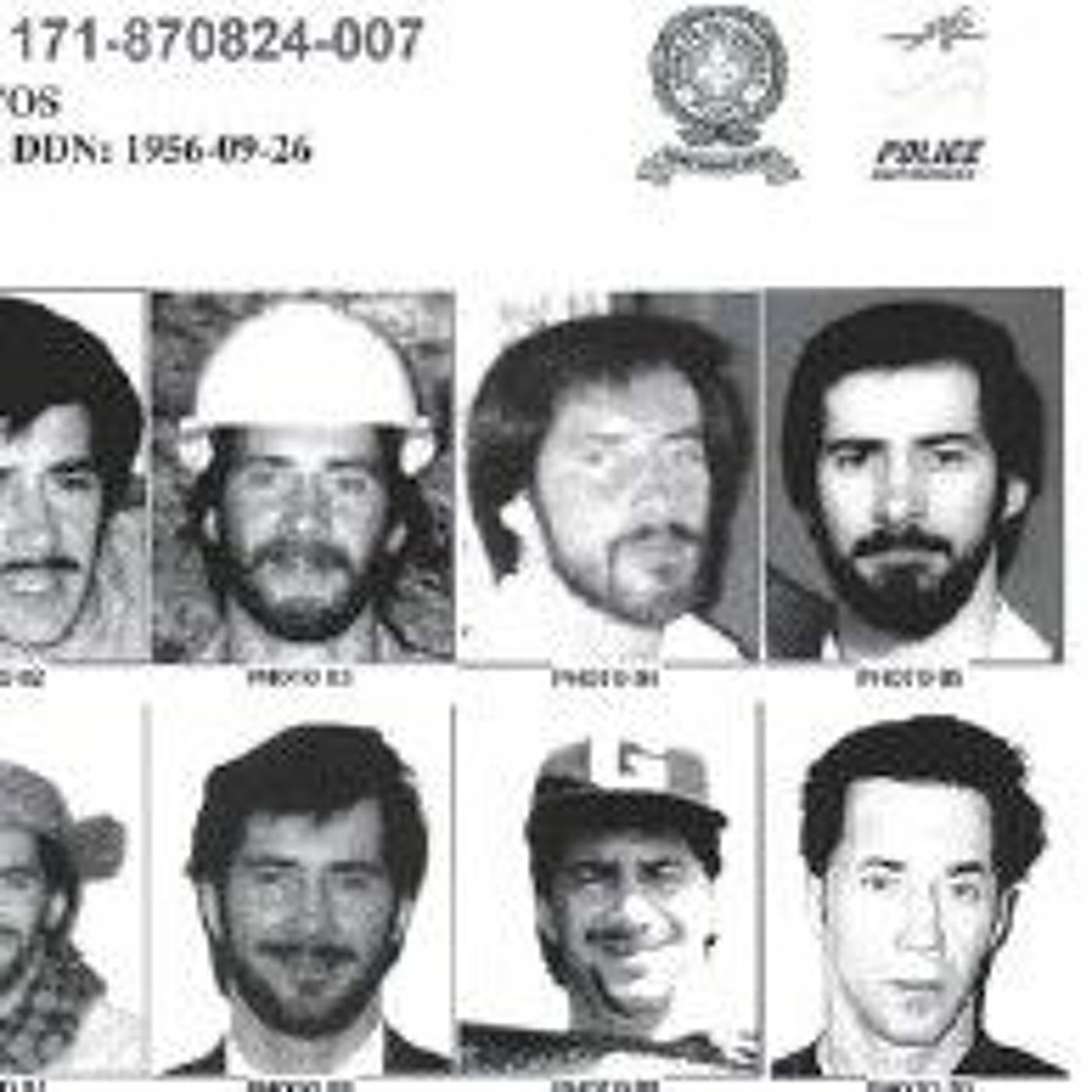
And I remember quite clearly, it was either in the newspaper, it had to be in the newspaper, seeing this story about Project Probe. They had photos of Croutault, and the guy was like a chameleon. They had like 10 photos of Croutault, and all 10 photos looked like a completely different guy. He put glasses on his face, it would change him, there's one where he's wearing a cowboy hat.
There's one where he looks like Brian Ferry, there's another one you turn around, he looks like David Bowie. It's like, who the hell is this guy? So I remember that quite clearly, and also because this began, at that time I was in Sherbrooke that March, not only with my brother, but also with Patricia Pierce and the investigative journalist for the National Post newspaper. And we were all doing our initial work around these kind of things.
We hadn't yet learned of a debate, a mental debate, and Louise Cameron, but we did that weekend determined that this was the epiphany where we went to what is not a drug overdose. This is not a boating accident, it's a murder. I remember that, and I've seen that article. Now, this is a side track, and this is when in my early days of amateur sleuthing, because we were going through archives of Champlain College and looking up old information, we came upon a directory of staff.
It was in one of the student newspapers, and it was like, here is your staff for the coming 1978 year. Photos and descriptions of all the people we've talked about in the past, Jean Edison, Dr. Madsen, he's the director of residence. I think I described once before, it was a place for Stewart Peacock, but it was just a big black emptiness, they didn't have a photo of him.
And one of the photos they had was this guy named Guy Clutier, and it said he worked as a lab assistant in the Johnson Building. I believe that was the chemistry of physics building. And because the Septitic attack was appealing to the public on Crutto, they wanted to see if they could nail him for other crimes. It's one of the first times I remember seeing their, I think they had just unveiled their website prior to, I think just the beginning of 2002 was when they had a website.
And one of the first things they had up there was this composite of Crutto. So we found this guy named Guy Clutier, who we made ourselves believe, I think that's the right way to put it, looked like Guy Crutto. This guy kind of had a loose perm, it's kind of large featured with a pair of glasses. Now in the Crutto composite, there was none with him, I believe wearing glasses.
So we drew a pair of glasses on one of the composite pictures and said, Guy Clutier is Guy Crutto. Right? I also remember, you know, they had a hotline, and at that time I didn't know they were just looking at a window from 95 to 2000. But I did the math and said that Crutto was 21 and 78, so it's a possibility.
So I found the hotline, and the guy who returned my call was Mark LePinn. He was heading up Project Pro. And you know, if you've listened, LePinn later did profiling training and is now the head of the Sarticabex cold case unit, someone who, not I haven't recently, but very often in the course of the last 15 years, I've interacted with him on several times. So this was my first encounter with LePinn, and we thought he was going to solve all our problems.
And we said, we're going to wrap this up really quickly. It's Crutto. Crutto looks like Clutier. And I'm just like, that's it?
Aren't we geniuses? Works done, case closed, let's go home. And so somehow we managed to find, we tracked down an address and phone number for Guy Clutier and found that he was living still in the Eastern Township. So we said, ah, we got it, we got it.
We phone his residents and like his wife picks up, child picks up, parents pick up and they say we don't know where he is. You know, he hasn't been seen in years. We were like, we got our guy. We haven't seen him because he's in jail right now because he's Gee Crutto.
Because we're brilliant. So I remember, I remember phoning the number, you know, and your heart's kind of racing. You don't know quite what you're going to say, but you're improvising and you're winging it. Three rings in, the phone picks up, and I said, is this Gee Crutier?
And the guy goes, what? I panic and I immediately hang up, right? Because it can't be Crutto because Crutto's in prison. So that was our first folly in amateur sleuthing.
I think in an abbreviated fashion, I've told this story before, but that's where the lesson came from. I think we related this story to serial profiler, Kim Rosmo, who immediately, his lesson was, don't go chasing suspects. Cut forward to 2004, Crutto's trial, which you would think would be a slam dunk, I mean 173 times for goodness sakes. But this period court, Justice James Brunson, for one thing, he doesn't allow the jury to be aware that Crutto is also awaiting a trial on multiple charges of sexual assault, forceable confinement, robbery, involving ten other females from the age of ten to 18.
And I believe these are in addition to the other three. Brunson also does not allow testimony from Mark LePinn, who by now is a profiler. And what they're getting at is the defending attorney, Mark LeBalle, is arguing to the jury that certainly Crutto might have raped her, and that's how the sperm had separated on her clothing. But that doesn't mean he killed her.
In his opinion, she could have been raped earlier and then there was a separate event and somebody else stabbed her 173 times. So the thing is up in the air, right? But finally, he's convicted. He's sentenced to 25 years without the possibility of parole, which we know in Canada means virtually nothing.
I think I read an article recently that said that he's eligible for parole in 2027, so that quickly got thrown out the window, we'll get to that. But immediately when Crutto hears this, he's convicted and sentenced, he tries to slit his wrists right there in the courtroom, fairly dramatic. But anyway, he's put away, he serves time in a minimum security facility in the Quebec region. So let's dovetail back to a couple of things that I think are interesting about this.
The first is clearly when this project probe came out, as in all cases in Quebec, they're trying to nail him for other crimes, but they get him for these sexual assaults, not for other murders, which is curious. It's hard to find him that he was responsible for this one singular murder to the maximum extreme. So the question is how could they not have charged him with other murders, for which he most certainly would have been responsible? And again, I think we come back to our old friend criminal investigative failures, systemic justice failures.
Well, yeah, they got them on the, you know, they got lucky with the evidence with Laundry, just as they got very, very fortunate with evidence in the case of the serial killer William Fife, but we don't know the extent of evidence preservation in the other cases. Maybe they lost the DNA as they have in so many other cases. Maybe they poorly processed the DNA or the evidence if they in fact had it. Maybe they're just not good enough investigators to have been able to tag him with the additional murders.
And then certainly in the case of there's no way Cruto is going to roll over and to confess to anything, because even a sentence of life imprisonment, which is 25 years without the possibility of parole, which is conditional, it's not a sure thing. You always, there's always a chance he will be let out as we learned in the promise of Luke Gregoir, who was promised that he would never be released. And then he was being processed for release up into the time of his death in 2015. But some of the things I think that I find curious about this in the other cases, so as we've said, the bodies of Laundry and then of Gib, who at this point is still a cold case in 2004, and we'll get to that.
So they're found in, you know, they're abducted in Laval and L'Angay, and we've heard those names before. We have many cases in Laval in the 70s. Of course, L'Angay is the site of the Sharon Pryor dump site in 75. So close to the vicinity of Montreal, but the dump sites are to the north.
In fact, the two dump sites, if I say that 20 clicks over from La Samcion is Saint-Arras-Shadashalene. Well, another 20 clicks over, and you run right into Saint-Calixt, which is where in 1977, the Jasslinhul's body was found, also abducted directly from the island of Montreal in the town by the Old Munich Tavern in downtown Montreal. So that is less about Croutot is responsible for all three crimes. It is more to do with, you know, over time and decades, these criminals, I believe, learn from each other and do a lot of the same things, jurisdictional, confusion.
You do the abduction in one place, and you put the body in another place, so that's going on. Similarities, if you skip forward to 2007 to the Cedrica-Provenche case, a similar technique is used. In the case we know that we're told that Croutot abducts a 10-year-old for sexual assault using the rules of I-Lost my dog. This is exactly the same rules that is used again in 2007 on Cedrica-Provenche, who is also 10 years old.
There's somebody going around the neighborhood and saying, have you seen my lost dog? So these tricks, these tactics are age-old, we know that they are, and they're used repeatedly, which is interesting, how the decades reflect and inform each other, and speak to each other back and forth. So we jump forward to August 17, 2013, the summer of 2013, and Croutot is granted a brief leave from prison. It's federal penitentiary to attend the funeral of a relative, which is understood, that's not parole, but it's still, it is freedom.
And this is an article from August 17, 2013 by the Gazette great crime writer Paul Cherry. I'll just read a little bit from it because it is informative of the Quebec rehabilitation system. It says, and this is referring to the relative who's funeral he's attending. The deceased was only referred to in the decision as someone Croutot should consider a model for him to follow, if he sets his goals towards rehabilitation.
Now, right there, that implies, somewhat, that he will be, someday released. And then it goes on to say, the parole decision reveals Croutot is detained at a medium security penitentiary somewhere in Quebec, and then he collaborates well with corrections staff. But he is still considered a high-risk reoffender, potential with little potential of being paroled, which won't be an option until sometime after 2027. The decision states Croutot meets regularly with a psychiatrist and psychologist to deal with mental health problems.
In 2004, he was diagnosed as suffering from chronic depression. He tried to kill himself in the courtroom while he was convicted of the murder, and from paranoia. He is also on a waiting list to take part in programs to treat sexual deviance and drug addiction. The interesting thing is that you would have to wait for those programs in a rehabilitation process.
To address the threat he posed, the parole board ordered the Croutot's leave to the funeral home be limited to less than eight hours with 30 minutes for lunch. The court also ordered that he be escorted by two armed guards at all times and transported in a vehicle used to transfer inmates. The board also required the Croutot be kept in handcuffs and leg shackles while at the funeral home. Considering all the measures foreseen to constrain you, your case management team is of the opinion that the risk can be managed adequately during the escorted leave that they recommended.
The board noted in its decision. All of the necessary verifications were done relative to the victims, and they raised no particular preoccupation with the leave. That's good. So they actually noted that the victims that they were going to take this action in advance of doing it, which is somewhat rare from what I know in the past when I've heard of these instances, the victims are rarely notified.
In fact, the first time they ever learned of these things is in a newspaper. I'm going to leave it there for this week with the exception of the the audience coda to all of this. So what of Leat Gibb? Well, Leat Gibb is still a cold case.
In fact, her case is on the September 11 website, along with my sisters, along with many of the other cases, not all of them that we've discussed through these series of podcasts. And it's still cold after all these years, 87, 97, 17, 30, 30 years. 30 years has passed since that, still cold. Say a prayer for Leat Gibb.
Now, some things. They're on my post on my website, Theresa-Lord.com, and I'll probably do this also on the Theresa-Lord who killed Theresa Facebook page and on the Theresa-Lord Twitter feed photos of both Gibb and Landry, and the 10 photo composite of Gikrutel. Also posted a picture of the lab assistant, Guy Kuttier, who was not a serial killer, apparently he just so happened to be an assistant in the chemistry building at Champlain College in Lennoxville, same chemistry building where my sister happened to take chemistry classes just to coincidence. And also there's a Quebec, you know, like a true crime ducky drama series from the day called Dossier Misterre, and they do about a 12 minute segment on Sophie Landry before Crutto is filmed.
Crutto is found, so it's 12 minutes about how she disappeared, how she died, if the public knows anything, etc. I don't think you have to speak, obviously it's in French, you don't have to understand, comprehend French in order to comprehend what's going on. Like America's Most Wanted, like any of these shows, it's a series of reenactments, so you get to see an actress playing her at the bus station, etc. Interestingly enough, though, they get some of the real players from the case to reenact the parts, for instance the farmer, Luc Deval, actually reenacts himself, you know, he's driving a tractor down into the cornfield and seeing the body, so they interview him briefly.
The lead investigator, Gilles LeDuc from the start to take a back, he's interviewed but also they get him to reenact the discovery of the crime scene, the processing of the crime scene. So, you know, if you've got 12 minutes and you like this kind of stuff and you're kind of bored with the Americanized versions you've seen of these, you might want to have a look at that, which I'll post on the website. So, with that, that's our episode this week. So, involving of the eight cases from from 87 to 95, the first two and then at the GIB, Sophie Landry will come back next week in the following weeks and make our way through the other six and we'll go from there.
So, thank you very much for listening this week. This has been Who Killed Theresa on your host, John Allure, have yourselves a great, great afternoon. We did it again. Verizon was just named America's most reliable network by Root Metrix for the 16th time in a row, proving once again that nobody builds networks like Verizon builds networks.
That's why we're building 5G Rock. That's why there's only one. That's Network. Verizon.
Best and most reliable based on Root Metrix reports from second half 2013, first half 2021 and three operators on all network types combined, not specific to 5G networks. We did it again. Verizon was just named America's most reliable network by Root Metrix for the 16th time in a row, proving once again that nobody builds networks like Verizon builds networks. That's why we're building 5G Rock.
That's why there's only one. That's Network. Verizon. Best and most reliable based on Root Metrix reports from second half 2013, first half 2021 and three operators on all network types combined, not specific to 5G networks.