
EPISODE · Jan 15, 2024 · 24 MIN
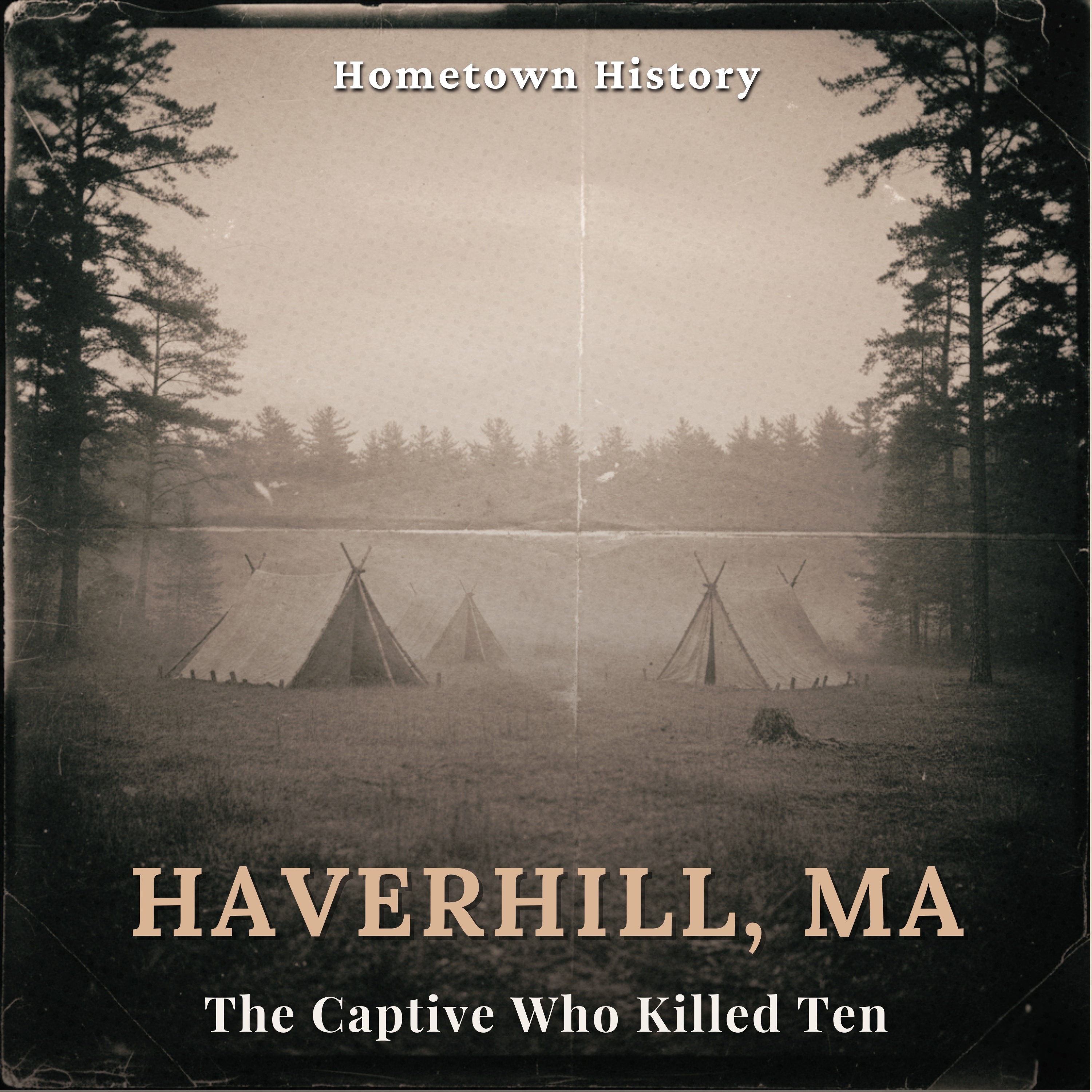
Hannah Duston: Colonial America's Dark Heroine
from Hometown History · host Shane Waters
In 1697, after Abenaki raiders killed her newborn infant before her eyes, Hannah Duston of Haverhill, Massachusetts became a captive, forced to march toward Canada. Days later, she killed ten of her captors, including six children, and escaped with their scalps. Colonial minister Cotton Mather transformed her story into a parable of Puritan righteousness, portraying her as a biblical hero striking down savages. But Hannah's tale didn't end there.By the 1820s, as America expanded westward, her story resurfaced with new purpose. Literary figures like Nathaniel Hawthorne revisited her narrative just as the nation debated Native removal. Hannah became a symbol, the innocent white woman defending herself against monstrous attackers, justifying centuries of violence against indigenous peoples. In 1861, she became the first American woman honored with a public statue, her image wielding tomahawks and scalps like Columbia, the nation's Liberty Goddess.This hidden page of American history reveals how one mother's trauma in colonial Massachusetts became the foundation for expansionist narratives that persisted through the Cold War, Vietnam, and beyond. Who decides the line between hero and villain? Join us as we examine the two faces of Hannah Duston and the dark legacy of America's founding mythology.New episodes every Tuesday.Episode SummaryHannah Duston's story is one of the most morally complex tales in American history. In March 1697, during King William's War, a 40-year-old mother from Haverhill, Massachusetts witnessed her newborn child murdered by Abenaki raiders. Taken captive alongside her neighbor Mary Neff and an English boy named Samuel Lennorzen, Hannah was forced to march toward Canada. Days later, in a brutal act of revenge, she killed ten members of the Native family holding her, six of them children, and returned home with their scalps to claim a £50 bounty.But this episode isn't just about one woman's violence. It's about how her story was weaponized across centuries to justify American expansion, Native removal, and international interventions. From Cotton Mather's 17th-century sermons to 19th-century statues to modern foreign policy, Hannah Duston's legacy reveals how selective storytelling shapes national identity.Key FiguresHannah Duston (1657-1736) - Haverhill, Massachusetts mother whose captivity and revenge killing became an American founding mythCotton Mather (1663-1728) - Puritan minister who wrote three versions of Hannah's story between 1697-1702, framing her as biblical heroineMary Neff - Hannah's neighbor, fellow captive, and accomplice in the killingsSamuel Lennorzen - English boy previously captured, taught Hannah and Mary how to wield tomahawksNathaniel Hawthorne (1804-1864) - Literary figure who revisited Hannah's story during the 1820s-1830s era of westward expansionCharles Goodrich - 1823 historian who depicted Native Americans as monsters in his retelling of captivity narrativesTimeline of Events1657 - Hannah Emerson (later Duston) born in Haverhill, MassachusettsMarch 15, 1697 - Abenaki raid on Haverhill; Hannah's newborn killed, she and Mary Neff taken captiveMarch 30, 1697 (approx.) - Hannah, Mary, and Samuel kill ten of their captors and escape by canoe1697-1702 - Cotton Mather writes three versions of Hannah's story, establishing the heroic narrative1820s-1830s - Story resurfaces during debates over Native removal and westward expansion1823 - Charles Goodrich publishes sensationalized version depicting Native Americans as supernatural monsters1850s - Increased westward expansion drives renewed commemoration1861 - First statue erected in Haverhill, the first American woman honored with a public monument1874 - Second statue built on island north of Concord, New Hampshire, depicting Hannah as Columbia-like figure with tomahawk and scalps1890s - As Native American population reaches near-extinction, Hannah's story fades from prominence20th-21st centuries - Legacy continues in American self-perception as righteous global guardianHistorical ContextThis episode takes place during King William's War (1688-1697), part of a larger conflict between English colonists, French forces, and various Native American nations. Following the devastation of King Philip's War (1675-1678), which killed up to 80% of southern New England indigenous populations through violence, starvation, and slavery, surviving tribes allied with northern nations like the Abenaki. These alliances, supported by the French, raided English frontier settlements throughout the 1690s.The broader context includes:Colonial expansion into Native territories creating constant frontier violenceCaptivity narratives as a popular literary genre used to demonize Native AmericansPuritan theology framing conflicts as spiritual battles between good (colonists) and evil (natives)19th-century Manifest Destiny using historical narratives to justify westward expansionWomen's symbolism in American identity, Columbia as virtuous maiden, women as moral voice of the nationRemoval era (1830s-1850s) when Hannah's story was strategically revived to support forced Native relocationGeographic FocusHaverhill, Massachusetts - Colonial frontier town on the Merrimack River, approximately 30 miles north of Boston. In 1697, Haverhill was a vulnerable settlement on the edge of English territory, subject to frequent raids during King William's War. The town's strategic location made it a target for Abenaki forces allied with the French.Route of Captivity: Hannah and fellow captives were marched northward toward Canada, likely following traditional Native routes along the Merrimack River valley. Her escape occurred somewhere in present-day New Hampshire before reaching the Canadian border.Monument Locations:Haverhill, Massachusetts (1861 statue, later repurposed for Civil War memorial)Island north of Concord, New Hampshire (1874 statue still standing)Sources & Further ReadingCotton Mather Primary SourcesDecennium Luctuosum (1699) - First published account of Hannah Duston's captivityMagnalia Christi Americana (1702) - Expanded version within larger New England historyThese texts established the heroic narrative that shaped centuries of interpretationAcademic AnalysisThe Name of War: King Philip's War and the Origins of American Identity by Jill Lepore (1998)Examines how colonial conflicts shaped American identity formation, including captivity narrativesCaptivity Narratives & Women's StudiesThe Unredeemed Captive by John Demos (1994)Explores colonial captivity experiences and their lasting cultural impactNative American PerspectivesFacing East from Indian Country by Daniel K. Richter (2001)Provides indigenous perspectives on colonial encounters often missing from traditional narrativesMonument & Memory StudiesStanding Soldiers, Kneeling Slaves by Kirk Savage (1997)Analyzes American monument culture including Hannah Duston statues as first woman commemorated19th Century Expansion EraHistorical society archives from Haverhill and Concord document the revival of Hannah's story during westward expansionContemporary newspaper accounts from 1820s-1860s show how her narrative was deployed politicallyModern ScholarshipMultiple academic articles examining how Hannah Duston's story functioned as propaganda across American historyStudies of how gender, violence, and national mythology intersect in her legacy Hometown History explores forgotten stories from small-town America. The overlooked events, hidden triumphs, and buried tragedies that shaped the country we live in. New episodes every Tuesday. Find every episode at mythsandmalice.com/hometown-historyAdvertising Inquiries: https://redcircle.com/brandsPrivacy & Opt-Out: https://redcircle.com/privacy
Embed this episode
NOW PLAYING
Hannah Duston: Colonial America's Dark Heroine
No transcript for this episode yet
Similar Episodes
No similar episodes found.
Similar Podcasts
No similar podcasts found.