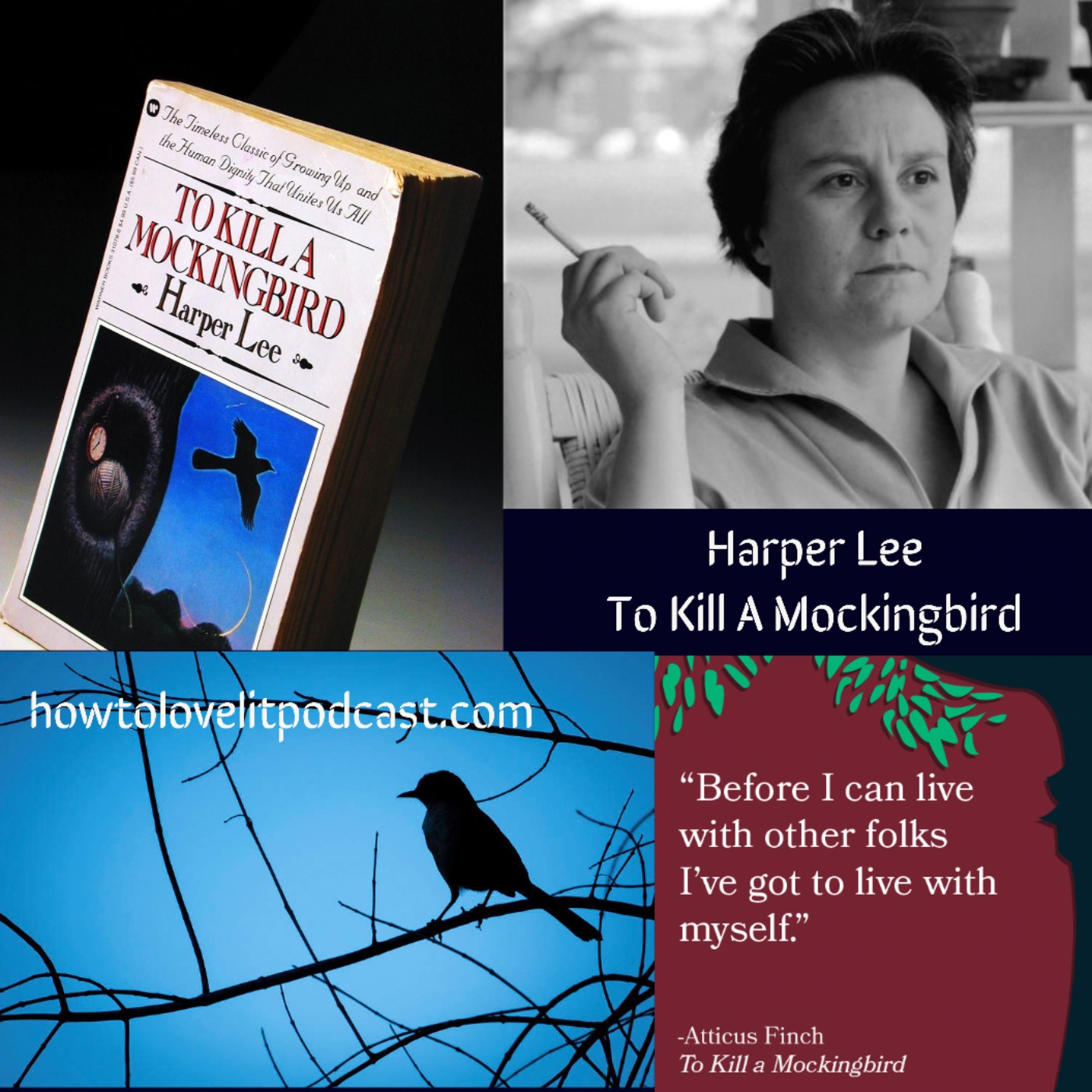
Harper Lee - To Kill A Mockingbird - Episode 2 - Innocence, Motifs And The Power Of Language! episode artwork

EPISODE · Apr 13, 2024 · 48 MIN

Harper Lee - To Kill A Mockingbird - Episode 2 - Innocence, Motifs And The Power Of Language!

from How To Love Lit Podcast

Harper Lee - To Kill A Mockingbird - Episode 2 - Innocence, Motifs And The Power Of Language! Hi, I’m Christy Shriver, and we’re here to discuss books that have changed the world and have changed us.  I’m Garry Shriver, and this is the How to Love Lit Podcast.  This is our second episode over that great American classic, To Kill a Mockingbird.  Last week, we introduced our author and both of her published books.  We compared them briefly, looked at the titles of each, and then focused more specifically on the origins and inspirations of Mockingbird.  We looked at Lee’s historical moment and argued that Lee’s novel, although set in the 1930s was far more interested in the world of the 1950s than the 1930s- a world struggling with civil rights.   We will develop the theme of racial injustice in the second part of the book, of course, but today as we lay the ground work for that part, we will continue our focus on part 1.  Last episode we ended our discussion talking about Maycomb, the tired old town where Lee set her story, a town which could be seen more like a character than an actual place.   Maycomb is a broken place and this brokenness is on display in several ways.  Part one only hints at the racial division that is the focus of the second section but that doesn’t mean it isn’t setting us up for it.  Lee carefully introduces several major themes and motifs then she proceeds to developed throughout and beyond the trial.  These themes should be considered as we read the section part of the book, for one reason because they provide a framework from which we should understand the insanity of the trial and its aftermath.  If you can’t understand Maycomb, you would not believe such a facade of a trial could even be possible.  So, Christy, can we say the primary role of section one is foreshadowing, then?  No.  I would absolutely say not the primary role.  There is forshadowing, for sure, and it surfaces in many different ways, but it’s the the primary role.  Harper Lee is laying the framework for a larger discussion than race.  Race is the context, but she is framing the racial discussion that will come.  Maycomb is the microcosm of society at large- any society, not just the segregated South of her days.  The disease of racism, and she does call it a disease, has several causes, and it’s the cause of this disease that she’s exploring.  The first half is charming and disarming.  It’s less intense and emotionally jarring than the second.  The language gets more offensive the closer we get to part two, but she’s setting us up for how she wants us to understand the racism we will soon be exposed to, and what she thinks we can and should do to address it.   Her argument is nuanced and much of it is delivered through the words of Atticus and Calpurnia, although Uncle Jack and Miss Maudie weigh in as well.  It’s illustrated through the actions of the children as they interact with the different groups in their community: the Cunninghams, the Radleys, The Ewell’s and Mrs. Dubose.  Lee explicitly discusses man’s relationship with power, its use and abuse of it,  She blatantly spells out for us what a mockingbird symbolically represents and the principle protecting the innocent.  Atticus not only tells his children to learn to understanding the lived experience of those around them, but forces this lesson upon them in what comes across as a very cruel way to learn a life lesson.  The setting of part 1 is the playful existence of childhood innocence, but as we walk with Scout, we are to learn these same life-lessons before she forces us to apply them in this adult world of experience which is cruel and ruthless in many ways.    Hosted on Acast. See acast.com/privacy for more information.

Harper Lee - To Kill A Mockingbird - Episode 2 - Innocence, Motifs And The Power Of Language! Hi, I’m Christy Shriver, and we’re here to discuss books that have changed the world and have changed us.  I’m Garry Shriver, and this is the How to Love Lit Podcast.  This is our second episode over that great American classic, To Kill a Mockingbird.  Last week, we introduced our author and both of her published books.  We compared them briefly, looked at the titles of each, and then focused more specifically on the origins and inspirations of Mockingbird.  We looked at Lee’s historical moment and argued that Lee’s novel, although set in the 1930s was far more interested in the world of the 1950s than the 1930s- a world struggling with civil rights.   We will develop the theme of racial injustice in the second part of the book, of course, but today as we lay the ground work for that part, we will continue our focus on part 1.  Last episode we ended our discussion talking about Maycomb, the tired old town where Lee set her story, a town which could be seen more like a character than an actual place.   Maycomb is a broken place and this brokenness is on display in several ways.  Part one only hints at the racial division that is the focus of the second section but that doesn’t mean it isn’t setting us up for it.  Lee carefully introduces several major themes and motifs then she proceeds to developed throughout and beyond the trial.  These themes should be considered as we read the section part of the book, for one reason because they provide a framework from which we should understand the insanity of the trial and its aftermath.  If you can’t understand Maycomb, you would not believe such a facade of a trial could even be possible.  So, Christy, can we say the primary role of section one is foreshadowing, then?  No.  I would absolutely say not the primary role.  There is forshadowing, for sure, and it surfaces in many different ways, but it’s the the primary role.  Harper Lee is laying the framework for a larger discussion than race.  Race is the context, but she is framing the racial discussion that will come.  Maycomb is the microcosm of society at large- any society, not just the segregated South of her days.  The disease of racism, and she does call it a disease, has several causes, and it’s the cause of this disease that she’s exploring.  The first half is charming and disarming.  It’s less intense and emotionally jarring than the second.  The language gets more offensive the closer we get to part two, but she’s setting us up for how she wants us to understand the racism we will soon be exposed to, and what she thinks we can and should do to address it.   Her argument is nuanced and much of it is delivered through the words of Atticus and Calpurnia, although Uncle Jack and Miss Maudie weigh in as well.  It’s illustrated through the actions of the children as they interact with the different groups in their community: the Cunninghams, the Radleys, The Ewell’s and Mrs. Dubose.  Lee explicitly discusses man’s relationship with power, its use and abuse of it,  She blatantly spells out for us what a mockingbird symbolically represents and the principle protecting the innocent.  Atticus not only tells his children to learn to understanding the lived experience of those around them, but forces this lesson upon them in what comes across as a very cruel way to learn a life lesson.  The setting of part 1 is the playful existence of childhood innocence, but as we walk with Scout, we are to learn these same life-lessons before she forces us to apply them in this adult world of experience which is cruel and ruthless in many ways.    Hosted on Acast. See acast.com/privacy for more information.

NOW PLAYING

Harper Lee - To Kill A Mockingbird - Episode 2 - Innocence, Motifs And The Power Of Language!

0:00 48:58

No transcript for this episode yet

We transcribe on demand. Request one and we'll notify you when it's ready — usually under 10 minutes.

MG Show MG Show The MG Show, hosted by Jeffrey Pedersen and Shannon Townsend, is a leading alternative media platform dedicated to uncovering the truth behind today’s most pressing political issues. Launched in 2019, the show has grown exponentially, offering unfiltered insights, comprehensive research, and real-time analysis. With a commitment to independent journalism and factual integrity, the MG Show empowers its audience with knowledge and encourages active participation in the political discourse. Breaking News Show | eTurboNews Juergen Thomas Steinmetz News is relevant to the global travel and tourism industry, human rights and global issues.Breaking news when it happens and only from the source. Eat to Live Jenna Fuhrman, Dr. Fuhrman Our health is our most precious gift and smart nutrition can change your life. Each month, join Dr. Fuhrman and his daughter, Jenna Fuhrman as they discuss important topics in the world of nutrition. Eat to Live will change the way you eat and think about food. French Your Way Jessica: Native French teacher founder of French Your Way Boost your French listening skills and test your comprehension with this one of a kind series of podcasts. Get the chance to listen to a real conversation between native speakers talking at normal speed AND customise your learning experience through carefully designed sets of questions (2 levels of difficulty) available for download at www.frenchvoicespodcast.com. All interviews also come with the transcript. French teacher Jessica interviews native speakers of French from around the world who share a bit of their life and passion. Where else would you meet in one same place a French yoga teacher based in Melbourne, a soap manufacturer from Provence, or a couple cycling around the world?

Frequently Asked Questions

How long is this episode of How To Love Lit Podcast?

This episode is 48 minutes long.

When was this How To Love Lit Podcast episode published?

This episode was published on April 13, 2024.

What is this episode about?

Harper Lee - To Kill A Mockingbird - Episode 2 - Innocence, Motifs And The Power Of Language! Hi, I’m Christy Shriver, and we’re here to discuss books that have changed the world and have changed us.  I’m Garry Shriver, and this is the How to Love...

Can I download this How To Love Lit Podcast episode?

Yes, you can download this episode by clicking the download button on the episode player, or subscribe to the podcast in your preferred podcast app for automatic downloads.
URL copied to clipboard!