
EPISODE · Sep 29, 2026 · 23 MIN
He Studied AI in 1996: What Non-Technical Leaders Get Wrong About What AI Can Do
from Leadership Sovereignty Podcast: Career Growth and Promotion · host Ralph Owens and Terry Baylor | Promotion & Career Growth
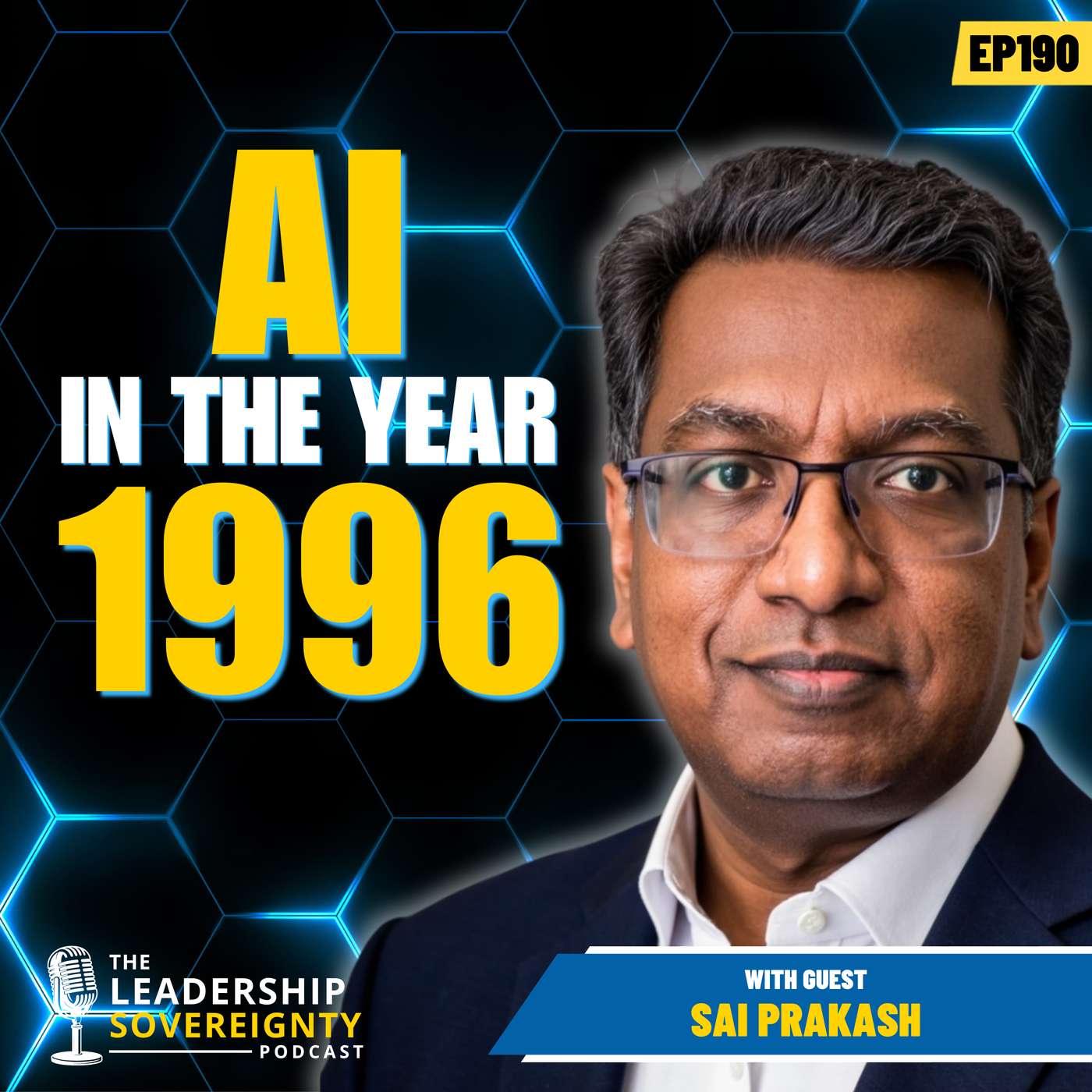
What does someone who was studying artificial intelligence in 1996 see that the rest of us are missing?Meet Sai Prakash, CTO and co-founder of MindStaq, six years at Microsoft, and a Master of Science in Mathematics and Computer Science from Sri Sathya Sai Institute of Higher Learning. Host Ralph E. Owens II and co-host Terry Baylor open a series of conversations with him here, starting with his story.It begins in a small, free university in India, in an AI lab that existed only because a grant required it, on machines that would not, in his words, "hold a candle to your iPhone." His class of 24 went on to Intel, Nvidia, Google, and DeepMind. Sai's read on the AI winter that followed: the ideas were sound, the hardware was too expensive, and when hardware finally caught up, software did not. "We're stuck in these monopolistic definitions of Word, PowerPoint, Excel. I'm like, can we do better?"He grew up on Isaac Asimov and still carries two things from those books: that people were "always central to that thesis," and a 1970s warning about "a cult of anti intellectualism in America where one person's ignorance is as good as another's knowledge." His concern today: "we've got this powerful technology, but we're not thinking hard enough about how it's used, how it's positioned."That thinking became MindStaq. It started with a question, "where's the Star Trek computer?", a scene from The Matrix, and a Sanskrit word for consciousness. How those connect closes this episode and opens the next one.******************************🎯 WHAT YOU'LL LEARN IN THIS EPISODE What an AI lab in India in 1996 looked like, and why it existed at all Why the AI winter was a hardware and cost problem, not a failure of ideas Where the 24 people in Sai's class ended up, and what that says about latent expertise How Isaac Asimov's fiction shaped a working technologist's view of what AI is for The Asimov warning about expertise that describes most meetings you sit in today The Star Trek question that started MindStaq Why Sai says "there is no document, there is no file" What "citta" means and why a company was named for it******************************👥 WHO THIS EPISODE IS FOR Directors and VPs asked to sponsor or approve AI without an engineering background Leaders who have sat through a vendor demo and could not tell staged output from real capability Executives deciding whether an initiative failed on merit or on cost Technology leaders who keep buying faster infrastructure and never ask what runs on top of it Anyone who will be asked this week what they think about AI******************************🎧 THE REST OF THIS CONVERSATIONThis is the first of an ongoing series with Sai Prakash. If you are new here, these three recent conversations are worth your time.EP187: Lead Your Leader: How to Master Leading Up and Build Influence That Gets You PromotedEP188: You're Not Responsible For What They Broke: How to Lead a Team You Inherited And ThriveEP189: Leading the Soul: How to Retain Young Talent When Compensation Has Stopped Working******************************🎤 MORE FROM SAI PRAKASHHis full bio, his links, and every one of his appearances on the show:Sai Prakash on The Leadership Sovereignty Podcast******************************📖 ABOUT SAI PRAKASHSai Prakash is the CTO and co-founder of MindStaq, an AI-native work management platform built to unify scattered tools and give teams a system that knows their work. He has spent more than 25 years in technology and product leadership at the intersection of enterprise systems, AI, and user-centric design, including six years at Microsoft and roles at Thomson Reuters and Agility. He holds a Master of Science in Mathematics and Computer Science from Sri Sathya Sai Institute of Higher Learning, where he studied artificial intelligence in 1996, and completed entrepreneurship study at The Wharton School.******************************🧾 Chapters(00:00) - (00:04) - AI’s Early Promise (00:49) - Meeting the Guest (02:17) - Studying AI Before the Boom (06:50) - Classmates Who Saw It Coming (08:32) - Asimov and the Future (11:38) - AI’s Human Purpose (14:35) - Trends and Anti-Intellectualism (16:44) - The Mindstack Origin (19:52) - Digital Selves and Memory (22:58) - Closing the Episode ******************************📺 Watch This Episode on YouTubeClick here to watch the full video of this episode. ******************************📩 Get Every Episode Delivered to Your InboxJoin the Leadership Sovereignty newsletter for new episodes, leadership insights, and exclusive resources, plus instant access to our free AI Toolkit: the practical guide smart professionals use to think clearer, communicate better, and make smarter decisions at work.*Sign up for our newsletter*******************************⭐ Help a Leader Find This ShowSixty seconds and a review puts this in front of another professional who needs it.🟣 Apple Podcasts 🟢 Spotify******************************🌐 More From UsFull episode library, free leadership frameworks, and show notes: leadershipsovereignty.comFollow the conversation: YouTube, LinkedIn, Instagram, TikTok, X, FacebookBook Ralph and Terry to speak: Connect with usSupport the show: ★ Support this podcast ★ ******************************📄 Full Episode TranscriptClick here to view the episode transcript.
Embed this episode
Ready to play
He Studied AI in 1996: What Non-Technical Leaders Get Wrong About What AI Can Do
No transcript for this episode yet
Similar Episodes
No similar episodes found.
Similar Podcasts
No similar podcasts found.