
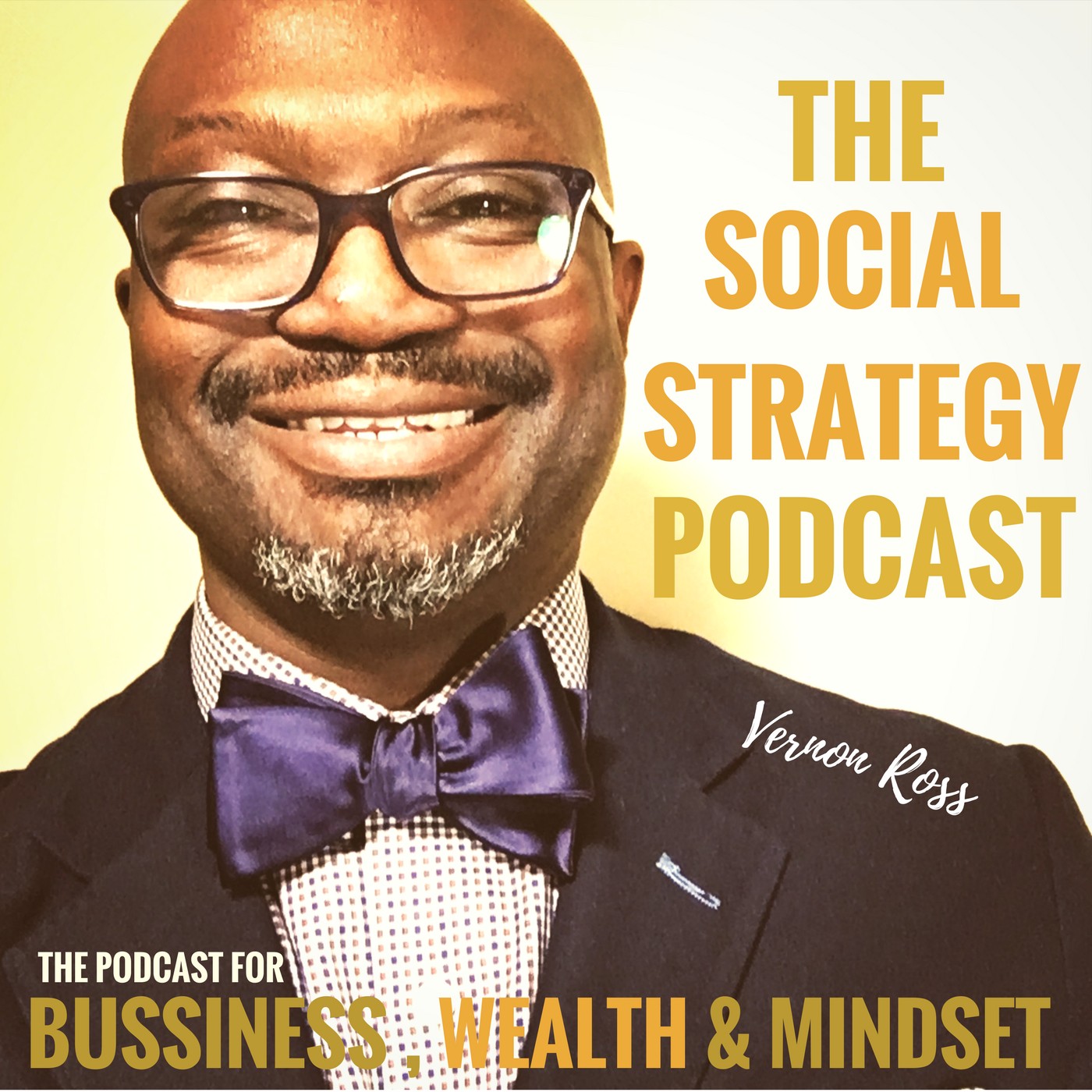
So strategy podcast episode 75. Welcome to the social strategy podcast where it's all about making the most of your business with smart tips on what's working now in social media, online business and good old fashioned. And now your host was also noted Ross PR on Twitter, Vernon Ross. Everyone, this is Vernon Ross and welcome to the social strategy podcast, bringing you the best in online business, social media and build fashion and working.
And guys, I got a guest today that is, she's more of a coaches coach. She helps entrepreneurs get into the coaching field, maximizing what their messages, helping them make transformations and get to where they're profitable in their business. She's got the training. She's got the master's degrees and she's got her own life changing story.
She took the leap early in 2015 from her nine to five and went full time in her business. So I am really, really looking forward to this conversation. Because I think what Shelly's going to be able to do is help us get into what it takes if you're in the coaching business or if you're a podcaster and you're looking at different aspects of coaching and what it really takes to be an effective coach online and offline. So Shelly, welcome to the show.
Thank you so much, Vernon. Thanks for having me on now. No, no, it's a pleasure. So I was reading through your bio.
Talk about the scared shitless moment. That stood out and I thought it was funny. And I'm like, yep, I've been through that. And yeah, we're starting right there, guys.
Yeah. Absolutely. You know, everybody I know has this scared shitless moment. And, you know, we often have it many times throughout our lifetime, but I'll share a little bit about my own.
Yeah. Early in 2015, I actually left my nine to five job to pursue full-time entrepreneurship, which was incredibly scary. My husband and I had just purchased a condo at the end of 2014. We had a brand new mortgage.
We had a brand new puppy and a lot of transition. And so why not quit your job? Why not put you down? Just add a little bit more uncertainty to the mix.
But the reality that happened for me was that it was, I think it was sometime early January where I was having a meeting with my boss and the topic of my raise came up again because I brought it up and I basically got denied for a raise that was had already been promised to me. And just to make a long story short, it was I was obviously not happy. I was really angry and confused about why something had been promised to me. And then the story changed that there was no money in the budget and I used to work for a non-profit.
So this was a very common theme in a lot of meetings that there's no money in the budget for this and that. So in that moment, I was like incredibly uncertain and scared and also kind of upset. But over the next couple of days, what I recognized in sitting in my own discomfort, my own upset and anger is that I was really angry at myself. I was, you know, I couldn't really say that my boss was responsible for it or the company I work for was responsible for it.
It was really my responsibility. Right. And so I just realized that somewhere along the lines, you know, I basically may have missed the mark and not really take in as much responsibility as I could have. And so at that moment, I made the decision that I had to basically burn the votes and take a hundred percent responsibility for my income.
If I really wanted my income to go up, I could no longer have somebody else be responsible for my success or my failures. And so I had already, you know, I had already had clients in my business. It was definitely still in ramp up and there was a lot of work to be done. But obviously we all have 24 hours in a day.
So I had to really choose what I was going to be spending my time doing on a day to day basis. So of course I came home, spoke with my husband, kind of told him what I was thinking and what I wanted to be focusing on. And so 30 days later, I quit my nine to five and went full time entrepreneurship. And so yeah, I mean, it was a very scary decision.
But the thing that I had the most confidence in was myself. I realized that, you know, that has always been the case. I know what I'm going to do, what I'm going to do it. And, you know, I couldn't transfer that confidence to somebody else because you never know what other people are going to do.
You can only, you only really know what you're going to do. Right. Now you're, you're fairly young. Did you get any pushback from your clients based on your age?
Because you know, there, there's a thing or you come across as fairly young. And when I think young is, so I am in my 40s. You appear to be in your 20s. I'm actually 35.
Okay. So you're not as young as I thought. I was thinking maybe 25. Yeah.
So that's not that bad. But do you still get pushback because you look young as a businessman tour? Yeah. You know, I have some clients that are in their mid 40s and I do have a lot of people in my community that are in their mid to late 40s.
And I mean, I wouldn't call it pushback, but I have had comments like, you know, positive comments, like I'm positively, you know, surprised by what you bring to the table. You look so young and, you know, I wasn't sure what your community would be all about and what kind of experience you would have and that kind of stuff. But it's been more positive than anything. I mean, there's been people that have been surprised by it.
That's a good thing. That's a good thing. So let's take a step back a little bit. And there's something that you say that you, you already had clients in your business.
So while you were doing your job, you were building a business on the side. Yes. Okay. So how long had you been at that?
It was my side hustle and it was, you know, I had, I started my business in 2014. So the idea came in 2013, but everything got formalized in 2014. So I had been at it for a while every day consistently, not skipping a beat. You know, I talk openly in, in my group and also in my newsletters that there were things that I felt like I had to sacrifice and really choose as to where I was going to put, put my attention.
Sometimes I missed family gatherings. Sometimes I stayed up late at night, you know, working on my business. Sometimes I worked all weekend. It just depends on what programs or what projects I was focusing on at the time.
But yeah, it takes a lot of consistency and a lot of focus. If you are doing a side, if it's a side hustle for you and you still have a nine to five. Right. Now when you say you had to sacrifice things, you had to sacrifice time or family events, stuff like that.
What's your primary customer base? Explain a little bit how you, how you do what you do. Yeah. So my primary customer is health coaches, health and wellness coaches and healers who want to have a social media presence and truly share their message, share their story and share their message to be able to help other people transform their lives.
So revolutionary health leaders that might be scared to step into that leadership and people that have their own story of transformation and they might not really be utilizing it to its full capacity. A lot of health and wellness coaches have their own story of transformation where they dramatically improve their own health. So what I help them do is really craft a strong message around their own transformation, around their own personal story and spread it so that other people get inspired to shift and change their own lives. Yeah, it's interesting.
No, you say you help them do that through, you know, through their social media channels. What's your, what would be your advice? Say, for instance, I run into quite a few Instagram health people or fitness coaches that, you know, they're starting to build a following. They're at those numbers where they've got maybe six or seven thousand people following them.
So brands are starting to talk to them, stuff like that, but they're trying not to get distracted with, I'm just going to promote this brand and they still really, really want to help people and spread their message. How would you talk to a person like that? What I say is in that kind of a situation, I would say to focus first and foremost on your own brand, you've got to be able to establish your own brand before you start promoting other people's brands. So I would say first and foremost, get your message really, really clear, locked in and systematize the way that you're going to share that.
A lot of health and wellness coaches get really discouraged or confused about what to even say on social media, how much information is too much information. A lot of my introverts struggle because they are scared to share more about themselves. And like I said, like feeling as though like they may say too much. So it's important to be able to systematize the way that you share your story, identify what your core story is and share different types of stories, like strategic types of stories that truly help other people get to know your brand, who you are, what you stand for and exactly how you can help them.
That's what's really, really important. If people don't really know how you help them, then obviously it's going to be tough to book more business. But that's what I would say is focus on your own brand before you go promoting other people's brands. Right.
Now that makes perfect sense. When you say systematize your story, what does that mean? So what I what I help my health coaches do is identify different types of stories that they can sprinkle throughout social media in a way that's really authentic and relatable. So the way to make it easy is that everybody has a core story, something that happened in their life that essentially made a transformation or the shift for health and wellness coaches typically revolves around their own story of transformation around health.
So what we do is we really identify what their core story is, like, what was that moment where the shift happened? And essentially be able to share that and sprinkle that throughout social media, but also sprinkle that throughout with other types of stories that help people understand how relatable they are. Also understand what position they take on health because not no, no two health coaches are alike. So that's really, really important to identify.
Like, where do you stand in the in the in the philosophy of health? You know, what, um, what kind of health coach are you? You know, are you vegetarian? Are you vegan?
Are you paleo? Like, where do you stand with certain issues or certain things that might be controversial? And it's really important for your tribe to really understand that because then they really understand how you're going to be able to help them. I envision a conversation of, you know, my health coach, I run across your site or I get a referral and my conversation is Shelly.
I hear you talking about building my tribe and building my community. I've got four people following me right now. I don't know how to build my community. Where do I start?
That's a great question. You really start from wherever you are. What I usually say is what social media platforms do you enjoy? It's really important to start wherever you enjoy being because you have to show up having fun at some point.
If you don't enjoy any social media platform, that's going to be a problem because this is really, really about putting yourself out in online space, which can be incredibly productive and effective at reaching more people and helping more people transform their lives. So I would say start exactly where you are, what social media platforms do you love? Pick two, really master one. And what I say is progressively shift towards doing video as much a video as possible because video, I think, is incredibly powerful.
People really get an idea for who you are, what you're about, what you sound like, what is it like to have a conversation with you and relate to you? So, you know, for people, treat those four people like gold, treat those four people like they're the most important followers in the world and they're going to bring more people because they're going to really enjoy who you are, what you're about. And if you can help them get results, they're going to tell more people. So those four people are going to tell four people and four more people and it multiplies from there.
So that's, I mean, I've grown my community to over 800 people in a very short amount of time and people come in every day. And I think that a lot of people are coming in by referral and by, you know, having their friends tell their friends. So don't underestimate the power of those four followers because happy followers that get results are going to tell other people, think about it. Right.
It just makes sense. Like whenever you come across something that you absolutely love and get really good results with, you're going to want to tell everybody. Exactly. Exactly.
No, that's perfect answer because I think people underestimate small audiences. So especially like, you know, with podcasters and coaches, when they're starting to put their information out there, whether it's coaches, wellness coaches, health coaches, business or whatever you're doing, even if you're just being interviewed on other podcasts and other shows and maybe even other people's videos, it's really, really effective and that will help build your community if you're given the value. And I think you expressed that perfectly. Yeah.
Well, awesome. So what's your favorite? What's your favorite network? What did you start with?
I started with Facebook and it's still my favorite platform. I enjoy Instagram a lot as well, but I think there's something about Facebook that makes it feel like it's a community and a lot more relational. And now with having Facebook live, I absolutely love it because you have the ability to do video and it's live. I mean, it's essentially what Periscope was doing, but you don't have to leave the platform, which is awesome.
So I feel like having Facebook live on Facebook in the community itself, just it's almost like it's another room to relate to people. Right. Do you think that Facebook is going to be the end of Periscope? I don't think so.
I think Periscope will stick around, but definitely face up. People are really, really digging Facebook live. And, you know, when you're already in conversation in a specific group and you don't have to leave, I think that's very appealing for people. And especially, you know, you know, the communities are incredibly powerful.
Facebook communities, private Facebook communities are incredibly powerful because it's like an it's like what an old networking group used to be. Right. You're just obviously it's virtual, but now with with a video option, you know, we really have the ability to relate on a more personal level. Do you do you also advise that people build an email list as well as Facebook and social other social media platforms?
Absolutely. Yeah. I think an email list is a really, really intelligent way to connect with your audience and it brings it gives it like a more personal touch. Facebook, I think is great.
But if tomorrow Facebook blew up or stopped working, what do you have left? How can you access your tribe? I think that having an email list gives you direct access to them and helps you relate to them on a more personal level, just because people still use their email in a very personal way, even though, you know, there's a lot of email marketing being done today. It's still a personal, you know, element.
So I absolutely feel like it's really important to build your email list and to be able to relate on a more personal level with your tribe there. Now, to switch gears a little bit, I want to actually a little bit about pricing and customers. You're a first customer. You say you're somewhere around the $400 mark.
How did that conversation go? You know, it's really interesting that you ask that. I was not even on the phone. I made that transaction via Facebook messenger.
What? Yeah. And it blew me away because that was one of my first sales and it just, you know, I basically sold a six week coaching package and it blew me away how you can make sales and healthy sales just simply by having a Facebook conversation. And that goes to show you the power of relating online and goes to show you the power of being relatable, the power of being vulnerable and sharing the right information that is truly there to help other people.
I very often tell my health coaches that you don't have to share everything about your life if you don't want to, but you have to at least give people an indication that you've got some skin in the game and are willing to be vulnerable if you're expecting them to be vulnerable with you, if you're expecting them to reach out for support. That's when somebody reaches out first for your support, they're in one of the most vulnerable places that anybody can be, right? Who likes to admit that they need help? You know, in this day and age and society, not a lot of people do because that traditionally has been seen as being weak or, like I said, vulnerable.
So as a health coach or as an online entrepreneur, it's important to be vulnerable yourself so that you show that you have some skin in the game and can give other people or allow themselves to give themselves permission to be vulnerable with you. Right. So had you already created your group when you got that sale or were you just yourself out there? No, I was just putting myself out there.
I didn't have a Facebook community. At that point, I was a newish health coach. I was terrified of creating a Facebook community. And I had just been putting myself out there in a more vulnerable way, sharing my story, sharing my own transformation, sharing what essentially what health issues I cleared up as a result of the system that I created and research that I had done over the years and training that I had taken.
And, um, and I think that there was a post and I honestly can't remember exactly what I wrote, but a post that hit home with a bunch of people because I remember I got like four sales in one week and. Oh, wow. I don't think that I jumped on the phone with any of them, which is again, really powerful. Yeah, that's awesome.
That is awesome. So there you go. There's a testament to sharing your story. And when people resonate with it, they're going to start contacting you.
Absolutely. Now, did you already have systems in place to be able to convert those to sales or were you scrambling at the last moment to figure out, okay, and now how do I sell them something? Um, so I already had some systems in place, definitely not, not anywhere near what I have in place now, but I already had some very basic systems to be able to make more sales, right? Which, you know, what's funny enough, and I'm sure you run into this, you'll have people that want to be coaches or there are coaches and they have no way for people to buy from them.
I have come across that. It's an interesting idea. Right. You'll have all this stuff, but there's no buy button.
There's no way to take a PayPal. Yeah. And no price. Right.
And no price. They don't have any pricing out there. Yeah. That's the problem.
Do you run into that a lot with, with, I guess, what heart centered professionals? I do. And you know, I think that like you, you actually nailed right now, heart centered professionals are really all about serving. They traditionally have not been about selling.
Yeah. And actually it's interesting that you say that because I'm coming out with a sales challenge and a sales course in the end of July that really bridges the two, that really bridges together the idea that selling is serving and heart centered entrepreneurs and women and wellness have tremendous power to impact thousands of lives if they can resolve a few issues around sales conversations and about sales in general. Right. Exactly.
Exactly. I think that's almost any entrepreneur. I find that with podcasters and anyone in a, in a service based business that, especially coaches, the, the charging for services and always explain it as, well, if you're giving value and you feel that you would buy what you're trying to sell them at the price you're trying to sell them, sell it to them at, then you should be fine. But what I've also found true is that if you've never bought coaching, you always have problems pricing.
Oh, yeah. I see that all the time as well. Yeah. It's like if you can't invest in someone to help you get to the next level, it's going to be very hard for you to ask someone else to do the same thing.
Absolutely. Yeah. You don't have a reference point. It's not something that you understand very well.
Right. No, that's, that's awesome. What a good story that you were able to close sales through Facebook messenger up until now. I've only heard that one other time and that was me through Yahoo instant messenger back in the day, we're running a video game tournament company.
I was able to close the sale through a, through a vendor. I love it. Right. Only through aim using aim.
Well, show, this has been fun. I really did enjoy getting to learn a little bit more about the coaching business. And I think you really covered a lot of social media, what coaches should do and how you really should approach pricing and getting your business started online. I'm really impressed with the amount of information you share.
Tell everyone how can we find you easily online? Sure. I am at cleanforks.com and I also have a growing community of helping wellness coaches on Facebook called health coaches, make bank mastermind. Oh, I love it.
Are you on Twitter? Yes. Twitter is at cleanforks and Instagram is also clean forks. Okay.
Have you jumped in the Snapchat? You know, I am still learning about Snapchat. It's some, it's like I had mentioned before that I think it's really important to really like stick with a couple of, of social media channels. And I am very much intrigued with Snapchat.
It's definitely on my list to look into, but I have just kind of dipped my toes in. I totally understand. I tell everybody when they start thinking about Snapchat, remember it's a one to one conversation at scale. Now this has been fun.
I really did enjoy it and hopefully I can get you back on. We can talk a little bit more about coaching sometime in the future. Yeah, we love that. Awesome.
Well, thank you so much, Shelley. Thanks a lot. All right. So that was pretty fun.
Shelley David, she's awesome. It's always fun to hear health and wellness people talk about social media and how they're actually serving their client base. I love it. And it's awesome that she's been able to branch out on her own and has been doing her own things.
So that should offer some inspiration to you, aspiring health and wellness people that want to branch off on your own and do your own thing. Really great story. So I wanted to talk about a couple of things that are going on. Of course, you guys know I am almost in full book launch mode.
If you go out to Vernon Ross dot com, forward slash book, just get on that email list. It is different than the main email list. That list is actually just for people that I'm going to be emailing about the book. Of course, you'll get emails about the book as things progress.
But this list is going to get a couple of videos. I'm going to add a couple of more videos onto that page. If you look up at the top, when you go out to that page, there's two other places for videos and we're going to be talking about content that's within the book that's talking about how you master your message, find your voice, communicate your greatness online and in life. That's one of the things that I've said for a while, I actually had a mastermind group called communicate greatness.
And that's part of this, not the mastermind group, but this whole thing with how you find your message, whether that be online, whether that's meetings on the stage, whatever you're doing, I want to help you be able to master that better. Had a lot of years of dealing with getting on stage and talking to people and stepping outside the comfort zone. And I want to help you guys get to that. So definitely go out to Vernon Ross.com for slash book, check it out, sign up for the email list.
And I hope you guys enjoy the videos that are going to be out there. You guys know where to find me at Ross PR pretty much everywhere on Snapchat, on Twitter, on Instagram, on Facebook, you can find me Facebook.com for slash Varn V. R. N.
Ross, R. Let's say so if you've liked the Ross PR page, it's going away. And actually maybe gone by the time you listen to this, because I'm going to unpublish page and really serve the brand anymore. So it's time to get rid of it as Stephen King says, you got to kill your darlings.
So I'm getting rid of it. And moving everything over to Vernon Ross or Vern Ross over on that Facebook page. So we like that page. We're going to be updating it with podcast stuff, book stuff, all kinds of great stuff and messages.
Oh, almost forgot. Check out Podbean. I'm doing some interesting stuff with Podbean. If you are an advertiser and you're looking to sponsor podcast, reach out to me.
I'm going to have a link in the show notes, signing up some sponsors for Podbean. So if you're interested in sponsoring a podcast or having your choice of podcast to sponsor, let me know and I can help you get that thing going. All right. So yeah, definitely check out Podbean guys.
You guys know the Co VR, Podbean free, give like a free 30 days, the trial, Podbean. If you want to be a podcast or you're curious about it, go check it out. If you happen to have attended my talk, I recently did a talk locally here in St. Louis, STL, venture works, get into the talk.
Don't worry, your resource list is coming and thank you so much for attending to the podcast. All right, guys, I'm definitely going to get out of here now. I will see you in the next episode.