
EPISODE · Jun 16, 2024 · 26 MIN
Healthy Calves Now Prevents BRD
from Ranch It Up Radio Show & Podcast · host Jeff ”Tigger” Erhardt
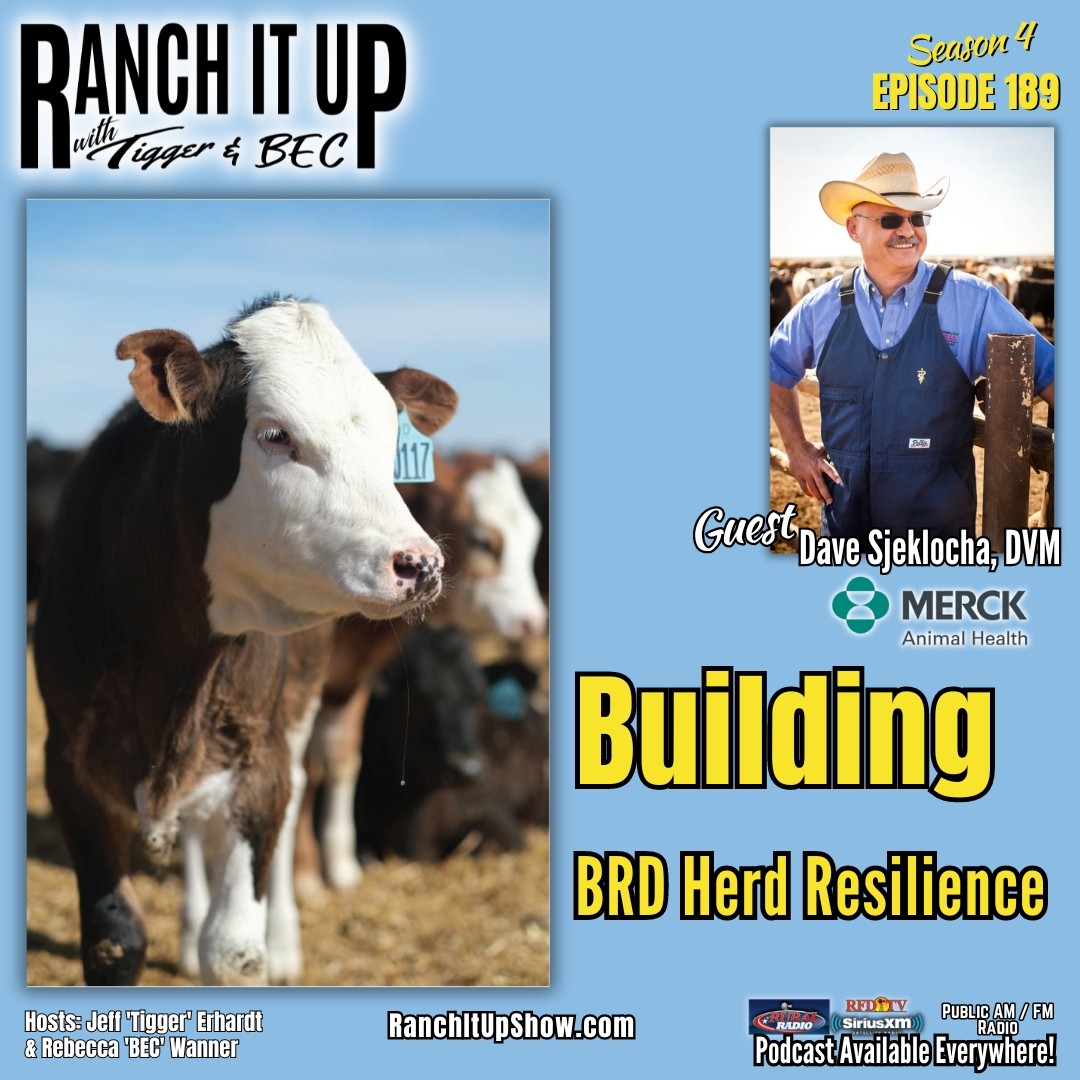
We discuss getting and keeping this year's calf crop healthy. Plus, updates on Beef imports and exports, new possible genetic defects, markets, recaps, sales and more on this all new episode of the Ranch It Up Radio Show. Be sure to subscribe on your favorite podcasting app or on the Ranch It Up Radio Show YouTube Channel. EPISODE 189 DETAILS BOVINE RESPIRATORY DISEASE (BRD), MANAGE IT NOW. OVERVIEW OF BOVINE RESPIRATORY DISEASE COMPLEX Bovine respiratory disease (BRD), shipping fever pneumonia, or undifferentiated fever is a respiratory disease of cattle of multifactorial etiology with Mannheimia haemolytica and, less commonly, Pasteurella multocida, Histophilus somni ( see Histophilosis), or Mycoplasma bovis being the important bacterial agents involved. Viral pathogens may also be involved, such as bovine herpesvirus 1, parainfluenza-3 virus, and bovine respiratory syncytial virus. BRD has a multifactorial etiology and develops as a result of complex interactions between environmental factors, host factors, and pathogens. Environmental factors (eg, weaning, transport, commingling, crowding, inclement weather, dust, and inadequate ventilation) serve as stressors that adversely affect the immune and nonimmune defense mechanisms of the host animal. In addition, certain environmental factors (eg, crowding and inadequate ventilation) can enhance the transmission of infectious agents among animals. Many infectious agents have been associated with BRD. An initial pathogen (eg, a virus) may alter the animal’s defense mechanisms, allowing colonization of the lower respiratory tract by bacteria. BRD is most commonly associated with the transport and assembly of large groups of recently weaned calves into feedlots. Morbidity in these types of feeder calves often peaks within the first 7–10 days after feedlot arrival. Morbidity can approach 35%–50%, and case fatality is 5%–10%; however, the levels of morbidity and mortality strongly depend on the array of risk factors present in the cattle being fed. The use of broad-spectrum antimicrobials labeled for bovine respiratory disease is the primary treatment, with macrolides and fenicols most commonly used as first-line treatment. Prevention and control are achieved via vaccination programs, preconditioning, identification and treatment of subclinically infected animals, and biosecurity. Etiology of Bovine Respiratory Disease The pathogenesis of bovine respiratory disease involves a stress factor, sometimes coupled with viral infection, which results in suppressed immune defenses and the proliferation of bacteria in the upper respiratory tract. Subsequently, these bacteria colonize the lower respiratory tract and cause bronchopneumonia with a cranioventral distribution in the lung. Many of the bacteria and viruses involved are commensal organisms of the upper respiratory tract that can be isolated from a proportion of healthy animals. Multiple stress factors contribute to the suppression of host defense mechanisms in cattle. Weaning is a noteworthy stressor, and the incidence of this disease is highest in recently weaned calves. Transportation over long distances serves as a stressor; it may be associated with exhaustion, starvation, dehydration, chilling, and overheating, depending on weather conditions. Additional important stressors include passage through auction markets; commingling, processing, and surgical procedures on arrival at the feedlot; dusty environmental conditions; and nutritional stress associated with a change to high-energy rations in the feedlot. The individual viral and bacterial etiologies, clinical signs, lesions, and treatment are discussed under Viral Infections Associated with Bovine Respiratory Disease Complex in Cattle and Bacterial Pneumonia in Cattle with Bovine Respiratory Disease Complex. Viruses associated with BRD include: bovine herpesvirus 1 (IBR) bovine respiratory syncytial virus parainfluenza-3 virus bovine viral diarrhea virus bovine adenovirus bovine coronavirus Bacteria associated with BRD include: Mannheimia haemolytica Pasteurella multocida Histophilus somni Mycoplasma bovis Bibersteinia trehalosi Control and Prevention of Bovine Respiratory Disease Prevention of bovine respiratory disease should focus on decreasing the stressors that contribute to development of the disease. Cattle should be assembled rapidly into groups, and new animals should not be introduced to established groups. Mixing of cattle from different sources should be avoided or minimized if possible; however, in the North American beef industry, this risk factor is almost unavoidable for large intensive feedlots. Transport time should be minimized, and rest periods, with access to feed and water, should be provided during prolonged transport. Calves should ideally be weaned 2–3 weeks before shipment, and surgical procedures should be performed in advance of transport; however, the availability of these “preconditioned” calves is quite limited. Cattle should receive arrival processing, which would include vaccinations and possibly metaphylactic antimicrobials within 48 hours after arrival at the feedlot. Adaptation to high-energy rations should be gradual, because acidosis, indigestion, and anorexia may inhibit the immune response. Vitamin and mineral deficiencies should be corrected. Dust control measures should be used. Metaphylaxis with long-acting antimicrobials, such as oxytetracycline, tilmicosin, florfenicol, gamithromycin, tildipirosin, or tulathromycin, has been widely adopted as a control measure given “on arrival” to cattle at high risk of developing shipping fever pneumonia. Metaphylaxis on arrival has been shown to substantially decrease morbidity, improve rate of gain, and, in some cases, decrease mortality. Mass medication in feed or water is of limited value because sick animals do not eat or drink enough to achieve inhibitory blood levels of the antimicrobial, and many of these oral antimicrobials are poorly absorbed in ruminants. On arrival, processing usually involves administration of modified live virus vaccines for viral antigens and for bacterial components of shipping fever pneumonia. Because most cases of pneumonia occur during the first 2 weeks after arrival, these on-arrival vaccines may not have adequate time to stimulate complete immunity in all individuals. When possible, vaccinations for the viral and bacterial components of shipping fever pneumonia should be given 2–3 weeks before transport or earlier and can be repeated on entry to the feedlot. Key Points BRD is the most common and costly disease affecting the North American beef cattle industry. BRD risk factors include weaning, transportation, adverse weather, commingling, and stressful events such as dehorning and castration. BRD is caused by suppressed immune responses and initial viral infection, which allow colonization of the lung by commensal URT bacteria. Preconditioning, minimizing mixing, vaccination for BRD pathogens, and metaphylaxis for high-risk animals are major control methods. Broad-spectrum antimicrobials labeled for bovine respiratory disease are the primary treatment. For More Information Key elements for implementing antimicrobial stewardship plans in bovine veterinary practices. American Association of Bovine Practitioners. Updated March 2022 Joint AABP-AVC Judicious Therapeutic Use of Antimicrobials in Cattle Cattle Industry News: Beef From Australia, New Genetic Defects, Alberta Prepares for HPAI, Trips Suspended to Michigan Farms U.S. IMPORTS OF AUSTRALIAN BEEF UP 74% FROM A YEAR AGO Australian exports of beef to the United States have soared in the last 12 months, hitting over 31,000 tons in May. Compared to the same month a year ago, that sum is 74% higher, according to global supply analyst Tim Jackson of Meat & Livestock Australia, a checkoff group for the country’s red meat producers. Australian farmers have also gained beef market share in Japan and South Korea largely at the expense of U.S. exporters, Jackson said. Australia’s global beef exports last month were up 9% from April and 25% from May 2023, hitting almost 114,000 tons — the highest level in more than four years. Jackson commented that the U.S. declines in production are now having a noticeable impact on export flows. NEW GENETIC DEFECT AFFECTING CATTLE MOBIDITY AND MEAT QUALITY Cattle have long been a cornerstone of agriculture, providing us with milk, meat, and various other products that nourish and sustain our communities. Ensuring the cattle’s health and optimal muscle development is vital when producing high-quality beef. However, various genetic conditions can disrupt muscle metabolism, affecting animals’ well-being and the quality of the meat they produce. Researchers at the University of Nebraska — Lincoln have discovered a new defect in composite cattle (Simmental, Red Angus, Gelbvieh) that often caused physical collapse when they exercised, with some calves unable to recover. This is an autosomal recessive genetic defect, which means both parents of affected calves must carry one copy of the mutation. TRIPS SUSPENDED TO MICHIGAN FARMS The Michigan Department of Health and Human Services asked the public to postpone visits to farms with dairy herds and poultry flocks amid the HPAI outbreak. Over the past few weeks, Michigan has reported two human cases of the H5 virus. The department asked schools, daycares, camps and other programs to delay any planned field trips to farms. ALBERTA PREPARES FOR HPAI IN CATTLE According to Chris Scott with Meating Place dot com, Confirmation of H5 virus infections in U.S. dairy cows is prompting animal health officials in Canada to consider their options to prevent the virus from affecting herds north of the U.S. border. Dr. Keith Lehman, Alberta’s chief veterinarian, told CBC News that vigilant surveillance is critical to protecting the Canadian dairy herd from a virus that has been confirmed among dairy cows in nine U.S. states so far. Canada imposed new import rules last month that require lactating cows from U.S. dairy farms test negative for H5 within seven days of export to help the nation maintain its HPAI-free status among cattle. UPCOMING SALES & EVENTS ISA Beefmasters: October 5, 2024, San Angelo, Texas BULL SALE REPORT & RESULTS Churchill Cattle Company Van Newkirk Herefords Gardiner Angus Ranch Cow Camp Ranch Jungels Shorthorn Farms Ellingson Angus Edgar Brothers Angus Schaff Angus Valley Prairie Hills Gelbvieh Clear Springs Cattle Company CK Cattle Mrnak Hereford Ranch Frey Angus Ranch Hoffmann Angus Farms Topp Herefords River Creek Farms Upstream Ranch Gustin’s Diamond D Gelbvieh Schiefelbein Farms Wasem Red Angus Raven Angus Krebs Ranch Yon Family Farms Chestnut Angus Eichacker Simmentals & JK Angus Windy Creek Cattle Company Pedersen Broken Heart Ranch Mar Mac Farms Warner Beef Genetics Arda Farms & Freeway Angus Leland Red Angus & Koester Red Angus Fast - Dohrmann - Strommen RBM Livestock Weber Land & Cattle Sundsbak Farms Hidden Angus Wheatland Cattle Company Miller Angus Farms L 83 Ranch U2 Ranch Vollmer Angus Ranch A & B Cattle Carter Angus Farms Roller Ranch Montgomery Ranch Jorgensen Farms DLCC Ranch Four Hill Farm North Country Angus Alliance Spruce Hill Ranch Wilson Angus FEATURING Dave Sjeklocha, DVM Merck Animal Health @merckanimalhealth https://www.merckvetmanual.com/ https://www.merck-animal-health-usa.com/ Mark VanZee Livestock Market, Equine Market, Auction Time https://www.auctiontime.com/ https://www.livestockmarket.com/ https://www.equinemarket.com/ @LivestockMkt @EquineMkt @AuctionTime Kirk Donsbach: Stone X Financial https://www.stonex.com/ @StoneXGroupInc Shaye Koester Casual Cattle Conversation https://www.casualcattleconversations.com/ @cattleconvos Questions & Concerns From The Field? Call or Text your questions, or comments to 707-RANCH20 or 707-726-2420 Or email [email protected] FOLLOW Facebook/Instagram: @RanchItUpShow SUBSCRIBE to the Ranch It Up YouTube Channel: @ranchitup Website: RanchItUpShow.com https://ranchitupshow.com/ The Ranch It Up Podcast available on ALL podcasting apps. Rural America is center-stage on this outfit. AND how is that? Tigger & BEC Live This Western American Lifestyle. Tigger & BEC represent the Working Ranch world and cattle industry by providing the cowboys, cowgirls, beef cattle producers & successful farmers the knowledge and education needed to bring high-quality beef & meat to your table for dinner. Learn more about Jeff 'Tigger' Erhardt & Rebecca Wanner aka BEC here: TiggerandBEC.com https://tiggerandbec.com/ #RanchItUp #StayRanchy #TiggerApproved #tiggerandbec #rodeo #ranching #farming References https://www.stonex.com/ https://www.livestockmarket.com/ https://www.equinemarket.com/ https://www.auctiontime.com/ https://gelbvieh.org/ https://www.imogeneingredients.com/ https://alliedgeneticresources.com/ https://westwayfeed.com/ https://medoraboot.com/ http://www.gostockmens.com/ https://www.imiglobal.com/beef https://www.tsln.com/ https://transova.com/ https://axiota.com/ https://www.merckvetmanual.com/respiratory-system/bovine-respiratory-disease-complex/overview-of-bovine-respiratory-disease-complex#Key-Points_v74932778 https://www.meatingplace.com/Industry/News/Details/114883 https://www.cattlebusinessweekly.com/articles/new-genetic-defect-impacting-cattle-morbidity-and-meat-quality/ https://www.meatingplace.com/Industry/News/Details/114869 https://www.meatingplace.com/Industry/News/Details/114841 https://www.merck-animal-health-usa.com/
Embed this episode
What this episode covers
We discuss getting and keeping this year's calf crop healthy. Plus, updates on Beef imports and exports, new possible genetic defects, markets, recaps, sales and more on this all new episode of the Ranch It Up Radio Show. Be sure to subscribe on your favorite podcasting app or on the Ranch It Up Radio Show YouTube Channel. EPISODE 189 DETAILS BOVINE RESPIRATORY DISEASE (BRD), MANAGE IT NOW. OVERVIEW OF BOVINE RESPIRATORY DISEASE COMPLEX Bovine respiratory disease (BRD), shipping fever pneumonia, or undifferentiated fever is a respiratory disease of cattle of multifactorial etiology with Mannheimia haemolytica and, less commonly, Pasteurella multocida, Histophilus somni ( see Histophilosis), or Mycoplasma bovis being the important bacterial agents involved. Viral pathogens may also be involved, such as bovine herpesvirus 1, parainfluenza-3 virus, and bovine respiratory syncytial virus. BRD has a multifactorial etiology and develops as a result of complex interactions between environmental factors, host factors, and pathogens. Environmental factors (eg, weaning, transport, commingling, crowding, inclement weather, dust, and inadequate ventilation) serve as stressors that adversely affect the immune and nonimmune defense mechanisms of the host animal. In addition, certain environmental factors (eg, crowding and inadequate ventilation) can enhance the transmission of infectious agents among animals. Many infectious agents have been associated with BRD. An initial pathogen (eg, a virus) may alter the animal’s defense mechanisms, allowing colonization of the lower respiratory tract by bacteria. BRD is most commonly associated with the transport and assembly of large groups of recently weaned calves into feedlots. Morbidity in these types of feeder calves often peaks within the first 7–10 days after feedlot arrival. Morbidity can approach 35%–50%, and case fatality is 5%–10%; however, the levels of morbidity and mortality strongly depend on the array of risk factors present in the cattle being fed. The use of broad-spectrum antimicrobials labeled for bovine respiratory disease is the primary treatment, with macrolides and fenicols most commonly used as first-line treatment. Prevention and control are achieved via vaccination programs, preconditioning, identification and treatment of subclinically infected animals, and biosecurity. Etiology of Bovine Respiratory Disease The pathogenesis of bovine respiratory disease involves a stress factor, sometimes coupled with viral infection, which results in suppressed immune defenses and the proliferation of bacteria in the upper respiratory tract. Subsequently, these bacteria colonize the lower respiratory tract and cause bronchopneumonia with a cranioventral distribution in the lung. Many of the bacteria and viruses involved are commensal organisms of the upper respiratory tract that can be isolated from a proportion of healthy animals. Multiple stress factors contribute to the suppression of host defense mechanisms in cattle. Weaning is a noteworthy stressor, and the incidence of this disease is highest in recently weaned calves. Transportation over long distances serves as a stressor; it may be associated with exhaustion, starvation, dehydration, chilling, and overheating, depending on weather conditions. Additional important stressors include passage through auction markets; commingling, processing, and surgical procedures on arrival at the feedlot; dusty environmental conditions; and nutritional stress associated with a change to high-energy rations in the feedlot. The individual viral and bacterial etiologies, clinical signs, lesions, and treatment are discussed under Viral Infections Associated with Bovine Respiratory Disease Complex in Cattle and Bacterial Pneumonia in Cattle with Bovine Respiratory Disease Complex. Viruses associated with BRD include: bovine herpesvirus 1 (IBR) bovine respiratory syncytial virus parainfluenza-3 virus bovine viral diarrhea virus bovine ad
Ready to play
Healthy Calves Now Prevents BRD
No transcript for this episode yet
Similar Episodes
No similar episodes found.
Similar Podcasts
No similar podcasts found.