
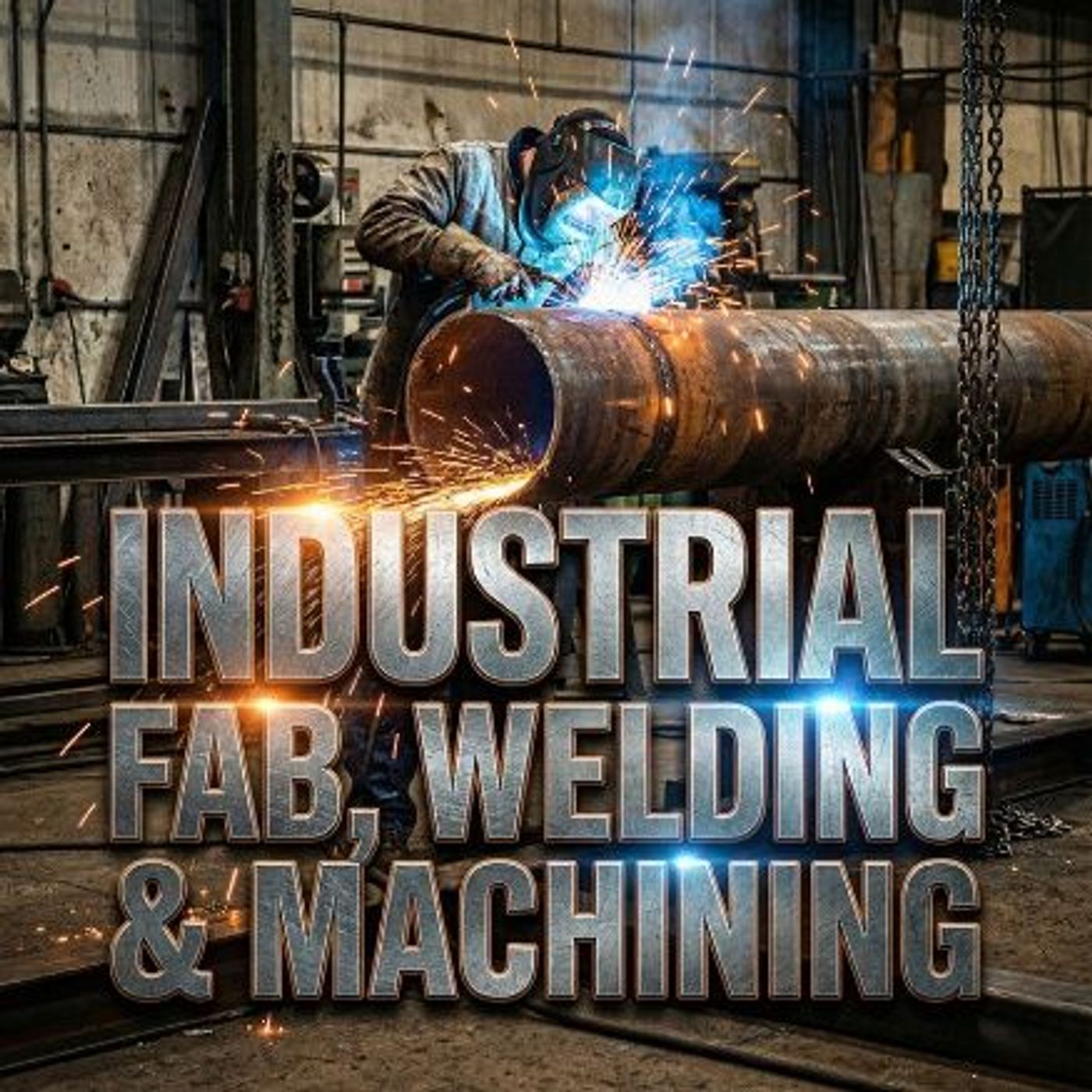
EPISODE · Jun 8, 2026 · 6 MIN
Heavy Equipment Repair Near Me: Complete Guide 2026
from Industrial Fab, Welding & Machining · host Aaron Sova
Minimizing Asset Downtime via Integrated Multi-Axis CNC Rebuilds, Portable Line-Boring Units, and Predictive Fleet Maintenance SystemsIn capital-intensive sectors like petrochemical extraction, heavy mining, and aggregate processing, unexpected mechanical breakdowns act as a direct drain on operational profit margins. When a primary structural component—such as an excavator boom or a processing plant hopper—fails mid-project, the resulting idle labor and missed contract milestones can easily accumulate thousands of dollars in losses per hour. In this comprehensive asset restoration installment of The Industrial Fab, Welding & Machining Podcast, the mechanical infrastructure experts at LTJ Industrial Services outline the steps for optimizing industrial heavy equipment repairs.Host and the LTJ manufacturing cell break down the choice between shop-based overhauls and rapid mobile field responses. Discover why single-vendor integration prevents geometry errors across multi-process fabrications, how to audit specialized welding certifications to guarantee structural integrity under extreme load stresses, and how hydraulic test stands protect machinery lines before deployment. Learn to analyze total project costs beyond the initial hourly billing rate, implement data-driven preventative maintenance software, and establish scalable regional partnerships capable of handling rugged Western US field environments.Chapter Sections00:00 – The True Cost of Downtime: Analyzing the compounding financial liabilities when major extraction machinery breaks down mid-project.01:45 – Shop-Based Overhauls vs. Field Response: Evaluating when to transport heavy components to a controlled center versus deploying a mobile crew.03:15 – Anatomy of a Field Service Fleet: Inside the diagnostic setups, hydraulic testers, and structural welding equipment carried on modern service trucks.04:50 – High-Stress Welded Fabrication: Restoring mechanical integrity across compromised structural elements like excavator buckets and booms.06:25 – Precision Machining as a Restoration Asset: Utilizing heavy CNC mills, lathes, and line boring to restore worn bearing surfaces to factory specifications.08:00 – Hydraulic System Verification: Deploying dedicated pressure test stands to validate pump, valve, and cylinder performance under full load pressures.09:30 – Sector-Specific Material Competence: Customizing repair alloys to handle the distinct wear patterns of aggregate crushing versus oil and gas.:11:05 – The Preventative Financial Shift: Moving from reactive emergency fixes to structured maintenance software that cuts costs in half.12:40 – Supply Chain Sourcing Resiliency: Mitigating long lead times through robust OEM parts channels and local component stocking.15:15 – Closing: Implementing strict lockout/tagout safety practices and requesting an emergency breakdown estimate at LTJIndustrial.com.Key Episode HighlightsThe Massive Financial Drag of Sudden Field Failures: Heavy earthmoving and processing machinery are the foundation of major job sites. When a core structural weld cracks or a high-pressure hydraulic line bursts, the subsequent gridlock travels upstream—stalling hauling fleets, wasting manual labor hours, and threatening severe contract delay penalties.Balancing Shop Control with On-Site Mobile Agility: Picking the right logistical path determines how fast you return a machine to service. While complex rebuilding or precision CNC machining demands a dust-free, fully equipped shop, mobile field repair units bypass transport friction by bringing complete diagnostic tools and welding lines straight to your job site.The Critical Demands of Certified Structural Welding: Patching compromised metal components involves strict physics. Heavy equipment attachments endure continuous, intense physical loads, making it vital to work with certified professionals holding valid ASME and AWS credentials who know how to protect the metal from future fractures.Reversing Component Wear via Precision Machining: Long hours of hard field service inevitably wear down critical hinge connections and shafts. Savvy operators bypass expensive complete replacement delays by using specialized portable line-boring gear to machine worn housings back to true concentric dimensions right on the equipment.The Core ROI of Predictive Maintenance Schedules: Relying on a purely reactive fix-it-when-it-breaks framework can triple your long-term repair overhead. Transitioning to a structured data system to track component run-times and schedule routine inspections lets your team swap worn seals and filters before a catastrophic failure triggers an emergency shutdown.Rocky Mountain Industrial Sourcing & Mechanical BenchmarksThe Process Integration Yield: Industrial operations that shift their parts sourcing from fragmented sub-contractors to an integrated single-vendor machine center experience a sharp drop in component geometry errors.The Emergency Fastening Ratio: Geotechnical data across Western US work sites confirms that utilizing proactive preventative maintenance software blocks the vast majority of sudden, high-cost component failures.The Field Machining Radius Dividend: Maintaining fully equipped mobile repair units allows field crews to execute emergency on-site shaft restorations quickly, saving significant transit time across remote regions.Secure Your Production Infrastructure with LTJ Industrial ServicesThe Western United States’ Elite Manufacturing Authorities: Operating from 22505 US-6, Rifle, CO, LTJ Industrial Services combines advanced CNC precision with decades of rugged field experience to support energy, aggregate, mining, and recycling operations across Colorado and Utah.Turnkey Machining, Fabrication, and Field Repair: We eliminate the scheduling vulnerabilities of sub-contractor networks. Our industrial facility handles your entire project in-house—from initial CAD/CAM blueprinting and high-pressure waterjet cutting to multi-axis CNC milling, certified ASME/AWS code welding, specialized industrial hydraulic rebuilds, and mobile on-site line boring.Request an Advanced Heavy Equipment or Repair Evaluation: Ready to protect your heavy equipment assets from high-cost mechanical wear and secure high-precision replacement components? Visit ltjindustrial.com or call our regional manufacturing center at (970) 625-9353 to review your blueprints with our estimating team today.Click here to read moreLearn more about LTJ Industrial Services at www.ltjindustrial.com/
Embed this episode
What this episode covers
Minimizing Asset Downtime via Integrated Multi-Axis CNC Rebuilds, Portable Line-Boring Units, and Predictive Fleet Maintenance Systems In capital-intensive sectors like petrochemical extraction, heavy mining, and aggregate processing, unexpected mechanical breakdowns act as a direct drain on operational profit margins. When a primary structural component—such as an excavator boom or a processing plant hopper—fails mid-project, the resulting idle labor and missed contract milestones can easily accumulate thousands of dollars in losses per hour. In this comprehensive asset restoration installment of The Industrial Fab, Welding & Machining Podcast , the mechanical infrastructure experts at LTJ Industrial Services outline the steps for optimizing industrial heavy equipment repairs.Host and the LTJ manufacturing cell break down the choice between shop-based overhauls and rapid mobile field responses. Discover why single-vendor integration prevents geometry errors across multi-process fabrications, how to audit specialized welding certifications to guarantee structural integrity under extreme load stresses, and how hydraulic test stands protect machinery lines before deployment. Learn to analyze total project costs beyond the initial hourly billing rate, implement data-driven preventative maintenance software, and establish scalable regional partnerships capable of handling rugged Western US field environments. Chapter Sections 00:00 – The True Cost of Downtime: Analyzing the compounding financial liabilities when major extraction machinery breaks down mid-project. 01:45 – Shop-Based Overhauls vs. Field Response: Evaluating when to transport heavy components to a controlled center versus deploying a mobile crew. 03:15 – Anatomy of a Field Service Fleet: Inside the diagnostic setups, hydraulic testers, and structural welding equipment carried on modern service trucks. 04:50 – High-Stress Welded Fabrication: Restoring mechanical integrity across compromised structural elements like excavator buckets and booms. 06:25 – Precision Machining as a Restoration Asset: Utilizing heavy CNC mills, lathes, and line boring to restore worn bearing surfaces to factory specifications. 08:00 – Hydraulic System Verification: Deploying dedicated pressure test stands to validate pump, valve, and cylinder performance under full load pressures. 09:30 – Sector-Specific Material Competence: Customizing repair alloys to handle the distinct wear patterns of aggregate crushing versus oil and gas. :11:05 – The Preventative Financial Shift: Moving from reactive emergency fixes to structured maintenance software that cuts costs in half. 12:40 – Supply Chain Sourcing Resiliency: Mitigating long lead times through robust OEM parts channels and local component stocking. 15:15 – Closing: Implementing strict lockout/tagout safety practices and requesting an emergency breakdown estimate at LTJIndustrial.com. Key Episode Highlights The Massive Financial Drag of Sudden Field Failures: Heavy earthmoving and processing machinery are the foundation of major job sites. When a core structural weld cracks or a high-pressure hydraulic line bursts, the subsequent gridlock travels upstream—stalling hauling fleets, wasting manual labor hours, and threatening severe contract delay penalties. Balancing Shop Control with On-Site Mobile Agility: Picking the right logistical path determines how fast you return a machine to service. While complex rebuilding or precision CNC machining demands a dust-free, fully equipped shop, mobile field repair units bypass transport friction by bringing complete diagnostic tools and welding lines straight to your job site. The Critical Demands of Certified Structural...
NOW PLAYING
Heavy Equipment Repair Near Me: Complete Guide 2026
No transcript for this episode yet
Similar Episodes
No similar episodes found.
Similar Podcasts
No similar podcasts found.