
EPISODE · Mar 18, 2025 · 13 MIN
Henrietta Lacks Reimagined: A Legacy of Cells, Ethics, and Patient Rights in the 21st Century
from The Cogitating Ceviché Podcast · host Conrad T Hannon
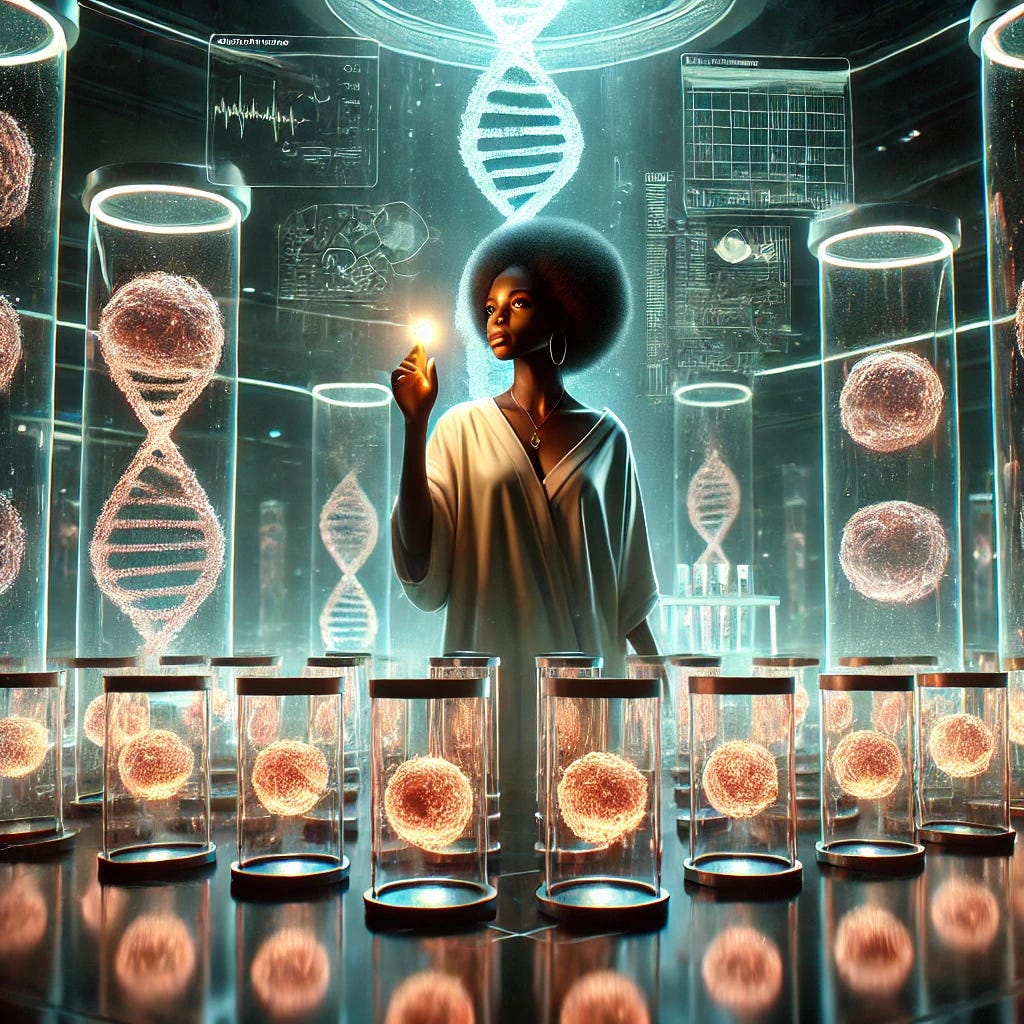
The Cogitating CevichePresentsHenrietta Lacks Reimagined: A Legacy of Cells, Ethics, and Patient Rights in the 21st CenturyPast Forward: Historical Icons in the Digital Frontier #52By Conrad HannonNarration by Amazon Polly (yes I know the audio says Eleven Labs, I messed up and didn't to regenerate it)PrefaceHenrietta Lacks was never asked for permission when her cells were taken in 1951, yet those same cells—known as HeLa cells—became the foundation of modern medical advancements. They were used in groundbreaking research on cancer, polio, and even space medicine, yet for decades, her name was a footnote, nearly erased from history.As medical science advanced, so too did the ethical dilemmas surrounding consent and ownership of biological materials. Henrietta’s story ignited conversations about racial inequities in medicine, corporate exploitation of human tissue, and the balance between scientific progress and individual rights. It forced the medical establishment to reckon with how scientific discovery often comes at the expense of marginalized communities.Today, bioethics, patient consent, and genetic research remain at the forefront of medical debates. The rise of AI in medical diagnostics, the commercialization of DNA data, and the debate over ownership of genetic material make Henrietta’s story more relevant than ever. What would she think of the world shaped by her immortal cells? How would she navigate the complexities of genetic privacy, biomedical ethics, and corporate exploitation?In this installment of Past Forward, we bring Henrietta Lacks into the modern age, where she confronts the consequences of her unwitting contributions and reclaims her place in history.IntroductionHenrietta Lacks walks through the halls of a modern biomedical research facility, her fingers brushing against cold glass displays of microscopic images—HeLa cells multiplying endlessly. Scientists rush past, discussing genetic sequencing and CRISPR with a fluency that leaves her breathless. The air hums with the sound of high-tech machinery analyzing the very building blocks of life. She pauses before a plaque: In Honor of Henrietta Lacks: The Woman Behind the HeLa Cells.She frowns. Not behind, but within.Looking at the endless petri dishes containing pieces of her, Henrietta feels both awe and betrayal. The enormity of her unwitting contribution presses down on her. These cells, once part of her body, have been to space, used in thousands of studies, and engineered into medical marvels. Yet, despite her cells existing everywhere, she herself had been forgotten for so long.She sees her name on journal covers, in textbooks, in legal documents debating medical ethics. Her face is in PowerPoint presentations, her story woven into debates on human rights in science. But no one asked her. No one told her. No one paid her family for decades. The injustice still lingers in the air, a silent undercurrent beneath the medical breakthroughs.A group of researchers stops nearby, engaged in discussion. One of them, a young geneticist, notices Henrietta staring at the plaque and the cells beyond the glass. Their eyes meet—his widen in disbelief, as if recognizing something impossible.Henrietta takes a step closer. “What do you all think gives you the right?” she asks, voice steady but firm. “And what are you doing about it?”The Historical Context and Modern ConnectionIn 1951, Henrietta Lacks sought treatment for cervical cancer at Johns Hopkins Hospital. Without her knowledge or consent, doctors harvested her cancerous cells, which were soon discovered to be uniquely immortal—they could survive and replicate indefinitely in a lab setting. This discovery revolutionized medicine, leading to breakthroughs in vaccines, cancer treatments, in vitro fertilization, and even space medicine. HeLa cells helped eradicate polio, aided in mapping the human genome, and are still used in cutting-edge research today.But Henrietta herself was left behind. Her family lived in poverty for decades, unaware that biotech companies profited off her cells while they struggled with medical bills. The injustice of her case sparked discussions about medical consent, race, and the ethics of human tissue ownership—issues that remain hotly debated today. It also raised deeper questions about how medical research prioritizes profits over the well-being of those who unknowingly contribute to it.As Henrietta examines the history of her cells, she sees echoes of her story in contemporary debates. The rise of direct-to-consumer genetic testing raises privacy concerns, as companies collect and store DNA data with little oversight. AI-driven medical diagnostics rely on vast datasets, often sourced without patient knowledge, reinforcing systemic disparities in healthcare access. Pharmaceutical companies continue to patent genetic materials, reaping billions while communities, particularly marginalized ones, see little benefit. The very same industries that profited from HeLa cells now monetize human genetics on a global scale.Henrietta realizes she is not just a historical figure; her story is an ongoing battle for medical justice. The same questions that were ignored in 1951 still linger today: Who owns the human body? Who has the right to profit from it? And when will the people behind the science receive the recognition and protection they deserve?Exploring Modern InnovationsGuided by bioethicists and medical researchers, Henrietta delves into the advancements made possible by HeLa cells. She watches CRISPR-Cas9 editing genes in real time, marvels at AI-assisted drug discovery, and listens as oncologists discuss targeted cancer therapies—treatments that might have saved her had she lived today. She stands before a holographic display of the human genome, where researchers demonstrate how HeLa cells were used to unlock its secrets. The sheer magnitude of what her cells have enabled—lifesaving vaccines, regenerative medicine, space biology—both astonishes and unsettles her.Yet, she cannot ignore the ethical dilemmas. Henrietta visits a biotech firm that patents genetic material, where she learns that individuals still struggle to retain rights over their DNA. The room is lined with framed patents, each representing discoveries built upon human samples taken without knowledge or consent. She listens as researchers debate the morality of biobanking, where genetic material is stored and monetized without donors' awareness.She meets patients whose tissues have been used in research without their knowledge. A mother whose child’s rare genetic disorder led to a major pharmaceutical breakthrough—yet she cannot afford the treatment herself. An elderly man whose genetic markers were instrumental in developing a new Alzheimer’s drug, but he is denied access to the medication due to its high cost. A young woman who was part of a clinical trial, only to learn that her participation contributed to a billion-dollar drug industry while she still struggles to pay for healthcare.Henrietta sits with these families and listens. “If they could take from me without asking,” she says, “how many others are they doing it to now?” Her words resonate beyond the room, a question echoing through the corridors of medical ethics, demanding an answer from a world that has yet to reckon with its past.Ethical Reflections and Societal ImpactHenrietta finds herself at a global bioethics summit, where policymakers, scientists, and activists discuss genetic rights. The grand conference hall is filled with voices of authority—pharmaceutical executives defending their research, ethicists calling for reform, patient advocates demanding justice. On the large screens behind the speakers, a slideshow displays key moments in medical history, HeLa cells among them, their story intertwined with countless scientific breakthroughs.The conversation shifts to the Henrietta Lacks Foundation, which helps her descendants receive medical care and education. It is a gesture of restitution, but Henrietta knows reparations for the past do not solve future violations. Cases are still emerging where genetic material is collected, studied, and patented without consent. She listens as a lawyer presents a lawsuit against a biotech firm accused of profiting from Indigenous DNA samples. A young woman stands up to share how her family’s genetic data was used in research they never agreed to, leading to treatments they cannot afford.Henrietta rises. The room quiets as she steps to the podium, her gaze sweeping over the audience. "You say my cells changed the world. But have you changed how you treat people like me?"Debates erupt. Should patients own their biological material? Should scientists be required to share profits with the people whose bodies fuel their discoveries? Should families have a say in how their deceased loved ones’ cells are used? A bioethicist argues for increased regulatory oversight, while a geneticist counters that strict regulations could hinder innovation. An advocate insists that equity in healthcare must include the right to genetic privacy and fair compensation.Henrietta listens, her presence no longer that of a silent subject in history—she is a force in the conversation, demanding that science serve humanity with fairness, dignity, and respect.Collaborative ContributionsDetermined to reclaim her legacy, Henrietta partners with researchers and activists. She advocates for stronger patient consent laws, supports efforts to create ethical standards in genetic research, and ensures that marginalized communities are not exploited by medical institutions. She collaborates with legislators to push for laws mandating informed consent in all biomedical research, working tirelessly to prevent others from experiencing the same violation of rights that she endured.She works with AI ethicists to develop transparency protocols for medical datasets, ensuring that all data collection is conducted with explicit patient permission. She demands accountability from corporations that have long profited from genetic material, challenging them to implement ethical frameworks that prioritize humanity over profit. She testifies before global health organizations, urging for equitable access to treatments derived from HeLa cells, emphasizing that no one should be denied care due to financial barriers.Henrietta challenges pharmaceutical executives, reminding them that behind every genetic breakthrough is a human life—a person, not just a data point. She spearheads initiatives to create patient-led oversight boards, ensuring that medical advancements benefit those from whom the research originates.And in classrooms, Henrietta Lacks speaks to the next generation of doctors and scientists, urging them to honor their patients, respect consent, and remember the responsibility that comes with knowledge. She leads workshops in medical schools, engaging students in difficult but necessary discussions about bioethics, historical injustices, and the need for systemic change. Through her efforts, she inspires a new era of ethical research, where scientific progress and human dignity go hand in hand.Legacy and Modern InfluenceStanding once more before the glowing images of her cells, Henrietta Lacks no longer feels invisible. Her name is not just in textbooks—it is in policies, in medical ethics reforms, in the ongoing fight for justice. She sees young researchers discussing patient consent with an urgency that was missing in her time, bioethicists drafting new laws to ensure that no one else is exploited the way she was, and patients standing up to demand their rights in the medical world.She reaches out, pressing her fingers against the glass. The cells move, divide, multiply. They will never die. And neither will her legacy. But she knows that a name etched into history is not enough—justice is not merely remembering, but acting. She turns and walks away, leaving behind a challenge not just in words, but in the responsibility placed upon those who now know her story.As she steps back into history, Henrietta leaves behind a challenge: The power of science must serve humanity—not exploit it.Her immortal cells built the future. Now, it is up to the world to ensure that future is just, to turn remembrance into action, and to transform medical ethics from an abstract debate into an unbreakable standard.Thank you for your time today. Until next time, stay gruntled.Do you like what you read but aren’t yet ready or able to get a This is a public episode. If you'd like to discuss this with other subscribers or get access to bonus episodes, visit thecogitatingceviche.substack.com/subscribe
Embed this episode
NOW PLAYING
Henrietta Lacks Reimagined: A Legacy of Cells, Ethics, and Patient Rights in the 21st Century
No transcript for this episode yet
Similar Episodes
No similar episodes found.
Similar Podcasts
No similar podcasts found.