Here’s what future Hyundai cars' screens will look like — and yes, the buttons survive episode artwork

EPISODE · Apr 29, 2026 · 3 MIN

Here’s what future Hyundai cars' screens will look like — and yes, the buttons survive

from Korea JoongAng Daily - Daily News from Korea · host SARAH CHEA

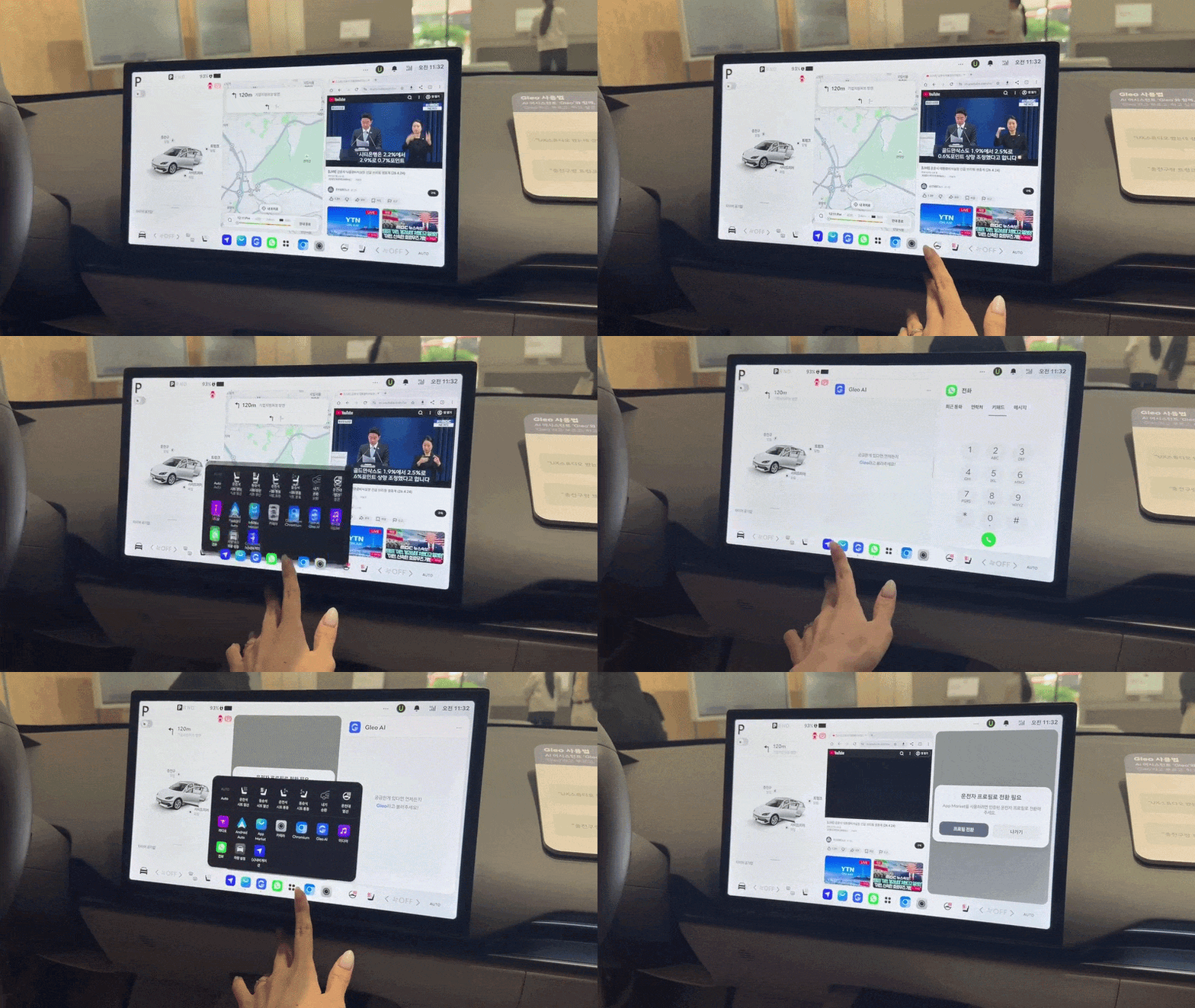
This article is by Sarah Chea and read by an artificial voice. Hyundai Motor has finally unveiled its new Pleos operating system — and in a move many drivers will welcome, physical buttons aren't going anywhere. The new infotainment platform will debut on the Europe-bound Ioniq 3, which is slated to launch in the second half of the year. U.S. customers will likely see the system in the upcoming launch of other Hyundai models, including the Avante, the Tucson and the Genesis GV90. Built on Android Automotive OS, Pleos centers on a large display featuring a fixed car information panel on the left and a toolbar on the bottom, reminiscent of the displays in Teslas and Rivians. But unlike its screen-only rivals, Hyundai has kept a row of physical buttons beneath the display that allow drivers to adjust climate settings and seat heating or ventilation quickly while driving — and most importantly, safely. While the design leans futuristic, many consumers find the all-touchscreen approach cumbersome, fueling a growing backlash against abandoning physical controls altogether. The system also introduces three-finger gestures, letting drivers rearrange apps or close them instantly, even while on the move. "Your first impression will likely be that it looks like Tesla," said Kim Chang-seob of Hyundai's User Experience team at a media event on Wednesday. "We saw that as the industry benchmark and built on it to maximize safety and flexibility." The central display is split into two main zones: the information panel on the left that functions like a traditional instrument cluster, showing speed, warnings and efficiency data at all times. It also renders nearby vehicles, objects, and pedestrians in 3-D to enhance situational awareness while driving or parking. On the right, the remaining two-thirds of the panel handles navigation, media and other vehicle settings. Drivers can run two apps side by side or expand one to fill the screen. Hyundai has also added a slim display directly in front of the driver, which can be customized with widget-style features. "A driver's natural field of view without turning the head is about 15 to 30 degrees," Kim said. "We designed the slim display and head-up display around that." Navigation now features a modular interface, enabling it to run alongside other apps without sacrificing usability. Gleo AI, a voice assistant co-developed with Hyundai's mobility software arm, 42dot, can interpret context from prior conversations, understanding vague phrases like "there" or "near here" and even respond to incomplete sentences or regional dialects. "If the driver makes multiple orders at a time, such as 'Turn off the air conditioner, set ambient lighting to forest mode and play the radio,' the AI understands it perfectly and handles multiple commands in sequence," said Lee Jong-ho, an engineer who developed the Gleo AI. It can also identify where a command is coming from; If a rear passenger says, "Turn on the heated seat," the system detects the speaker's position and activates the correct seat automatically. Hyundai is also launching its own in-car app marketplace, allowing direct access to services such as YouTube, Spotify, and local streaming apps. Korean customers will be able to see it with the upcoming facelift of the Grandeur, its first new look in over three years.

This article is by Sarah Chea and read by an artificial voice. Hyundai Motor has finally unveiled its new Pleos operating system — and in a move many drivers will welcome, physical buttons aren't going anywhere. The new infotainment platform will debut on the Europe-bound Ioniq 3, which is slated to launch in the second half of the year. U.S. customers will likely see the system in the upcoming launch of other Hyundai models, including the Avante, the Tucson and the Genesis GV90. Built on Android Automotive OS, Pleos centers on a large display featuring a fixed car information panel on the left and a toolbar on the bottom, reminiscent of the displays in Teslas and Rivians. But unlike its screen-only rivals, Hyundai has kept a row of physical buttons beneath the display that allow drivers to adjust climate settings and seat heating or ventilation quickly while driving — and most importantly, safely. While the design leans futuristic, many consumers find the all-touchscreen approach cumbersome, fueling a growing backlash against abandoning physical controls altogether. The system also introduces three-finger gestures, letting drivers rearrange apps or close them instantly, even while on the move. "Your first impression will likely be that it looks like Tesla," said Kim Chang-seob of Hyundai's User Experience team at a media event on Wednesday. "We saw that as the industry benchmark and built on it to maximize safety and flexibility." The central display is split into two main zones: the information panel on the left that functions like a traditional instrument cluster, showing speed, warnings and efficiency data at all times. It also renders nearby vehicles, objects, and pedestrians in 3-D to enhance situational awareness while driving or parking. On the right, the remaining two-thirds of the panel handles navigation, media and other vehicle settings. Drivers can run two apps side by side or expand one to fill the screen. Hyundai has also added a slim display directly in front of the driver, which can be customized with widget-style features. "A driver's natural field of view without turning the head is about 15 to 30 degrees," Kim said. "We designed the slim display and head-up display around that." Navigation now features a modular interface, enabling it to run alongside other apps without sacrificing usability. Gleo AI, a voice assistant co-developed with Hyundai's mobility software arm, 42dot, can interpret context from prior conversations, understanding vague phrases like "there" or "near here" and even respond to incomplete sentences or regional dialects. "If the driver makes multiple orders at a time, such as 'Turn off the air conditioner, set ambient lighting to forest mode and play the radio,' the AI understands it perfectly and handles multiple commands in sequence," said Lee Jong-ho, an engineer who developed the Gleo AI. It can also identify where a command is coming from; If a rear passenger says, "Turn on the heated seat," the system detects the speaker's position and activates the correct seat automatically. Hyundai is also launching its own in-car app marketplace, allowing direct access to services such as YouTube, Spotify, and local streaming apps. Korean customers will be able to see it with the upcoming facelift of the Grandeur, its first new look in over three years.

NOW PLAYING

Here’s what future Hyundai cars' screens will look like — and yes, the buttons survive

0:00 3:25

No transcript for this episode yet

We transcribe on demand. Request one and we'll notify you when it's ready — usually under 10 minutes.

No similar episodes found.

No similar podcasts found.

Frequently Asked Questions

How long is this episode of Korea JoongAng Daily - Daily News from Korea?

This episode is 3 minutes long.

When was this Korea JoongAng Daily - Daily News from Korea episode published?

This episode was published on April 29, 2026.

What is this episode about?

This article is by Sarah Chea and read by an artificial voice. Hyundai Motor has finally unveiled its new Pleos operating system — and in a move many drivers will welcome, physical buttons aren't going anywhere. The new infotainment platform will...

Can I download this Korea JoongAng Daily - Daily News from Korea episode?

Yes, you can download this episode by clicking the download button on the episode player, or subscribe to the podcast in your preferred podcast app for automatic downloads.
URL copied to clipboard!