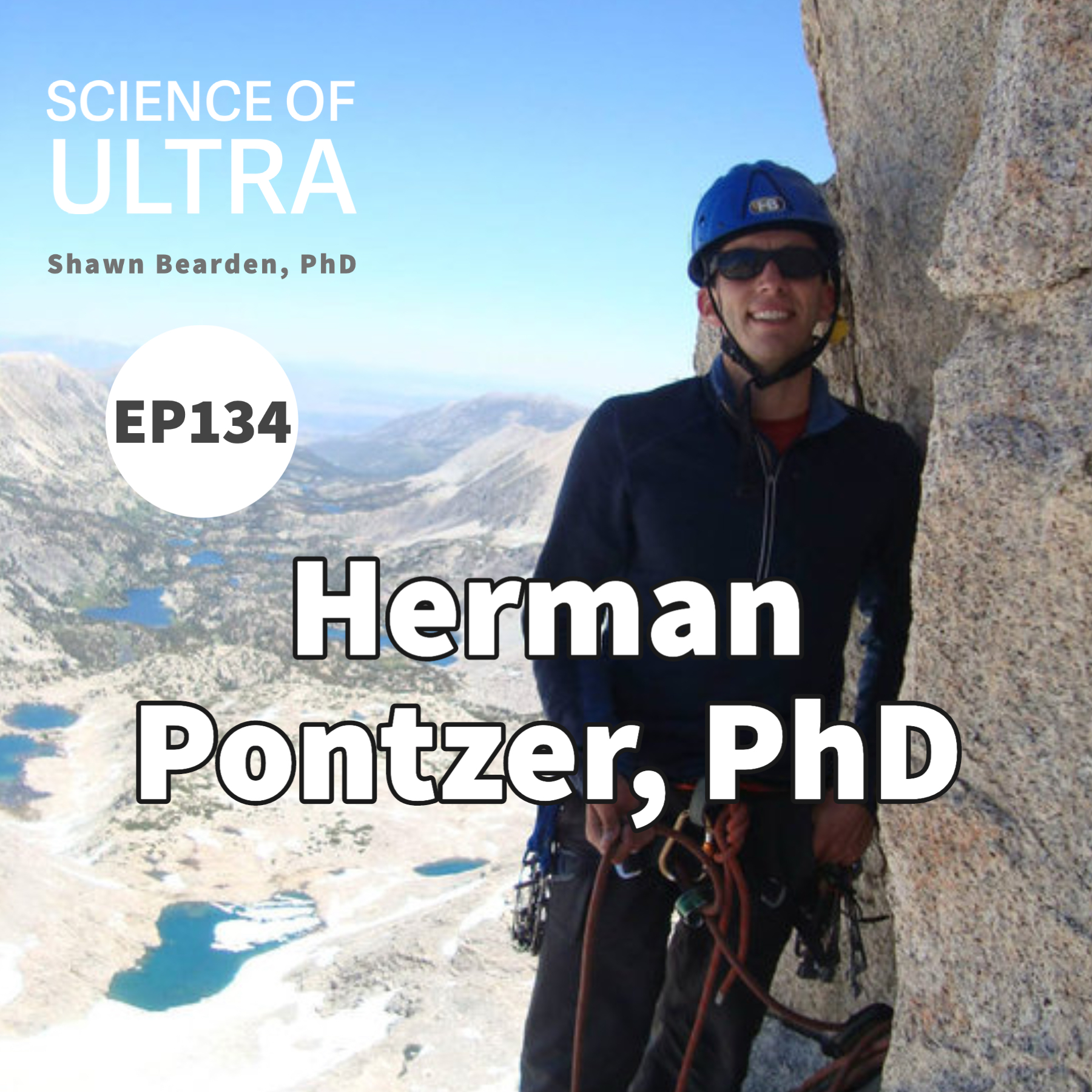
Herman Pontzer, PhD
from Science Of Ultra
Herman Pontzer, PhD is an evolutionary anthropologist at Duke University interested in how the human body evolved and how our species' past has shaped our health and physiology today. He studies the ecology, lifestyle, diet and evolutionary history of humans and apes to better understand metabolism and health. As you'll hear in the interview, we emphasize what hunter-gatherer societies can tell us about the human body because it's the lifestyle of hunter-gatherers that created the bodies we have. Several years ago, Dr. Pontzer and his colleagues were curious about the total energy expended per day by people living as hunter-gatherers. They discovered that nobody had made the actual, direct measurements. It took them a while to convince funding agencies that this was a good use of research dollars because the reviewers thought 'these are very active people, they're going to be expending a lot more energy than sedentary people, we have good estimates of that based on activity level, we're not going to learn anything here'. But Dr. Pontzer and is colleagues persisted, got the funding, and did the direct measurements. They discovered that the Hadza people of Tanzania expend the same number of calories per day as sedentary people in the United States and other modern societies despite being much more active. Show page: https://www.scienceofultra.com/podcasts/134
Embed this episode
No transcript yet.