
EPISODE · Apr 19, 2024 · 3 MIN
Hervé Guibert - Slideshows
from Audioteca Fotográfica · host Isabel Hernández
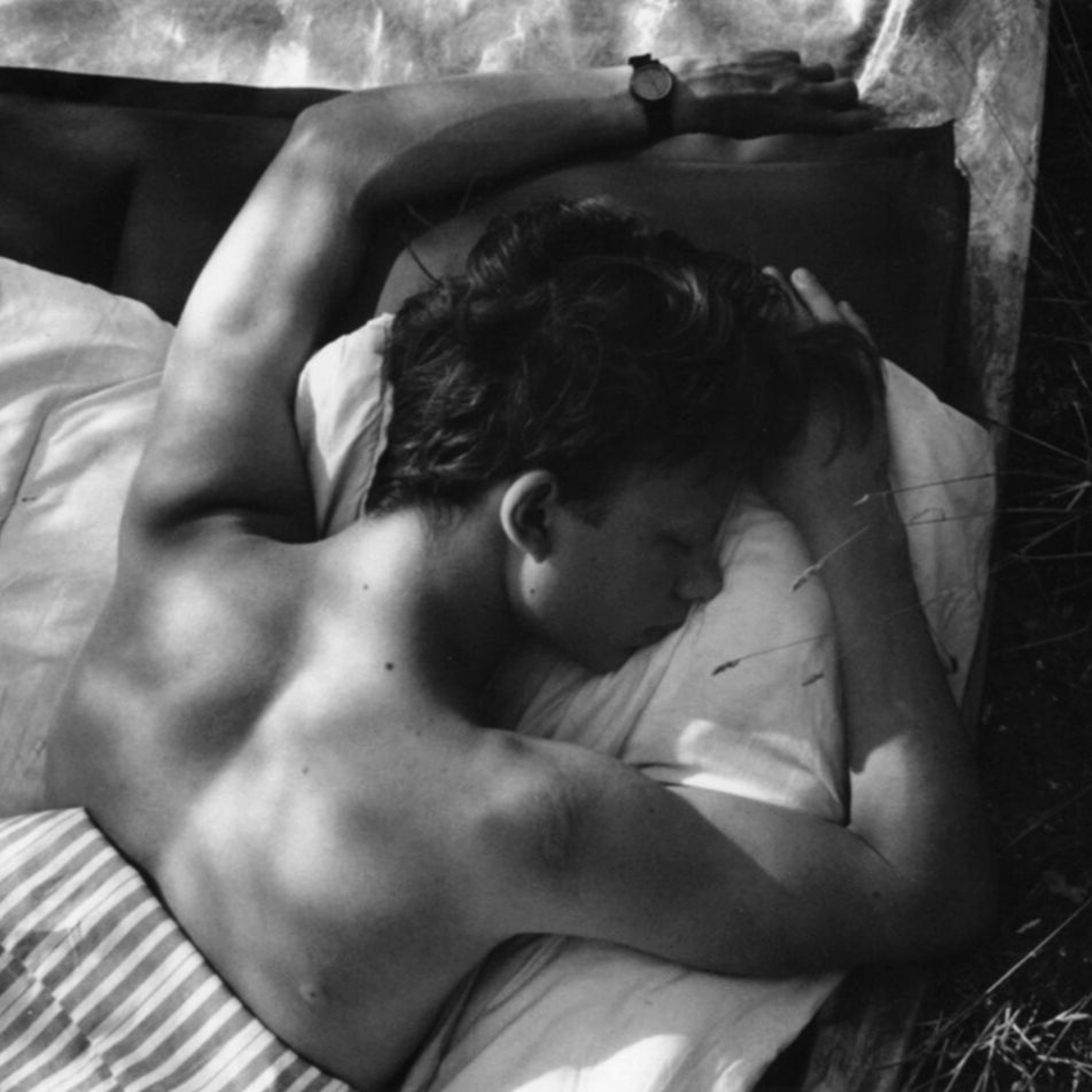
To evoke a face, we have a kind of mental slideshow, more or less immediate, more or less vague, more or less distant in time. We have in our heads - just behind our eyes, where there seems to be another screen - stores of more or less familiar images, more or less ready to work with. And then there are remote warehouses where we go from time to time to look for an old or forgotten slide, a face that slips imperceptibly away before falling entirely into a trap or into the fire. Sometimes, we never find the slide again; only the warehouse number remains, but the image is lost. All we have left is the name, so we go back to look at all the photos in the warehouse that have not been lost and try to recompose the sacrificed image by dint of superimpositions and comparisons. But sometimes what appears is nothing tangible, just the shape of a nose, like a crude prosthesis; or just the inflexion of a voice, like the notes of a half-broken music box; or just the colour of the hair; the memory of a garment; a very vague smell, always diaphanous or putrid: nothing but a very diffuse and incomplete image, pink pain for the effort it demands of us, for its plea to come back into existence. These images are abstractions, a certainty of existence, of sympathies or antipathies. They are not really close-ups but miniature close-ups, like the shrunken heads of the Kabyle. They are also the vibration of the last vision: the last snatches of voice that echo in the silence just before sleep. I try to locate in my head the most familiar slides from my warehouses, the closest ones: they seem fixed forever, immovable. They are also perhaps the most abstract because I don't need to re-imagine them; they are immediate and within reach. If I wanted to get rid of them, I couldn't: my parents' faces, T.'s face, Y.'s face, C.'s face, M.'s face, P.'s face, F.'s face, even B.'s dead face, even faces I will never see again. They are in layers, at different distances, and I can move them from one warehouse to another, move them forward or backwards, because sometimes I have to sort these warehouses and I discard some things or, instead, they discard themselves, they move away, they leave their place, they are like biodegradable. There are also the faces that I have only seen once and that ineluctably sink despite all my efforts; it is as if I were going up a descending escalator with them; they weigh too much, they are like dead weights, and at some point, I have no choice but to abandon them. But I try to know what defines the more tangible faces and what details fix them, whether they are masks or auras. The more distant faces are like images that are too dark or too pale. They require restoration and longer exposure time. They regenerate very slowly, and with each memory, they become copies of copies, each time a little more distant from the original. The most familiar faces are no longerconstituted by the colour of the eyes, the lines of the mouth or the nose, not even by their age: they are like essential images, beings fossilised inside a mineral, clots that cannot be removed. (It is said that each death entails the destruction of a photographic background that reappears for the last time through a passage of consciousness...). Text and photo: Hervé Guibert + info www.audiotecafotografica.com
Embed this episode
Ready to play
Hervé Guibert - Slideshows
No transcript for this episode yet
Similar Episodes
No similar episodes found.