
EPISODE · Jan 7, 2026 · 1H 11M
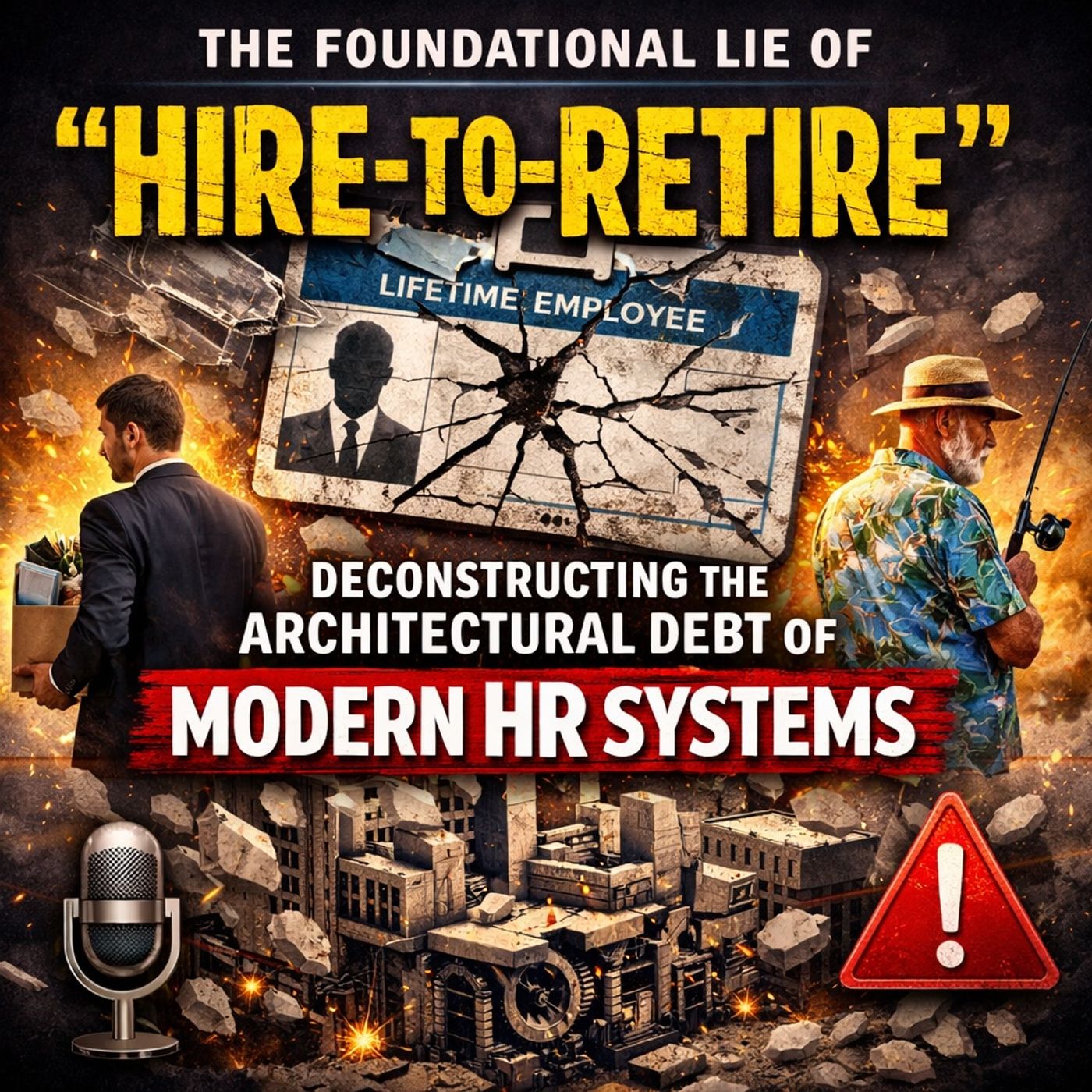
Hire‑to‑Retire Is a Lie: How to Fix HR System Architecture, Policy, and AI Governance in Modern Microsoft‑Centric HR Platforms
from M365.FM - Modern work, security, and productivity with Microsoft 365 · host Mirko Peters - Founder of m365.fm, m365.show and m365con.net
(00:00:00) The Hidden Truth About Hire to Retire (00:00:33) The Myth of a Linear Life Cycle (00:00:55) The Distributed Decision Engine (00:05:12) The Configuration Entropy Trap (00:07:17) AI's Limitations in HR Systems (00:14:39) Workday's Process Rigor Fallacy (00:19:42) Success Factors' Global Complexity Dilemma (00:25:19) Entra ID: The Shadow System of Record (00:31:03) Power Automate: The Debugging Economy (00:31:29) The Pitfalls of Using Flows as Policy Engines Most HR leaders still talk about “hire‑to‑retire” as if it were a real process. A single lifecycle, cleanly modeled in an HCM, with neat stages and clear ownership from offer to exit. But at scale, that lifecycle is a narrative, not a system. What actually runs your HR landscape is a mesh of platforms, identity stores, workflows, and integrations that all make independent decisions at different speeds — and every misalignment between those decision engines quietly turns into architectural debt long before AI ever shows up.In this episode of M365.FM, Mirko Peters examines why organizations that treat hire‑to‑retire as a linear process keep tripping over edge cases, compliance gaps, and broken automations — and why the ones that treat HR as a distributed decision engine are the only ones who can safely add AI on top. This is a conversation about the structural difference between drawing a lifecycle and enforcing obligations, between modeling employees as records and modeling them as identities, and between “implementing an HR system” and designing an operating model that can survive regulation, acquisitions, and Microsoft‑centric automation at scale.The organizations that will lead with modern HR platforms are not those with the most polished process diagrams. They are those that have turned their HR stack into an explicit contract:Where policy lives in versioned, testable rules instead of buried in workflows and emails.Where facts are captured as events, not overwritten stages.Where identity and access are compiled from obligations, not hand‑assembled from tickets.WHAT YOU WILL LEARNWhy “hire‑to‑retire” collapses in real life and how HR systems actually behave as distributed decision engines.How configuration entropy (templates, connectors, stages, and email text) quietly becomes de‑facto policy without anyone noticing.Why AI pilots in HR plateau at “recommendations only” when the platform cannot expose intent, obligations, or clean events.How to think about HR architecture in terms of capability provisioning, obligation tracking, and identity orchestration instead of lifecycle boxes.How to start pulling policy out of workflows and into explicit, machine‑queryable contracts that AI and automation can safely respect.THE CORE INSIGHTHire‑to‑retire is a story we tell ourselves so the HR landscape feels coherent. Systems, however, do not run on stories; they run on contracts. As long as policy hides in flows, emails, and local configuration, every integration adds a little more drift, every exception lives forever, and every AI initiative is forced to infer intent from chaos. Mirko argues that until HR policy becomes explicit, versioned, and tied to identity and events, AI will not fix your HR stack — it will amplify the architectural debt you already haveWHO THIS EPISODE IS FORCHROs, HR directors, and HR operations leaders responsible for HR platforms and process design.Enterprise and solution architects working on HR, identity, and Microsoft‑centric automation landscapes.IT and platform leaders who have to integrate HR systems with Microsoft 365, Entra ID, and downstream business applications.Compliance, risk, and security leaders worried about how HR data, policy, and access actually behave in practice.Microsoft partners and consultants advising clients on HR system modernization, integration, and AI readiness.ABOUT THE HOSTMirko Peters is a Microsoft 365 and Azure architect, strategist, and the host of M365.FM — a podcast focused on modern work, security, data, and operating model design in the Microsoft ecosystem. He works with organizations from midmarket to global enterprise to turn fragmented HR, identity, and Microsoft platforms into coherent, governable systems that can safely support automation and AI. His work centers on Microsoft 365 and Azure architecture, identity and access design, governance frameworks, and the hard reality of aligning processes, platforms, and policy in complex enterprises.Become a supporter of this podcast: https://www.spreaker.com/podcast/m365-fm-modern-work-security-and-productivity-with-microsoft-365--6704921/support.
Embed this episode
What this episode covers
(00:00:00) The Hidden Truth About Hire to Retire (00:00:33) The Myth of a Linear Life Cycle (00:00:55) The Distributed Decision Engine (00:05:12) The Configuration Entropy Trap (00:07:17) AI's Limitations in HR Systems (00:14:39) Workday's Process Rigor Fallacy (00:19:42) Success Factors' Global Complexity Dilemma (00:25:19) Entra ID: The Shadow System of Record (00:31:03) Power Automate: The Debugging Economy (00:31:29) The Pitfalls of Using Flows as Policy Engines Most HR leaders still talk about “hire‑to‑retire” as if it were a real process. A single lifecycle, cleanly modeled in an HCM, with neat stages and clear ownership from offer to exit. But at scale, that lifecycle is a narrative, not a system. What actually runs your HR landscape is a mesh of platforms, identity stores, workflows, and integrations that all make independent decisions at different speeds — and every misalignment between those decision engines quietly turns into architectural debt long before AI ever shows up. In this episode of M365.FM, Mirko Peters examines why organizations that treat hire‑to‑retire as a linear process keep tripping over edge cases, compliance gaps, and broken automations — and why the ones that treat HR as a distributed decision engine are the only ones who can safely add AI on top. This is a conversation about the structural difference between drawing a lifecycle and enforcing obligations, between modeling employees as records and modeling them as identities, and between “implementing an HR system” and designing an operating model that can survive regulation, acquisitions, and Microsoft‑centric automation at scale. The organizations that will lead with modern HR platforms are not those with the most polished process diagrams. They are those that have turned their HR stack into an explicit contract: Where policy lives in versioned, testable rules instead of buried in workflows and emails. Where facts are captured as events, not overwritten stages. Where identity and access are compiled from obligations, not hand‑assembled from tickets. WHAT YOU WILL LEARN Why “hire‑to‑retire” collapses in real life and how HR systems actually behave as distributed decision engines. How configuration entropy (templates, connectors, stages, and email text) quietly becomes de‑facto policy without anyone noticing. Why AI pilots in HR plateau at “recommendations only” when the platform cannot expose intent, obligations, or clean events. How to think about HR architecture in terms of capability provisioning, obligation tracking, and identity orchestration instead of lifecycle boxes. How to start pulling policy out of workflows and into explicit, machine‑queryable contracts that AI and automation can safely respect.<a...
NOW PLAYING
Hire‑to‑Retire Is a Lie: How to Fix HR System Architecture, Policy, and AI Governance in Modern Microsoft‑Centric HR Platforms
No transcript for this episode yet
Similar Episodes
No similar episodes found.
Similar Podcasts
No similar podcasts found.