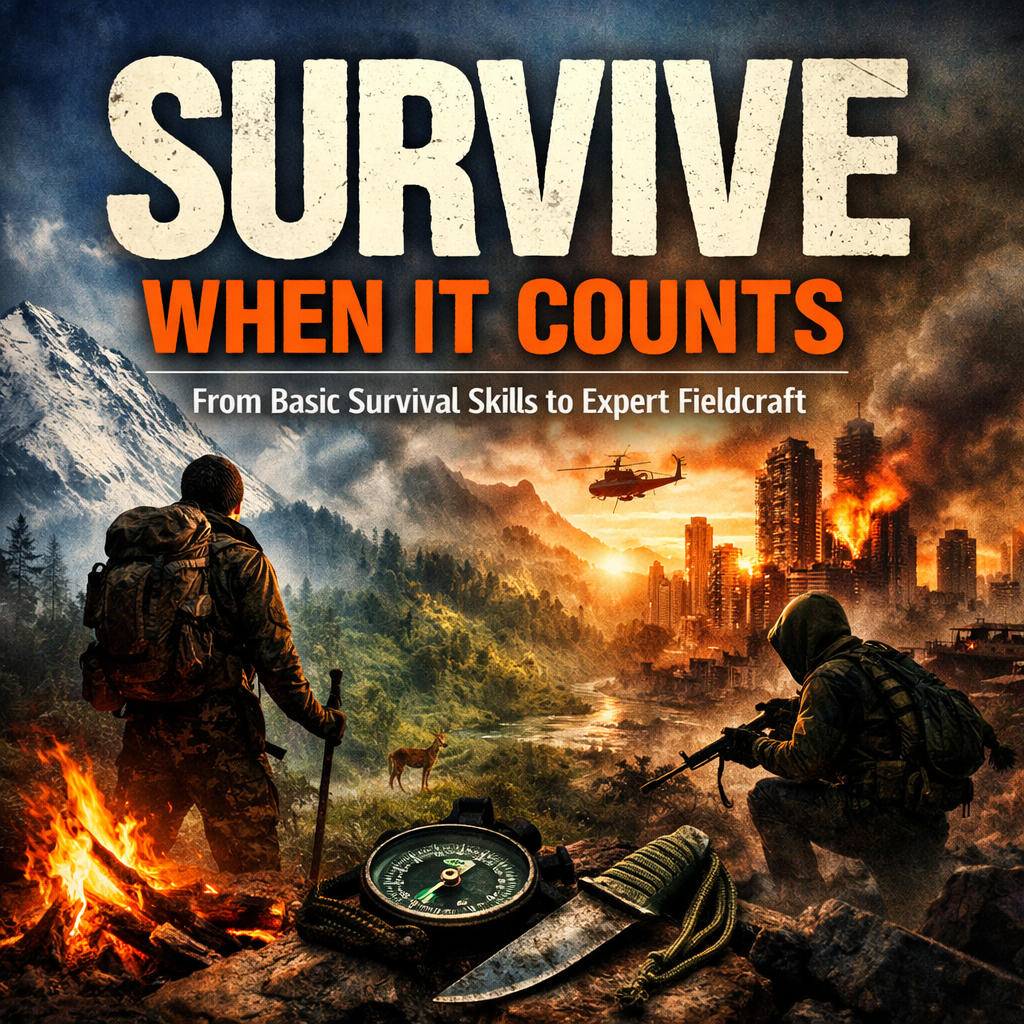
Home Resilience episode artwork

EPISODE · Jun 2, 2026 · 3 MIN

Home Resilience

from Survive When It Counts

Welcome back to the series, where we build survival skills from the ground up and turn uncertainty into something manageable. In this episode, we’re focusing on home resilience —the ability to keep your household safe, functional, and calm when normal systems are disrupted. Before you think about disappearing into the woods or packing a bug-out bag, it’s worth asking a simpler question: how prepared is your home to handle an emergency right where you are? Home resilience starts with the basics: water, power, warmth, food, and communication. If the grid goes down, the taps slow, or the weather turns severe, the households that cope best are the ones that have already thought ahead. That means storing enough drinking water for several days, keeping easy-to-cook food on hand, and having a way to charge phones or power essential devices. A flashlight in the right drawer matters more than a tactical fantasy if the lights go out at 2 a.m. A battery radio, spare batteries, and a small backup power bank can bridge the gap between confusion and control. The next part of home resilience is understanding your space. Your house or apartment should not be a mystery when stress hits. Know where the main water shutoff is. Know how to turn off gas and electricity safely if needed. Keep fire extinguishers in practical places, not buried in a closet. Make sure smoke alarms and carbon monoxide detectors are working. These are small habits, but they buy time, and time is one of the most valuable survival assets you have. In an emergency, people often lose minutes simply by not knowing where things are or how their home systems work. Planning also matters. A strong home resilience plan includes a 72-hour kit, but it also includes roles, routines, and decision-making. Who grabs medications? Who checks on pets? Where does everyone meet if the house becomes unsafe? These questions sound simple until the moment you need answers fast. The best plans are written down, easy to explain, and realistic for everyone in the household. If you live alone, that means building your own checklist and making sure trusted contacts know how to reach you. If you live with family, practice the plan before you need it. Under pressure, people don’t rise to the occasion—they fall back on what they’ve rehearsed. Finally, home resilience is as much about mindset as supplies. Emergencies can create panic, but a prepared person stays mentally flexible. Maybe you intended to shelter in place, but a nearby hazard forces you to leave. Maybe you expected a short outage, but it turns into a longer disruption. Resilience means adapting without spiraling. It means keeping the house livable, conserving resources, and making steady decisions one at a time. The goal is not perfection. The goal is stability. When you strengthen home resilience, you create a safer foundation for everything else. You reduce noise, lower stress, and give yourself more options when conditions change. That’s the real advantage. Survival doesn’t begin in the wilderness—it begins where you live, with the choices you make before anything goes wrong. Sponsor: Find the book on Amazon and Books Central Website

Welcome back to the series, where we build survival skills from the ground up and turn uncertainty into something manageable. In this episode, we’re focusing on home resilience —the ability to keep your household safe, functional, and calm when normal systems are disrupted. Before you think about disappearing into the woods or packing a bug-out bag, it’s worth asking a simpler question: how prepared is your home to handle an emergency right where you are? Home resilience starts with the basics: water, power, warmth, food, and communication. If the grid goes down, the taps slow, or the weather turns severe, the households that cope best are the ones that have already thought ahead. That means storing enough drinking water for several days, keeping easy-to-cook food on hand, and having a way to charge phones or power essential devices. A flashlight in the right drawer matters more than a tactical fantasy if the lights go out at 2 a.m. A battery radio, spare batteries, and a small backup power bank can bridge the gap between confusion and control. The next part of home resilience is understanding your space. Your house or apartment should not be a mystery when stress hits. Know where the main water shutoff is. Know how to turn off gas and electricity safely if needed. Keep fire extinguishers in practical places, not buried in a closet. Make sure smoke alarms and carbon monoxide detectors are working. These are small habits, but they buy time, and time is one of the most valuable survival assets you have. In an emergency, people often lose minutes simply by not knowing where things are or how their home systems work. Planning also matters. A strong home resilience plan includes a 72-hour kit, but it also includes roles, routines, and decision-making. Who grabs medications? Who checks on pets? Where does everyone meet if the house becomes unsafe? These questions sound simple until the moment you need answers fast. The best plans are written down, easy to explain, and realistic for everyone in the household. If you live alone, that means building your own checklist and making sure trusted contacts know how to reach you. If you live with family, practice the plan before you need it. Under pressure, people don’t rise to the occasion—they fall back on what they’ve rehearsed. Finally, home resilience is as much about mindset as supplies. Emergencies can create panic, but a prepared person stays mentally flexible. Maybe you intended to shelter in place, but a nearby hazard forces you to leave. Maybe you expected a short outage, but it turns into a longer disruption. Resilience means adapting without spiraling. It means keeping the house livable, conserving resources, and making steady decisions one at a time. The goal is not perfection. The goal is stability. When you strengthen home resilience, you create a safer foundation for everything else. You reduce noise, lower stress, and give yourself more options when conditions change. That’s the real advantage. Survival doesn’t begin in the wilderness—it begins where you live, with the choices you make before anything goes wrong. Sponsor: Find the book on Amazon and Books Central Website

NOW PLAYING

Home Resilience

0:00 3:17

No transcript for this episode yet

We transcribe on demand. Request one and we'll notify you when it's ready — usually under 10 minutes.

Breaking News Show | eTurboNews Juergen Thomas Steinmetz News is relevant to the global travel and tourism industry, human rights and global issues.Breaking news when it happens and only from the source. LIGHTS, CAMERA, SMILE! Creatives Club Media Lights, Camera, Smile, is a podcast for anyone with a dream to share something with the world, out of the overflow of themselves - be it their mind, their heart, their personalities, and much more. Each of us are alive in this moment in time, with an innate ability to have ideas and create various things to benefit both ourselves and the people around us for a reason, and here, you will find the encouragement, the inspiration, and the motivation to do just that. Hosted by Cicily, founder of Creatives Club, she dives into various topics surrounding creativity and business. Exploring entrepreneurship for creatives in a corporate reality, sharing tips and tricks in a media centered company, answering questions regarding what a creative actually is are just a few of the things discussed on this podcast. Be encouraged to create for yourself as Cicily gets vulnerable by pivoting the camera to herself for the first time.To submit questions for Cicily to answer, or have her address certain t Solving for Change MOBIA Technology Innovations Solving for Change welcomes business and technology leaders to share stories of bold business transformation within complex organizations. In an era when technology and markets are changing around businesses, the key to staying competitive is to evolve in response to those changes.  MOBIA’s Mike Reeves and Marc LeBlanc investigate business transformation, deconstructing the challenges, ambitions, and market disruptions that drive companies to embark on transformation journeys, and exploring their unique approaches to achieving meaningful outcomes.  What sparks leaders to pursue business transformation? How do they overcome the challenges along the way? What are the keys to creating enduring change?  Through in-depth conversations with business and technology leaders, Mike and Marc answer these questions and explore how businesses evolve by pulling four key transformation levers: people, process, technology, and culture. Invictus by Greyana, A Tomione Podfic M+G Readings Sporadic uploads thanks to gallstones.Voldemort intended the object to be used by his most loyal follower in the event that his horcruxes were destroyed, but it ended up in Hermione’s possession instead.It sent her back to a time when he was much less the monster that she’d always known him to be. Nothing could have prepared her for the intelligence and charm of Tom Riddle.He isn’t who she thought he was.Hermione discovers that it’s a dark descent into the madness of the man she should hate, but can’t… a descent she will never emerge fr

Frequently Asked Questions

How long is this episode of Survive When It Counts?

This episode is 3 minutes long.

When was this Survive When It Counts episode published?

This episode was published on June 2, 2026.

What is this episode about?

Welcome back to the series, where we build survival skills from the ground up and turn uncertainty into something manageable. In this episode, we’re focusing on home resilience —the ability to keep your household safe, functional, and calm when...

Can I download this Survive When It Counts episode?

Yes, you can download this episode by clicking the download button on the episode player, or subscribe to the podcast in your preferred podcast app for automatic downloads.
URL copied to clipboard!