Hello Roy here, I just wanted to let you know that you can listen to the Roy Green Show ad-free on Amazon Music included with Prime. A safer Ontario means more police and prosecutors making sure my card doesn't get stolen. It means building new jails to keep criminals behind bars. And it means there's no need to worry when I play at the park.
We're making every corner of Ontario safer to make all of Ontario safer. That's how we protect Ontario. For all of us. Learn how at ontario.ca.com.
Payed for by the Government of Ontario. If you're looking for a real-life radio, you've come to the right place. This is the Roy Green Show on the chorus radio network. You also know about the evil beings that took her life and if society's lucky, we will not see them again on the streets.
There's the Clayton Babcock, the father of Laura Babcock. This morning in the court of Inter-Hardo after the guilty verdict was brought down or verdicts were brought down against Delon Mallard and Mark Smitch. In the death of the murder of Laura Babcock, we first became familiar with the names of Mallard and Smitch after the murder of Tim Bosma in Ancaster, Ontario. And now they've been through their second trial and Mallard has another trial coming up.
Sean O'Shea joins me on the Roy Green Show on Global News Radio. And Sean was in the courtroom this morning or today when the verdicts were brought down. Sean, thank you very much for the time. The most tremendous amount of tension in that courtroom.
There was Roy, thanks for having me on. I did not cover the trial, but I did cover the verdict today. In Global News, I extensively cover the trial. It was a packed courtroom, as you might imagine.
And during the deliberating for several days and often in cases, that makes people wonder about whether the verdict will come back. As a knock-yelty and that's certainly not what happened today, both men were found guilty first-degree murder. And when the judge asked the individual jurors to confirm their guilty verdict, one by one, and a roll call is usually the case, three of the jurors broke down and first did it here. It was extremely tense.
And you could see and hear the emotion and see it on their faces. This was a tough decision. This was a tough case. What was the response on the reaction by Mallard and Smitch Lee to the verdict?
Mallard, who was defending himself, turned around and gave a long death stare to the Bock family. Just stare them down and then turn around. Smitch was facing forward. And the family was there for the entire trial.
They were in the first row behind the area where the judge and the lawyer said. So they were there and they looked back. But when the jury read the verdict, there was a lot of gas being on the part of the family as well. I mean, this is the verdict that they had hoped for.
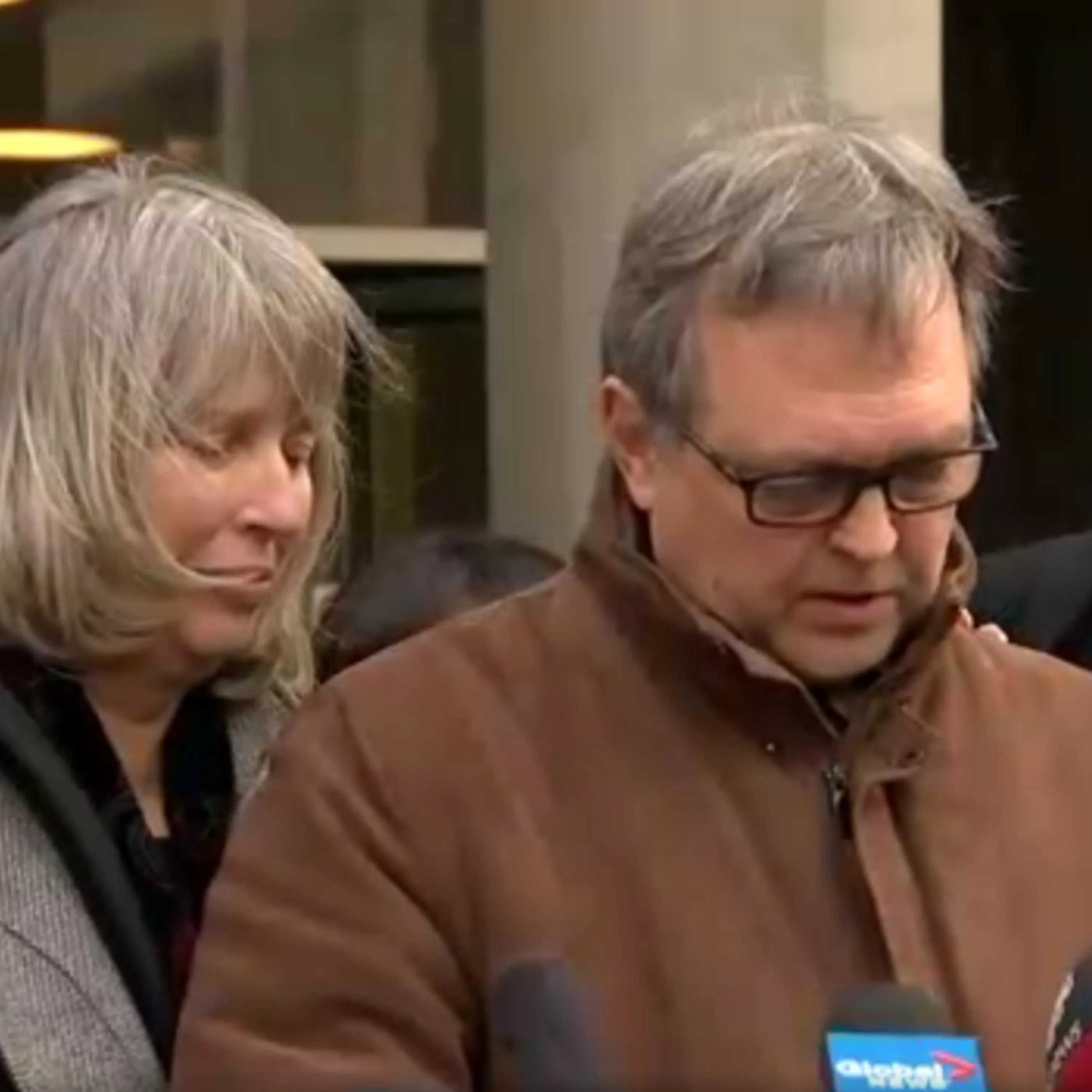
But in the press conference, just afterward, Clayton Babcock said, this still was not a great day for them. It doesn't bring any joy, he said, to them. Said the loss of Laura today is no less painful than it was five years ago. And like I said, he said, it loses the trial.
They can only move forward with thoughts of what might have been. So the verdict they wanted, but not a great day. Good people facing abhorrent evil. It's always so incredibly difficult.
And again, I'm asking yourself, how can anybody do this? But it happens again and again. And so we have the responsibility of having a justice system that holds them accountable. You had an opportunity to speak to the crown and what was the crown's position.
The crown's position essentially was that they were happy. They said, Justice was served today. They were very thankful to the members of the jury. Long trial, seven weeks or so, long deliberation right before Christmas.
It's an emotional time. It's a murder case. They thanked the Babcock family. And then I spotted the crown prosecutor inside the courtroom after things have been wrapping up and she was crying.
She hugged the family members. And then when she came outside to talk to reporters, I asked her about what kind of an affected head on the legal team, the crown. And she said, you know, this took a total of us, our family. She said, you don't look at it until it's over until it's over.
She said, you know, it's not a good thing to look back on it with emotion. So this kind of a case, when you're dealing with good people and people that are really involved in trying to do the right thing and trying to do the jobs professionally, it does take a toll. You could see it on the jurors. You could see it on the lawyers.
And Justice is done. But as I said, it's still not a great day for people because there's no bring Laura back on back. No, and nobody ever expects to be face to face with this kind of evil and this kind of self-indulgent evil. What are the police in the detective?
Yeah, the lead detective there, I asked him the question about, you know, why he thought it took the jury so long. And he applied that he thought it took them so long because they really wanted to take it seriously, do the right thing and approach it so professionally. And on that point, one other interesting aspect of this day in court was that after the judge dismissed the jury, usually that's it. But then after the jury was dismissed, the judge mused about the possibility of the length of time before parole eligibility, normally on a first degree murder case.
There's no parole for 25 years. But as you pointed out, both of these men were previously convicted of first degree murder. Of course, the jury didn't know that, couldn't know that or told that because they didn't want to have that get into their way of deliberations. But after the verdict was read and the jury was dismissed, the judge called the jury back about 10 minutes later.
He wanted their opinion about parole eligibility because they've now been convicted of two first degree murder charges under some new legislation, federal legislation. Those sentences could be served consecutively rather than concurrently. So one after the other, he wanted to ask the jurors what they thought would be fair when it came to these men and how long they should spend in jail. And both unanimously, in the case of Delano-Lard, the jury came back and said they should be served consecutively.
In other words, potentially parole eligibility for 50 years as opposed to 25. In the case of Smith, five of the jury members thought it should be longer and seven had no opinion. So this is a unique case as well because this will, the judge admitted he's not dealt with anything like this because the law is fairly new. Sean, thank you so much for the tough day for everyone.
For you in the courtroom, for those of us listening, for the family obviously, and much appreciate the time. Thank you, Sean. Thank you, Roy. You have a good day.
You too, Sean O'Shea from Global News, on the way to Green Show.