Hello, Roy here. I just wanted to let you know that you can listen to The Roy Green Show ad-free on Amazon Music, included with Prime. Roy may be a lot of things, but Shy isn't one of them. He never backs down from a good debate.
This is The Roy Green Show, of course, radio network. I'm going to read you a few lines before I talk to my guest. I'm going to read just a few lines from something that he wrote and an excerpt from it ran in newspapers in Canada. It was about two weeks ago, and it appeared in Canada 150, a very special book, the full piece that he wrote.
And here's what I want to read to you, and then I'll say hello to him. On April 16, 1992, I was released after spending almost 23 years inside prison for a crime I did not commit. Prison is horrible. The Supreme Court of Canada was not clear about my innocence and sent my case back to Saskatchewan for them to review.
Saskatchewan would not go forward with a new trial. This was their way of hiding the fact that they'd convicted an innocent man. There was no apology to me and my family. This was the worst possible way to leave anyone with no clear verdict specific to innocence.
In the end, DNA cleared my name. There were many factors contributing to my release. The one strongest reason is because my mother never gave up on me. She fired up the Canadian public, who believe in what is right and just, and this made the difference.
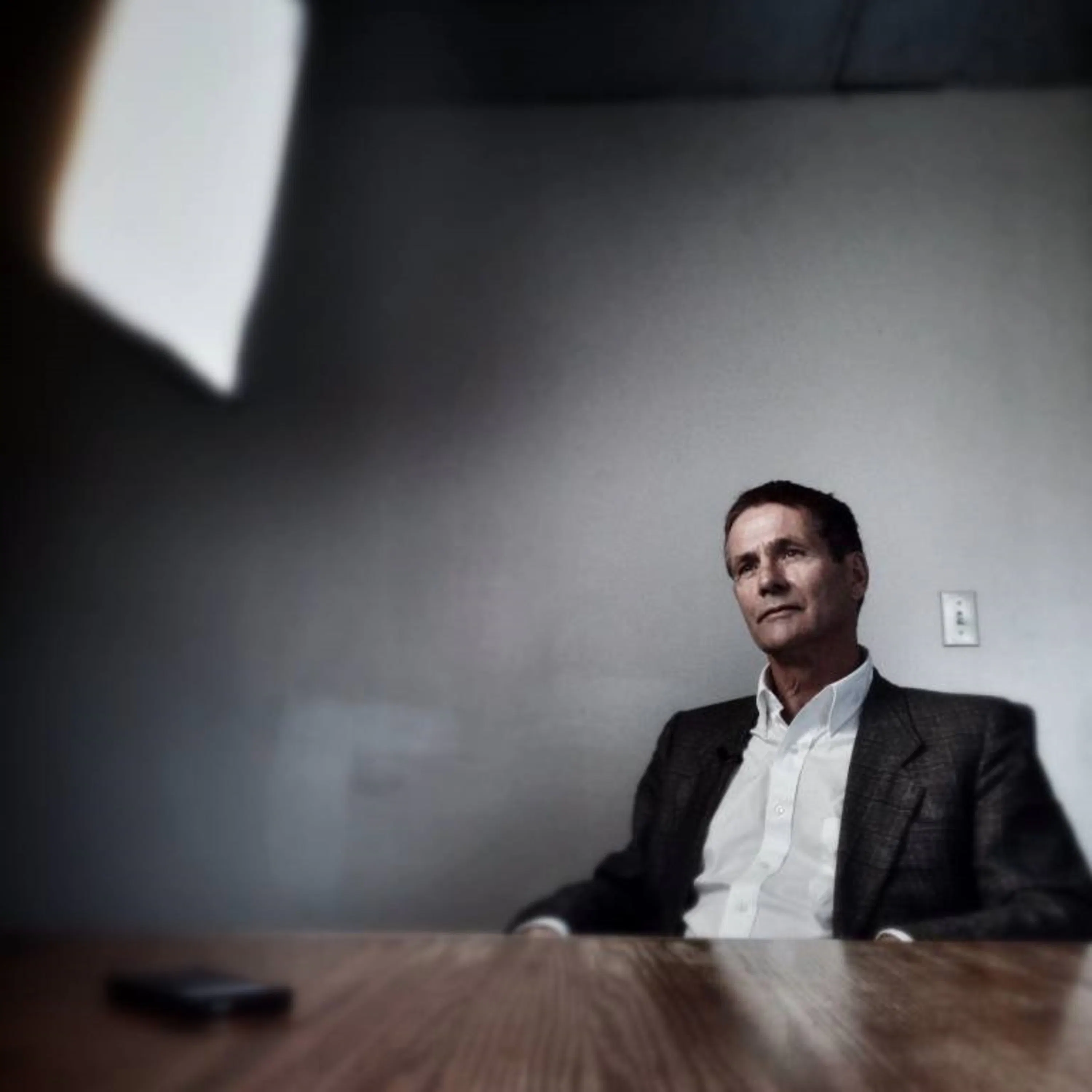
David Milgaard, it's good to talk to you. Hello, Roy. How are you, David? Oh, I'm a little bit nervous right now because I'm just starting to talk, but once I get going, I'm usually not too bad at all.
We've had some good conversations over the last week. Yeah, we have. David, when I read those words that you wrote about your mom, there were many factors contributing to my release. This one strongest reason is because my mother never gave up on me.
Talk to us about your mom. Well, my mom is very special to me and still is. She's my mentor, and sometimes if I have a tough day or a tough week, I give her a call. And she always has something there to say that, well, this is my spirit, so it gives me some kind of direction and stuff.
Well, all this was going on years and years ago, and she had to come up and see me inside prison. And I can remember many different times she said, David, you know, if you would just behave yourself a little bit better, that will make a big difference in your life, and things will start to change for you. And I guess eventually I just got wise to the fact that I really did need to kind of clean up my act a little bit inside there, and I started to do some things for myself and maybe some things to help others and things that start to change. And it was a lot of work.
I think the beginning of it all started when I was in Toronto. I got shot in Toronto. I took off from the Stanley Mountain Penitentiary, and I ended up getting shot. And she just wanted some sort of way to keep my spirits up, and she said, we're going to put up a reward for any information leading to my exoneration.
And it was a long, long, winding road with ups and downs and different things taking place in it. But it was the one thing that kind of got things moving for us. When you were first talked to by police, and then when the case moved forward, and they took you to court, and they charged you with rape and murder, and this is going on around you, and you know that you have done none of the things that you're being accused of, and they're bringing forward evidence to convict you, and you know you've done none of the things that they're going to convict you of. And when the day comes that they pronounce you guilty of rape and murder based on the evidence they brought forward, and none of it is true, how do you, I don't know if this is a question you can answer.
How does a person feel while that is going on around you, David? Well, to be frank with you, Roy, I don't even like hearing you say that to me. I mean, I was convicted of murder. There was a terrible, horrible crime that took place, and she died in the back alley and was raped and everything.
But just hearing you say that upsets me. But the point is, how did it feel? It was horrible. I can remember actually, you know, listening to the people give evidence and knowing that it was not true.
The fact is that, you know, the police did what they did to both of the witnesses, actually. They kept a young lady in jail until she started to say the things that they wanted to hear. Another gentleman, you know, he actually took a lie detector test after he'd given them the state and telling them the truth. And then the same thing, they had to sleep on him quite a bit, and he changed his testimony.
You'd think that in some way or the other they would have simply just, you know, gave him another lie detector test to see if he was telling the truth. But no, everything just seemed to go wrong there in Saskatoon with the police there at that time. I can remember my dad was always a very big man, 6 feet 4, always played football. Football and baseball, and it was always a strength to me.
I always saw him as a very strong person. I can remember when he read the verdict and he said, I heard this big body moaning behind me, and I turned around and I looked at my dad, and I'd never ever seen him look like that. He just looked like weak. And that was probably the most loudest moment in my life.
After that, I don't really remember so much. It was just too emotional for me to be able to cope with it. Today, and since your release, and probably before your release, but very strongly today, you're working hard on things, see things change in Canada. I want to quote again from the piece you wrote.
Wrongly convicted people are in a very bad situation. We must remove the legal obstacles, especially the criteria, that is keeping them from having their cases reviewed quickly and efficiently. If anyone can demonstrate that they are innocent, their case should be heard immediately. The present ministerial review process fails us miserably.
We are failing innocent people twice. These men and women, and in some cases children, have done no wrong. There is no need to keep these people for years inside prison. This is the worst possible way to feed our innocent.
Why, that is so true, and what is happening? What needs to happen, David? What are the changes that absolutely need to take place to change the process to accomplish what you're telling them they need to accomplish? Well, we've had inquiry after inquiry that we create an independent board of review.
This has been going on for 20 years. Why have these recommendations been ignored? We need an independent board of review to get these people out of prison now. These prisoners need to be freed, Roy.
I can't put enough emphasis on that. I have been talking to universities. I've been doing many different things. People have been involved.
The prime minister himself just recently got a letter from me, and also the minister of justice also received a letter from me, and the situation is being outlined very clearly to them. You know, there's no need to have years and years of appeals go by in a person's life when they are able to demonstrate that they have nothing wrong, and it's simply a matter of justice. It's just plain wrong that's taking place. You can never get the years back.
And let me ask you this. If I were to go into any prison in this country today, would I find people in each and every prison in Canada, do you think I'd find people in each and every prison in Canada, that are there for a significant period of time that have done nothing wrong? There's no doubt about it, Roy. There's lots of them.
So do they draw a conclusion and then too often draw a conclusion and then try to satisfy the conclusion they've drawn in the trial? Is it not about finding reasonable doubt in some cases? Is it about, yeah, we think he's guilty, so we've got to prove he is or she is? Well, it's a matter of something that has been termed tunnel vision.
Once they feel that they have a person that's responsible for the crime, you know, their focus is specifically to incriminate that person. It's really, really, really bad. I'm thinking of a fellow that died, and I'm just so upset that he died and that he wasn't compensated, and I was trying so hard to have them try to speed things along for him. And the bottom line was they had information that he was, I don't know, 35, 45 kilometers away, maybe it was further away from what took place.
And the bottom line is, you know, a police officer was there that identified him being someplace else. And, you know, it's a terrible reflection on us as a society that, you know, things like this continue to go on. If it wasn't for the Canadian public that do believe in what's right and just, you know, I wouldn't be talking to you now. I would still be inside a prison.
You know, we just have to make this work. We have to get people involved in making the changes that need to be made and get this independent board of review to take place as soon as possible. Let me take a break, David. We'll come back and we'll talk about what you're asking for, what you're demanding, and appropriately so.
An independent board of review. Now think about it. We can all do this. We can all put ourselves in David Milgaard's place.
You've committed no crime. You've done nothing wrong. And yet you're suddenly arrested. And you're charged.
And you're protesting your innocence. But you're taken to court. And over a period of days or weeks, your guilt is established in the minds of the people in the courtroom, and they take you away. You've done nothing wrong.
An independent board of review is what's required, said David Milgaard. We'll talk more with David when we come back on the Chorus Radio Network. Intelligence Talk Radio. Intelligence Talk Radio.
This is the Roy Green Show on the Chorus Radio Network. I'm speaking with David Milgaard, 23 years of his life. We're taken from him, 23 years. And he was convicted of a rape and a murder that he did not permit.
A young woman was raped and she was murdered. But it wasn't David Milgaard. In your piece in Canada 150, David, you say, and you write, we've had inquiry after inquiry recommend we create an independent board of review. Why have these recommendations been ignored?
We need an independent board of review to get these people out of prison now. I know how it feels to be inside those walls for so long. This is not justice. This is just plain wrong.
Why? What obstacles are you aware of that have been placed in the way of an independent board of review? Well, at one point, the Justice Department decided they would shuffle things around a little bit in that department, suggesting that that would solve the problem. It certainly doesn't solve the problem.
The worst thing about it, and I hate to be straightforward at once, but even if they go about, say you were a person that had done no wrong and were convicted of it, and somehow you were able to apply under the section that's available for you to apply under in the criminal code to have them review your situation for you. The sad thing is you have to exhaust all of your appeals. You have to go through appeal court after appeal court after appeal court sometimes. And then a minister of justice, a former minister of justice, told me.
He was so upset once he was aware of the information. In this case, it was Stephen Trescot and the insect information that demonstrated that he wasn't guilty of having done anything wrong. But he couldn't just say, okay, you can go home. And he broke protocol, and he spoke with Stephen, who was very upset to see that he had to go back and have a new trial all over again.
It's such a ridiculous, defunct system, and it fails everybody miserably. And it has to be. They don't share the information with the clients, and they don't have the power to release a person, and then it has to start all over again. The same nightmare just doesn't stop.
That's horrific. That is horrific. In the dictionary sense of the word, what happens? Are there any repercussions?
Several listeners have sent emails. They want to know if there are repercussions for the people who were engaged in wrongfully convicting you when some of them had to know what they were doing. In my situation, there wasn't any doubt that people were responsible for not bringing forward information that could have had me released when I was, let's see, arrested when I was 16. I was inside the penitentiary by the time I was 17.
My appeals came up when I was 18 or 19. They had information at that point in time that implicated the person that was responsible for the crime that later on BNA proved that he was responsible. You know, being in a position of authority, there's terms that are used now. Some terminology has been changed.
Words have been changed. And, you know, I don't like to come across as a person that's upset, and I usually am not. But, you know, I could have been out of prison. I could have been home with my family.
I could have lived out a big chunk of my life with my dad, and it was all taken away from me. And they simply tried to withhold evidence so that the person that was responsible would not get convicted. And later, he was convicted, and he died in prison. That's Larry Fisher.
That's correct. We talked about your mother at the beginning of the segment. We have about two minutes left here. I had the honor of getting to know your mom, of speaking with her on the air and off the air.
And she is a truly remarkable woman, and she was such a great champion of yours. And I'm just thinking, for anybody who is wrongfully imprisoned who doesn't have such a powerful, strong-willed, eloquent advocate, that's a terrible, terrible fate. And they better get off their backsides and create this independent board of review, because every innocent person in prison in Canada has to be released. It's awful to hear what happened, but it's a privilege for me to speak with you, David.
Thank you so much for giving me the opportunity. Oh, you're welcome, Roy, and I appreciate the fact that you're trying to do something about something where we really need to help people that need our help the most. Thank you very much. We'll do whatever we can, and I mean that collectively, Canadians.
We'll do whatever we can to help you in this very necessary goal. Thank you, David, and all the very best to you. All right, thank you. Take care.
David Milgard. It's just not enough, eh? Take care. It's not enough.
And he, they offered him the opportunity to leave prison. All he had to do was say, I'm guilty. And they knew that he wasn't. Who are these people?
They can impact your life and the lives of people you love simply because they want to, or it's convenient. We'll come back.