Hello, Roy here. I just wanted to let you know that you can listen to The Roy Green Show ad-free on Amazon Music, included with Prime. A safer Ontario means more police and prosecutors making sure my card doesn't get stolen. It means building new jails to keep criminals behind bars.
And it means there's no need to worry when I play at the park. We're making every corner of Ontario safer to make all of Ontario safer. That's how we protect Ontario for all of us. Learn how at ontario.ca slash saferontario.
Paid for by the government of Ontario. At this point, most shows are winding down. Roy is just getting started. The Roy Green Show on The Chorus Radio Network.
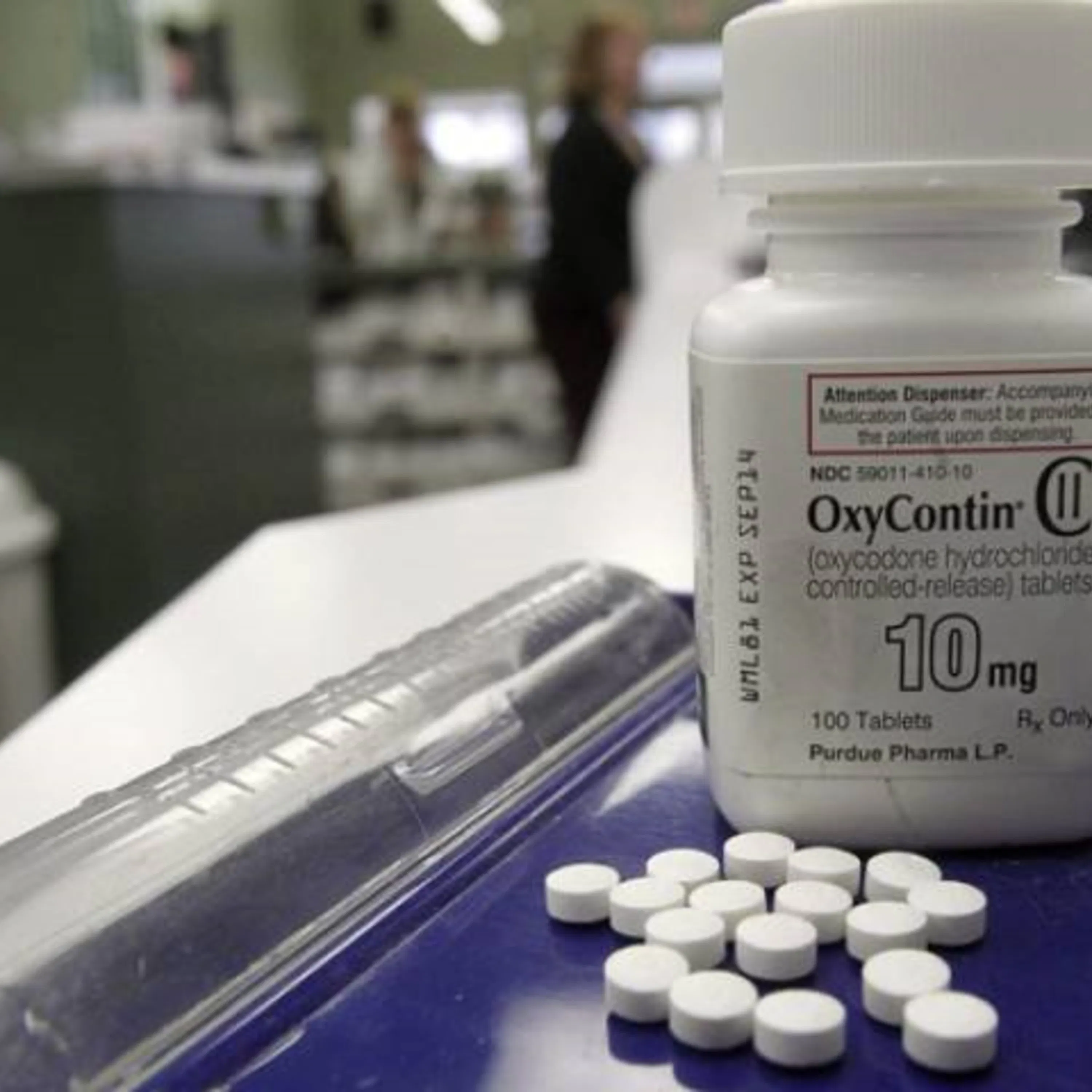
What are pain patients addicted to? You want to know what particular... You tell me, please, and tell my listeners, which includes chronic pain patients, one of whom we'll be joining shortly. What are pain patients addicted to?
Well, I think you are asking a question that is trying to describe the fact that there's a single or simple story. And I think that there... I don't want to oversimplify... Well, Minister, with due respect, I don't think you've answered any of my questions yet.
Well, feel free to ask me another question, and I'll see if I can satisfy you. That was from my interview with the former Minister of Health federally in Canada, Jane Philpott. You can still find that just on The Roy Green Show page on any of The Chorus Radio Station's websites that carry this program. And you can hear the interview with the Minister, and she didn't answer my questions.
This week, I... Here's something I tweeted this week. Allison Kimberly, mom, 30. Ryan Transo, veteran, 26.
Mercedes McGuire, four-year-old son. Zach Williams, veteran, brain injury, 35. Travis Patterson, Army Staff Sergeant wounded by IED. All chronic agony patients refused pain-controlling prescription opioids.
Non-addicts, all dead. Suicide. Far too many stories. This comes from someone who tweeted this.
I think it's Susan. My mom, Rita Langwell, died unnecessarily on November 18th. Mom fell and fractured four vertebrae. She was sent home with Tylenol for her pain.
I told the hospital that mom was on oxygen and had to take three deep breathing exercises a day to keep her lungs clear and dry. They refused to let her have pain meds. I told them she had trouble breathing, and they still refused to let her have them. She was in so much pain, I would hear her crying at night.
I called her family doctor, and he said the hospital would not allow him to write a prescription for the pain. Franciscan Brothers Hospital was responsible for the refusal. Mom ended up in the hospital with double pneumonia and fluid in both lungs. I told them that what was going on, what was going to happen to her, but they ignored me.
By the time she ended up in the hospital, it was too late to save her. They didn't want her to become a drug addict. She was 86 years old. This is the sort of story that breaks your heart.
Story after story after story. Story after story after story. Of people who are living with chronic pain, which translates into chronic agony. They can't live.
They barely exist. And we've heard them say on this program, and we've argued with some doctors, and we've said, oh, you've heard the show. And when they were prescribed their opioid medications, and they were on the opioid medication for long periods of time, and there were no problems. They had a degree of quality of life for Stuart returned.
And then they started to get it with wrong, with wrong, with wrong, with wrong, with wrong. And now they're living in agony again. And that email, that tweet is going to get longer, unfortunately. Dr.
Thomas Klein, Ph.D., he's an American physician. And some pain patients who have sent me emails have described Dr. Klein as a saint. He's not pro-opioids.
He's just, as I understand it, pro-correcting a terrible mistake. He's the author of the myth that prescriptions cause the opioid crisis. Dr. Klein, thank you for coming on the program.
We've been trying to get this done, and I'm glad you're here with us. My pleasure, really. Would you, in your words, describe to all of my listeners on both sides of the border, what's going on? How did this happen, and why are we not?
Why are we not doing the sensible? And that is just allowing the pain patients to be treated with medication that returns some quality of life. Because we're afraid. We're afraid that we're going to see the resurgence of the dopamine epidemic portrayed in 1936 in the famous movie Reifer Mendez, which was actually produced by the United States government.
A fellow that ran the Narcotics Bureau in the United States from 1930 to 1962 saw to it that his own personal views about drugs and crime came to the forefront. He had laws passed in the United States. He convinced states to pass laws to outlaw medications that would lead to dopines. Dopines, in his view, were primarily sexual predators, black folks that convinced white teenagers to run off with them.
He created stories that would make the hair stand on the back of your neck, all officially by the United States government. Now, things get into our fabric. The fear gets into our fabric, but we forget what the original reason was. If you were to ask, and maybe it would be interesting to ask some of your listeners, what is it that you're concerned about?
If a person with an opioid addiction, and I'm going to call it addiction disease because it really is a disease, moved in next door to you, what would your fears be? The problem is that once you have a rampant fear, all logic disappears. It's very difficult to say to somebody, don't worry. But the facts are there that you really don't have to worry.
It turns out, and we're probably going to find out in the next few months for sure, that opiate addiction is a true metabolic brain disease. It's triggered by opiates and also alcohol. It is not created by opiates. That's real important because the assumption is that if you start spreading too many opiates around, you're going to addict everyone, and then what's going to happen?
They're going to turn into dope fiends, and they're dangerous. Who's been talking to the folks with the addiction disease? Nobody. And if you talk to people with addiction disease, you find out that they really aren't the criminals that the fellow in the United States, Ann Slender, created.
Yes, people with addiction disease, or what we call junkies, and they call themselves junkies too, with tongue-in-cheek. He said, sexual crimes, are you kidding me? We're so doped up, as he smiled, with our heroin dose. We're not interested in sex or doing anything.
And he said, violent crime amongst people with addiction disease, almost never. And also the statistics in the United States show that as well. People that commit serious crimes are alcoholics and people who take alcohol with other drugs. In Vietnam, the Army said 3% of people were shooting up heroin.
It turns out it was probably 40%. And when they came back to the United States in the early 70s for detoxification at the VA, which I was actually part of, they went through the usual withdrawals that anyone will go through who takes opiate pain medicine, or antidepressants for that matter, or benzodiazepines, or sleep pills. We'll go through these withdrawals. That's a physical thing.
They call it dependence. That's a bad word. It's not being dependent on the medicine. It's just the way it's mixing up in your body.
So a very famous researcher by the name of Lee Robin, who's now deceased, came from St. Louis to study what was going on. And the question was, how many people who've been on heroin in Vietnam are we going to have to pay for it when they turn into heroin? So we took everybody off.
There were 700 people altogether. And guess how many addicted ended up with street addiction after taking intravenous pure heroin for months and months in Vietnam? I know what the answer is, but please go ahead and tell us. Well, now, Roy, don't spoil the story.
I'm not going to. So the prediction would be, and that would be a good question to ask your audience, and everybody just kind of pick a number. So out of 100, how many became addicted? And the answer is two, possibly three.
And Lee Robin thought that probably two of those were eggs when they went into the Army. So basically this means if we took everybody in the Dominion and gave them all intravenous heroin, 98% of people would not become addicted. Dr. Klein, I'm going to have to take a break.
What's interesting here as well, just before I take a break, is in this country, and I believe in the United States, I'm not sure, but in this country there is an increasing number of supervised heroin or drug-taking facilities where they provide you with a needle and they provide you with a clean environment to do your drugs. And off you go. I've always found that. I find it incredible that a person who is a so-called, or I stereotype them, I guess, as generic addicts, they can go to a supervised drug injection site and receive the paraphernalia, if not the drug, to go ahead and shoot up their heroin, and then they carry on.
But the person who is living with a physical ailment, with a health condition that creates massive pain, agony, doesn't allow them to function. And one pain doctor said on this program, there are four steps in the sequence, there are four parts to the sequence. The first one is pain. The next one is social isolation.
The next one is depression. And the fourth one is suicide. So when you have people who live in that kind of, within that scope, to say we're going to cut you off your meds or we're going to cut you back dramatically and then think you're doing something positive is absolutely, it's counterintuitive. And I had a guest on this program a few weeks ago.
She's a former Justice Department lawyer, human rights lawyer, for more than 20 years. She was also a chronic pain patient. She's no longer. She was on opioids reluctantly at first, but they restored her ability to work and do it in a competent manner, physically competent manner.
And she said, and I could bring you back to my point where you said, how would people feel if somebody who was on opioids moved in next door to you? You never know. With most of them, you never know, because it's a medication that they're taking. Now, I may have spoken somewhere along the way here, and we'll go back to Dr.
Klein in just a moment. Dr. Thomas Klein is my guest. So glad we were able to get on the show.
Some of it was my issue with scheduling. Other times, Dr. Klein was in the air. And anyway, he's here now.
We'll come back and we'll talk some more. Say this. Directed. Harded.
No Holds Barred. The Rory Green Show on the Kors Radio Network. I have a special session for you tomorrow, final segment of the year for this program. I'll have with me three women who are members of Canada's parliament.
They're conservatives, members of the Conservative Party of Canada. Two are MPs, and one is a senator. Senator Denise Batters. Where are we here?
Candace Bergen is going to go. I'm going to go. And Michelle Rumpel. So I'm looking for something here, and something's misfiring.
Not in my brain. Something's misfiring physically. So anyway, it'll be Senator Batters, Michelle Rumpel, and Candace Bergen. We'll be on the program tomorrow.
In the last hour, we'll talk about 2017, 2018. Okay, rescued it. Dr. Thomas Klein is my guest.
We're talking about, well, what are we talking about, Dr. Klein? Are we talking about, is the conversation about pain, or is it about addiction? Well, the two are interrelated.
The reason we're not treating pain is because we're afraid of addiction. And that's why, what you just said before the break, and which I find myself saying all the time, is why aren't people listening? Why are people doing this? Why are people dying?
In the United States, there are 10 million people who need opiates every day for their pain disease, and 6 million have been taken off. 50% of doctors have stopped prescribing. 30% of pain clinics have stopped prescribing. Are they doing it out of fear?
Here in Canada, they're doing it out of fear, because they're afraid they're going to lose their medical license. They've been intimidated. The people who are members of the colleges of physicians and surgeons say, no, that's wrong. We haven't intimidated doctors.
Well, somehow doctors are fearful. Yes, that's a huge problem in the United States. Henry Anslinger, 1930 to 1962, controlled the federal drug police, the previous DEA, and he purposely sent them out to terrorize doctors, because doctors were handing out the Satan pills, and were causing the addiction. So that's why the two are related.
It's very important to realize that if you take 1,000 people and give them all opiates, there's only going to be one person who becomes addicted and has to have the genes for that. So the police started to enforce the moral concerns of the federal government narcotics bureau, and now we have the DEA that was interestingly created by Richard Nixon to enforce his particular law in the United States, which is the Controlled Substance Act. We now know, through confession of John Ehrlichman in 1994, that Richard Nixon designed the entire drug control program in order to catch his political enemies. Dr.
Klein, I'm sorry. I have one minute. I want to have you back very soon, but we have one minute left today. Is there a way out of this morass?
Are pain patients doomed, or is there going to be ultimately some salvation? There has to be an understanding that this is a real disease, and if you don't have the genes for the disease, you will never become addicted. So the whole mess of trying to control and not give is useless. It's not going to work, and we have to understand that, and there are plenty of statistics to show that.
So we need to sit down and be logical and realize that we're operating against the winds of prejudice, but we're human beings, and we have the ability to think this through, and that's what we need to do. All right. I will ask you back very soon, and I thank you so much for today, and I understand why pain patients are referring to you as a saint. Well, that may be overblown, but I do enjoy being on your show.
All right. Thanks for talking to you. Thank you. Dr.
Thomas Klein. It's Thomas Klein, MD, at Thomas Klein, MD on Twitter, at Thomas Klein, MD. Wow. That was very, very, very informative and useful.
When we come back, it's always informative and always useful. What did we get at with Catherine and Linda and Michelle? The final beauties of the beast of 2017.