Hello, Roy here. I just wanted to let you know that you can listen to The Roy Green Show ad-free on Amazon Music, included with Prime. At this point, most shows are winding down. Roy is just getting started.
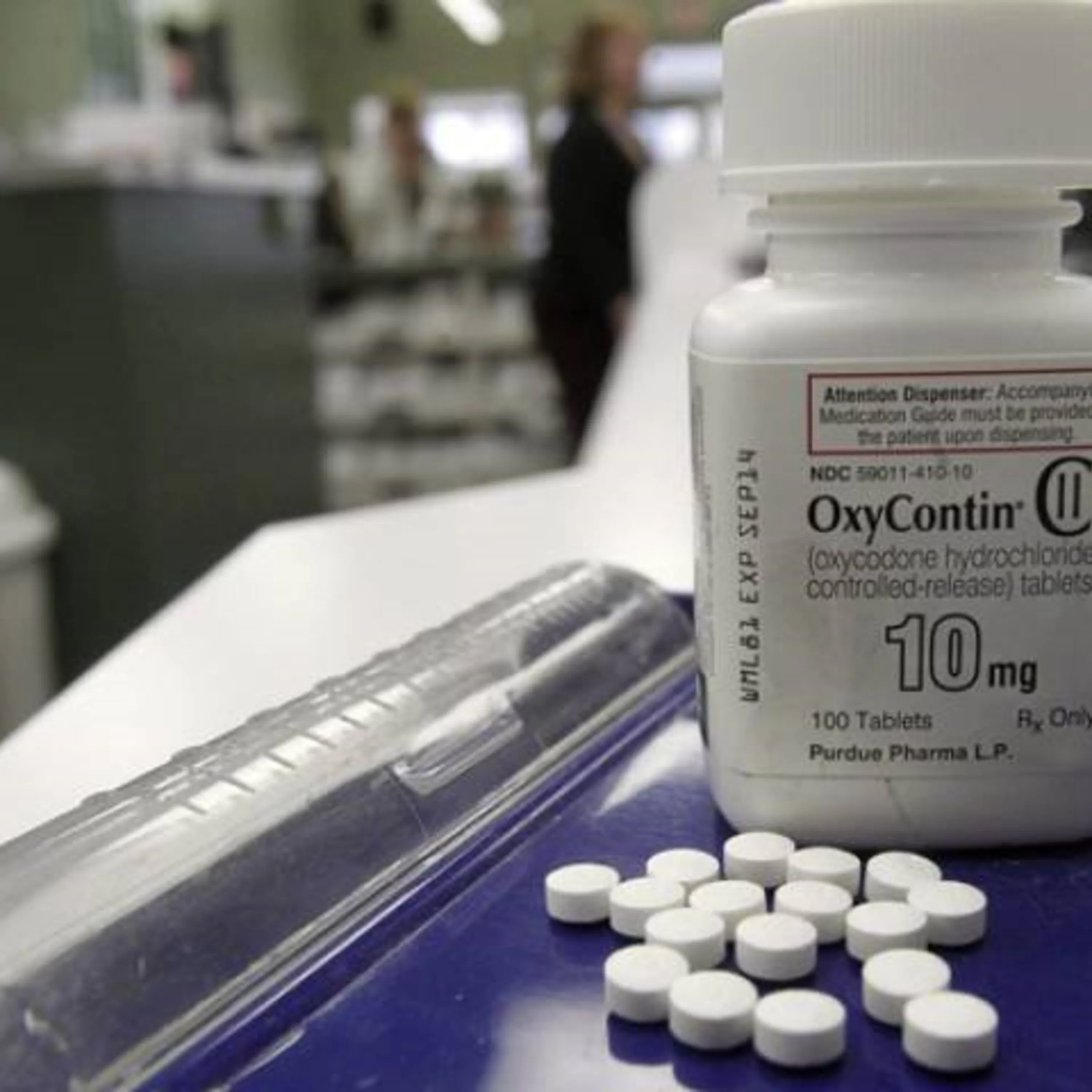
The Roy Green Show on the Coors Radio Network. An issue that we've spent a great deal of time on on this program over the last year is chronic pain, and the chronic pain suffered by literally millions, many millions of people in North America. Maybe some 60 million in the United States, possibly 2 to 3, likely 2 to 3 million in this country. Regardless of our Prime Minister's declaration of chronic pain being just, I'm paraphrasing, kind of a mild annoyance, chronic pain drives people to suicide, and increasingly so, we're told, because of the reactionary response by politicians and by some doctors.
You've heard my interviews with the former Federal Minister of Health, and the Registrar for the Alberta College of Pharmacists. I've talked to patients, I've talked to doctors, the editor of the Canadian Pain Guide, Pain Drug Guide for non-cancer-related pain. And you've heard the patients, you've heard them talk about their agony. And what we get in return, is doctors who are now afraid to prescribe opioid pain meds, they're scared they're going to lose their license, they're afraid the colleges are going to remove their licenses to practice medicine.
So it's an honor for me to speak to my next guest. Her name is Kate Nicholson, she served in the Civil Rights Division of the United States Department of Justice for more than 20 years, practicing health-related civil rights law, and she secured powerful victories, including at the U.S. Supreme Court. She's writing a book about her personal experiences with severe chronic pain.
Kate is also an arts writer and enthusiast who helped found the new non-profit, TiltWest.org. And she was recently named by Westworld as the best think tank for arts. That was recently named by Westworld as the best think tank for arts and culture in the area. She was a senior fellow at Dartmouth College and is a graduate of Harvard Law School.
Now, I also sent Kate Nicholson a copy of the Professional Standards and Guidelines, Safe Rescribing of Drugs with Potential for Misuse and Diversion from the British Columbia College of Physicians and Surgeons. Kate, thank you so much for joining us on the air today. It's my pleasure, Roy. Thank you for having me.
Let's speak about the issue of chronic pain and the impact that it has on people's lives. And I think maybe the best way that I can think of for you to do that for us, if you don't mind, is share with us your experience with chronic pain, which our listeners will be able to see on YouTube when you give the TED Talk. Right. It is available on YouTube.
So I had a surgery, which was actually for endometriosis, a fairly common condition that causes infertility. And I had what by all accounts was to be a routine surgery, but the surgeon actually placed nerve plexuses in my spine. And those are networks of lots and lots of nerves that intervate the back and the legs. And I ended up in very severe pain and unable to sit, dance, or walk for more than very brief periods with the assistance of a walker for the better part of 20 years as a result of the surgery.
I was very fortunate to be working in the Civil Rights Division at the time that was enforcing at that point a very new law called the Americans with Disabilities Act. And they were willing to accommodate my inability, my need to work lying down, essentially, which was very fortunate. And I also had access to really good pain management treatment. And my doctors tried to repeat surgery to correct some of the damage to the nerves.
They did all kinds of nerve blocks. They tried lots and lots of different things in addition to a host of integrated treatments and eventually prescribed opioids for me in addition to integrated treatments. And those were what really enabled me to continue to work under very difficult circumstances. And how did the opioids affect your pain reality?
They didn't take my pain away, but what they did was, you know, sort of allow me to function again. Space opened in my mind, and I could think and I could work. Pain when it's that severe can be very limiting to flexibility of focus and function both physically and intellectually. And I had been reluctant to take opioids initially.
I didn't want to. So I worried that they would make me feel filthy, and I worried about addiction. And, in fact, they had quite the opposite effect on me. They clarified my ability to think.
And I certainly never felt very high for them. No one who I worked with in all of those years would have had any idea that I was taking any sort of medication. So they were incredibly helpful in allowing me to sort of sustain a life during those years. Now, if your pain had developed in 2017 and heading into 2018, you wouldn't so readily in the United States and in some parts of Canada, wouldn't so readily, most parts of Canada, all parts of Canada, wouldn't have so readily been able to access opioids.
That is correct. And that's why I got up a few months ago and David had talked about this. Because I really worry about people today. You know, when you are in such severe pain that you become isolated, that your job and relationships are at risk, and you have no palliative measures, no ability to abate the pain, just because, you know, that's a serious problem.
And it is a problem for patients in the United States today. So I felt like it was important to tell my story, because all we hear about in the media is opioid abuse, which is certainly a problem that we need to attend to. But chronic pain, at least in the United States, is very serious chronic pain. It's either persistent or severe.
It affects 50 times the number of people affected by opioid abuse. And very few chronic pain patients suffer addiction. It's not that it doesn't happen, and there are safeguards that can be put into place with pre-screening and follow-through care to help with that. But there's this sort of strange conflation that's going on in which patients and doctors are being blamed for the opioid crisis.
It's interesting, isn't it, how the patient and the doctors are to blame? What do you make of, what can you say? What do you feel comfortable saying about? Well, I sent you an idea that the College of Physicians and Surgeons of British Columbia's professional standards and guidelines are safe for prescribing of drugs with potential for misuse and diversion.
And, of course, opioids figure prominently in this particular series of pieces of paper. Yes. I mean, it seems to suffer from, and it seems to be based somewhat on, some of the same problems with the CDC guidelines of the United States, which were designed not as sort of a tool for all doctors. They were designed sort of for primary care physicians, because I think there is a public awareness that pain and the treatment of pain is under-addressed in medical education in the United States and in Canada as well.
And so, you know, although there are people who specialize in pain management who take and specialize training who, you know, sort of have to treat pain, a lot of people in pain ended up having to go to primary care doctors, and a lot of them weren't sort of trained in how to treat pain. And so the CDC guidelines were an attempt, I guess, to address that problem, although I would say they're overly rigorous and that not enough people, physicians in the pain community were included in their design. But it seems like what's happening in British Columbia is part of sort of what's happening in the United States. Those were intended as simply guidance, and now in the United States, a lot of states are adopting them with a force of law.
And it looks like these guidelines have, you know, many of the same flaws in the sense that they don't really allow for sufficient intervention or breadth of treatment options within the doctor-patient relationship. And it sounds like there is sort of a bit of authority behind these, that they're not simply guidelines in British Columbia. How is it people can be so obtuse about the obvious? You know, it's funny.
The pain is, in some ways, it suffers from the fact that everyone feels it at some level. And I think unless you've experienced extraordinarily severe pain, which to me, and of course just speaking from my own experiences, it's really sort of a different kind. It's almost a different thing. You know, I've had bad bones, I've had serious surgeries, and that level of pain, I reported about a 2 or 3 on a pain scale of 1 to 10, where my sort of pain condition was more than 10.
So I think part of it is people not really understanding the degree to which pain can affect people's lives who live with very severe pain or very persistent pain. And part of it is just that this is, you know, sort of a reaction. The pendulum in the United States, there were, in the 1990s, there was a push to treat pain more seriously. I think that was an important and right thing to do.
But there also was some sponsoring of, you know, pain studies by pharmaceutical companies and, you know, some sort of marketing collusive effects. And that, you know, arguably led to some overprescribing in certain situations. But what's happening now is we've gone, you know, completely to the other side. And all people hear is, you know, sort of about people dying in the streets of opioid abuse.
And that's really the only way in which this issue is being considered. Right. And what guidelines like this are going to do, standards and guidelines are going to do, they will cause pain patients to have to do without what they require to get their pain under control with a doctor's prescription. And they'll force, these guidelines are going to force pain patients to go to the streets and deal with God knows who and by God knows what, for God knows how much, in the hopes that it will provide them some relief.
Yeah, that's correct. I remember in the early 90s and late 80s reading some studies about people before pain was really treated well in this country about sort of a woman who was posing as a drug addict so she could go to a methadone clinic to get pain medication. And, yeah, I think people, you know, it is, of course, some very perhaps unintended but very dangerous results. And we have seen cases of suicide in which, you know, people have very clearly stated that this is the reason that they are taking their lives because they cannot get access to pain medication anymore.
Hold on, please. We'll come back. And you heard my interview with the mother and daughter of a man who, or the wife and daughter of a man who committed suicide, number one, 53 years of age, because the doctors decided under the guidance of their regulatory bodies that he couldn't have the pain medications that he required, and so now he's dead. Shot himself in the head.
I wonder if those regulatory bodies, who will they blame? I want to show it's the patient's fault. Welcome back. If you're looking for real-life radio, you've come to the right place.
This is the Roy Green Show on the Chorus Radio Network. My guest is Kate Nicholson. For more than 50 years, served with the Civil Rights Division of the United States Department of Justice, and particularly in health-related civil rights law. Kate, is there a path to setting aside these sometimes terrible, terrible guidelines that doctors are given for health patients or chronic pain patients?
Is there a path to the courtroom to set aside these decisions, to make these regulatory bodies not so powerful in the edicts they deliver? I think there are a variety of options available in the courts, and I think that those cases sort of need to be brought. I mean, arguably, the law that I enforced, the Americans with Disabilities Act, is one way of doing that. It protects both people with severe chronic pain and people with opioid use disorder.
There are possibilities for sort of fair claims that cases and a number of things. Unfortunately, right now, everyone's really just focused on prosecuting pharmaceutical companies. And so I think partly we also need to change the conversation, which is part of why I'm speaking and writing and advocating, and advocate to regulatory bodies. We need to sort of have a presence to help to affect change.
But undoubtedly, you know, there are arguably Supreme Court presidents for a duty to treat. The World Health Organization has said that pain is a human right. So there are a variety of different paths that lawyers could take, but I really believe we need sort of a multi-pronged approach. Some of it lobbying regulators and politicians, some of it lobbying, but a lot just raising awareness because so many people that I know have only heard the negative side of opioids.
And we certainly have a drug overdose problem, but we're also losing many more people still to alcohol abuse in terms of deaths and then more than that to cigarette-related deaths. And all of those are arguably addictive, but there are no corollary health effects that are benefits to alcohol and cigarettes. And I think it's really important for us to look carefully and clearly at the numbers and try to open people's minds, which is something wonderful that you're willing to do on this show, to show that there's another side to opioids, that they also heal people, that they're palliative, that they're necessary, and that cutting supplies and cutting off access to care is not going to be an effective way of alleviating the problem in treatment of opioid use. Well, you know, we had a very prominent Canadian pain physician on this program, and an anesthesiologist at SickKids Hospital in Toronto, and she was talking about chronic pain and how if it leads to suicide, there are four steps that invariably follow one another.
The first is pain, the second is social isolation, the third is depression, and the fourth is suicide. So when I heard that, I started to hear calls from people explaining what in the hell they were going through and the misery they were forced to endure by those who have the power to create the misery for them. I thought, well, I'll do whatever I can on this show to hopefully make a bit of a difference or give them a voice. And you're doing that, and we only have a few seconds left.
Thank you so very much. Hopefully you'll come back to the program. I would like that, very much. And I know you've got a book coming, and next time we have you on, we'll talk about how that's going.
Thanks so much, Kate. Very good. Thank you so much. I really appreciate it.
Thank you very much. Kate Nicholson on the Royal Green Show on the Corpus Radio Network. I know there are some people who are considering lawsuits against provincial colleges, physicians, and surgeons. I know that's being actively considered now.
We'll come back. Puff drops, tip-offs, first pitches, kick-offs. When the game is on, you call the shots. Head to betway.ca and bet your way.
Must be 19 plus. Ontario won't play responsibly. Concerns about your gambling? Visit connexontario.ca.