
EPISODE · Jun 4, 2025 · 41 MIN
How a Florida murder and an unlikely justice created a ‘criminal procedure revolution’
from Modern Law Library · host Legal Talk Network
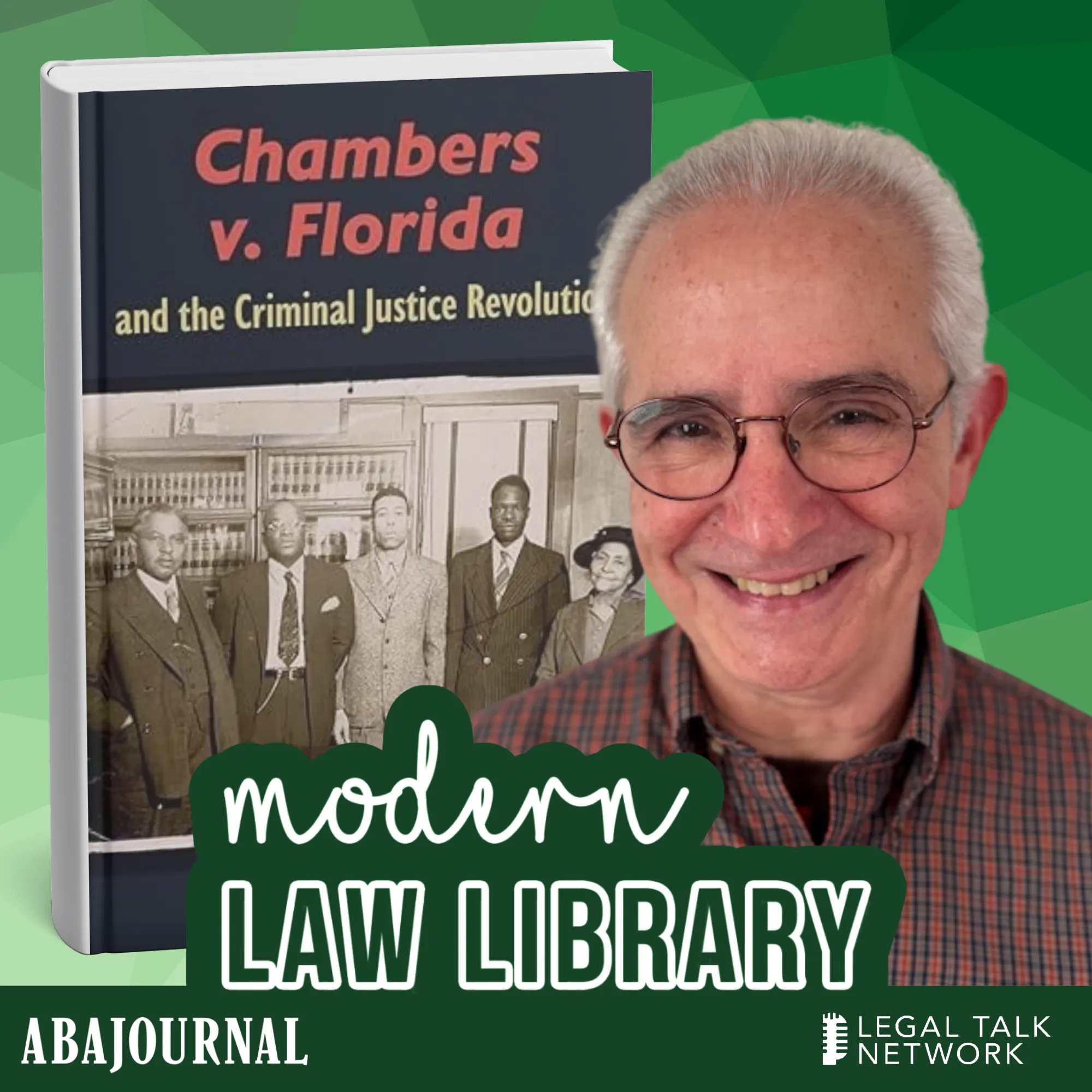
In Chambers v. Florida and the Criminal Justice Revolution, historian and former ABA Journal reporter Richard Brust lifts the veil on a case that laid the groundwork for some much more famous civil rights victories. On May 13, 1933, shopkeeper Robert Darsey was robbed and murdered in Pompano, Florida. Four Black migrant farm workers—Izell Chambers, Walter Woodard, Jack Williamson and Charlie Davis—were seized and pressured by the local sheriff into confessing to the murder under threat of lynching. Their appeals eventually reached the U.S. Supreme Court through the efforts of some dedicated African American attorneys, and succeeded in 1940. In Justice Hugo Black’s written opinion for the majority, the justice drew parallels between the Jim Crow regime in the American South and the rise of authoritarianism and fascism in Europe. Chambers v. Florida forbade the use of psychological coercion—such as threatening to turn prisoners over to lynch mobs—as well as physical abuse to extract confessions. The court’s ruling declared that the protections of the Bill of Rights extended into states’ criminal cases, and began to change the kinds of cases that made it onto the Supreme Court docket.Brust sees it as part of a trio of cases, which includes Moore v. Dempsey (1923) and Brown v. Mississippi (1936), that led to a “criminal procedure revolution,” he tells the ABA Journal’s Lee Rawles. In this episode of The Modern Law Library, Brust discusses the lawyers who worked on the case, most prominently Simuel D. McGill, a Black attorney in Jacksonville. He delves into the generational differences between the Floridian defense lawyers and the attorneys of the NAACP’s Legal Defense Fund who would go on to win key civil rights battles. He explains why Justice Black would have been considered an unlikely author for this opinion. And he shares what he could discover about the fates of Chambers, Woodard, Williamson and Davis after the trial.
Embed this episode
NOW PLAYING
How a Florida murder and an unlikely justice created a ‘criminal procedure revolution’
No transcript for this episode yet
Similar Episodes
No similar episodes found.
Similar Podcasts
No similar podcasts found.