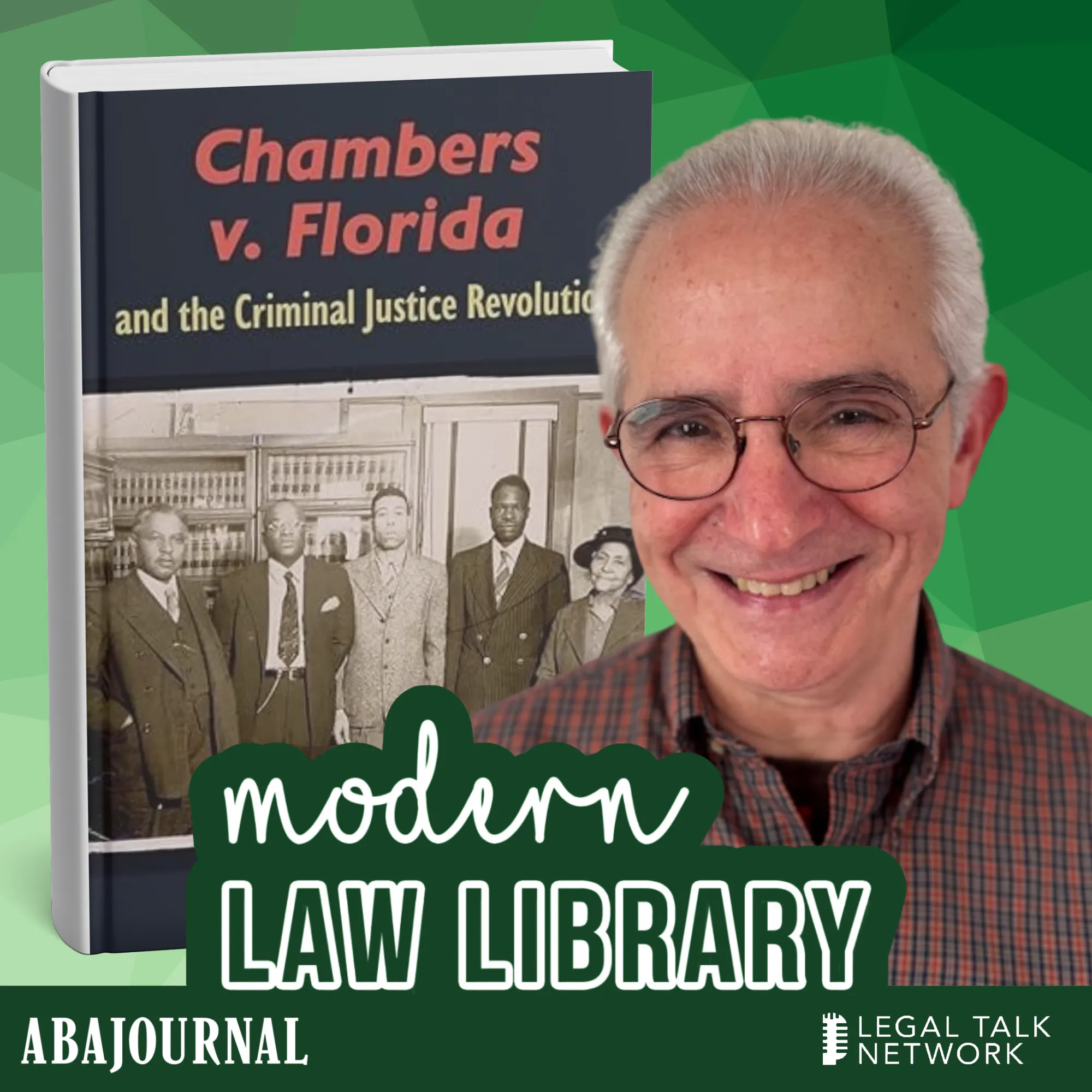
How a Florida murder and an unlikely justice created a ‘criminal procedure revolution’ episode artwork

EPISODE · Jun 4, 2025 · 41 MIN

How a Florida murder and an unlikely justice created a ‘criminal procedure revolution’

from Legal Talk Network - Law News and Legal Topics · host Legal Talk Network

In Chambers v. Florida and the Criminal Justice Revolution, historian and former ABA Journal reporter Richard Brust lifts the veil on a case that laid the groundwork for some much more famous civil rights victories. On May 13, 1933, shopkeeper Robert Darsey was robbed and murdered in Pompano, Florida. Four Black migrant farm workers—Izell Chambers, Walter Woodard, Jack Williamson and Charlie Davis—were seized and pressured by the local sheriff into confessing to the murder under threat of lynching. Their appeals eventually reached the U.S. Supreme Court through the efforts of some dedicated African American attorneys, and succeeded in 1940. In Justice Hugo Black’s written opinion for the majority, the justice drew parallels between the Jim Crow regime in the American South and the rise of authoritarianism and fascism in Europe. Chambers v. Florida forbade the use of psychological coercion—such as threatening to turn prisoners over to lynch mobs—as well as physical abuse to extract confessions. The court’s ruling declared that the protections of the Bill of Rights extended into states’ criminal cases, and began to change the kinds of cases that made it onto the Supreme Court docket.Brust sees it as part of a trio of cases, which includes Moore v. Dempsey (1923) and Brown v. Mississippi (1936), that led to a “criminal procedure revolution,” he tells the ABA Journal’s Lee Rawles. In this episode of The Modern Law Library, Brust discusses the lawyers who worked on the case, most prominently Simuel D. McGill, a Black attorney in Jacksonville. He delves into the generational differences between the Floridian defense lawyers and the attorneys of the NAACP’s Legal Defense Fund who would go on to win key civil rights battles. He explains why Justice Black would have been considered an unlikely author for this opinion. And he shares what he could discover about the fates of Chambers, Woodard, Williamson and Davis after the trial. Learn more about your ad choices. Visit megaphone.fm/adchoices

In Chambers v. Florida and the Criminal Justice Revolution, historian and former ABA Journal reporter Richard Brust lifts the veil on a case that laid the groundwork for some much more famous civil rights victories. On May 13, 1933, shopkeeper Robert Darsey was robbed and murdered in Pompano, Florida. Four Black migrant farm workers—Izell Chambers, Walter Woodard, Jack Williamson and Charlie Davis—were seized and pressured by the local sheriff into confessing to the murder under threat of lynching. Their appeals eventually reached the U.S. Supreme Court through the efforts of some dedicated African American attorneys, and succeeded in 1940. In Justice Hugo Black’s written opinion for the majority, the justice drew parallels between the Jim Crow regime in the American South and the rise of authoritarianism and fascism in Europe. Chambers v. Florida forbade the use of psychological coercion—such as threatening to turn prisoners over to lynch mobs—as well as physical abuse to extract confessions. The court’s ruling declared that the protections of the Bill of Rights extended into states’ criminal cases, and began to change the kinds of cases that made it onto the Supreme Court docket.Brust sees it as part of a trio of cases, which includes Moore v. Dempsey (1923) and Brown v. Mississippi (1936), that led to a “criminal procedure revolution,” he tells the ABA Journal’s Lee Rawles. In this episode of The Modern Law Library, Brust discusses the lawyers who worked on the case, most prominently Simuel D. McGill, a Black attorney in Jacksonville. He delves into the generational differences between the Floridian defense lawyers and the attorneys of the NAACP’s Legal Defense Fund who would go on to win key civil rights battles. He explains why Justice Black would have been considered an unlikely author for this opinion. And he shares what he could discover about the fates of Chambers, Woodard, Williamson and Davis after the trial. Learn more about your ad choices. Visit megaphone.fm/adchoices

NOW PLAYING

How a Florida murder and an unlikely justice created a ‘criminal procedure revolution’

0:00 41:54

No transcript for this episode yet

We transcribe on demand. Request one and we'll notify you when it's ready — usually under 10 minutes.

MG Show MG Show The MG Show, hosted by Jeffrey Pedersen and Shannon Townsend, is a leading alternative media platform dedicated to uncovering the truth behind today’s most pressing political issues. Launched in 2019, the show has grown exponentially, offering unfiltered insights, comprehensive research, and real-time analysis. With a commitment to independent journalism and factual integrity, the MG Show empowers its audience with knowledge and encourages active participation in the political discourse. Breaking News Show | eTurboNews Juergen Thomas Steinmetz News is relevant to the global travel and tourism industry, human rights and global issues.Breaking news when it happens and only from the source. Eat to Live Jenna Fuhrman, Dr. Fuhrman Our health is our most precious gift and smart nutrition can change your life. Each month, join Dr. Fuhrman and his daughter, Jenna Fuhrman as they discuss important topics in the world of nutrition. Eat to Live will change the way you eat and think about food. French Your Way Jessica: Native French teacher founder of French Your Way Boost your French listening skills and test your comprehension with this one of a kind series of podcasts. Get the chance to listen to a real conversation between native speakers talking at normal speed AND customise your learning experience through carefully designed sets of questions (2 levels of difficulty) available for download at www.frenchvoicespodcast.com. All interviews also come with the transcript. French teacher Jessica interviews native speakers of French from around the world who share a bit of their life and passion. Where else would you meet in one same place a French yoga teacher based in Melbourne, a soap manufacturer from Provence, or a couple cycling around the world?

Frequently Asked Questions

How long is this episode of Legal Talk Network - Law News and Legal Topics?

This episode is 41 minutes long.

When was this Legal Talk Network - Law News and Legal Topics episode published?

This episode was published on June 4, 2025.

What is this episode about?

In Chambers v. Florida and the Criminal Justice Revolution, historian and former ABA Journal reporter Richard Brust lifts the veil on a case that laid the groundwork for some much more famous civil rights victories. On May 13, 1933, shopkeeper...

Can I download this Legal Talk Network - Law News and Legal Topics episode?

Yes, you can download this episode by clicking the download button on the episode player, or subscribe to the podcast in your preferred podcast app for automatic downloads.
URL copied to clipboard!