
EPISODE · Apr 30, 2026 · 3 MIN
How A Room Redesigns A New $9T Economy
from The Food Is Health Revolution · host Michaela Elliott
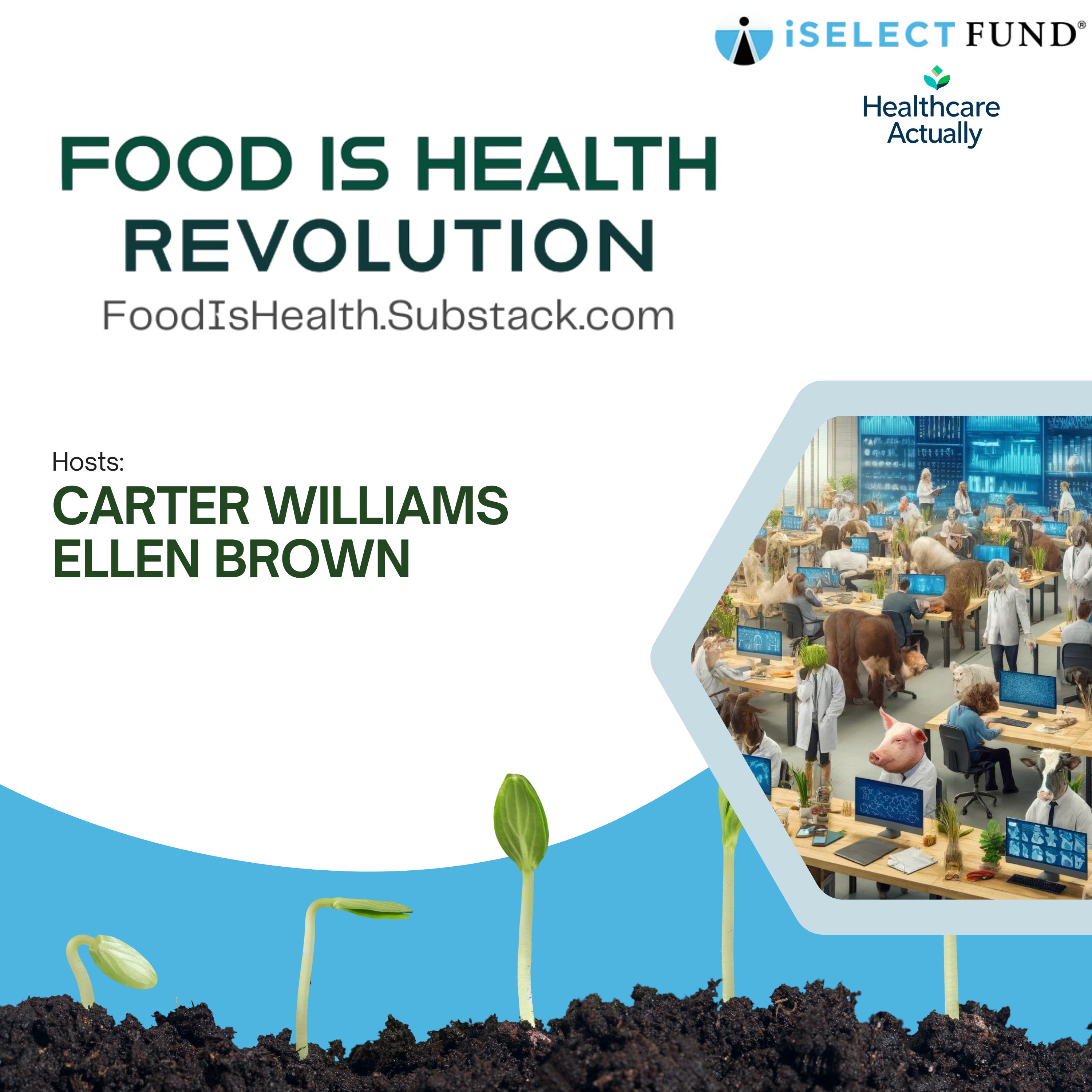
By 2050, it should be hard to make a bad decision in the grocery store. That’s the goal. What happened in this room was a step toward making it real.This week at Food Health LIVE, our Innovation Lab brought together over 50 cross-sector industry leaders representing the full chain of soil to cell. Farmers, seed geneticists, food banks, clinicians, ingredients companies, advanced diagnostics, CPG founders, health insurers, community food organizers, measurement technologists and many others, and asked them to do something rooms like this don’t attempt often. We asked them to build the system in real time, with real people, in the room. We threaded the needle from soil to cell and here are a few things I took away.P.s. keep an eye out for a soon to come list of exclusive discounts from the companies delivering System C for paid subscribers.The Pieces Exist. The Loop Doesn’t.One of the most important things that happened in that room wasn’t just a single conversation, it was the accumulation of all of them.At the end of the 3 hours, you could trace a line from the farmer who knows exactly how his growing practices affect the glucosinolate content of his broccoli, through the ingredient company that’s spent a decade developing a fiber profile that heals the gut, through the CPG brand whose products show a 21-point cholesterol reduction in clinical data, through the insurer who’s already covering food as medicine and showing a 3-to-1 return on investment, through the technologist who’s figured out how to measure metabolic health in under two minutes simply using an ultrasound and another innovator who is doing the same via cellphone.Every node in that chain was in the room but the loop doesn’t close here. Not yet.The Market Signal Is the Whole GamePeople miss this when they assume the problem is supply. Better seeds, cleaner ingredients, more regenerative farms. Yes. All of that matters but supply is not the real constraint.Consumer demand is the trigger that matters.Right now, food is priced on features – grams of fiber, sugar content, organic certification – not on outcomes. A farmer who grows broccoli with twice the glucosinolate content gets paid the same as the farmer who doesn’t, because no one downstream is asking for it. In large part because consumers can get that information. A CPG company that can demonstrate that its product reduces inflammation in a measurable, personalized way can’t communicate that without going through a pharmaceutical-grade FDA claims process it can’t afford. Yet the technology to measure human outcomes at the individual level is collapsing in cost with $80 blood panels, CGMs on instant order, and AI-powered metabolic imaging, but that data isn’t connected to the supply chain. Not yet.When a consumer can measure what a food does to their body, share it, and have that data feed backward through retail into CPG into ingredient sourcing into seed genetics, that’s the market signal that rewrites the economics of the entire food system. That’s the flywheel. The diagnostic infrastructure is the crank.The room saw this unfold over the course of the morning. The question then became how quickly and with what combination of existing measurement tools can this infrastructure to deliver the missing that outcome layer.Reimbursement Is Not the SolutionA lot of the work happening in food as medicine right now is focused on reimbursement. Getting medically tailored meals covered. Getting produce prescriptions into Medicaid. Getting food written into value-based care contracts. All of it matters and is important. All of that cost burden is downstream once disease is already established. It operates in System B (as B+). We need to expand this upstream so it isn’t reliant of downstream funding which is fundamental to System C.Downstream reimbursement as an intervention is System B+. It’s the best version of the current system and we should pursue it, because it funds the transition to System C and proves the outcomes. But, reimbursement still sits on top of a broken economic architecture. You haven’t changed the system when you’ve convinced it to pay for a workaround.Ellen pushed on this hard in the room. She asked one of the medically tailored meal founders point-blank, “if you could wave a magic wand, would you want to be upstream of all this where people never develop the disease that requires your intervention in the first place?” He said yes. So did almost everyone else when pressed.The goal is food that is so affordable, accessible, and nutritionally dense that chronic disease becomes rare. Not simply managed. Rare. That’s the engineering challenge and reimbursement is a funding mechanism on the way there, not the place you’re trying to get to.This distinction matters because it determines where you invest your energy. System B+ is about negotiating better terms inside a broken system. But when you add System C as the long game you can build it using System B to fund it.The Access Problem Is Built Into the Architecture, or It’s Not RealA food bank director stood up and said what is often avoided – if your solution requires people to be able to afford to shop differently, it’s not a new system, it’s a premium tier.And she was right.Ellen shared a story about a woman who graduated from a Food Is Medicine program. In 8 months she learned to cook – she and her son made eggplant together – and her relationship with food had been transformed. And then she shared – I’m going to have to go back to eating what I was eating before. I can’t afford anything else. The food bank doesn’t have eggplant.That’s not someone “unwilling to change”. That’s what it looks like when the system is designed from top to bottom for the wrong outcome. The economic model of System C isn’t “healthy food for people who can pay for it.” It’s “fix the cost structure upstream so that nutritionally dense food is the affordable default everywhere – in the grocery store, the food pantry, the hospital cafeteria, and the corner store.”That’s not simply charity, it’s engineering, and a complete system re-design.And it really comes back to outcomes data.AI Is The Reusable Rocket of Healthcare.Ellen made a point that I want to echo here, “AI primary care is effectively free already. For $20 a month you can access something better than most physician consultations for general health questions. The reusable rocket has landed.”What that means for the future design specifically is that the cost of knowledge – personalized, synthesized, acted on – is approaching zero. The “n of one” medicine that used to require a $500 blood panel at minimum, interpreted by a concierge doc charging $1000 to review, is moving towards less than $100.That changes the measurement economics, the clinical workflow, and who can access personalized nutrition guidance. At the same time, it creates a new problem – all that intelligence and information is worthless if it’s not connected to a food supply that can actually respond to it.The knowledge layer and the supply chain layer have to close the loop on each other. AI accelerates the knowledge layer. The supply chain transformation still needs work. And a new system.So What?The food and health system is not going to be reformed from the inside. The organizations embedded in the current state - the food companies, the insurance companies, the hospital systems – are doing exactly what they were designed to do. So much so that Ellen and Carter have named their first book “Nobody Did Anything Wrong”. These companies are not villains. They are optimizing for the metrics they were built around. The metrics that produce and monetize chronic disease.What will actually change the system is a parallel architecture that makes the old one irrelevant. That’s what System C is. Yesterday you could see all the pieces of it – the soil science, the measurement technology, the clinical proof points, the reimbursement innovation, the community infrastructure, the AI layer – come together.The reusable rocket doesn’t become reusable until launch. System C is doing its final pre-launch checklist. Not a paid subscriber yet? Get on it, new discount benefits hitting soon. You can take advantage of the special subscription opportunity for those who were physically in the room until Sunday - $99 for a full year (a discount of over 40% off!) for the first 20 (only 10 slots are left). Use this LINK and if the discount price doesn’t show, enter the url foodishealth.substack.com/first20. Get full access to Food is Health at foodishealth.substack.com/subscribe
Embed this episode
Ready to play
How A Room Redesigns A New $9T Economy
No transcript for this episode yet
Similar Episodes
No similar episodes found.
Similar Podcasts
No similar podcasts found.