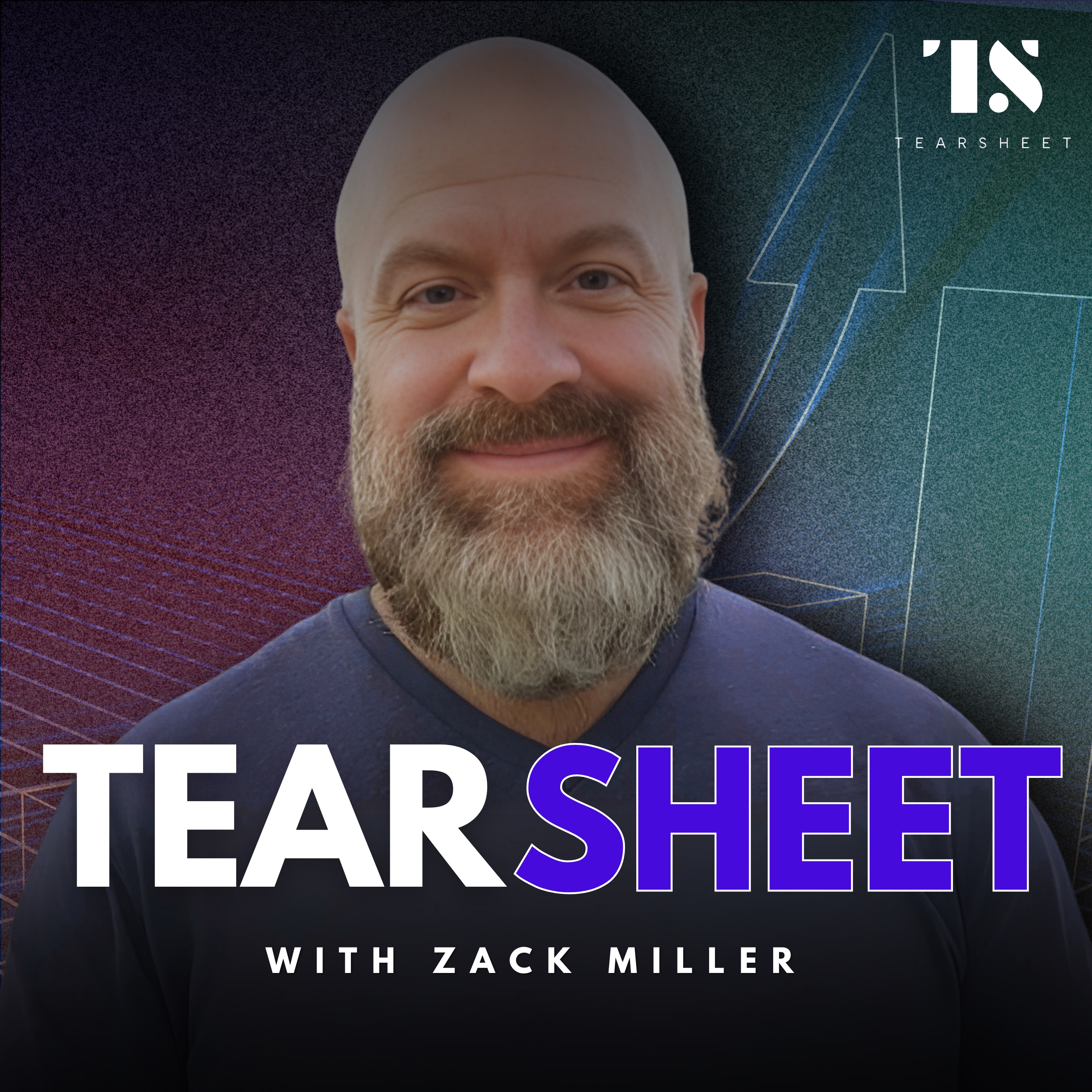
How Block built a $200 billion credit operation by seeing customers traditional lenders can't episode artwork

EPISODE · Apr 22, 2026 · 18 MIN

How Block built a $200 billion credit operation by seeing customers traditional lenders can't

from Tearsheet Podcast: Exploring Financial Services Together · host Tearsheet Studios

The credit system in the US was built on a fundamental assumption: that past borrowing behavior predicts future risk. That assumption has left roughly 100 million Americans essentially invisible to lenders — no score, thin file, or a history that doesn't reflect who they actually are financially today. The result is a system that compounds exclusion, requiring debt to unlock debt, and pricing risk so conservatively for anyone outside the norm that the cost of capital itself becomes a barrier. Juan Hernandez has spent the last decade at Block building lending products for exactly those customers. As head of credit and underwriting, he leads the teams behind Cash App Borrow, Square Loans, and Afterpay — three distinct products serving consumers and small businesses that traditional underwriting models consistently misread or ignore. Block recently crossed $200 billion in credit extended to customers globally. The engine behind that number is a data advantage. By underwriting from first-party signals native to the Cash App and Square ecosystems rather than relying on sparse bureau data, Block has built models that are both more accurate and more inclusive. Hernandez sat down with Tearsheet to talk about how they built a credit operation at that scale, what it takes to serve the underserved responsibly, and where the product suite is heading next.

The credit system in the US was built on a fundamental assumption: that past borrowing behavior predicts future risk. That assumption has left roughly 100 million Americans essentially invisible to lenders — no score, thin file, or a history that doesn't reflect who they actually are financially today. The result is a system that compounds exclusion, requiring debt to unlock debt, and pricing risk so conservatively for anyone outside the norm that the cost of capital itself becomes a barrier. Juan Hernandez has spent the last decade at Block building lending products for exactly those customers. As head of credit and underwriting, he leads the teams behind Cash App Borrow, Square Loans, and Afterpay — three distinct products serving consumers and small businesses that traditional underwriting models consistently misread or ignore. Block recently crossed $200 billion in credit extended to customers globally. The engine behind that number is a data advantage. By underwriting from first-party signals native to the Cash App and Square ecosystems rather than relying on sparse bureau data, Block has built models that are both more accurate and more inclusive. Hernandez sat down with Tearsheet to talk about how they built a credit operation at that scale, what it takes to serve the underserved responsibly, and where the product suite is heading next.

NOW PLAYING

How Block built a $200 billion credit operation by seeing customers traditional lenders can't

0:00 18:30

No transcript for this episode yet

We transcribe on demand. Request one and we'll notify you when it's ready — usually under 10 minutes.

That Hoarder: Overcome Compulsive Hoarding That Hoarder Hoarding disorder is stigmatised and people who hoard feel vast amounts of shame. This podcast began life as an audio diary, an anonymous outlet for somebody with this weird condition. That Hoarder speaks about her experiences living with compulsive hoarding, she interviews therapists, academics, researchers, children of hoarders, professional organisers and influencers, and she shares insight and tips for others with the problem. Listened to by people who hoard as well as those who love them and those who work with them, Overcome Compulsive Hoarding with That Hoarder aims to shatter the stigma, share the truth and speak openly and honestly to improve lives. The Small Business Startup School – Business Notes | Financial Literacy | Retail Psychology – For Professionals & Entrepreneurs The Small Business Startup School Inc. Starting or buying a small business? While personal circumstances may vary, business patterns remain timeless. On The Small Business Startup School, we explore strategies, insights, and practical solutions to help entrepreneurs confidently navigate their journey.Hosted by Ola Williams—a retail entrepreneur, fintech founder, and financial coach with over two decades of experience—this podcast marries financial awareness and retail psychology with optimism to deliver actionable takeaways.Join us to learn, grow, and connect as we uncover the keys to business success.Let’s continue to learn together and be encouraged to keep on connecting! DIOSA. Carolina Sanper This podcast is a sacred space created by Carolina Sanper where you connect with your inner wisdom and embody your magnetic feminine power.It is the realization that the mystical realm is where you plant the seeds of your desired reality.It is a portal to your true essence: awareness, presence, and receiving with ease. Welcome home, DIOSA. 🖤 XXX Tech by SOVRYN Dr. Brian Sovryn The crossroads between technology, sensuality, and metaphysics - and the longest running anarchist podcast in the world! Brought to you by Dr. Brian Sovryn.

Frequently Asked Questions

How long is this episode of Tearsheet Podcast: Exploring Financial Services Together?

This episode is 18 minutes long.

When was this Tearsheet Podcast: Exploring Financial Services Together episode published?

This episode was published on April 22, 2026.

What is this episode about?

The credit system in the US was built on a fundamental assumption: that past borrowing behavior predicts future risk. That assumption has left roughly 100 million Americans essentially invisible to lenders — no score, thin file, or a history that...

Can I download this Tearsheet Podcast: Exploring Financial Services Together episode?

Yes, you can download this episode by clicking the download button on the episode player, or subscribe to the podcast in your preferred podcast app for automatic downloads.
URL copied to clipboard!