How Border Collies Work with Ohio Geese Control
from From A Dog's Eye View Hosted by Susan Coleman
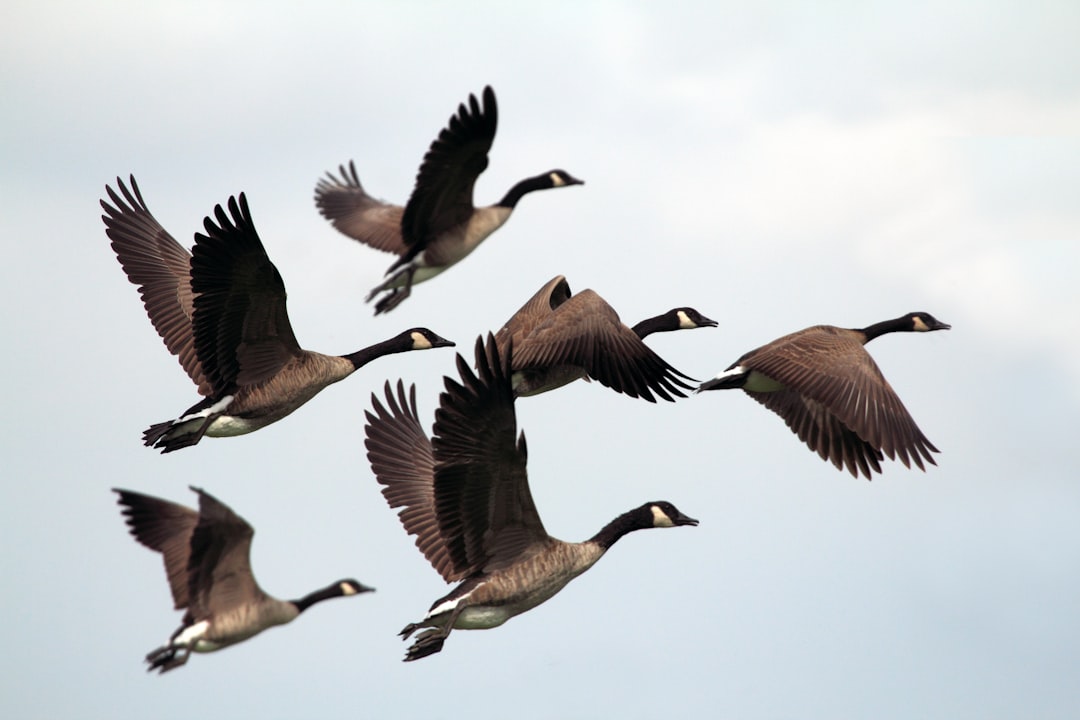
Geese are beautiful birds with fascinating behavioral patterns that are interesting to observe. Their black heads and necks, along with their distinctive white-striped cheeks, make them especially striking to look at. I always stop to watch them up above when I see them in their infamous V-shaped flight pattern. However, they can be a nuisance to communities and businesses when they begin settling in large groups. In particular, the goose droppings are annoying to anyone walking on grass, sidewalks, or parking lots where they have been. Not only do the droppings carry diseases and present walking hazards, they can cause sickness in dogs if ingested. We all know how tempting animal feces are to dogs! Geese can also become aggressive while protecting their nests. They will hiss, pump their heads up and down, and charge at whatever is threatening their territory. My guest, Marci Hower, joined her husband, Jeff, in managing geese populations, after Jeff came up with the idea of using a resident Border Collie at the golf course where he worked, to scare away the geese that had settled there. Since he had success at the golf course, he started taking the dog other places and inquiring if he and his dog could chase away their resident geese for free. Jeff started exploring whether a business plan of using well trained dogs to chase geese away was a viable way to make a living. After all, this was a new concept in Ohio. It took about three years to establish a fully functional business. Finally, Ohio Geese Control (OGC) was formed in 2004, with the headquarters located in Cleveland. Initially, Jeff used the dog from the golf course with a binding agreement that the dog would live with Marci and Jeff. It is very important that the dogs used for this type of work live and bond with their handlers. When Jeff was ready to start the business, he purchased the dog, named Nick, from the golf course. Soon after that, they started adding to their pack. They learned that not all dogs are suitable for this type of work. The ones that were, became very effective in managing geese populations. Marci and Jeff have grown their company to servicing not only Cleveland, but also Akron, Canton, Toledo, Columbus, Cincinnati, and Dayton. There are currently 100 employees and 30 working dogs. When Ohio Geese Control is awarded with a contract in any of these areas, they search for the right dog in that area that can be accustomed to working with geese and can become a good family dog too. Sometimes, Marci and Jeff find dogs in nearby rescue agencies or farms. If they assess that the dog will fit this criteria, they will temporarily foster the dog until the employee has been trained and is ready to take on the dog. Ohio Geese Control exclusively uses Border Collies. A Border Collie’s work ethic, instinctual drive to herd but not hurt animals or birds, plus their intelligence, make them an ideal tool to use to effectively and humanely chase geese away. They also are structurally built to intimidate whatever they are herding. They stoop down low and possess a wolf-like glare that no other dog has. Geese instinctively view the dogs as predators causing them to want to fly away. When Marci and Jeff assess a dog, an important instinct to search for is the right intensity of prey drive. To review a subject I have mentioned in previous podcasts, prey drive is a dog’s instinct to track, chase and capture moving objects or animals. Stalking, herding, and chasing animals (in this case, geese) away are optimal instincts in Border Collies to capitalize on. Sometimes, farmers are willing to relinquish their Border Collies who aren’t intense enough to herd farm animals. These types of dogs can be perfect for geese control. They are more apt to not be aggressive towards the geese. Marci and Jeff do not want the dog to catch, kill, or consume the geese. A top priority of Ohio Geese Control is to keep the geese, dog, and members of the community they are servicing very safe. This is to be done with the utmost care to uphold their value as a company as a humane, safe and effective way to manage geese populations. Ohio Geese Control’s mission is to create a healthier, happier environment for everybody who uses the outdoors. They want you to enjoy the outdoors and to embrace nature. All animals, including the geese, have every right to be a part of that experience. OGC employees must respect the animals and birds whose territory they are entering by avoiding actions that threaten or harm them. However, geese can become a nuisance when they are aggressively protecting their nests and when their droppings are in our paths as we are out and about in nature. One single goose can produce a pound and a half of dropping per day! OGC may be successful in employing one of their strategies, such as their dogs, to successfully deter the geese from settling and staying in a particular area. They also may use a combination of strategies. Several ways to humanely and effectively chase geese away are: * using Border Collies * building fencing around the property where geese have settled * laying down wire lines over the water source * placing decoys such as fake coyotes on the property * using lights and green laser pointers recognized by the geese as a threat - especially useful when working with geese that have settled on rooftops of businesses. * operating remote controlled boats on the water * using EPA approved geese repellents made with food grade ingredients In order to be successful at dissuading geese from settling amongst inconvenient places, it is necessary to know their behavior, reproductive cycle and migration patterns. Some fun facts about Canada geese are: * They mate for life * A group of geese is called a gaggle * They molt, or lose their flight feathers, typically during the month of July and cannot fly during that time * They migrate to warmer climates in the fall and return to their place of birth in the spring * Resident geese stay on the property and do not migrate * Their lifespan is approximately 20 years * They lay approximately 2-8 eggs over a period of several days each spring with an incubation period of about 26 days OGC must have safety protocols in place when working with geese. Canada geese like other birds in the wild, can carry diseases through their droppings. Salmonella, E. coli, Listeria, and the bird flu can be contracted by humans and dogs. According to Marci, the bird flu has become more prevalent in recent years. It is transferred from bird to bird through the droppings or saliva. When a large group of geese are together in an area, there is more chance of spreading the bird flu if the flock is exposed. Therefore, using the dogs to disperse the flock is a very effective way to decrease the likelihood of the bird flu settling and spreading to the other geese. After the handler and dog have worked an area, they must sanitize their car, the crates used to transport the dogs and their shoes. They also must rinse the dogs’ pads with soap and water. They recommend having a set of shoes specifically for this work that are left at the front door and then enter their house. The handlers are also instructed to not touch or move an injured or dead bird since they may be suffering from any one of the diseases mentioned. Instead, it is advised to call a wildlife center for further instructions such as Lake Erie Nature & Science Center (440-871-2900) or The Ohio Division of Wildlife Customer Service Center at (1-800-WILDLIFE). An abundance of goose droppings can pollute soccer fields, ponds, and parks. Discourage your dog from eating the feces. If they do ingest enough of the droppings, they can get very sick from the bacteria and parasites in the droppings. If your dog does eat the droppings and starts to b… This is a public episode. If you would like to discuss this with other subscribers or get access to bonus episodes, visit canineconcierge.substack.com
Embed this episode
No transcript yet.