NPR. This is the indicator from Planet Money. I'm Waylon Wong. And I'm Adrian Ma. Remember when the internet was like this?
With America Online, you get instant news and sports, financial updates, online magazines. The year was 1995, and the digital world was this exciting new place, brimming with possibility. Right. Downloading is easy. I can even send an email on the internet.
And email on the internet, Whizbang. Amazing. Mind blown. Fast forward a few decades, and now the internet is like this. This is Muse, a personal AI agent from Meta, built for you and your goals.
AI agent helps you get things done across every part of your life. Meta introduced Muse in September, and millions of Facebook users have downloaded. I'm trying to say for a car. Where can I cut back? I gave Muse read-only access to my bank statements.
And just like that, it built me a dashboard, complete the budget. These days, you're just as likely to run into Muse or another bot on the internet as you are a fellow human. In fact, bots are now outnumbering people online. And this shift has consequences for the economics of the internet. Today on the show, what does an internet without humans look like?
And how does that change the way we access and pay for all the stuff we do online? This week on our first, we're in the final days before the midterm elections. And this is one of the wonderful things about politics, one of the wonderful things about humanity. We have all this data, we have all this information, and nobody really knows what's going to happen. We're going to follow it day by day, through Election Day and beyond.
And you can listen to our first every morning on the NPR app or wherever you get your podcasts. Midlife brings a lot of changes. Your turn without a snobbery is a new podcast to help you navigate the twists and turns. From health and relationships to creativity and purpose, we can help steer your next chapter with your turn without a snobbery. Find it on the NPR app or wherever you get your podcasts.
Support comes from NPR sponsor AARP. This week on Wait, Wait, Wait, Don't Tell Me, we talk with fashion designer Daniel Vassavek about why he is in charge of renovating his parents' house. I don't have an architecture degree. I'm not an interior designer, but I'm gay. Well, there you are.
So hard. Can't be. Don't miss our full conversation of the rest of our games. Listen to the Wait, Wait, Don't Tell Me podcast and the NPR app or wherever you get your podcasts. Instead of scrolling mindlessly, engage mindfully with the NPR app.
With a mix of on-demand news, stories from the station and your favorite podcast, you can relax without shutting off your brain. Download the NPR app today. Erin Hussein has been online since the 90s. She helped build a national COVID tracker during the pandemic. And these days, she's doing projects related to the tech protocol that powers the social network blue sky.
I am a writer and researcher who focuses on the social internet and what it might be doing to us. Ooh, spooky. Is this your Halloween episode? Because it could be. Yeah, we're in spooky season, so bring it on.
Erin has fond memories of the early social internet. Like the first few years of Twitter, Erin connected with people that became real friends. Lately, though, the internet has felt more impersonal. Like when Erin recently hired an estate lawyer, she suspected that he used an AI chatbot. He fed the estate information into...
No. I don't know. A cloud, a chat GBT, and it started emailing me in this very inhuman way, but with the details of my family member situation. That can't be right. Did you keep working with this attorney?
Or were you like, I need a different person? I did not, but I did receive after my family member passed a chat GBT-condole-in-se-mail. Maybe you've been on the receiving end of a chatbot written email. Maybe you've asked a large language model to write and send emails on your behalf, or to organize your household calendar or research vacation plans. The bots are busy.
Cloudflare is an internet infrastructure company, and it says that bots reach a historic milestone this year. For the first time, more than half of the traffic on the internet is non-human. Anxiety about this tipping point has been simmering since at least the 2010s. People in online forums were expressing concern even then that bot-generated content was taking over the internet, and that artificial interactions were replacing human ones. These worries coalesced into a name.
Dead internet theory. That does sound spooky. So basically, the dead internet, it's just bots talking to other bots? Yeah, so it's like not only our social media posts generated by bots, but then all of the accounts commenting and engaging with that post are also bots. Now, Erin doesn't fully subscribe to Dead internet theory, but she does sometimes get a creepy feeling when she watches YouTube.
She sees human influencers who are reading what seem like AI-generated scripts, and everything about their videos, from the length to the thumbnail image, is designed to appeal to algorithms. To Erin, these influencers represent a kind of AI-human hybrid that she finds unsettling, and we're already seeing influencers who are fully AI-generated. We do live in a moment where it is getting harder to tell. The artificial from the human, from the combination AI human, we actually find those things far more uncanny. Is this the reason why every YouTube thumbnail has someone whose eyes are just bugging out and their mouth is a game?
I think our thumbnails look like that. It's a game. It's always, here's some facts about interest rates, and it's me making this muppet face. The rise of algorithmically tuned videos and social media posts is just one example of how the internet is changing dramatically. There are also potential consequences for shopping and banking, and the whole business model of the internet.
Avani Woldani is a computer scientist and the former head of AI research at CloudFlare, the Internet Infrastructure Company. She still consults with them. Avani points out that we use agents more than we might think. Like when we do a Google search, we're sending out bots to get the results for us. And with both humans and bots mingling online, it's not easy to tell which is which.
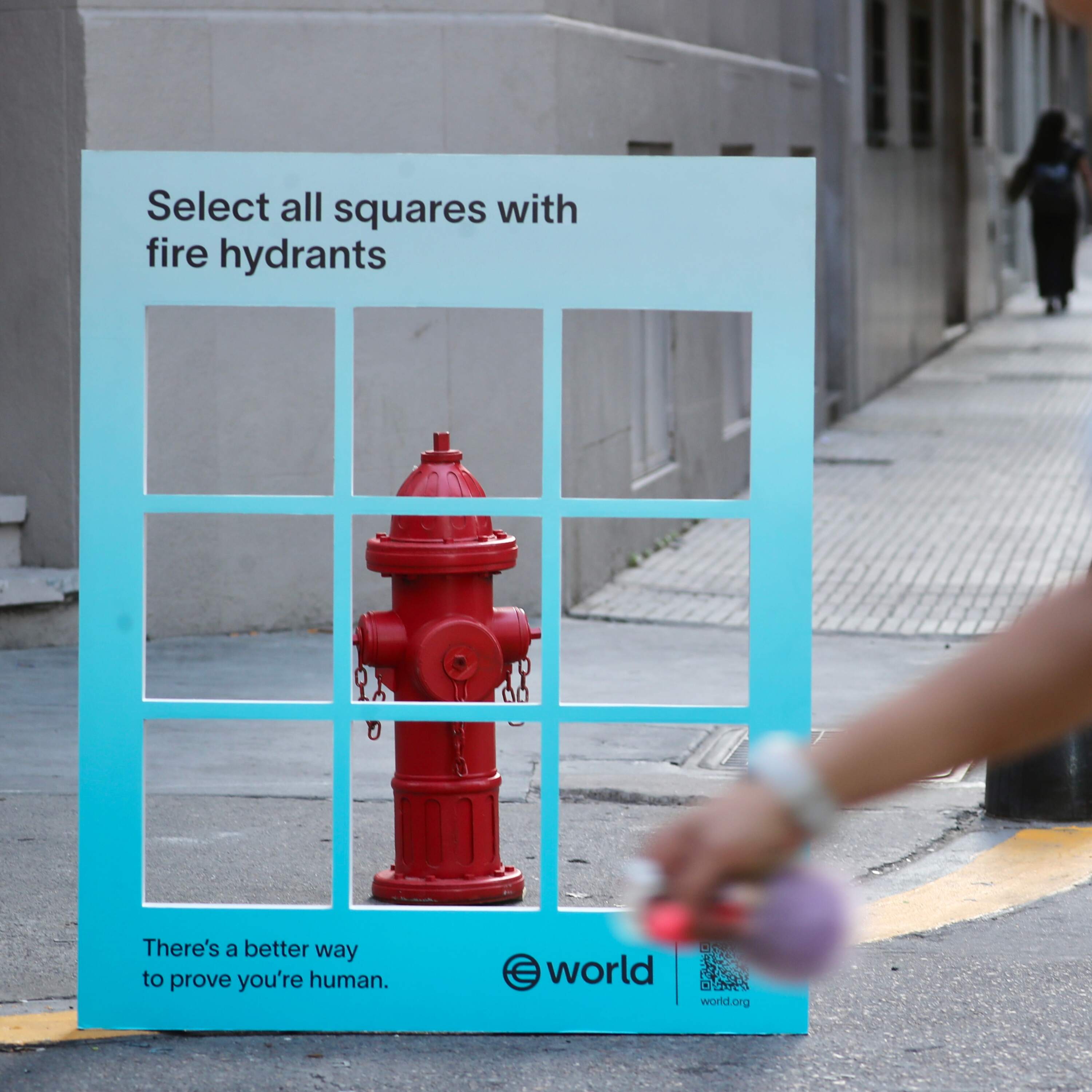
It's a constant struggle for, I think, across the industry to understand what bot traffic and the human traffic is. And of course everybody sees this as captions, right? When you are verified that you're a human, that's why. Are you going to capture this, Adrian? I love captions.
You love captions. Yeah, I... They're a lot easier than a crossword. Well, it's important to distinguish between humans and bots, because they use the internet differently. Avani's research has shown that AI web crawlers, for example, look at a broader range of content than humans.
They might access musty web pages that people rarely come across, and they might scrape the same stuff over and over. Earlier versions of web crawlers would surface information in search engine results. The person doing that search would then click through the original source. But today's AI-powered web crawlers, while they send the size of information to generate summaries, there's no need to click through to another website. Yeah, and the shift in behavior has led to a decline in website traffic for online news publishers, including NPR.
That is right. I actually did an episode about the zero-click internet earlier this year. Okay, and then just as an experiment, Adrian, I went to Google and I typed in the indicator NPR's zero-click internet. And then there was this Google AI summary, it explained what zero-click internet is, and then it's a quote, NPR's the indicator from Planet Money covered this trend on July 14th, 2026, and an episode titled, Can the Internet Survive AI Summaries? And then it's summarized the episode.
Wow, I guess people don't even have to listen to our show anymore. Right, and it's not just that online publishers are losing visitors. If people aren't going past an AI summary, they're not seeing the ads on a website. Plus, bots don't interact with ads the same way humans do. So any website that relies on ad revenue is losing money.
This is upending the basic business model of the internet. How many says think about internet infrastructure like a system of roads? Humans are like cars, and bots are like big rigs. It used to be that the roads were supported by billboards or tourist routes. And now the trucks don't care about tourist routes, and so if it's all trucks, you've got to start charging them for the roads, or find some other way to build out those roads, maybe charge tolls for the cars, this translates to license rations. And so there are many other models out there that people are looking at, like, paper use,
paper crawl, which is something that cloudless has talked about. We are still in the early stages of learning how agents behave at a mass scale. For example, as more bots get dispatched to do online shopping, should retailer websites be designed to give AI agents the information they need to make decisions, or to appeal to human shoppers? Amazon, by the way, has banned muse from shopping on behalf of customers, Amazon cited security and privacy risks. Seems valid enough? Sure, but another reason may be that, as we mentioned before, bots don't click on ads or sponsored items like people do.
So that's what's happening with retail. Then there's banking, one investment firm warned of what it called an agent bank run. Basically, bots pulling client deposits out of accounts in mass in search of higher interest rates. J.P. Morgan, Bank of America, and others have already restricted agents from accessing client accounts citing security reasons.
We asked Avani if there's a future where there's two different internets, one for bots and one for humans. She told us she doesn't see that as a sustainable way forward. It takes a lot of infrastructure to keep the internet going. If this happens, it'll be a branch of the human internet and a lot of non-human internet. It's not just going to be one human internet.
And it's not going to be connected in the same way that we have now. We should start building out these very, like, an AOL type system. It might be a sense of. So then we had to find somebody to make sure that it's accessible to people in low income streams. Still, Avani says she's a techno optimist. She believes we'll come up with a way to have bots and humans coexist online.
This episode was produced by Julia Richie with Engineering by OmniKwan, with Back Checked by Sierra Plata's. Kicking Ken is our editor and the indicator is a production of NPR. This election season led to NPR Politics's podcast Save Your Time and Your Sanity. It will help you understand key races which polls you can safely ignore and what might happen if power shifts in Congress. Our short daily episodes come out every afternoon so you can spend less time scrolling through each chaotic news cycle.
Make NPR Politics your hub for midterm election coverage, follow our podcast on the NPR app or wherever you get your podcasts. American journalist Austin Tice vanished in Syria over a decade ago. For years we've been searching for him and now we finally have some answers. This is the person that Austin was in. Oh my god. We found Austin's file.
Listen to Where Is Austin Tice from NPR's Embedded and BBC Radio 4 on the NPR app or wherever you get your podcasts.