How BTS's arrival in Mexico became a national occasion episode artwork

EPISODE · May 8, 2026 · 4 MIN

How BTS's arrival in Mexico became a national occasion

from Korea JoongAng Daily - Daily News from Korea · host SHIN HA-NEE

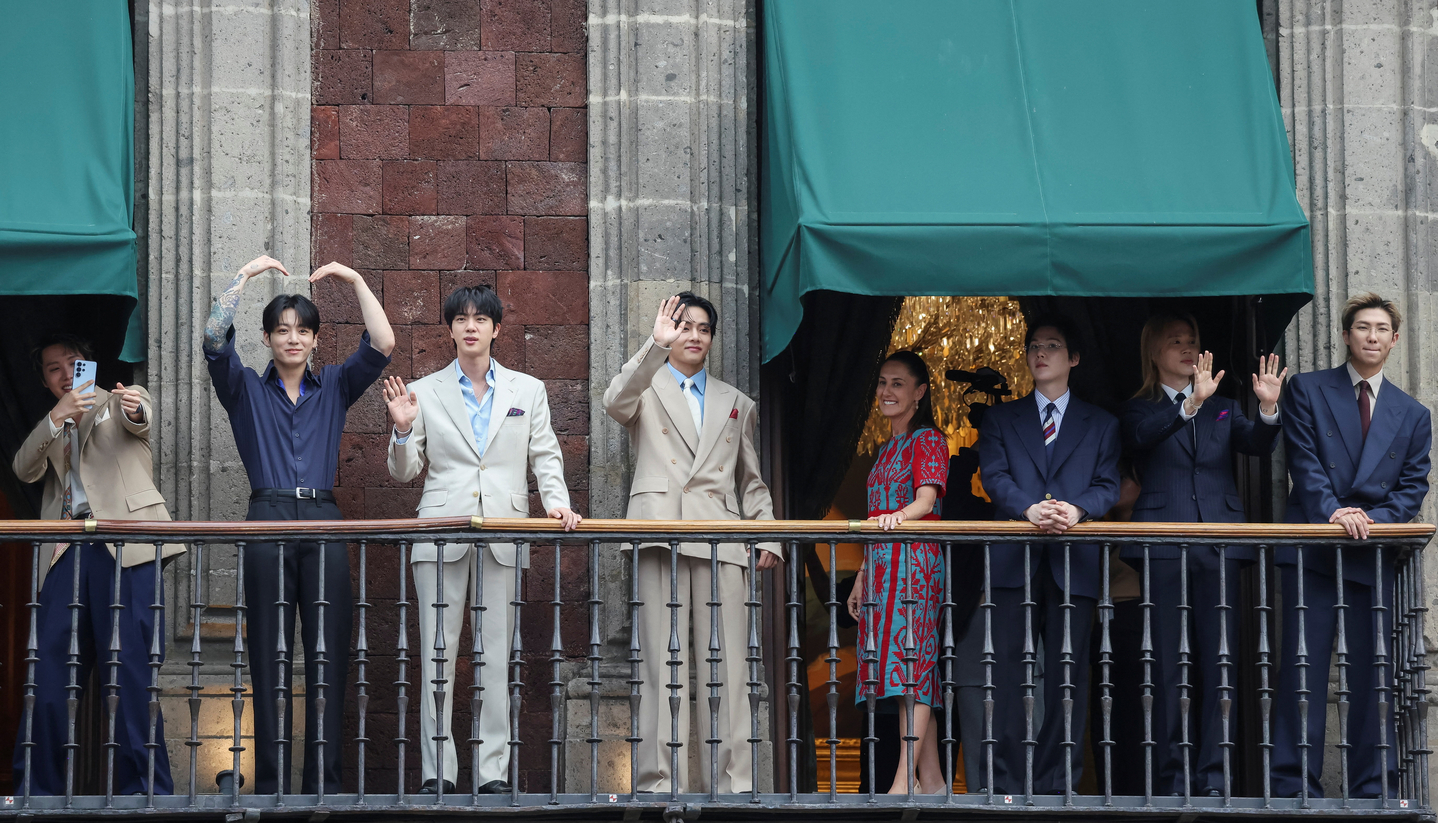
This article is by Shin Ha-nee and read by an artificial voice. BTS's arrival in Mexico looked more like a state occasion than a routine tour stop. The septet stood alongside Mexico's President Claudia Sheinbaum on the balcony of the National Palace in Mexico City on Wednesday — a day before its first concert in the country as part of its "Arirang" world tour — and greeted some 50,000 fans who had gathered below. Mexico has long been home to one of BTS's strongest markets outside Asia and North America, as well as a general powerhouse for K-pop's spread and consumption across Latin America, and the group's popularity in the country was reflected in the overwhelming crowd. In fact, all three shows at Estadio GNP Seguros — the second and third taking place on Saturday and Sunday — sold out almost immediately, prompting Sheinbaum to ask Korean President Lee Jae Myung if additional dates in the country could be arranged. Other data related to Mexico's relationship with BTS demonstrates why the band's arrival in Mexico City took on the scale of a national event. Mexico City was the city that listened to BTS the most on Spotify during March — the month that the group returned from a nearly 4-year hiatus — with 714,212 listeners, followed by Jakarta, Indonesia, and São Paulo, Brazil, according to the local outlet LatiNation. BTS drew around 37 million monthly listeners worldwide during the period. The Mexico City Chamber of Commerce, Services and Tourism estimated that the shows at Estadio GNP Seguros would generate 1.86 billion pesos ($107.6 million) in economic activity, including ticket sales and spending on accommodations, food and services. "BTS World Tour 'Arirang' in Goyang: Live Viewing" concert film also generated about 48.1 million pesos at the local box office. Such figures point to a market in which BTS is not simply an imported pop act but a major cultural and economic force, one large enough to draw presidential attention. What, then, made a Korean boy band from half a world away resonate so powerfully in Mexico? For Mitzy Minerva, a devoted BTS fan from Mexico, the answer lies in communication. "The connection between [BTS] and its fans is different [from that of other musicians]," she said when asked what made BTS special for her. "For example, one of my favorite artists is [British singer] Robbie Williams, but he wouldn't communicate with fans [as BTS does] through Weverse." Weverse is a K-pop fan community platform. Her comment points to a quality that sets K-pop acts apart from their Western counterparts. Beyond its polished production for both its music and performances, K-pop is built around a sense of community and intimacy, encouraging people to be not merely fans but active participants in the artists' journey. In Latin America, the appeal has been amplified by highly active fan communities — which have played a central role in promoting K-pop and making it more accessible through translations, dance covers, fan-made content and streaming campaigns — led by the comparatively large and social media-savvy youth populations in Mexico and the broader Latin America region . According to Statista data published in December last year, Mexico had nearly 90 million social media users, and the percentage of the population actively using social media reached nearly 84 percent, making it one of the world's largest markets for social media platforms. The country also has one of the region's longest histories of exposure to Korean content, beginning with films and dramas in the 1990s, according to Lim Su-jin, a professor in the Department of Spanish Language and Latin American Studies at Daegu Catholic University. BTS, however, helped change how K-pop and Korea as a whole are perceived in Mexico, according to Lim. "K-pop had been popular even before BTS, but it wasn't as widely loved across different demographics as it is now," she said. "K-pop, once considered a minor subculture, has helped change perceptions not ...

This article is by Shin Ha-nee and read by an artificial voice. BTS's arrival in Mexico looked more like a state occasion than a routine tour stop. The septet stood alongside Mexico's President Claudia Sheinbaum on the balcony of the National Palace in Mexico City on Wednesday — a day before its first concert in the country as part of its "Arirang" world tour — and greeted some 50,000 fans who had gathered below. Mexico has long been home to one of BTS's strongest markets outside Asia and North America, as well as a general powerhouse for K-pop's spread and consumption across Latin America, and the group's popularity in the country was reflected in the overwhelming crowd. In fact, all three shows at Estadio GNP Seguros — the second and third taking place on Saturday and Sunday — sold out almost immediately, prompting Sheinbaum to ask Korean President Lee Jae Myung if additional dates in the country could be arranged. Other data related to Mexico's relationship with BTS demonstrates why the band's arrival in Mexico City took on the scale of a national event. Mexico City was the city that listened to BTS the most on Spotify during March — the month that the group returned from a nearly 4-year hiatus — with 714,212 listeners, followed by Jakarta, Indonesia, and São Paulo, Brazil, according to the local outlet LatiNation. BTS drew around 37 million monthly listeners worldwide during the period. The Mexico City Chamber of Commerce, Services and Tourism estimated that the shows at Estadio GNP Seguros would generate 1.86 billion pesos ($107.6 million) in economic activity, including ticket sales and spending on accommodations, food and services. "BTS World Tour 'Arirang' in Goyang: Live Viewing" concert film also generated about 48.1 million pesos at the local box office. Such figures point to a market in which BTS is not simply an imported pop act but a major cultural and economic force, one large enough to draw presidential attention. What, then, made a Korean boy band from half a world away resonate so powerfully in Mexico? For Mitzy Minerva, a devoted BTS fan from Mexico, the answer lies in communication. "The connection between [BTS] and its fans is different [from that of other musicians]," she said when asked what made BTS special for her. "For example, one of my favorite artists is [British singer] Robbie Williams, but he wouldn't communicate with fans [as BTS does] through Weverse." Weverse is a K-pop fan community platform. Her comment points to a quality that sets K-pop acts apart from their Western counterparts. Beyond its polished production for both its music and performances, K-pop is built around a sense of community and intimacy, encouraging people to be not merely fans but active participants in the artists' journey. In Latin America, the appeal has been amplified by highly active fan communities — which have played a central role in promoting K-pop and making it more accessible through translations, dance covers, fan-made content and streaming campaigns — led by the comparatively large and social media-savvy youth populations in Mexico and the broader Latin America region . According to Statista data published in December last year, Mexico had nearly 90 million social media users, and the percentage of the population actively using social media reached nearly 84 percent, making it one of the world's largest markets for social media platforms. The country also has one of the region's longest histories of exposure to Korean content, beginning with films and dramas in the 1990s, according to Lim Su-jin, a professor in the Department of Spanish Language and Latin American Studies at Daegu Catholic University. BTS, however, helped change how K-pop and Korea as a whole are perceived in Mexico, according to Lim. "K-pop had been popular even before BTS, but it wasn't as widely loved across different demographics as it is now," she said. "K-pop, once considered a minor subculture, has helped change perceptions not ...

NOW PLAYING

How BTS's arrival in Mexico became a national occasion

0:00 4:56

No transcript for this episode yet

We transcribe on demand. Request one and we'll notify you when it's ready — usually under 10 minutes.

No similar episodes found.

No similar podcasts found.

Frequently Asked Questions

How long is this episode of Korea JoongAng Daily - Daily News from Korea?

This episode is 4 minutes long.

When was this Korea JoongAng Daily - Daily News from Korea episode published?

This episode was published on May 8, 2026.

What is this episode about?

This article is by Shin Ha-nee and read by an artificial voice. BTS's arrival in Mexico looked more like a state occasion than a routine tour stop. The septet stood alongside Mexico's President Claudia Sheinbaum on the balcony of the National...

Can I download this Korea JoongAng Daily - Daily News from Korea episode?

Yes, you can download this episode by clicking the download button on the episode player, or subscribe to the podcast in your preferred podcast app for automatic downloads.
URL copied to clipboard!