
EPISODE · Dec 31, 2025 · 51 MIN
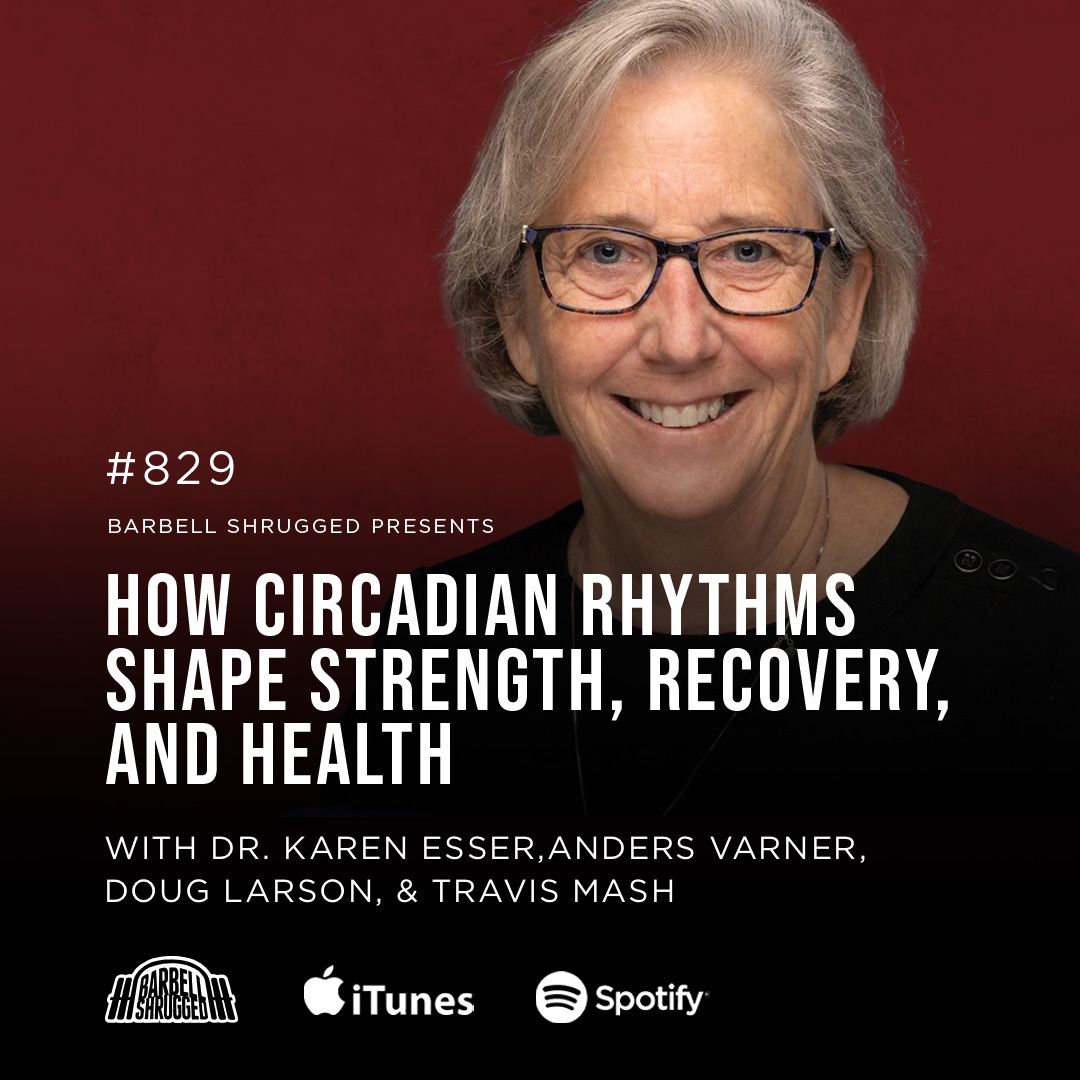
How Circadian Rhythms Shape Strength, Recovery, and Health with Dr. Karen Esser #829
from Barbell Shrugged
In this episode, Dr. Karen Esser Professor and Chair of the Department of Physiology and Aging at the University of Florida joins the crew to break down one of the most overlooked performance variables in human physiology: circadian timing. After a career spent studying muscle adaptation, Dr. Esser shifted her research toward the molecular clocks inside our tissues, uncovering how every cell in the body keeps its own time. She explains how these clocks govern fuel storage, protein repair, metabolic readiness, and ultimately the way muscle responds to training. The team digs into what these clocks do, how they synchronize, and why misalignment affects everything from daily performance to long-term health. The conversation dives deep into time-of-day effects on strength, endurance, and adaptation. Dr. Esser highlights that humans are consistently stronger and more explosive in the afternoon, a pattern reflected in Olympic records and decades of performance data. But her lab's animal research reveals something game changing: consistent morning training can shift the internal clock system, allowing morning athletes to achieve equal or even better adaptations after several weeks, despite using lower absolute training loads. She also explains how travel, jet lag, and mistimed eating disrupt organ specific clocks, reducing performance and creating metabolic consequences similar to pre-diabetes. The crew tests these ideas against real world training habits, coaching experience, and what happens when athletes switch from evening to early morning training. Finally, Dr. Esser unpacks the broader health implications of circadian disruption from increased risk of metabolic disease and cardiovascular dysfunction to higher rates of depression and cancer in chronically misaligned shift workers. She outlines simple, actionable strategies: anchor your sleep and training times, keep eating within a roughly 10 hour window, avoid late night calories, and arrive early when competing across time zones. The conversation closes with practical takeaways for athletes, coaches, and everyday lifters who want to maximize adaptation, improve metabolic health, and align their biology with the rhythms built into every cell. Links: Anders Varner on Instagram Doug Larson on Instagram Coach Travis Mash on Instagram
Embed this episode
NOW PLAYING
How Circadian Rhythms Shape Strength, Recovery, and Health with Dr. Karen Esser #829
No transcript for this episode yet
Similar Episodes
No similar episodes found.