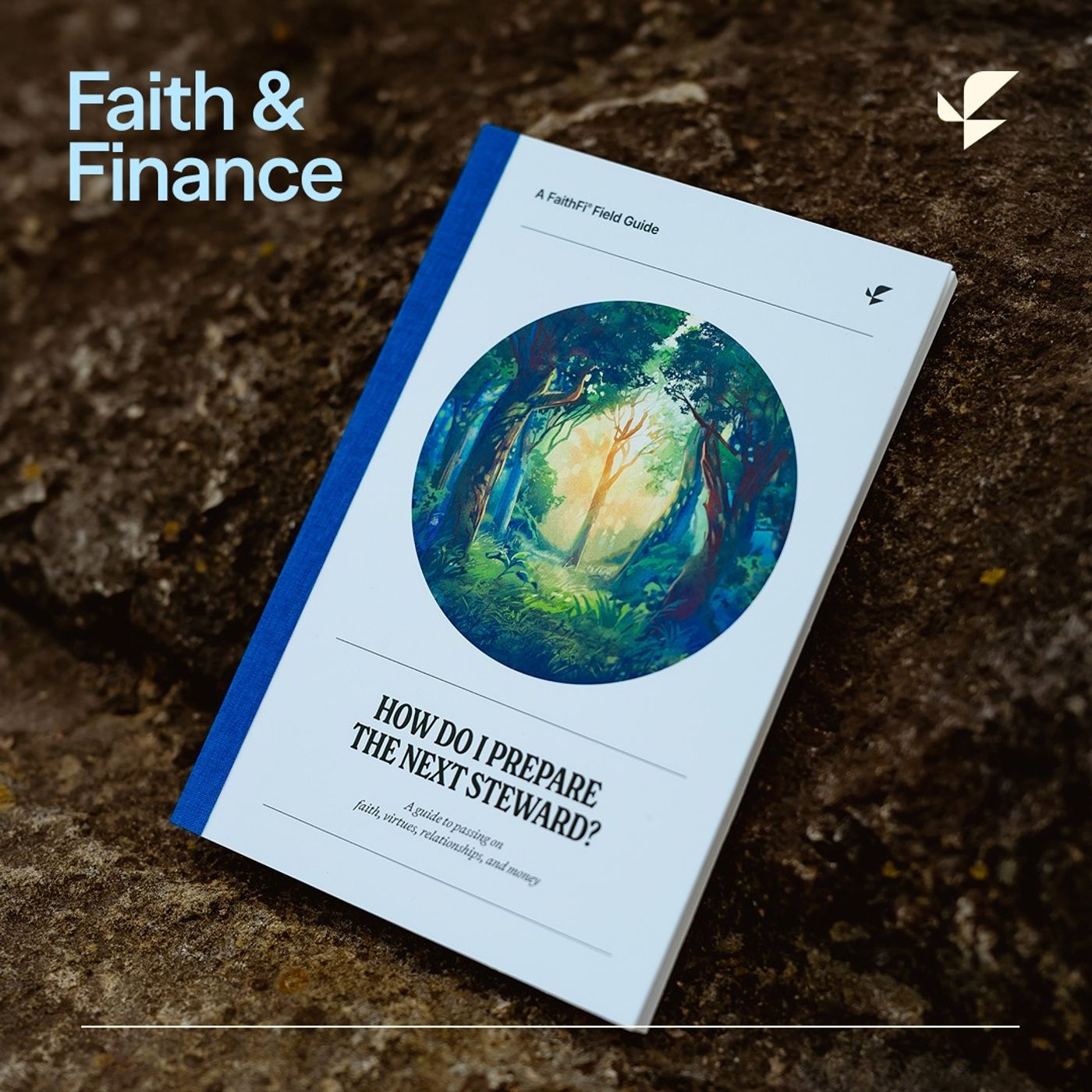
How Do I Prepare the Next Steward? with David Wills
from Faith & Finance Hosted by FaithFi
Someday, someone else will steward the resources God has entrusted to you. But will they be prepared for that responsibility? Many families devote considerable time and attention to estate planning. They establish wills, create trusts, and develop strategies to transfer assets efficiently. Those are important steps, but they address only part of the challenge. Preparing the next steward involves more than preparing an inheritance. It involves preparing the person who will receive it. David Wills, President Emeritus of the National Christian Foundation (NCF) and a contributor to FaithFi's newest Field Guide, How Do I Prepare the Next Steward?, joined the show today to discuss how families can pass down not only financial resources but also the wisdom, character, and biblical values needed to steward them faithfully. Start With Why, Not How When families begin discussing wealth transfers, they often turn immediately to financial tools and tax strategies. While those considerations matter, Wills believes a more important starting point exists. He encourages families to approach the process by asking three questions: Why? Why has God entrusted these resources to us in the first place? What? What do we hope to accomplish through the accumulation, investment, use, and eventual transfer of those resources? How? What financial tools and strategies will help us accomplish those objectives? Too often, families begin with the third question without adequately considering the first two. The goal isn't simply to transfer assets efficiently. It's to ensure those resources continue to be managed wisely and faithfully. Ecclesiastes 7:11–12 reminds us of the value of wisdom alongside an inheritance. Financial resources can create opportunities, but wisdom helps us use them well. That leads to a guiding principle from FaithFi's new Field Guide: Prepare heirs for assets, not just assets for heirs. And preparation shouldn't be limited to children or grandchildren. For married couples, the surviving spouse may be the first person to assume responsibilities previously managed by the other. Both spouses should understand their finances and feel equipped to make important decisions. How Do You Know When Someone Is Ready? Jesus' parable of the talents in Matthew 25 offers a helpful picture of stewardship. In the parable, a master entrusts different amounts to his servants according to their abilities. Each servant is then accountable for how he manages what he has received. While the parable ultimately speaks to faithfulness to God, it also invites us to consider how people handle the responsibilities already entrusted to them. Wills encourages families to observe the everyday decisions of those who may eventually receive an inheritance. How do they manage smaller responsibilities? How do they respond to mistakes or unexpected challenges? Do they seek wise counsel? Are they growing in generosity and financial maturity? Rather than making assumptions based on age or family relationships, these questions help us understand someone's readiness for greater responsibility. And perhaps most importantly, we should model the kind of stewardship we hope to see in the next generation. If we want our children to be generous, they need opportunities to observe generosity in our lives. If we want them to make wise financial decisions, we should invite them to understand how and why we make ours. Preparing the Next Steward Is a Gradual Process Fortunately, preparing someone for stewardship doesn't have to happen all at once. Wills suggests a simple progression that resembles discipleship: observe, participate, decide, and lead. At first, children might simply observe their parents making financial decisions. As they mature, they can participate in those decisions, eventually making smaller choices independently before assuming greater responsibility. Consider three familiar areas of financial stewardship: giving, saving, and spending. Instead of treating these as private activities, families can practice them together. Parents might invite their children to help select a charitable organization, establish savings goals, or evaluate a purchase. Wills has put this principle into practice in his own family by establishing charitable giving funds for his children. When they use those funds for generosity and contribute additional money, he and his wife offer matching contributions within established limits. The arrangement provides practical experience while encouraging generosity. It also gives parents a chance to see how their children make decisions, what matters to them, and how their understanding of stewardship develops. Of course, not every lesson will come from success. Wills emphasizes the importance of sharing our financial mistakes and what we've learned from them. Those experiences can become some of the most valuable lessons we pass along. Does Fair Always Mean Equal? One of the most difficult questions in estate planning is whether every heir should receive an equal share. Wills believes the answer requires careful consideration because fairness and equality aren't always the same thing. Rather than starting with how much can be distributed, families might ask what each person needs and which assets best suit their circumstances, abilities, and responsibilities. For example, imagine a family business in which only one child is actively involved. Dividing ownership equally among several siblings who have no interest in the business could create significant challenges for its future management. Similarly, a child who loves agriculture might find farmland especially meaningful, while another family member might treasure a collection of books or artwork. Recognizing those differences can be appropriate, but Wills offers an important caution: Unequal distributions require thoughtful communication. Without explanation, even well-intentioned decisions can leave family members feeling confused, hurt, or overlooked. That's why conversations about inheritance should begin long before an estate is settled. Families need opportunities to discuss their values, intentions, and the reasoning behind significant decisions. And while different circumstances may justify different distributions, unequal treatment isn't automatically the wisest approach. The goal should be to exercise discernment while preserving relationships and honoring each person's dignity. After all, an inheritance should bless the next generation, not create unnecessary division. Stewardship Extends Beyond Family and Finances Preparing the next steward also means recognizing that the resources we manage extend far beyond money. We steward our relationships, knowledge, experience, skills, and opportunities to serve others. These forms of capital may be even more valuable than the financial assets we leave behind. And the people we influence don't have to be our children or grandchildren. Wills shares a remarkable example involving Pete and Deb Ochs, who operate a manufacturing facility inside a prison near Wichita, Kansas. Wanting to help incarcerated men experience the joy of generosity, they identified several charitable organizations and invited the men to choose where they wanted to give. The invitation came with an added encouragement: Pete and Deb would match their donations. Although the men had limited financial resources, their response was extraordinary. The experience gave them a chance to make meaningful decisions, practice generosity, and help meet others' needs. It's a powerful reminder that preparing the next steward isn't exclusively about transferring an inheritance. It's also about helping people recognize what they've already been entrusted with and encouraging them to use it faithfully. Start With One Conversation For someone who has spent years preparing an estate but relatively little time preparing the people who will receive it, the process can feel overwhelming. Wills encourages a simpler approach: Start with one person and one conversation. Consider who might eventually receive the resources you manage. Then begin discussing what faithful stewardship looks like. What have you learned about earning, saving, spending, and giving? What financial mistakes have shaped your thinking? What biblical convictions guide your decisions? And what responsibilities could you begin sharing today? These conversations don't require a large estate or a sophisticated financial plan. They simply require intentionality. Wills also encourages families to seek guidance from trusted financial advisors who understand that wealth transfer involves more than financial calculations. An experienced advisor can help families think through the practical, relational, and personal dimensions of preparing the next generation. Ultimately, the greatest inheritance we leave may not be what we give someone, but what we've helped them become. Financial assets may change hands in a single day. Wisdom, character, generosity, and faithfulness are cultivated over a lifetime. And that's why preparing the next steward is a responsibility worth embracing today. A Resource to Help You Prepare FaithFi's newest Field Guide, How Do I Prepare the Next Steward?, helps individuals and families look beyond the financial aspects of wealth transfer and consider the character, spiritual, and relational dimensions of preparing those who come after them. Whether you're thinking about your spouse, children, grandchildren, or others who may one day steward the resources God has entrusted to you, this guide offers a practical framework for beginning those important conversations. Get your copy today or place a bulk order at FaithFi.com/Shop. On Today’s Program, Rob Answers Listener Questions: My 10-year term life policy is expiring, and I’m retired with other assets. Should I convert to a smaller policy or let the coverage end? I have about $17,000 in credit card debt and live on Social Security. What’s the safest way to manage or consolidate the debt without resorting to debt settlement? Resources Mentioned: Become a FaithFi Partner National Christian Foundation (NCF) Christian Credit Counselors Faithful Steward: FaithFi’s Quarterly Magazine FaithFi Field Guide: How Do I Prepare the Next Steward? FaithFi Field Guide: How Much Money is Enough? Our Ultimate Treasure: A 21-Day Journey to Faithful Stewardship by Rob West Wisdom Over Wealth: 12 Lessons from Ecclesiastes on Money Look At The Sparrows: A 21-Day Devotional on Financial Fear and Anxiety Rich Toward God: A Study on the Parable of the Rich Fool Find a Certified Kingdom Advisor® (CKA) FaithFi App Remember, you can call in to ask your questions every weekday at (800) 525-7000. Faith & Finance is also available on Moody Radio Network and American Family Radio. You can also visit FaithFi.com to connect with our online community and partner with us as we help more people live as faithful stewards of God’s resources.
Embed this episode
What this episode covers
Someday, someone else will steward the resources God has entrusted to you. But will they be prepared for that responsibility? Many families devote considerable time and attention to estate planning. They establish wills, create trusts, and develop strategies to transfer assets efficiently. Those are important steps, but they address only part of the challenge. Preparing the next steward involves more than preparing an inheritance. It involves preparing the person who will receive it. David Wills, President Emeritus of the National Christian Foundation (NCF) and a contributor to FaithFi's newest Field Guide, How Do I Prepare the Next Steward?, joined the show today to discuss how families can pass down not only financial resources but also the wisdom, character, and biblical values needed to steward them faithfully.
No transcript yet.